

AI Search for Ecommerce: How It Works and How to Choose the Best Ecommerce Search Engine
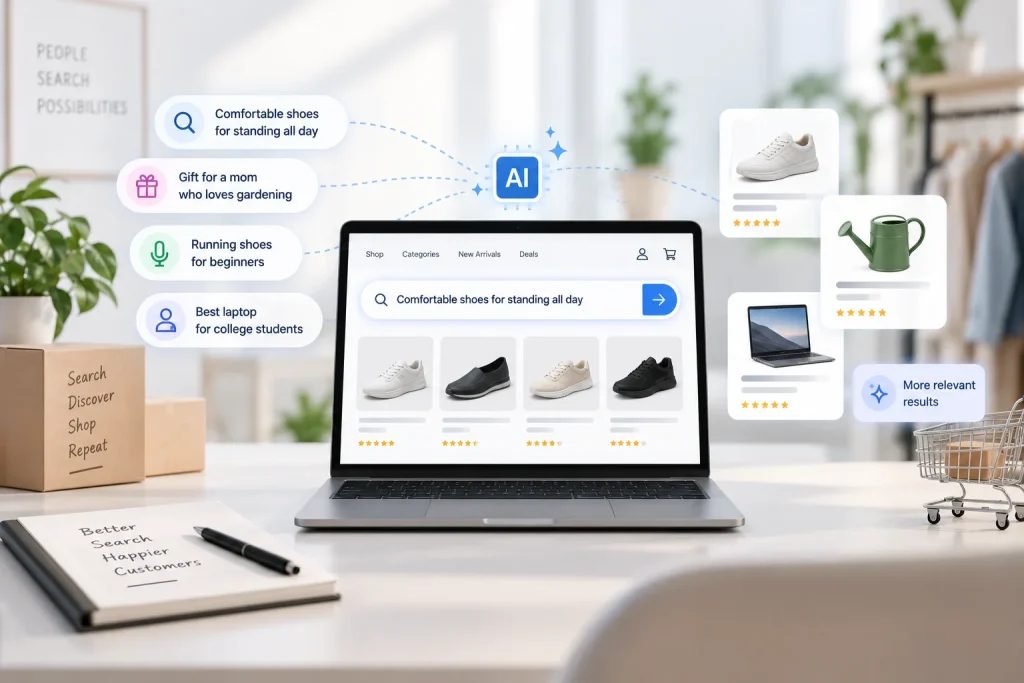
What is AI search for ecommerce?
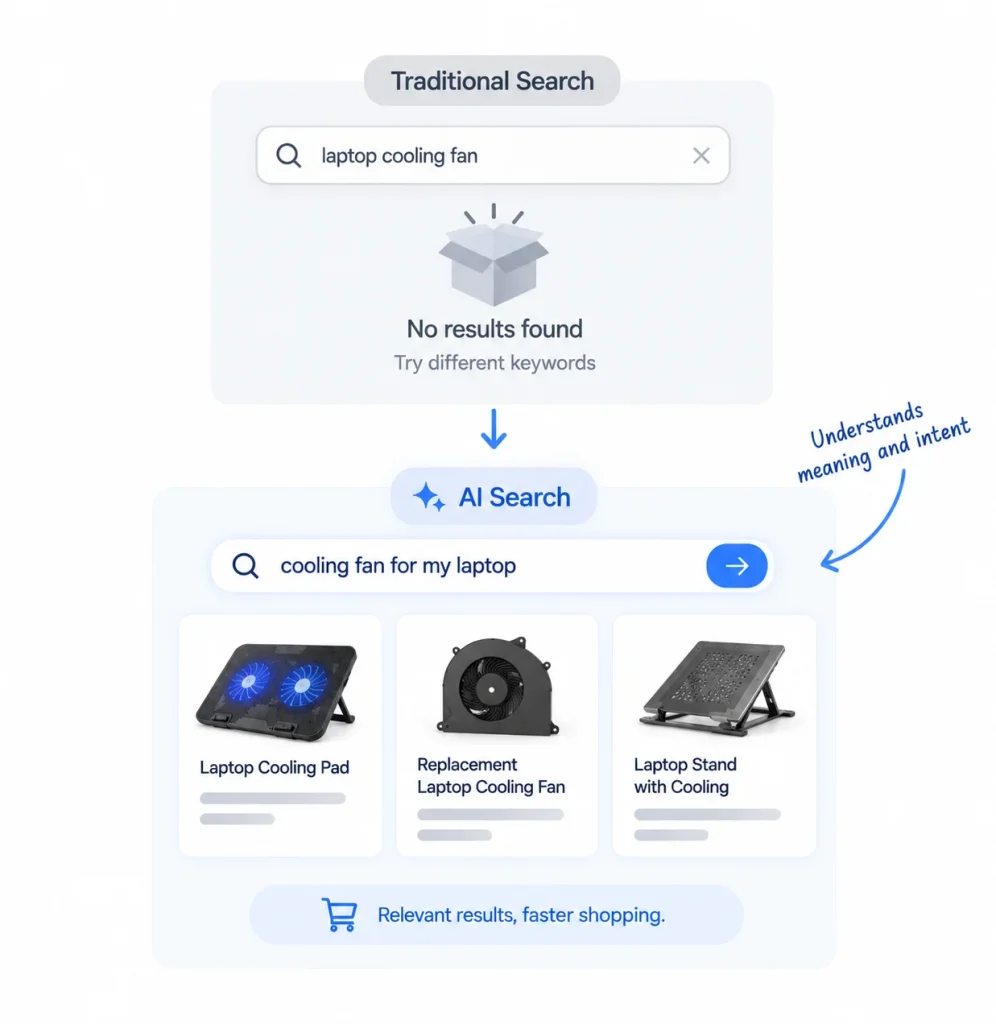
AI search vs. traditional keyword search
Capability
Traditional keyword search
AI search for ecommerce
How AI search for ecommerce works
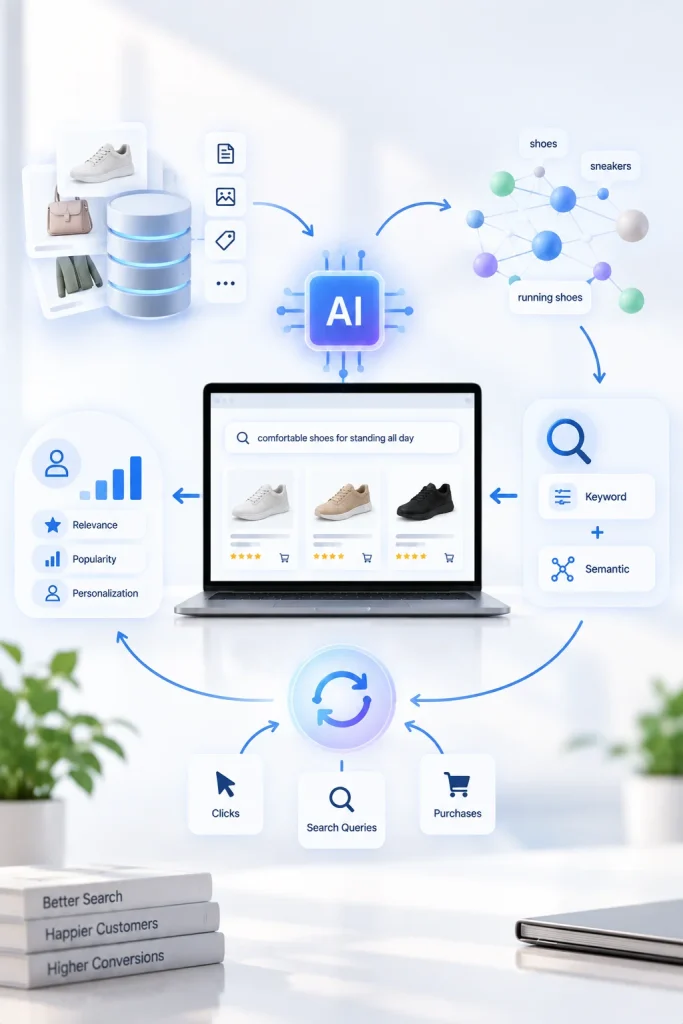
The business case: why AI search matters now
Rather than quoting a headline
percentage, measure your own baseline before and after against a control group. Our search relevance metrics and A/B testing guides cover the methodology, and a measured number you can defend is worth more in a board conversation than an industry average you can't.
The takeaway is simple:
every day your store runs on legacy keyword search, you're paying to acquire traffic and then failing to convert it. Better search recovers that lost revenue without spending a dollar more on ads.
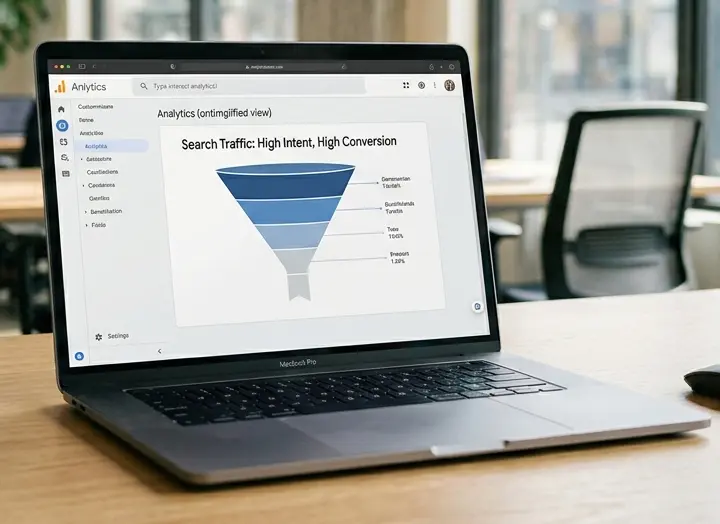
Higher conversion on your highest-intent traffic.
Search users have already declared what they want, so relevance improvements land on the visitors closest to buying.
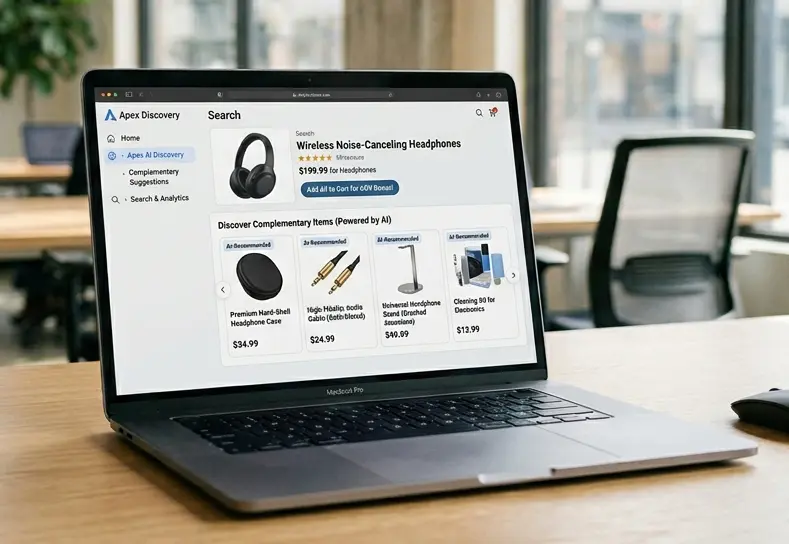
Higher average order value
as AI product discovery surfaces complementary items alongside the requested one.
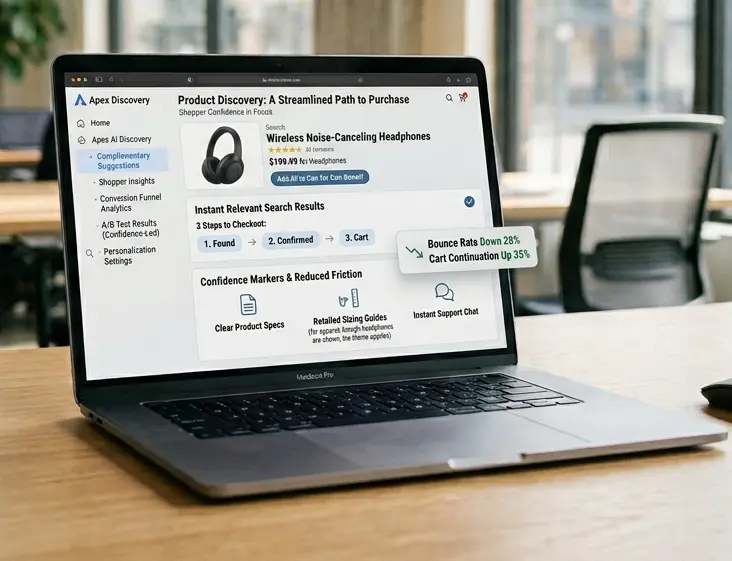
Lower bounce rate
because shoppers can quickly find relevant products, explore with confidence, and continue toward purchase instead of abandoning the site.
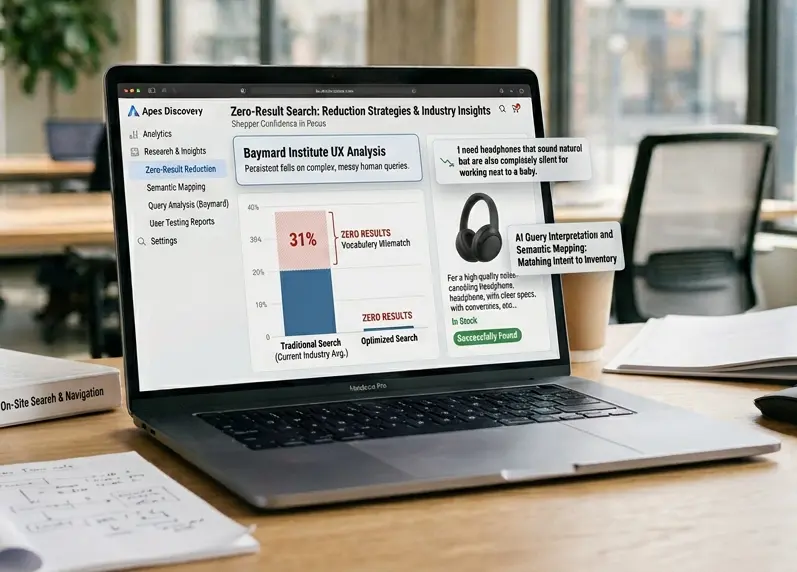
Fewer zero-result searches.
Long-running UX research from the Baymard Institute consistently finds most sites failing the messy, human queries shoppers actually type, and industry analysis commonly puts around 31% of on-site searches returning nothing, usually from vocabulary mismatch rather than missing stock — every one is a customer with intent turned away.
How AI product discovery increases ecommerce conversion
Category ordering.
The highest-volume ecommerce search and discovery surface in most stores, and typically left at whatever default the platform ships. Applying the same relevance intelligence to browse ranking that you apply to search results is often the largest untapped gain available.
Zero-result recovery.
A dead end in ecommerce search wastes a visit from someone who declared intent. Alternatives, spelling corrections, and adjacent categories turn an exit into a second chance.
Per-visitor adaptation.
Session signals shape ecommerce search results within two or three interactions, which works for anonymous traffic — the majority on most stores.
Recommendations that share the ecommerce search brain.
When "similar products" and "customers also bought" run on the same understanding of your catalog as search, they get meaningfully better — and they stop contradicting each other, which shoppers notice even when they can't name it.
Semantic search for ecommerce
One caveat worth repeating, because vendors rarely volunteer it: semantic retrieval alone drifts on exact identifiers. A shopper typing a SKU gets "close enough," which in practice means wrong. That's why production ecommerce search runs hybrid — semantic understanding for descriptive queries, keyword precision for part numbers and model codes, fused into one result set.
Conversational search for ecommerce
How to choose the best ecommerce search engine
01
Semantic understanding
Matches intent, not just keywords — the core capability everything else rests on
02
Conversational / natural language search
"Gift for mom who loves gardening" should return a sensible, curated set
03
Speed
Sub-200ms cached, under 400ms cold — latency directly affects conversion
04
Personalization
Results adapt to each shopper's history and behavior in real time
05
Merchandising controls
Pin bestsellers, boost high-margin items, bury out-of-stock products on demand
06
Deep analytics
Real-time dashboards for zero-results, conversion attribution, and revenue impact
07
Native integrations
Pre-built connectors for Shopify, BigCommerce, Magento, WooCommerce, plus a REST API for headless stacks
08
Enterprise security
TLS 1.3, private VPC, GDPR-compliant handling — your data stays yours
09
Reliability at scale
Proven uptime (99.99%) and the ability to handle real traffic without degrading
AI search and AI visibility: two sides of the same coin
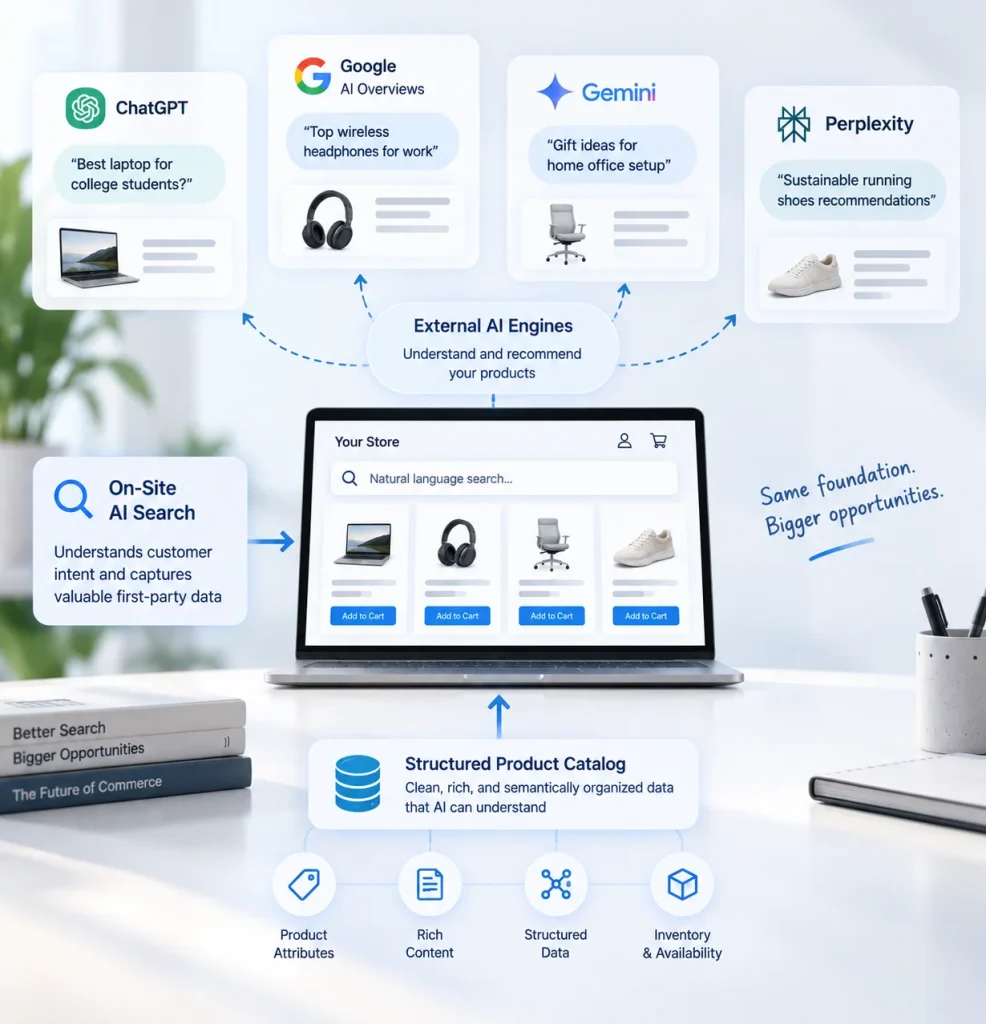
Here’s a shift worth paying attention to. Shoppers aren’t only searching on your store with natural language — they’re asking ChatGPT, Gemini, Perplexity, and Google’s AI Overviews for product recommendations too. The same intent-understanding that powers a great on-site search experience is what determines whether external AI engines can understand and recommend your products.
What to require from a platform
Demoing with clean queries only. Test typos, synonyms, and full sentences — that's where the difference lives.
Ignoring zero-result data. The searches that return nothing are a direct map of lost revenue; the right platform turns them into a feedback loop.
Treating speed as a "nice to have." Latency is a conversion lever. Sub-200ms isn't a vanity metric.
Overlooking merchandising. Relevance is table stakes; the ability to boost margin and bury out-of-stock items is what protects profit.
Forgetting the headless path. If you're on (or moving to) a React/Vue/Next.js storefront, confirm there's a real REST API, not just a plugin.
Where this is heading
The full ecommerce search library
Foundations
Building blocks
Measuring and improving
By use case
Ecommerce FAQs
What is AI product discovery, and how is it different from search?
Is conversational search for ecommerce worth it?
What is AI search for ecommerce?
What is the best ecommerce search engine?
How is AI ecommerce search different from keyword search?
Keyword search matches the exact words in a query against your catalog and fails when they don’t line up. AI search interprets the meaning and intent behind the query, handles typos and synonyms automatically, understands full sentences, and personalizes results — so shoppers find the right product even when they don’t use your exact terms.
Does AI search work with Shopify, BigCommerce, Magento, and WooCommerce?
Will AI search slow down my website?
Can AI search help my products show up in ChatGPT and Google AI?
Indirectly, yes. The clean, semantically structured catalog that powers strong on-site AI search is the same data external AI engines read when deciding what to recommend, and an on-site AI assistant reveals the real questions shoppers ask — both of which support your AI visibility.