

AI Search for Auto Parts: Solving the Fitment Problem
Why auto parts search is its own problem
In auto parts, fitment is the query, not a filter.
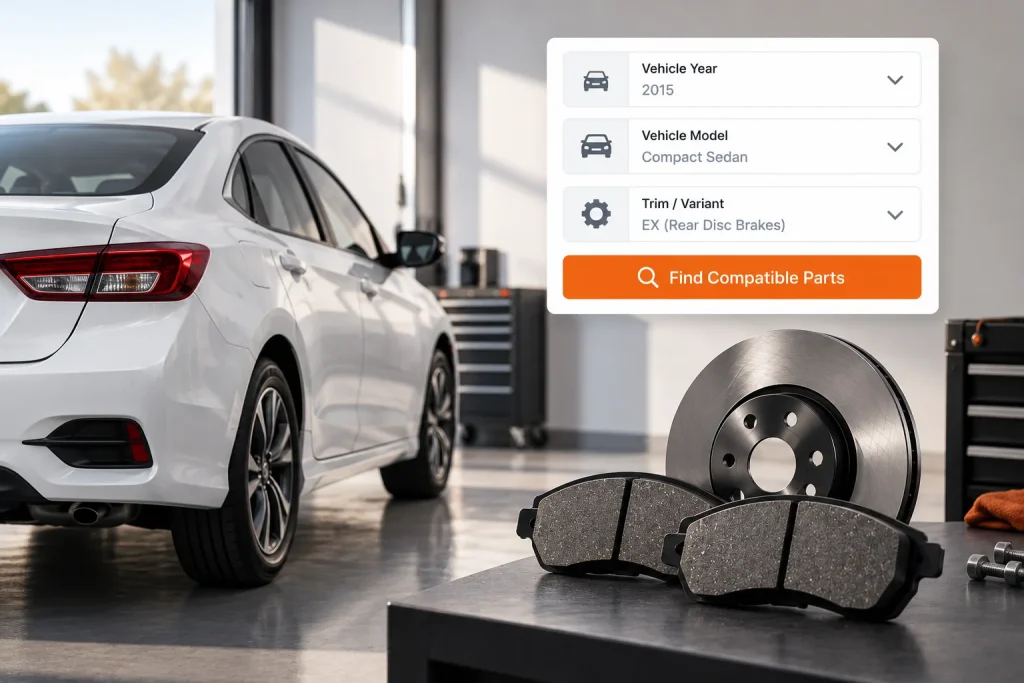
In most retail, "size medium" narrows a result set. In automotive, the vehicle is the question. A brake pad that fits a 2015 Civic EX with rear discs is a completely different SKU from one fitting the same year LX with drums. Return the wrong one and you haven't given a slightly worse result — you've given a wrong one.
Auto parts catalogs are enormous.
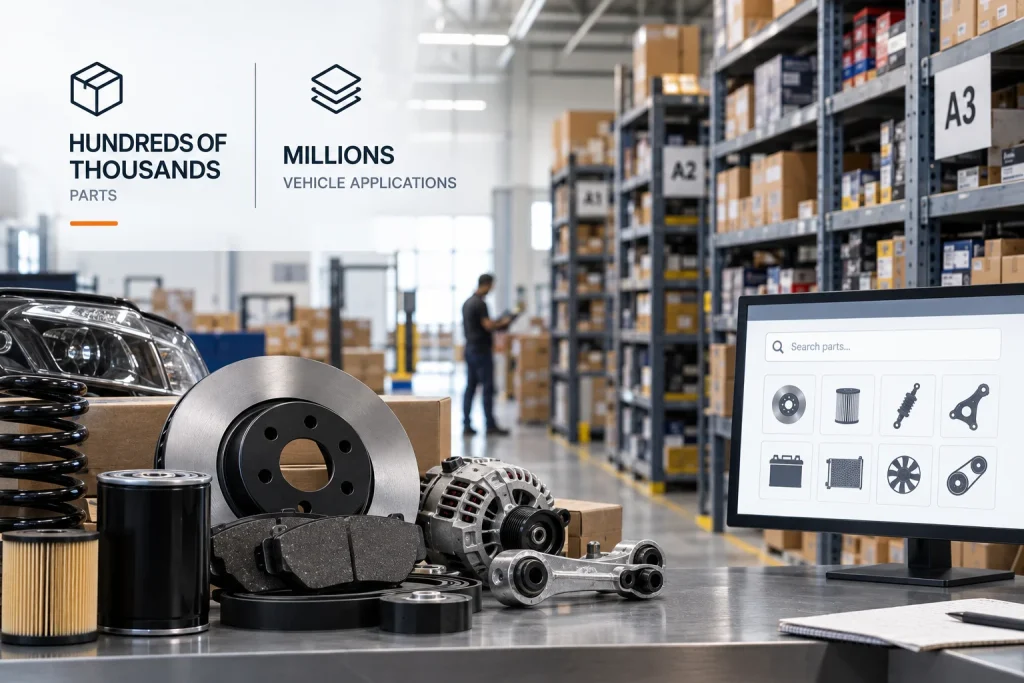
A mid-size distributor carries hundreds of thousands of SKUs; a large one runs into millions once fitment applications multiply. Each part may have thousands of vehicle applications attached.
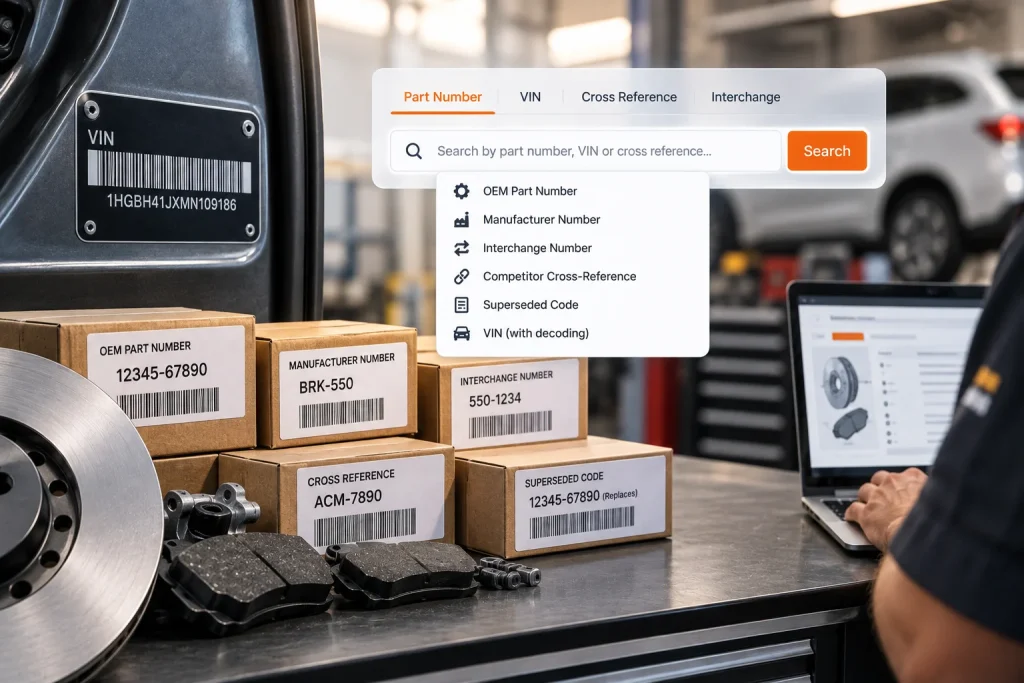
Identifiers are everywhere.
OEM part numbers, manufacturer numbers, interchange numbers, competitor cross-references, and superseded codes. Professional buyers search almost exclusively this way, and increasingly by VIN where the platform supports decoding it.
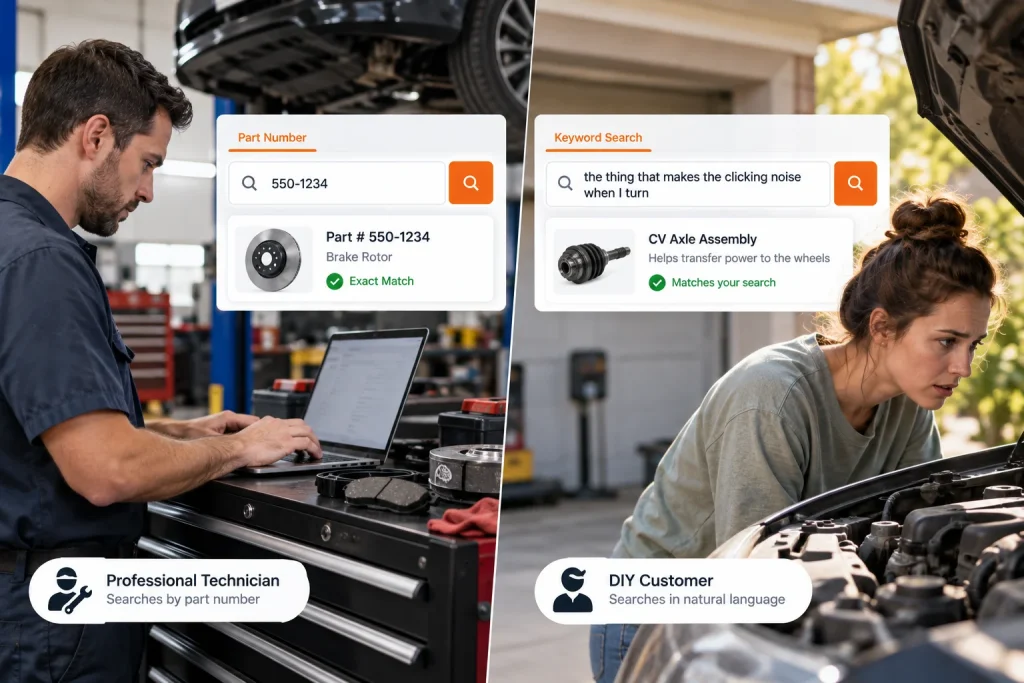
Two auto parts audiences, opposite behaviors.
A professional technician types a part number and expects it literally. A DIY customer types "the thing that makes the clicking noise when I turn." Both are legitimate auto parts search traffic, and a system tuned for one fails the other.
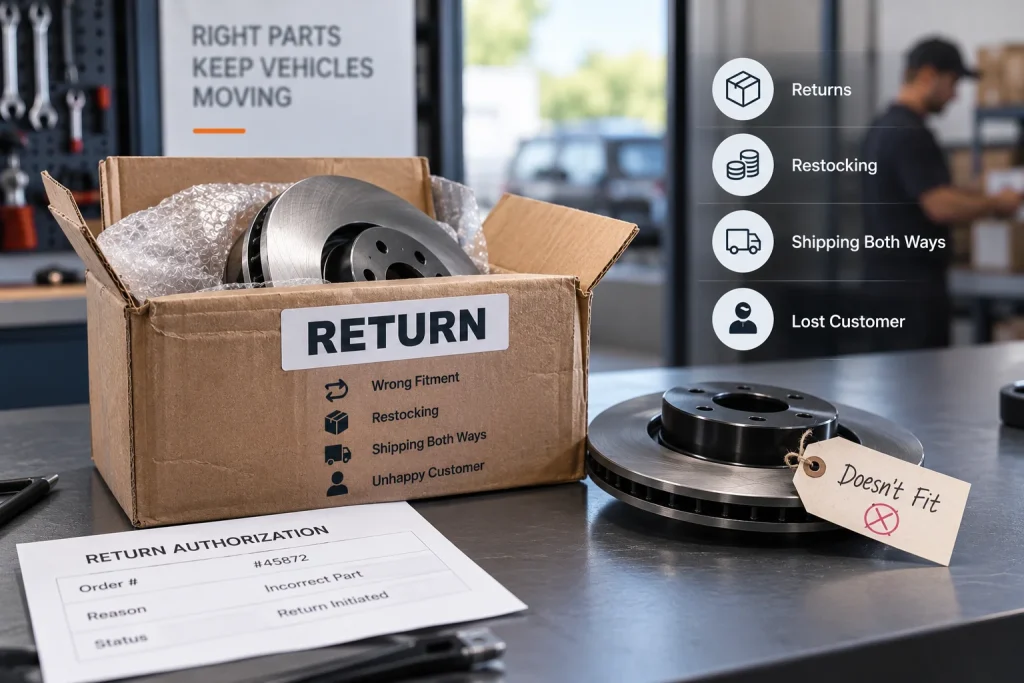
Wrong answers cost real money.
Fitment errors generate returns, restocking, shipping both ways, and a customer who doesn't come back. In most retail a bad result costs a click; here it costs the margin on the order.
The data standards underneath
VCdb- Vehicle Configuration Database
the universe of vehicles: make, model, year, engine, transmission, drivetrain, bed length
PCdb- Product Classification Database
standardized part types and terminology
Qdb- Qualifier Database
the notes that change fitment: "with 300mm rotor," "with tow package"
PAdb- Product Attribute Database
specifications like CCA rating, filter dimensions, terminal layout
AI Solution for Auto Parts
Measuring auto parts search
Fitment accuracy rate.
Of searches where a vehicle was specified, what share returned parts that genuinely fit? This is your headline metric and most retailers have never calculated it.
Exact-match resolution rate.
Of identifier-shaped queries, how many resolved to a product? Track the failures — they're your cross-reference gaps.
Return rate attributed to wrong fitment.
The commercial number. Search improvements that reduce fitment returns pay for themselves in a way relevance scores never demonstrate to a CFO.
Zero-result rate segmented by audience.
Separate identifier queries from descriptive ones. They fail for different reasons and averaging them hides both. Our search relevance metrics guide covers scoring, and A/B testing covers validation.
What AI search for auto parts actually adds
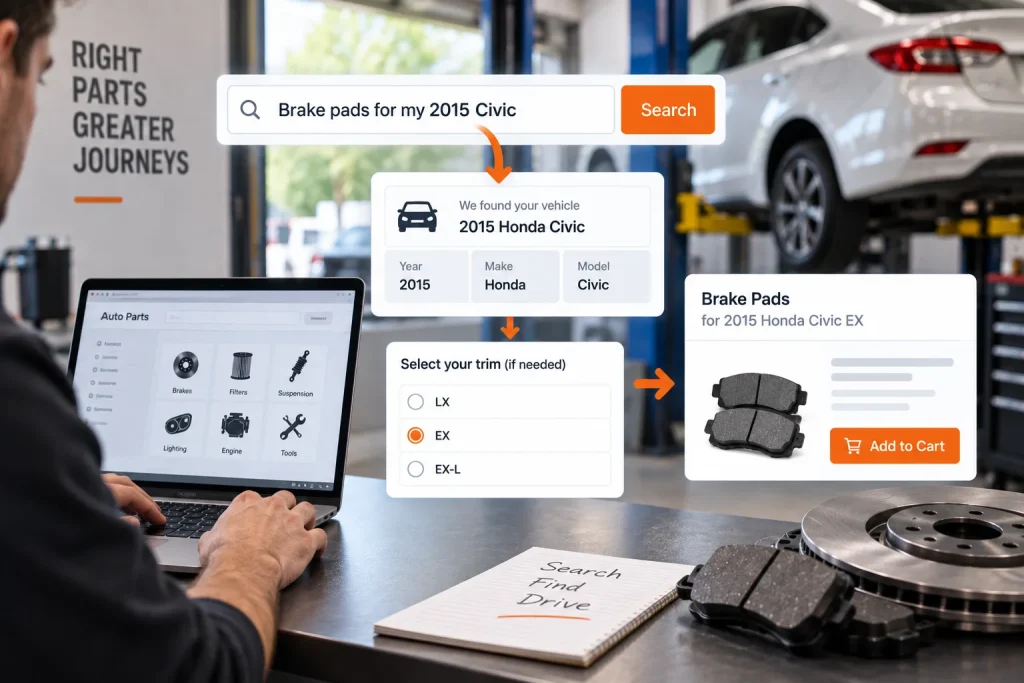
Natural-language vehicle parsing
"Brake pads for my 2015 Civic" should resolve to a year, make, and model automatically, then prompt for the submodel or trim only when it genuinely changes the answer. Forcing every customer through a year-make-model dropdown before they can search is a conversion tax on people who already told you what they drive.
Symptom-to-part translation
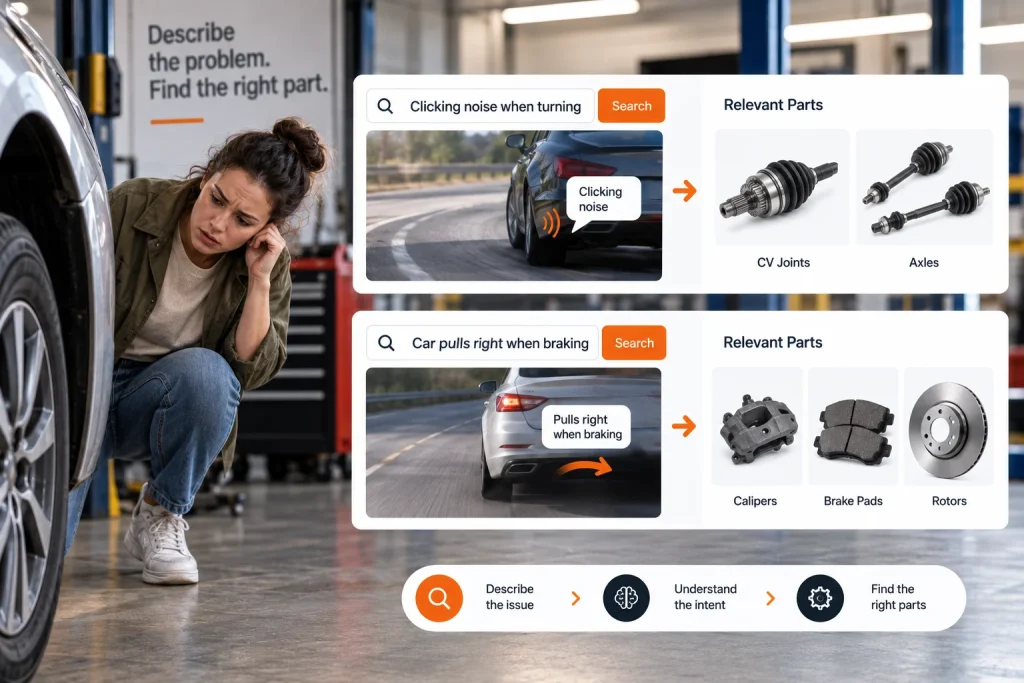
DIY customers describe problems, not parts. "Clicking noise when turning" should surface CV joints and axles; "car pulls right when braking" should surface calipers, pads, and rotors. Keyword search has no path from symptom to component — semantic retrieval does, provided your content contains the connection somewhere.
Cross-reference resolution
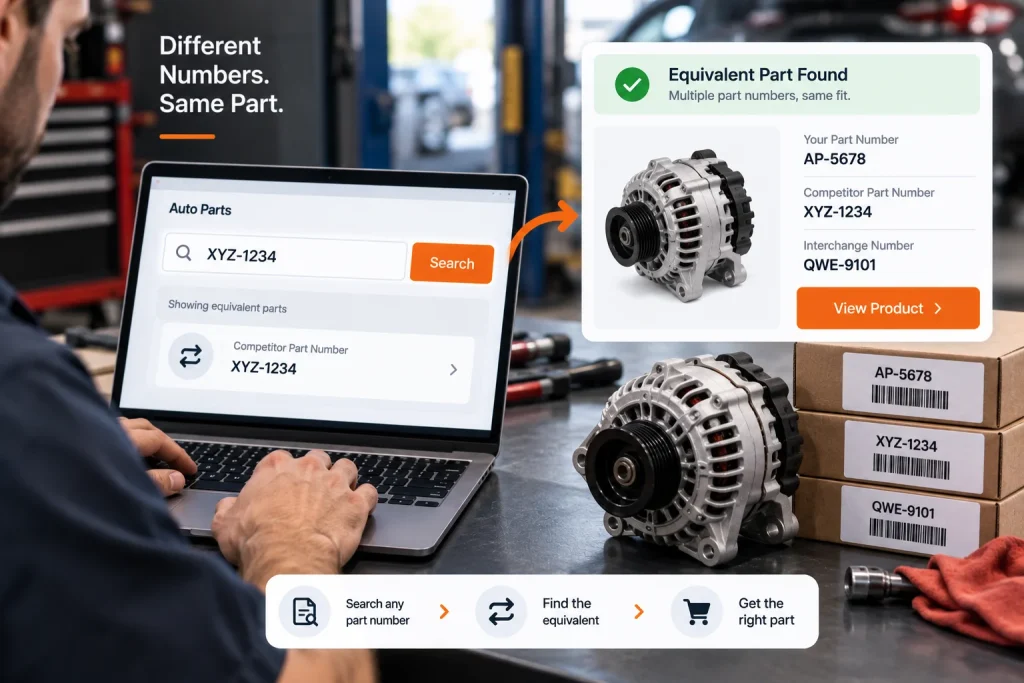
A buyer switching suppliers searches with a competitor's part number. If you stock the equivalent and can't resolve it, you lose a conversion at precisely the moment someone was ready to switch to you. This is the single highest-value gap in most **auto parts product discovery**, and it's data work more than software work.
Format tolerance for auto parts numbers
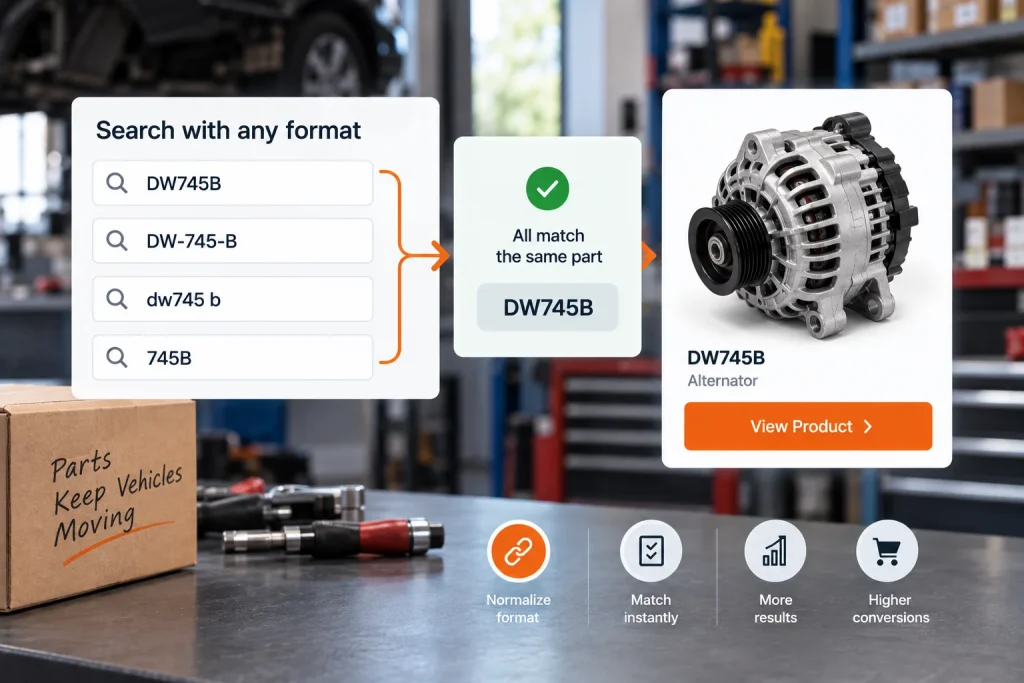
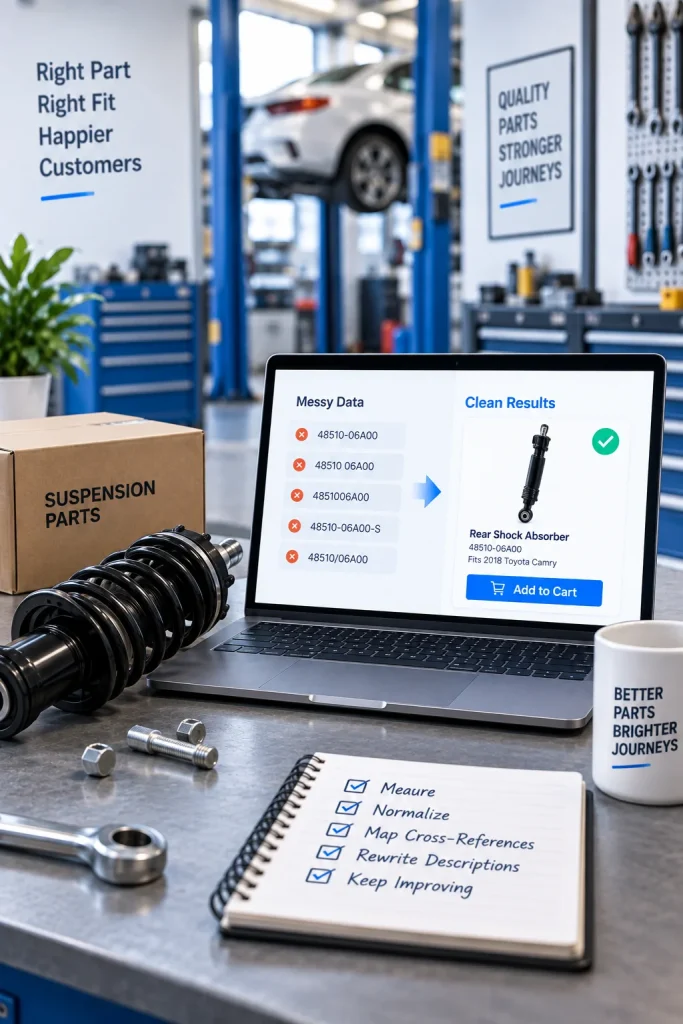
`DW745B`, `DW-745-B`, `dw745 b`, and `745B` are the same part. Naive exact matching resolves one of them. Normalizing hyphens, spaces, and case is cheap and recovers a surprising volume of failed searches.
Why hybrid retrieval is non-negotiable here
Keyword Only
A mid-size distributor carries hundreds of thousands of SKUs; a large one runs into millions once fitment applications multiply. Each part may have thousands of vehicle applications attached.
Semantic Only
Pure semantic search — matching by meaning alone — drifts on exact identifiers. Type a part number into a vector-only system and you'll get something similar, which in automotive means a part that doesn't fit.
What to require from a platform
01
Exact-identifier resolution with format tolerance.
Non-negotiable. Part numbers must resolve literally, in every formatting variation.
02
Fitment-aware filtering that performs.
Every query in this vertical carries constraints — vehicle, position, quantity, availability. Filtered-query latency at high SKU counts is where platforms diverge most, and automotive queries are essentially never unfiltered. Benchmark p95 and p99 with your real facets, not a demo index. Our AI search for large catalogs guide covers the mechanics.
03
Cross-reference and supersession mapping.
The platform should use your interchange data. If it can't, you're maintaining that logic elsewhere forever.
04
Real-time inventory accuracy.
A part shown in stock that isn't generates a cancelled order and a support call. Parts availability changes constantly — see our real-time indexing guide.
05
Attribute-level search.
"Ceramic brake pads with low dust" requires PAdb-level attributes to be searchable, not just displayable.
06
Account-aware results.
For distributors, contract pricing, entitlements, and purchase history should shape both filtering and ranking. A trade customer seeing list prices loses confidence in the whole portal.
07
Analytics on failed searches.
A ranked list of queries returning nothing is your app-hole to-do list and your cross-reference backlog in one report. Our ecommerce search analytics guide covers the instrumentation.
The duplicate content problem nobody mentions
Serving both audiences without compromising either
Professional technicians and shops
arrive knowing the part. They search by number, they're placing repeat orders, and they're doing it between jobs with a customer waiting. Speed and exactness are everything. For this group, auto parts search should surface purchase history prominently — "ordered 4× — last on June 12" converts a search into a one-click reorder, and it protects the accounts that carry your revenue.
DIY and enthusiast customers
arrive knowing the symptom, the vehicle, or sometimes just the sound. They need guidance, fitment verification, and reassurance before buying. For them, auto parts product discovery means surfacing the right component category, confirming fitment explicitly, and offering the related items a job actually requires — pads and rotors together, not pads alone.
Detect query shape and adapt.
An alphanumeric string leans toward exact matching; a sentence leans semantic. Good automotive semantic search shifts the balance automatically rather than applying one setting everywhere.
Make the vehicle persistent, not mandatory.
Once a customer sets their vehicle, keep it across the session and apply it as a soft filter with an obvious override. Forcing it before the first search costs you the professional who already knows the part number.
State fitment confidence explicitly.
"Fits your 2015 Civic EX" builds trust. "May fit — verify" is honest. Silence is what generates returns, and returns are the expensive failure mode in this category.
A practical starting sequence
Auto Parts FAQs
What is AI search for auto parts?
How is auto parts search different from regular ecommerce search?
What are ACES and PIES?
Does AI-powered auto parts search work with part numbers?
How do I fix duplicate product descriptions from PIES data?
Can AI search handle symptom-based queries from DIY customers?
How do I measure auto parts product discovery?