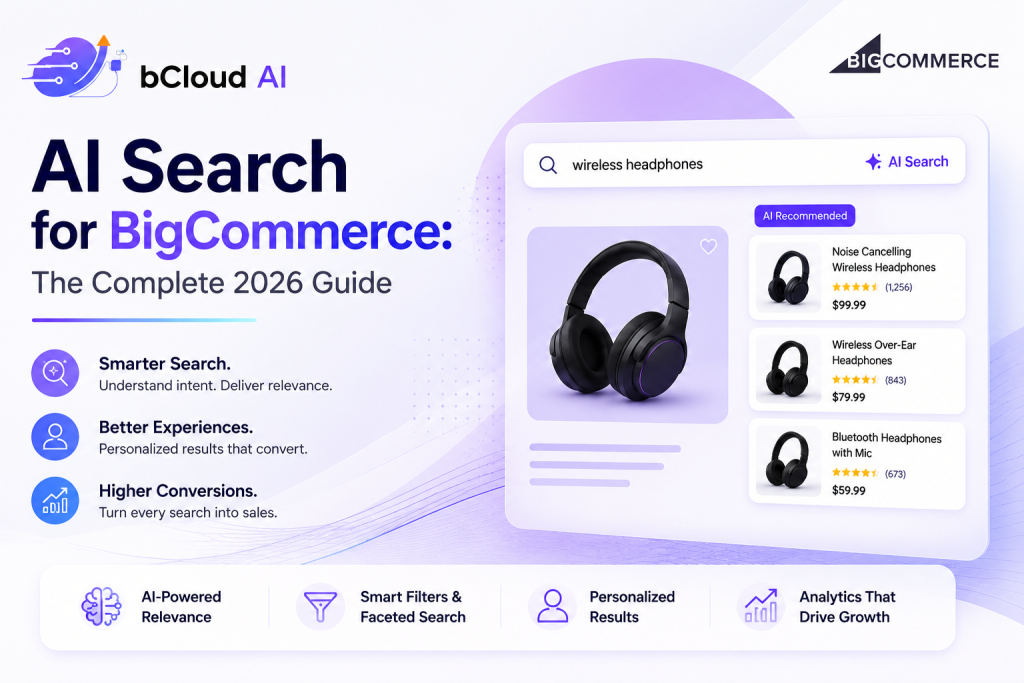

Quick answer: The best e-commerce search understands what shoppers mean — not just the words they type. It combines AI-powered semantic understanding, sub-second speed, typo tolerance, autocomplete, personalization, and smart merchandising into one experience that turns browsers into buyers. The “best” choice for your store is the platform that delivers those capabilities with predictable pricing and easy integration into your stack. The Best E-Commerce Search is crucial for optimizing your online store’s performance.
Understanding the Best E-Commerce Search will enhance the shopping experience and increase conversion rates significantly.
Why e-commerce search is your most valuable real estate
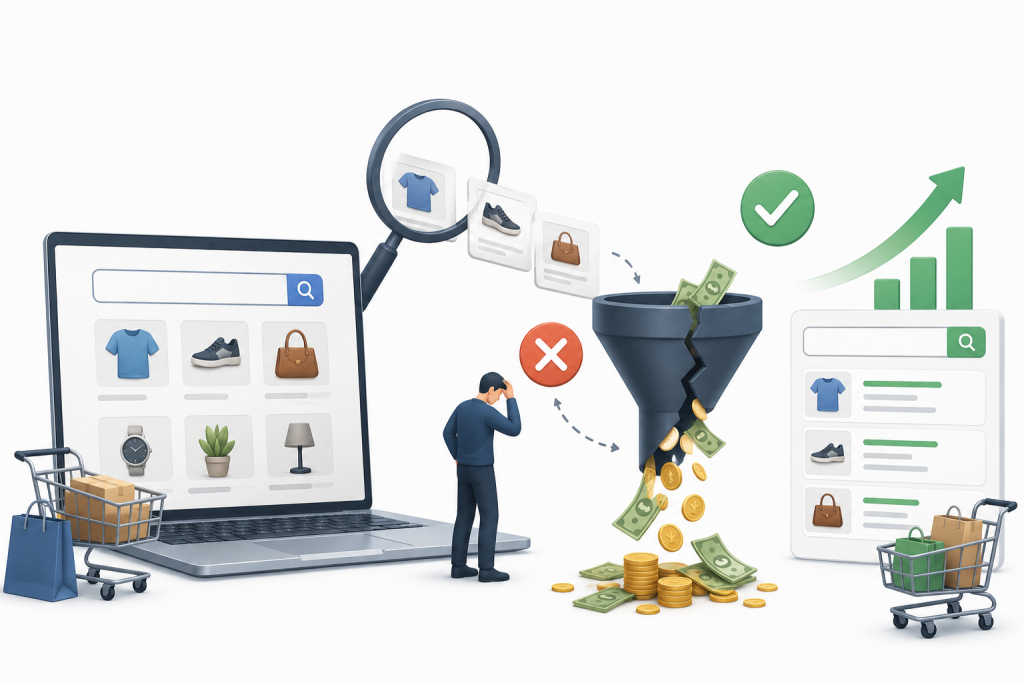
Shoppers who use site search convert at dramatically higher rates than those who only browse — which makes search one of the highest-ROI investments in your entire store. Industry research has consistently found the same pattern across retailers: visitors who engage with internal search are far more likely to purchase, and they can account for a disproportionate share of total revenue despite being a minority of traffic.
The logic is simple. A shopper who searches “waterproof hiking boots size 10” isn’t window-shopping — they have intent, specificity, and urgency. If your search delivers, you’ve removed friction at the exact moment of highest purchase intent. If it fails, you’ve lost a near-certain sale and trained that shopper to leave. The best e-commerce search treats every query as a revenue event and is engineered to convert it. For the fundamentals of how these systems work, see our overview of what an AI e-commerce search engine is.
What makes the best e-commerce search?
The best e-commerce search combines ten capabilities — and missing even a few of them is what separates “search that works” from search that drives growth. Here’s what to look for.
| Capability | Why it matters |
|---|---|
| AI & semantic understanding | Matches on meaning, so “comfy work shoes” finds a “memory-foam loafer” |
| Sub-second speed | Instant, as-you-type results keep shoppers engaged |
| Typo & error tolerance | “addidas snikers” still returns Adidas sneakers |
| Natural-language queries | Handles full phrases the way shoppers actually type and speak |
| Autocomplete & suggestions | Guides shoppers to products before they finish typing |
| Personalization | Tailors results to behavior, history, and context |
| Merchandising controls | Lets your team boost, pin, and promote products by rule |
| Faceted filtering | Refine by size, color, price, brand, and attributes |
| Zero-results handling | Never a dead end — always offers relevant alternatives |
| Analytics & insights | Reveals what shoppers want (and what they can’t find) |
A platform that nails all ten feels effortless to shoppers and gives your merchandising team real control. A platform missing several will quietly cost you conversions no matter how much traffic you send it.
Traditional vs. AI-powered e-commerce search
The difference between traditional keyword search and AI-powered search is the difference between matching words and understanding shoppers — and it shows up directly in conversion rates.
| Traditional (keyword) search | AI-powered (semantic) search | |
|---|---|---|
| Matching | Exact words must align | Understands meaning & intent |
| Natural language | Struggles with full phrases | Handles conversational queries |
| Typos | Often returns no results | Auto-corrects and recovers |
| Synonyms | Needs manual synonym lists | Learns relationships automatically |
| Personalization | Limited or none | Adapts to each shopper |
| Zero-results rate | High | Low |
| Conversion impact | Leaves revenue on the table | Captures high-intent demand |
For most modern stores, AI-powered search is no longer a “nice to have.” As shoppers increasingly type and speak in full, natural phrases — a habit reinforced by voice assistants and AI chat — keyword-only engines fail a growing share of queries. Our primer on AI search covers how this shift is reshaping product discovery.
AI Search Grader by bCloud AI
Grade your ecommerce search in 10 quick questions
31% of ecommerce searches return zero results — and most shoppers who hit a dead end leave for a competitor. How does your store's search stack up?
Answer 10 short questions and get your AI search score, plus a personalized report to fix the gaps. Free, takes about 2 minutes.
No signup needed to take the quiz.
Understanding intent…
Scoring your answers across relevance, AI, experience, and insights.
Your AI search score is ready
Tell us where to send your personalized report. You'll see your score and recommendations right away.
Your score by pillar
Personalized recommendations
Fix the gaps in weeks, not quarters
bCloud AI replaces keyword-only search with hybrid AI retrieval — sub-200ms responses, 99.99% uptime, and conversion lifts of up to 40% across 50+ implementations.
How to choose the best e-commerce search for your store
The best e-commerce search for your store is the one that delivers modern AI capabilities, fits your platform, and prices predictably as you grow. Evaluate any solution against these criteria:
A useful rule of thumb: prioritize relevance and predictable cost over a long feature checklist. A search that returns the right products instantly, handles AI queries by default, and won’t surprise you on the invoice will outperform a feature-rich platform that’s expensive and hard to tune.
The best e-commerce search goes beyond matching the exact words shoppers type. It understands search intent, handles natural-language queries and typos, delivers fast and relevant results, and helps shoppers discover the right products with features such as autocomplete, personalization, smart merchandising, and intelligent zero-results handling. By turning every search into a high-intent shopping opportunity, an effective e-commerce search experience can reduce friction, improve product discovery, increase conversions, and help your store capture more revenue from the shoppers already looking to buy.
How bCloud AI delivers best-in-class e-commerce search
bCloud AI — Built for modern e-commerce search
bCloud AI is built so that the capabilities that define the best e-commerce search — AI-powered semantic understanding, instant results, typo tolerance, personalization, and smart merchandising — come standard, not as expensive add-ons. Where many platforms gate semantic search behind a top enterprise tier or bill an AI premium on every query, bCloud’s approach is to make modern, intent-aware search part of the core product, with pricing that’s predictable as you scale.
Shoppers find what they mean
Lifting conversion at the highest-intent moment — on the first try.
Real merchandising control
Your team gets full control without needing engineering tickets.
Predictable search costs
Your search bill doesn’t balloon as your traffic grows.
For e-commerce teams, that translates into three practical advantages: shoppers find what they mean on the first try (lifting conversion at the highest-intent moment), your merchandising team gets real control without engineering tickets, and your search bill doesn’t balloon as your traffic grows. The result is search that behaves like your best salesperson — understanding the request, surfacing the right products, and never leaving a shopper at a dead end. To see the building blocks behind it, start with our guide to AI e-commerce search engines, and explore how a well-tuned search engine for an e-commerce website is structured.
Common e-commerce search mistakes that cost sales
Even stores that invest in search lose revenue to a handful of avoidable mistakes — and fixing them is often faster than replacing the whole system. Watch for these:
The best e-commerce search makes most of these mistakes hard to make: it minimizes zero results, is forgiving by design, puts merchandising in your team’s hands, and surfaces the analytics you need to keep improving.
How to Measure the Success of Your E-Commerce Search
Installing a modern search engine is only the first step. The highest-performing online stores continuously monitor how shoppers interact with search and use that data to improve conversions. By tracking a handful of key metrics, you can quickly identify friction points and uncover new revenue opportunities.
Signs Your Search Is Performing Well
- High search-to-purchase conversion rate
- Very few zero-result searches
- Fast response times under one second
- High click-through rate on first-page results
- Growing average order value from search users
Warning Signs to Watch
- Frequent “No Results Found” pages
- Shoppers repeatedly refining the same query
- High abandonment after searching
- Popular searches with low click rates
- Slow search performance during peak traffic
Pro Tip: Review your search analytics every month instead of only during major sales events. Small improvements to relevance, synonyms, and merchandising often deliver significant gains in conversion without increasing marketing spend.
Frequently asked questions
What is the best e-commerce search?
The best e-commerce search is an AI-powered system that understands shopper intent rather than just matching keywords. It combines semantic understanding, sub-second speed, typo tolerance, autocomplete, personalization, merchandising controls, faceted filtering, smart zero-results handling, and analytics — delivered with predictable pricing and easy integration.
What features should the best e-commerce search have?
At minimum: AI/semantic understanding, instant as-you-type results, typo and error tolerance, natural-language handling, autocomplete, personalization, merchandising controls, faceted filters, zero-results recovery, and search analytics.
Is AI search better than keyword search for e-commerce?
For most modern stores, yes. AI-powered semantic search understands meaning, handles natural-language and misspelled queries, and rescues searches that keyword-only engines fail — which directly reduces zero-result rates and improves conversion.
How do I choose the best e-commerce search platform?
Test relevance on your real catalog and hardest queries, confirm AI/semantic features are included rather than gated, check speed and uptime, ensure your team can merchandise without engineering, verify it integrates with your platform, and model the total cost — favoring predictable pricing over usage-based billing that grows with traffic.
How much does e-commerce search cost?
It varies widely. Some platforms use usage-based pricing (per search request and per record) that can become unpredictable at scale, while others — including bCloud AI — use plan-based pricing with AI search included. Always project cost at your real traffic and catalog size before committing.