
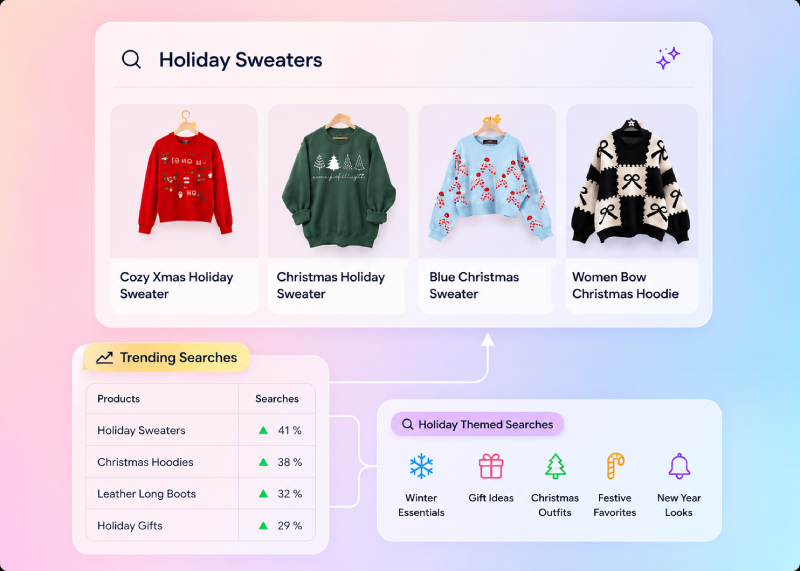

AI Search: Transform Information Discovery and Boost Productivity
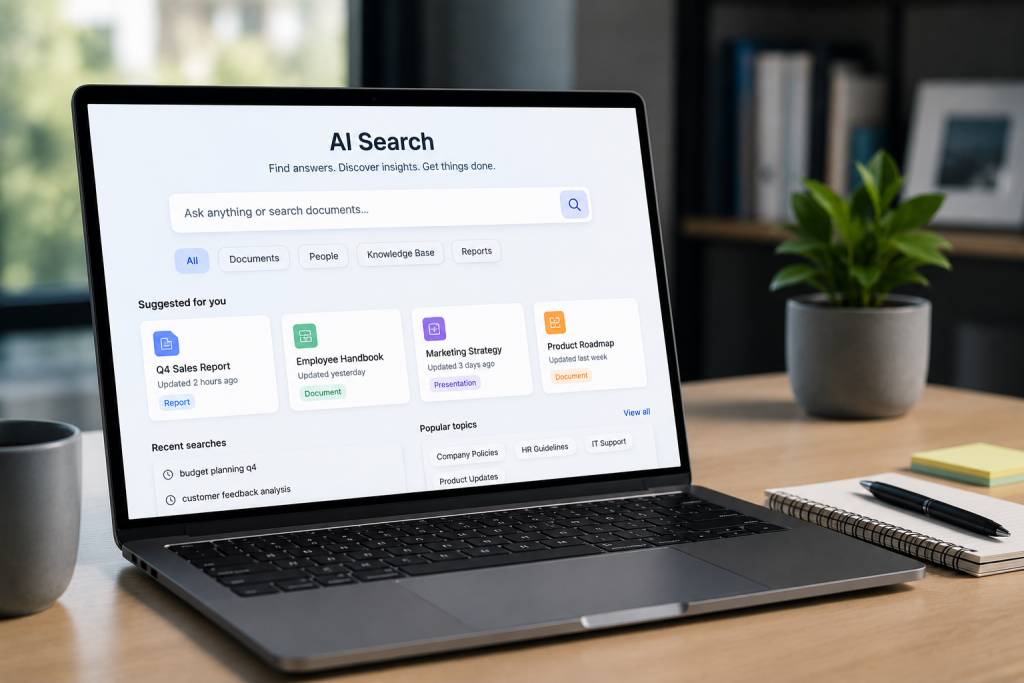
From Keyword Matching to Intelligent Discovery
What Is AI Search and Why Does It Matter?
- AI search is more than a buzzword—it's a transformation in how organizations handle information discovery. At its core, AI search combines several technologies: large language models, vector databases,semantic understanding, and machine learning ranking systems.
- The traditional search experience: you type keywords, the system finds content matching those exact words, and you sort through results (or give up if nothing relevant appears). This approach has frustrated users for decades.
- AI search changes this entirely. AI search understands the meaning behind your query. When you search for "budget constraints affecting Q3 planning," modern AI search doesn't just look for pages containing those exact words. Instead, AI search understands you're asking about financial limitations and planning challenges, then finds relevant information regardless of exact terminology.
Why does this matter?
🧠
Reduced Zero-Result Searches.
Organizations lose massive productivity when searches return nothing useful. AI search dramatically reduces this frustration.
🎯
Faster Information Access.
When AI search returns highly relevant results, employees find answers faster.
🔗
Better Decisions.
Decision-making improves when people can quickly access relevant information. AI search enables this.
💬
Improved Customer Experience.
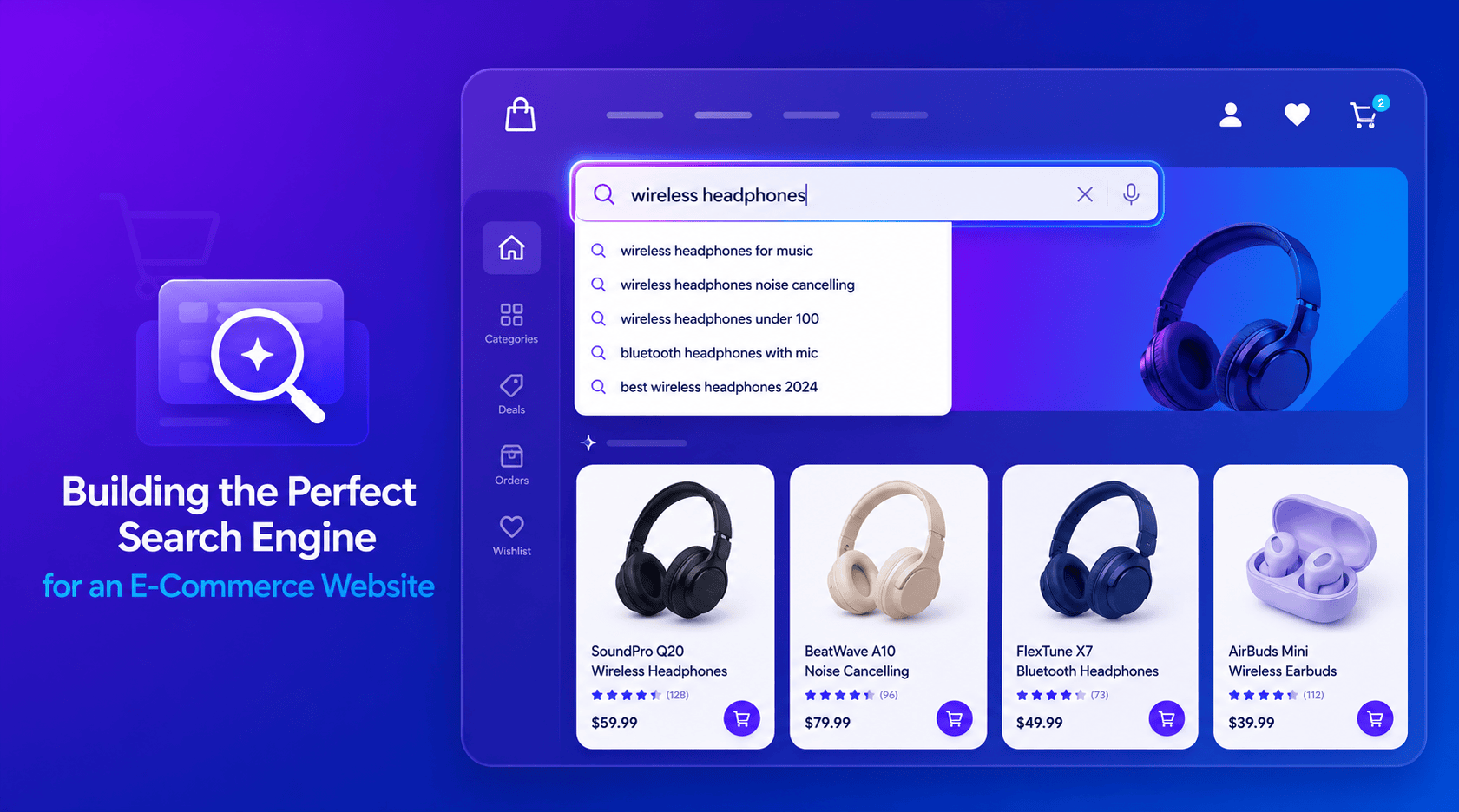
In ecommerce and customer-facing applications, AI search is critical for discovery and conversion.
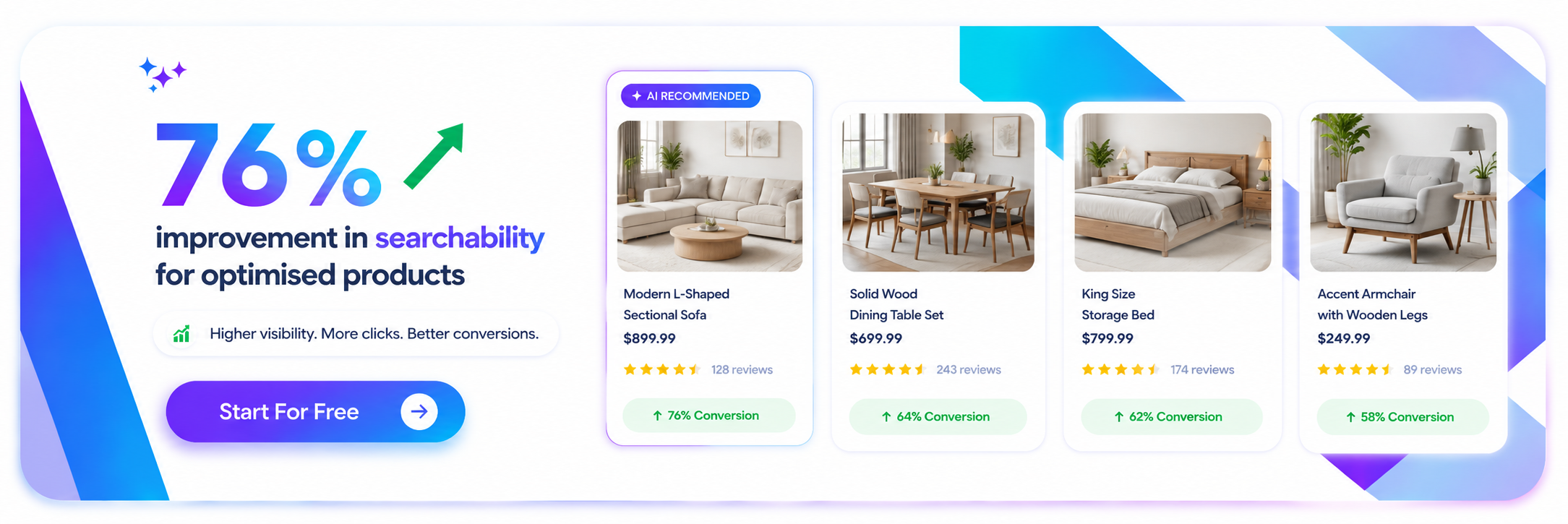
How AI Search Actually Works
Natural Language Understanding
AI search analyzes your query to understand what you're actually looking for, not just the words you use.
Learning
Each interaction teaches AI search more about what works, continuously improving future results.
Content Matching
AI search finds content with similar semantic meaning, not just keyword matches.
Ranking
Results are ranked by relevance, freshness, authority, and personalization factors.
Result Presentation
AI search presents results in a clear format optimized for how you'll use them.
Semantic Encoding
Your query is converted into a mathematical representation that captures meaning.
Real Impact: What AI Search Changes
Let’s move beyond theory to practical impact. Here’s what changes when you implement AI search:
For Ecommerce:
- Customers find products 40% faster
- Zero-result searches drop from 30% to 5%
- Conversion rates increase 20-35%
- Average order value increases through better discovery
01
02
For Internal Knowledge Management:
- Employees spend 60% less time searching
- Better answers to common questions
- Reduced support ticket volume
- Higher employee satisfaction
For Regulated Industries (Healthcare, Financial Services, Legal):
- AI search helps users find compliant answers faster
- Audit trails improve accountability
- Specialized AI search understands domain terminology
- Accuracy improves through domain training
03
AI Search vs. Traditional Search: Key Differences
📈
Result Relevance
AI search is dramatically better at returning relevant results. Traditional search misses relevant content; AI search finds it.
📉
Cost
AI search typically costs more than traditional search software, but produces higher ROI through improved productivity and reduced support costs.
👤
Infrastructure
AI search requires more sophisticated infrastructure, but cloud solutions have made this affordable and manageable.
🧠
Implementation
AI search requires more planning and setup than traditional search, but the payoff justifies this investment.
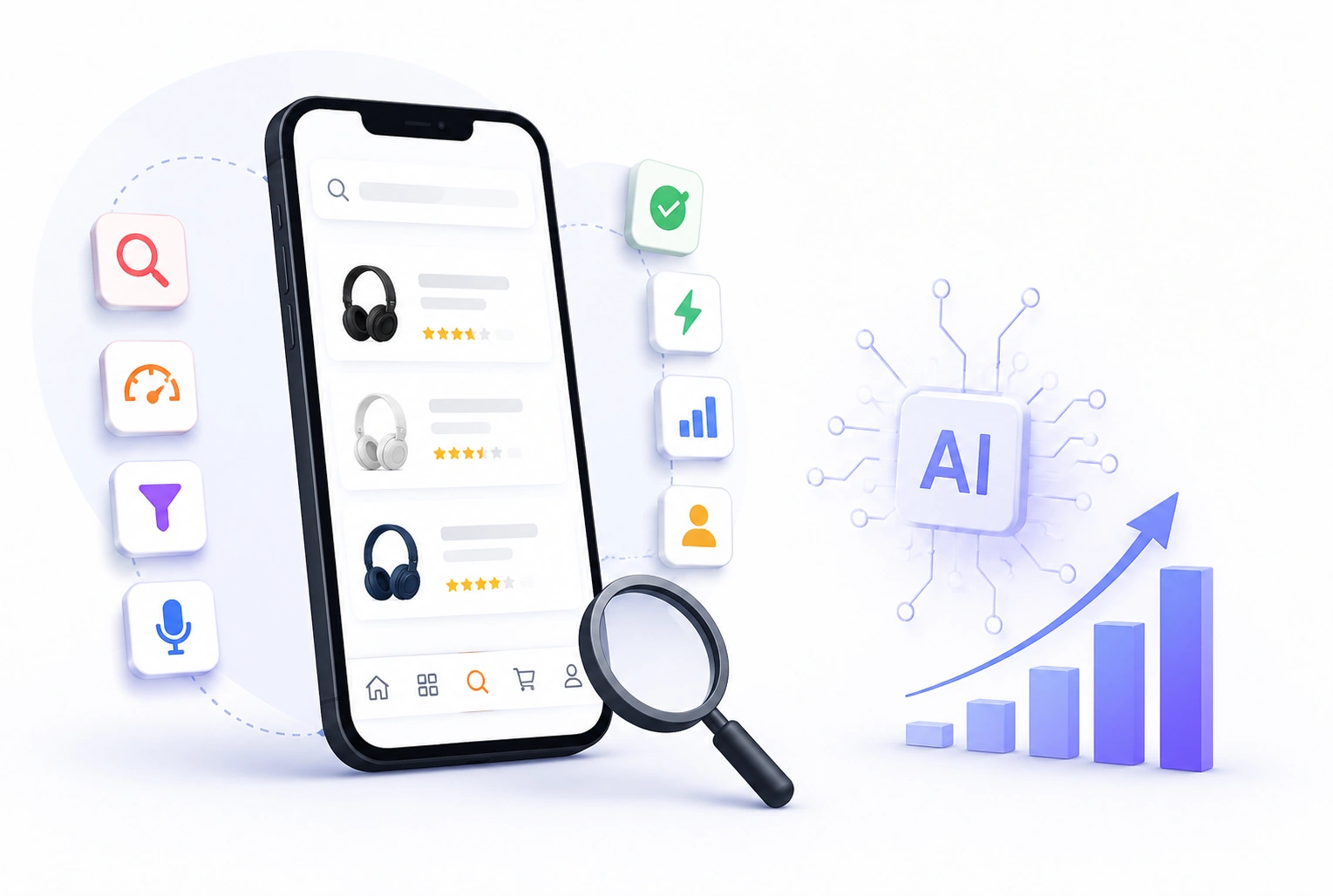
When Your Organization Needs AI Search Right Now
- Users regularly encounter zero-result searches
- Employees spend significant time searching for information
- You have product/content volumes exceeding 5,000 items
- Your customers complain about finding products
- You operate across multiple departments or locations with different terminology
- You're losing ecommerce conversion rates to poor product discovery
The Semantic Search Implementation Process
Evaluating AI Search Platforms
Real Results from AI Search Deployments
Related posts

Enterprise Search
The ability to quickly find information across documents, databases.
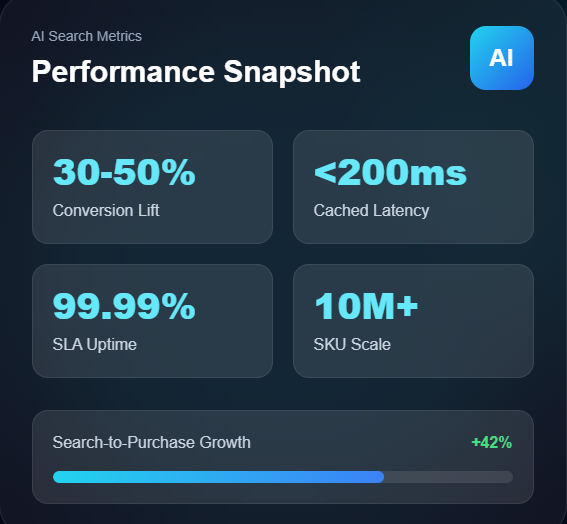
bCloud AI vs Glean
Glean sits firmly in the enterprise tier of search and digital experience platforms.

Data Transformation
Streamline data preparation and elevate data quality.

Semantic Search:
Semantic search can find results that don’t use your exact terminology but address your actual need.
bCloud AI vs OpenSearch
Comparing OpenSearch and bCloud as your e-commerce search engine?
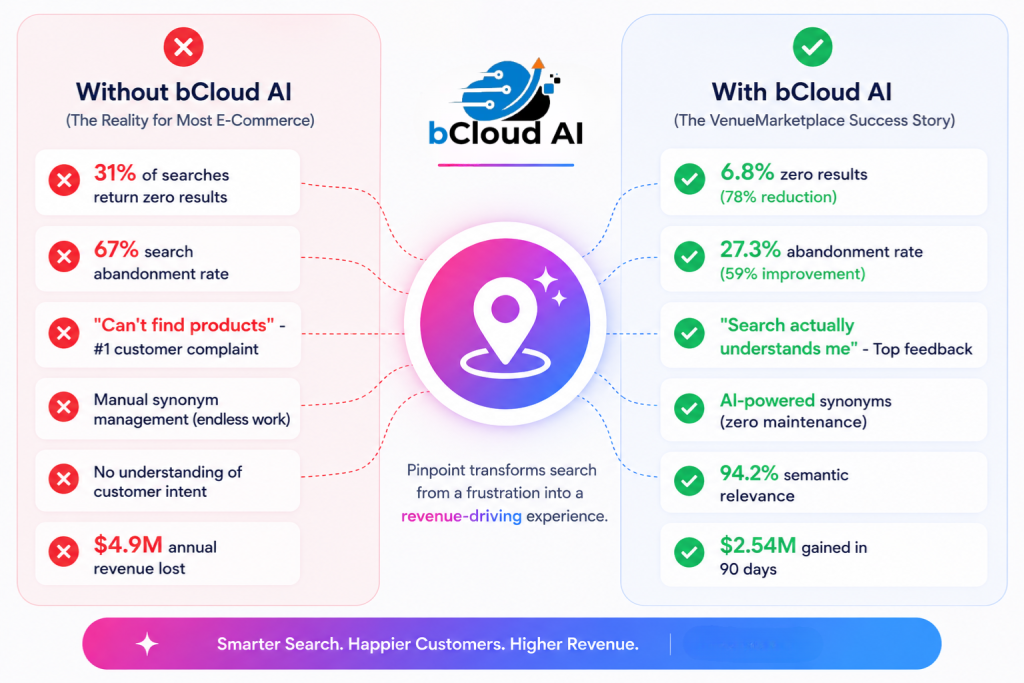
Whitepaper_2026
A comprehensive case study with technical implementation details, ROI analysis.
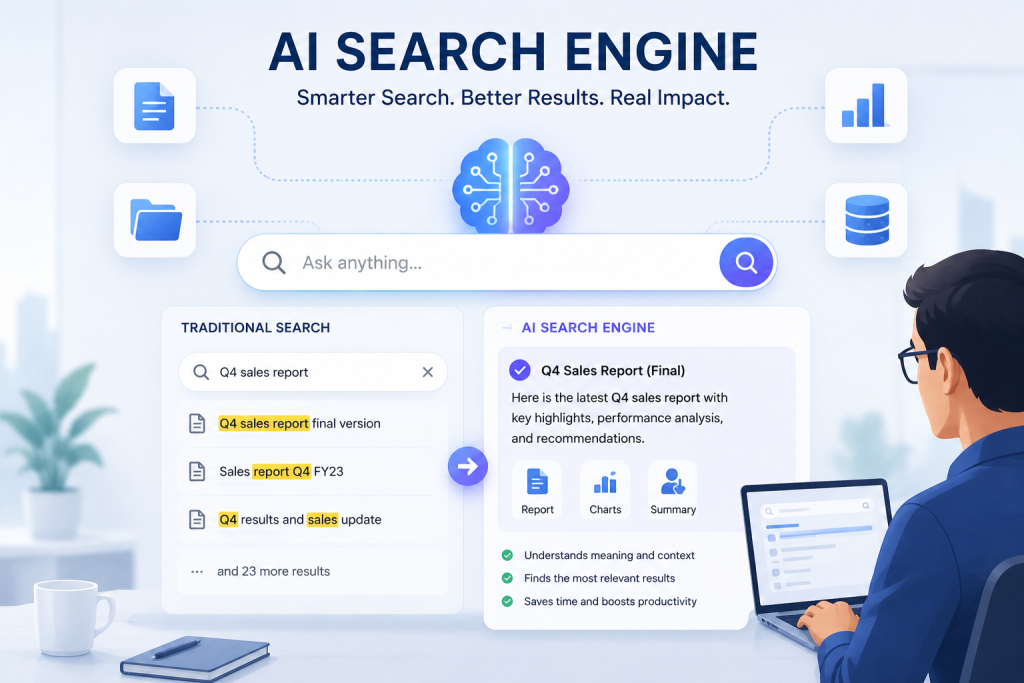
AI Search Engine
An AI search engine represents one of the most transformative technologies available to modern organizations.
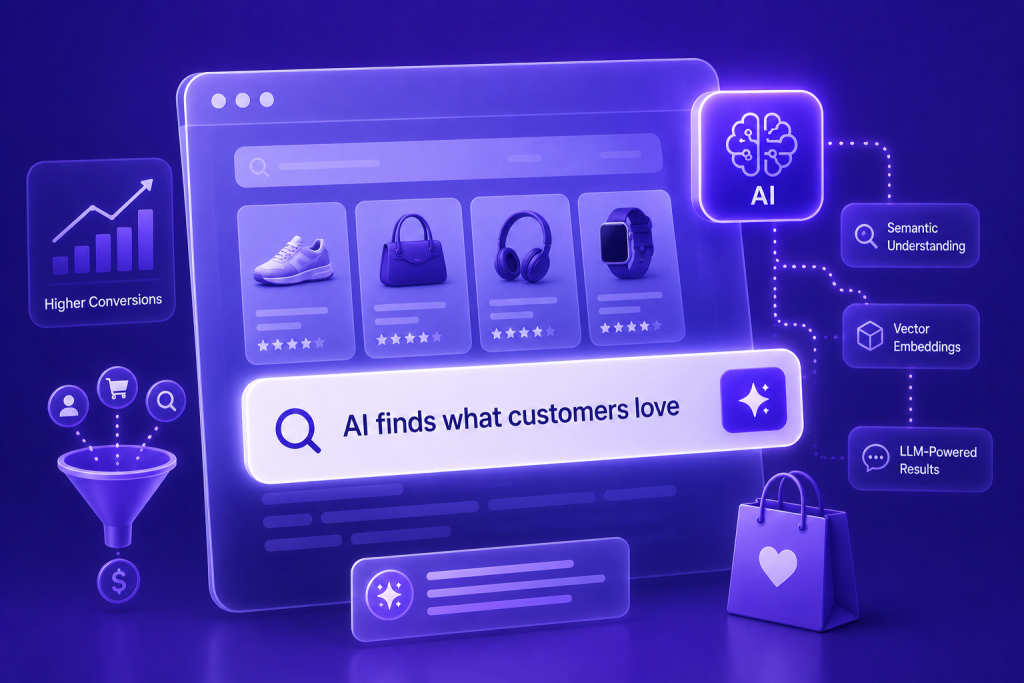
AI E-Commerce Search Guide
Discover how e-commerce AI search is revolutionizing product discovery.
bCloud AI vs Sinequa
AI-feature depth, total cost of ownership, and the flexibility your growth team has to merchandise without filing engineering tickets.
Enterprise AI News & Trends 2026
For enterprise leaders trying to understand what’s actually relevant to their organization.
Frequently asked questions
How is AI search different from what Google does?
Can we implement AI search gradually?
What about security and privacy in AI search?