
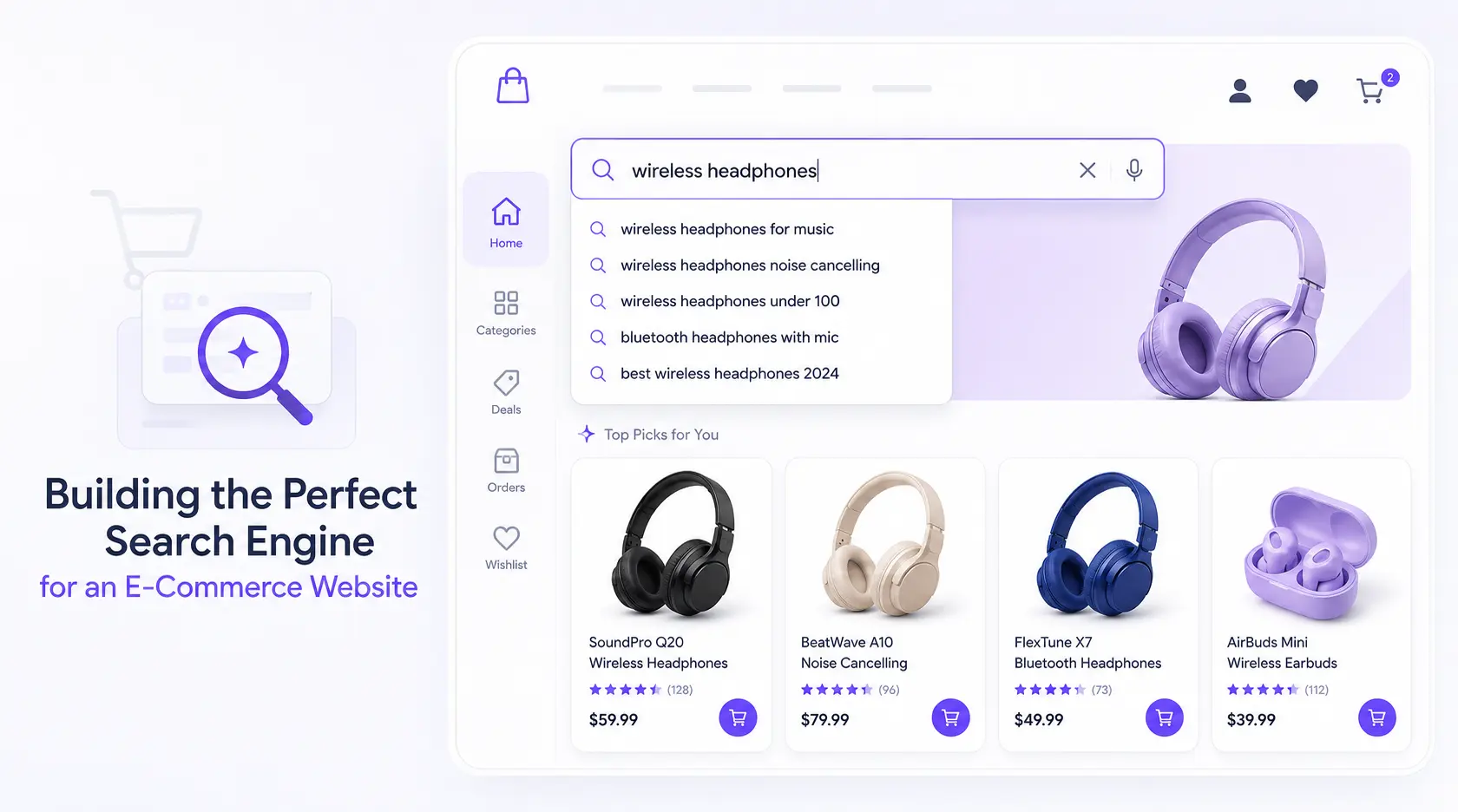
Building the Perfect Search Engine for an E-Commerce Website
$11.3M
Annual revenue impact (avg. retailer)
25–35%
Customers lost to search failures
SOC 2 Type II certified
P50 search response time
Here's the uncomfortable reality:
most e-commerce sites are losing 25-35% of potential customers to search failures.

The search engine for an e-commerce website isn't just another feature.

Most search engines for e-commerce websites were built using technology from 2010-2015: Elasticsearch or Solr with basic keyword matching. These platforms work fine for blogs and documentation sites where users search for specific phrases that appear in content.E-commerce is fundamentally different:
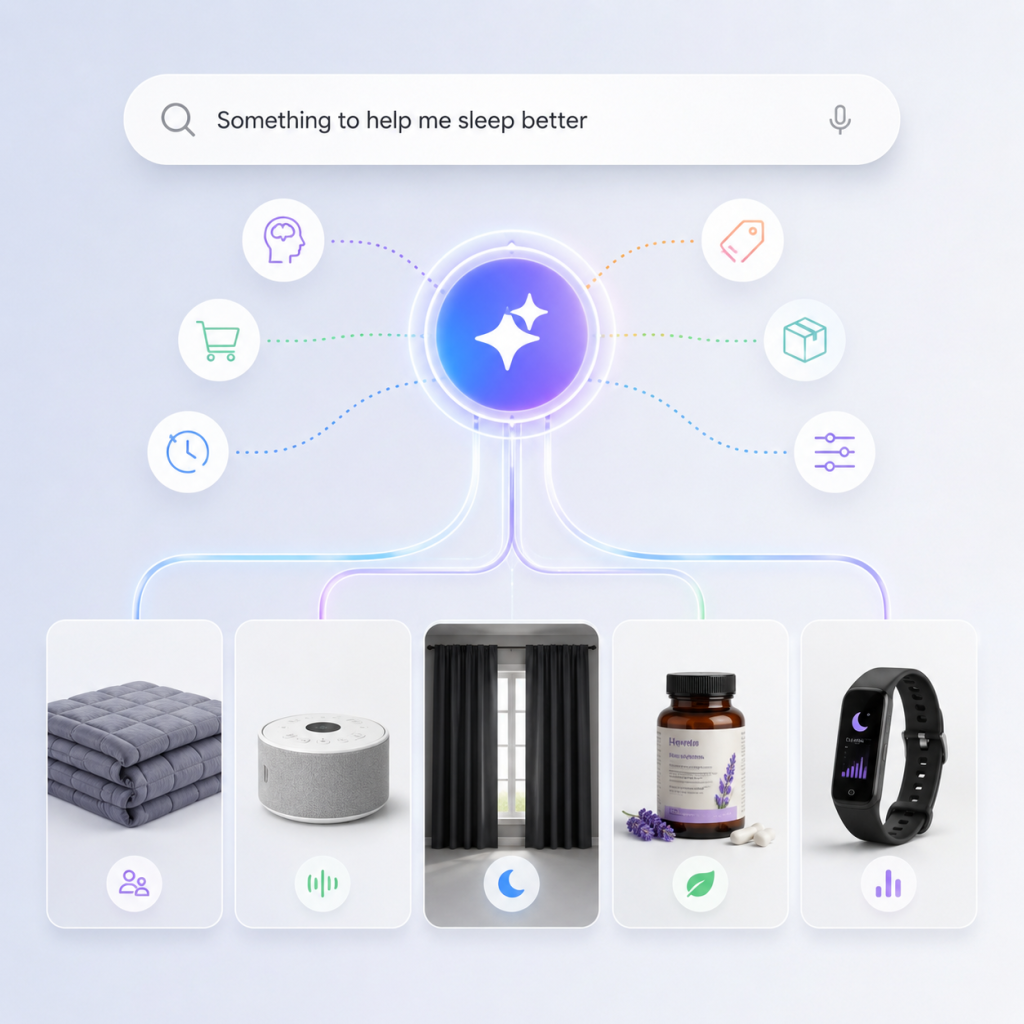
We use GPT-4 class models to interpret natural language queries. “Something to help me sleep better” triggers results for weighted blankets, white noise machines, blackout curtains, supplements, and sleep trackers—products that solve the problem, not just match keywords.
The search engine for an e-commerce website understands:
- Intent (“laptop for gaming” vs. “laptop for students” require different specs)
- Context (search history, cart contents, browsing behavior)
- Synonyms (“couch” = “sofa” = “sectional” automatically)
- Constraints (“under $100,” “free shipping,” “in stock now”)
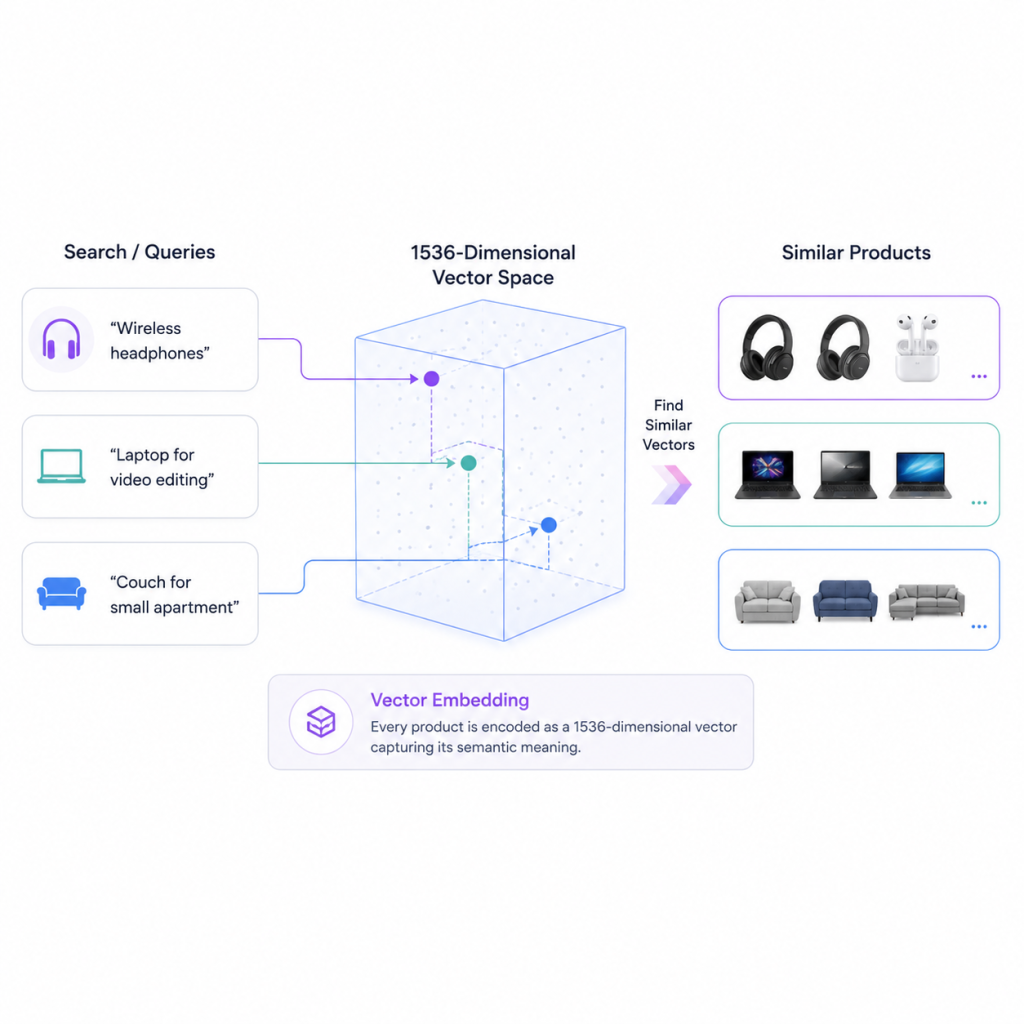
Every product gets encoded as a 1536-dimensional vector capturing its semantic meaning. When customers search, we find products with similar meaning vectors—not just similar words.
This means:
- “Wireless headphones” and “Bluetooth headset” map to nearly identical vectors
- “Laptop for video editing” matches products described as “high-performance computing device for content creators”
- “Couch for small apartment” prioritizes compact furniture even if “small apartment” never appears in product descriptions
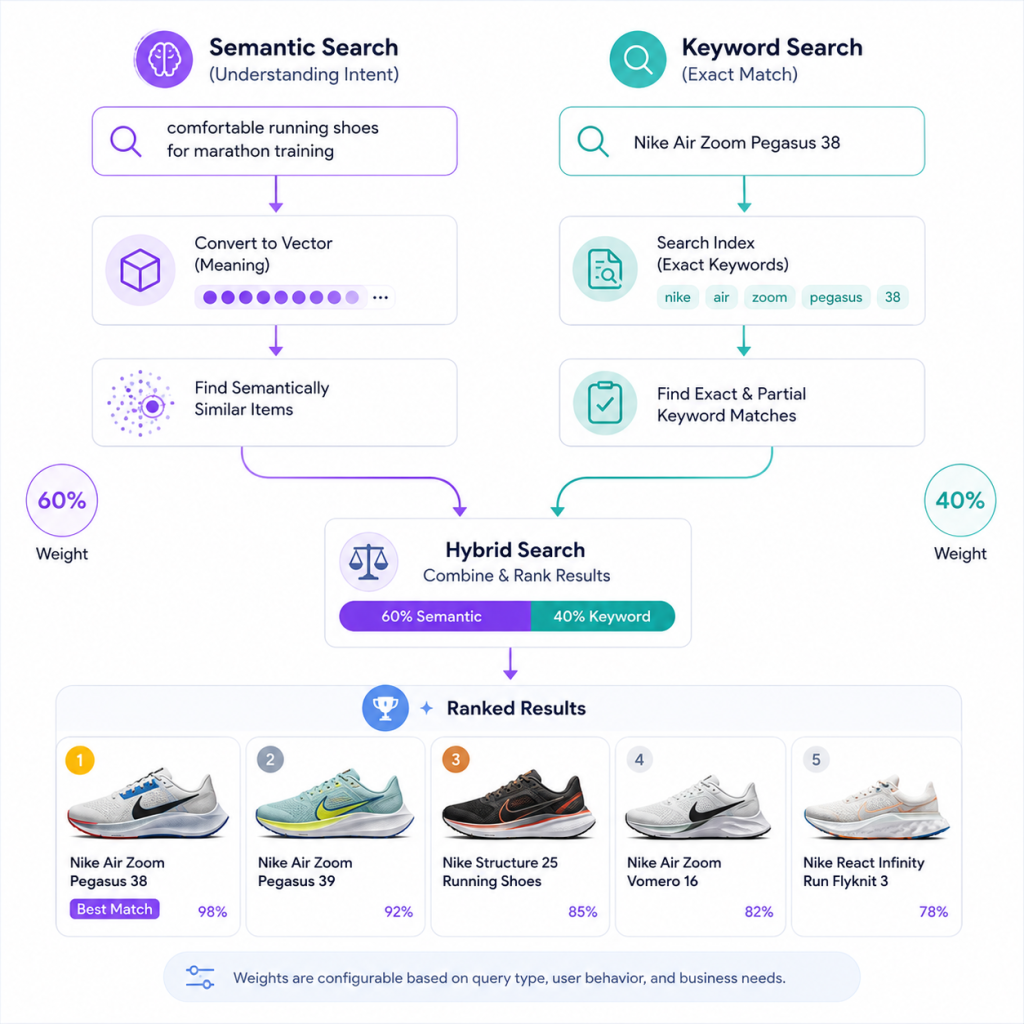
Pure semantic search sometimes misses exact matches (“SKU-12345” should return that exact product). Pure keyword search misses intent. Our hybrid approach combines both:
- 60% semantic (intent understanding)
- 40% keyword (exact matching)
- Configurable based on query type
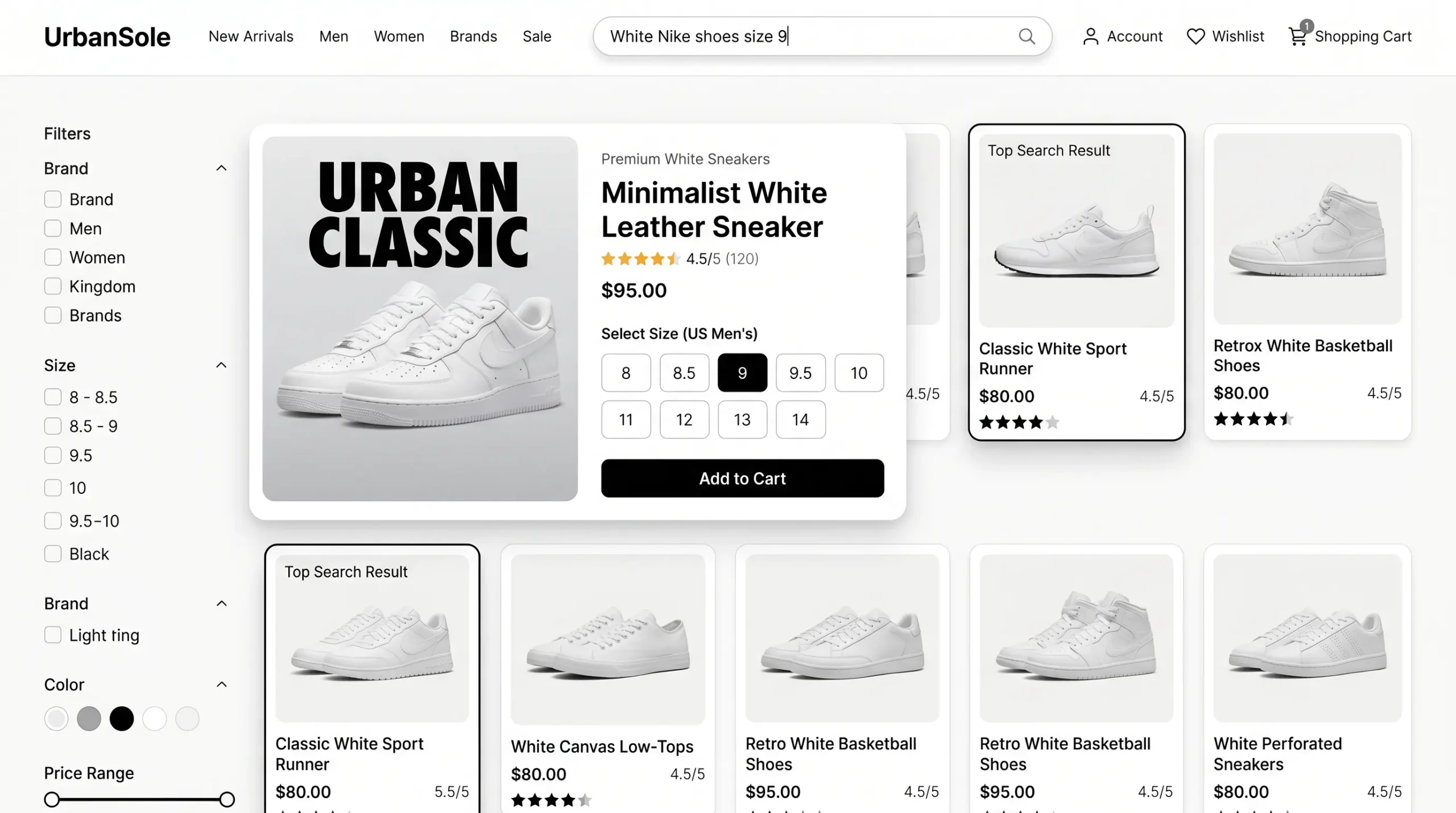
This search engine for an e-commerce website delivers accurate results for both natural language queries (“comfortable running shoes for marathon training”) and precise searches (“Nike Air Zoom Pegasus 38”).
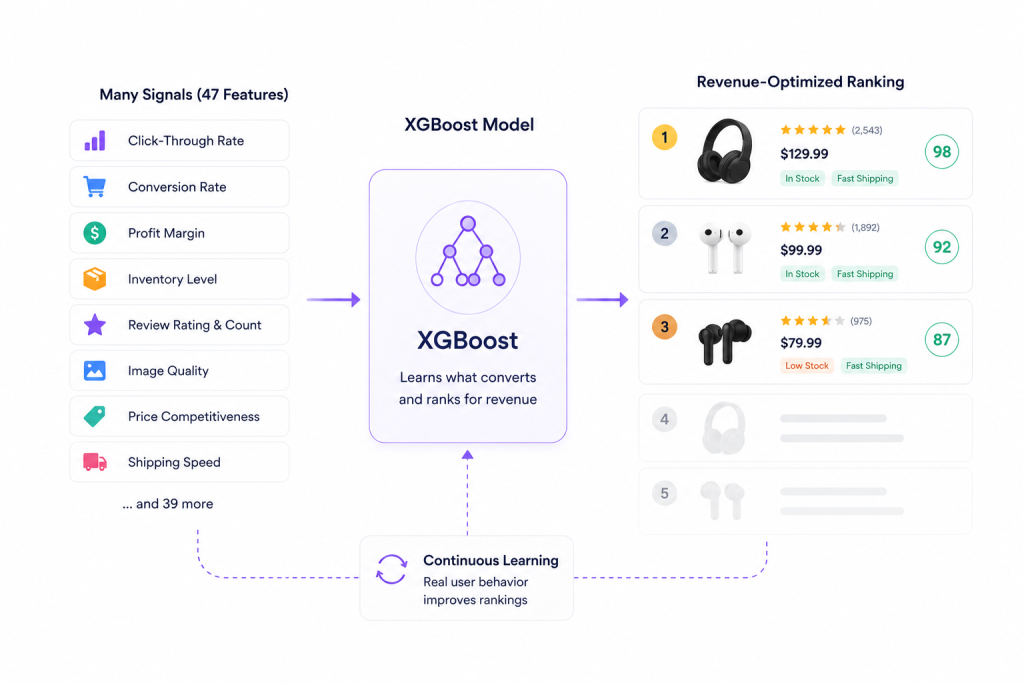
- Historical click-through rate
- Conversion rate by product
- Profit margins
- Inventory levels
- Review ratings and count
- Image quality
- Price competitiveness
- Shipping speed
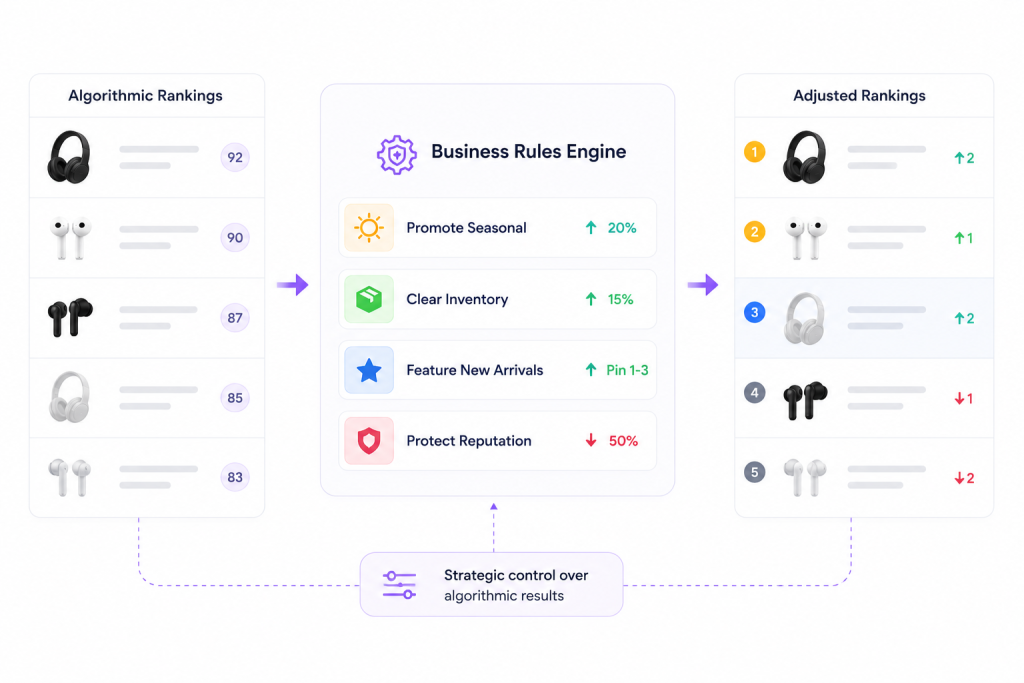
Sometimes algorithmic rankings need strategic overrides:
- Promote seasonal products (“Boost ‘summer’ items by 20% May-August”)
- Clear excess inventory (“Boost products with >100 units by 15%”)
- Feature new arrivals (“Pin new collection to positions 1-3 for ‘dresses’ search”)
- Protect brand reputation (“Bury products with <3 stars by 50%”)
65% of e-commerce traffic happens on mobile devices. Yet mobile search abandonment runs at 74%—dramatically worse than desktop’s 58%. Why?
- Slow loading (1.2+ seconds average)
- Typos from small keyboards (28% of searches)
- Filters hidden behind menus
- Results don’t adapt to screen size
Lightning Performance (156ms) Every millisecond matters on mobile. We’ve achieved 156ms P50 latency through:
- Aggressive edge caching (43% hit rate, 12ms response)
- Application caching (67% hit rate, 45ms response)
- Geographic routing (nearest data center serves request)
- Parallel query execution (keyword + semantic run simultaneously)
Result: Mobile search abandonment drops from
Implementing an intelligent search engine for an e-commerce website requires understanding modern e-commerce search. technology from the ground up. Start with our comprehensive guide to ecommerce search engines that explains semantic AI, vector databases, and hybrid ranking in plain English. For businesses ready to upgrade their product search engine, our implementation guide walks through the complete process — from vendor selection to launch optimization.
Integration & Discovery
Connect to your platform (Shopify, BigCommerce, Magento, WooCommerce, custom), export complete product catalog, and analyze current search performance. We identify quick wins and long-term optimization opportunities.
Data Optimization
Most retailers discover 20-30% of products have missing descriptions, poor titles, or incorrect attributes. Our LLM-powered tools auto-generate missing content, extract attributes from unstructured text, and normalize brand names for consistency.
Algorithm Configuration
Tune hybrid search balance (semantic vs. keyword), configure business rules (inventory-based boosting, margin-based ranking), and set up merchandising controls. Your team learns the dashboard and tests different configurations.
Internal Beta
All employees use the new search engine for an e-commerce website before customers see it. We collect feedback, identify edge cases, refine results, and build team confidence the system works correctly
Limited Public Beta
5% of customer traffic gets new search while 95% continues using old system. We compare conversion rates, revenue per search, and satisfaction metrics in real-time, making adjustments based on performance data
Algorithm Configuration
When metrics consistently show new search outperforms old system, we scale to 100% traffic. Monitoring continues, but the heavy lifting is complete. Your search engine for an e-commerce website is now intelligent, fast, and continuously improving
$892,000
Financial Impact:
Merchandising Without Manual Labor
Full Algorithmic Control:
System decides everything. You can't promote seasonal items or feature new arrivals. Results are unpredictable.
Full Manual Control:
You configure thousands of rules for thousands of queries. Requires dedicated teams, never scales, breaks constantly.
bCloud AI's search engine for an e-commerce website provides a third way: intelligent defaults with strategic overrides.
Pin Products
Lock specific items to top positions: "Winter coats" during November-February shows your new collection first. Automatically expires when winter ends. Configuration takes 30 seconds.
Boost by Attribute
"Increase all 'Sale' items by 15%" promotes your entire promotional catalog. "Boost products with >4.5 stars by 10%" rewards quality automatically.
Time-Based Promotions
"Boost 'back-to-school' products by 25% from July 15 - September 15" runs automatically without manual start or stop.
A/B Testing
Split traffic 50/50 between ranking strategies, measure conversion difference, let data decide what works best.
Top Searches Dashboard
• Most common queries (focus optimization here)
• Trending searches (emerging demand to capitalize on)
• Zero-result queries (gaps in catalog)
• High-traffic, low-conversion searches (merchandising opportunities)
Product Performance Reports
• Which products appear most in search
• Which convert best when shown
• Which have high views but low conversion (pricing issues?)
• Which never appear despite strong inventory (discoverability problems)
Revenue Attribution
Understand search's true contribution with multi-touch attribution. Most retailers discover their search engine drives 40–60% of total revenue.
Conversion Funnel Analysis
Where do searches fail? Full breakdown shows precisely where customers drop off and why.
Certifications
SOC 2 Type II (annual third-party audits) ISO 27001 (information security management) GDPR compliant (European customer protection) CCPA compliant (California privacy rights) PCI DSS adherent (never touches payment data)
Reliability
99.99% uptime SLA (financial penalties if missed) Multi-region redundancy (automatic failover) Real-time monitoring (we detect issues before you do) Instant rollback (zero-downtime changes)
Data Privacy
Your data stays yours (never sold or shared) Configurable retention (30-365 days) Right to deletion (GDPR/CCPA compliant) Anonymized analytics (PII automatically stripped)
Related posts
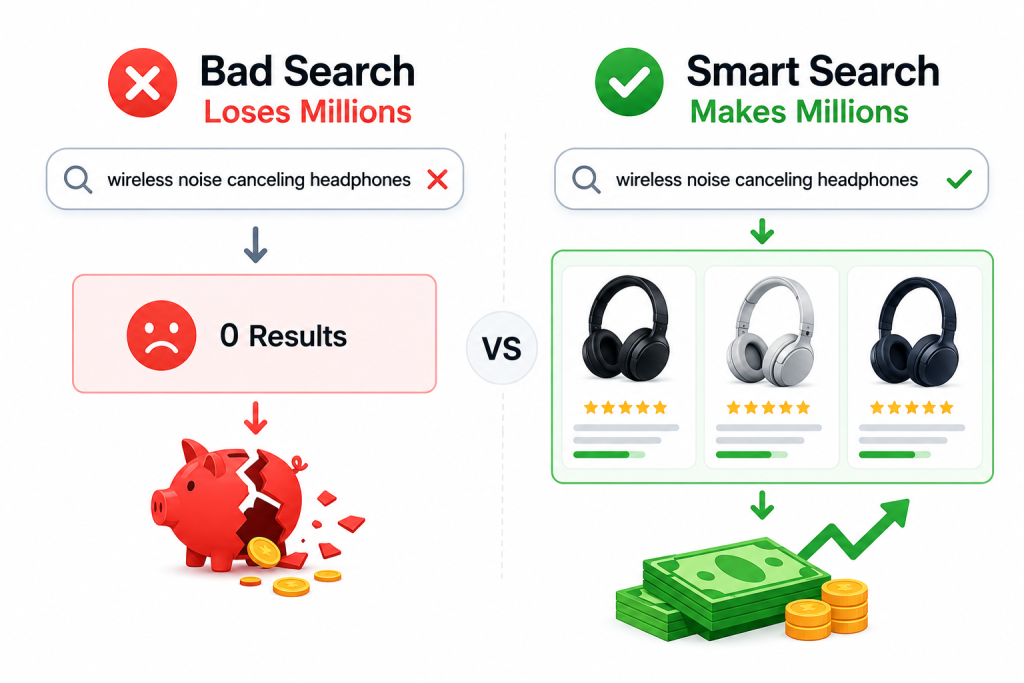
Product Search Engine
Intelligent AI search helps customers find products instantly using semantic search, vector ranking.
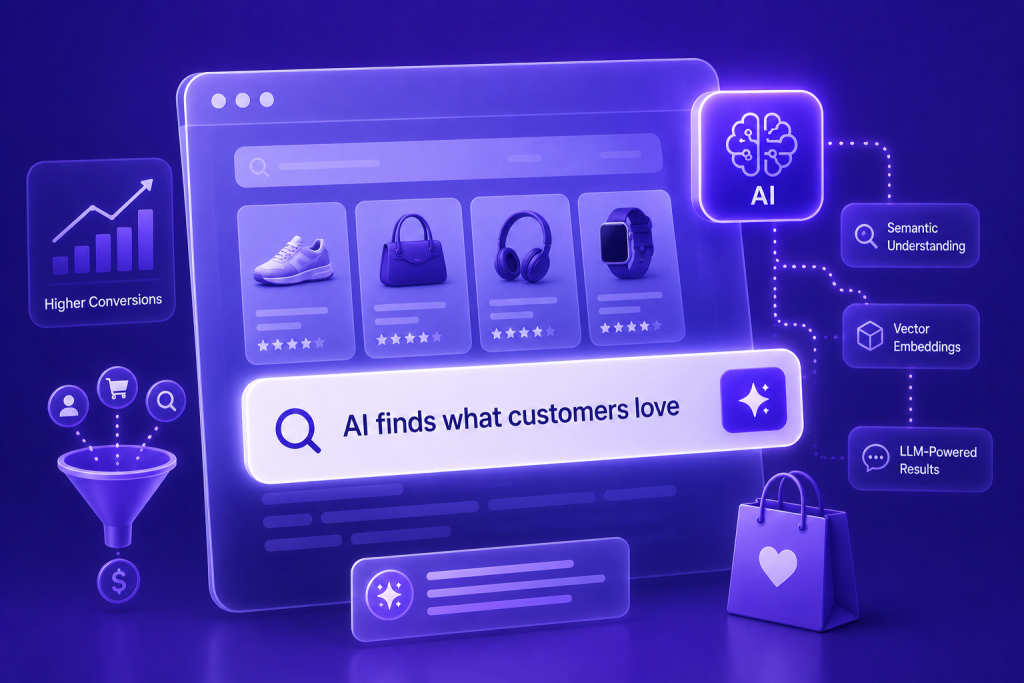
AI E-Commerce Search Guide
Discover how e-commerce AI search is revolutionizing product discovery, .
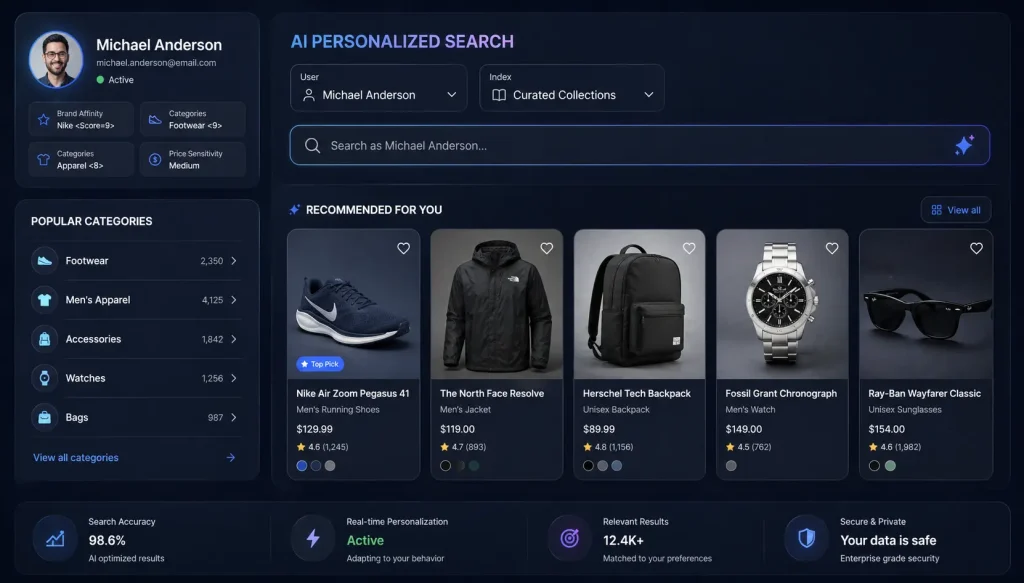
Personalization
Create dynamic, data-driven experiences that adapt in near real time.

E-Commerce Search Engine
E-commerce search engine makes all the difference.
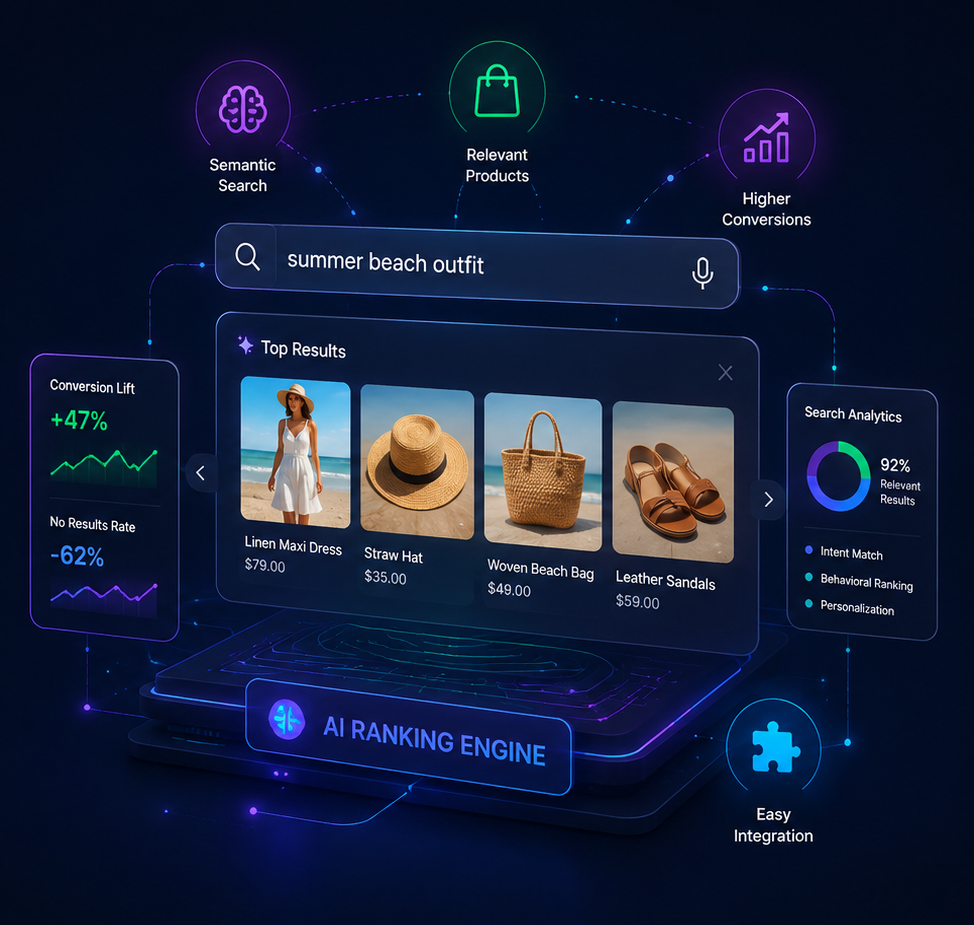
Best e-commerce search
Comparing OpenSearch and bCloud AI as your e-commerce search engine?
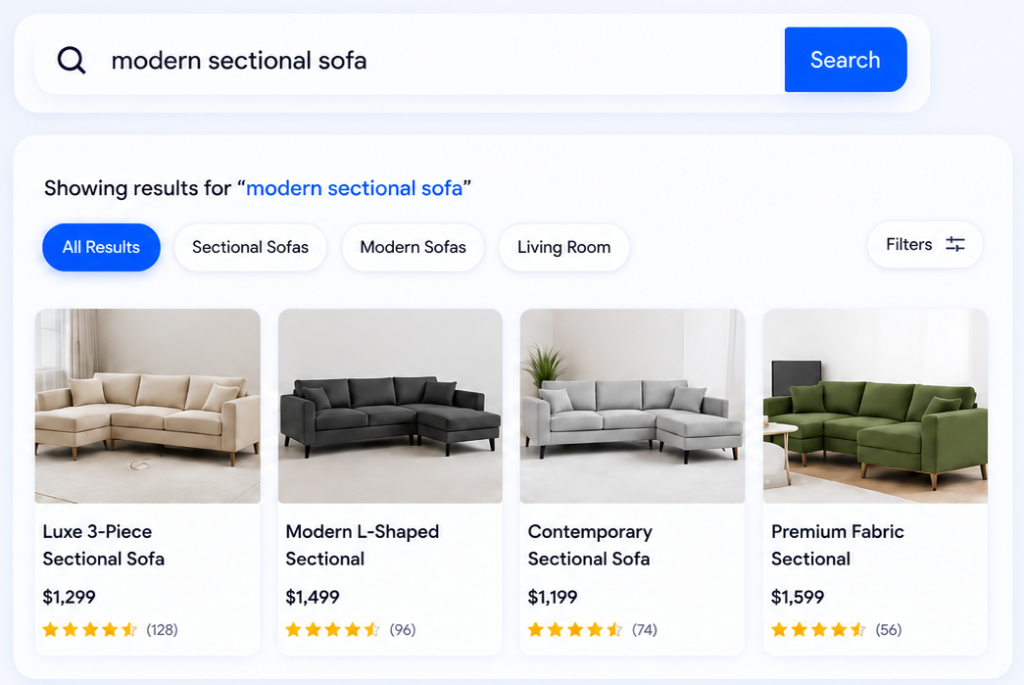
E-Commerce Search
Transform product discovery with AI-powered search experiences designed.
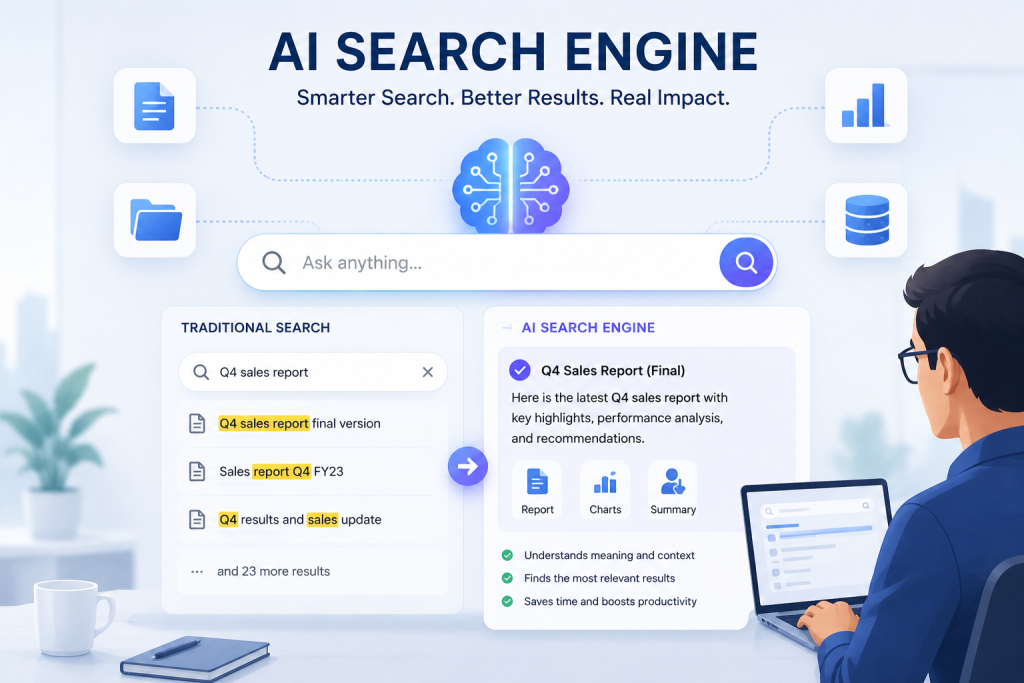
AI Search Engine
An AI search engine represents one of the most transformative technologies available to modern organizations.
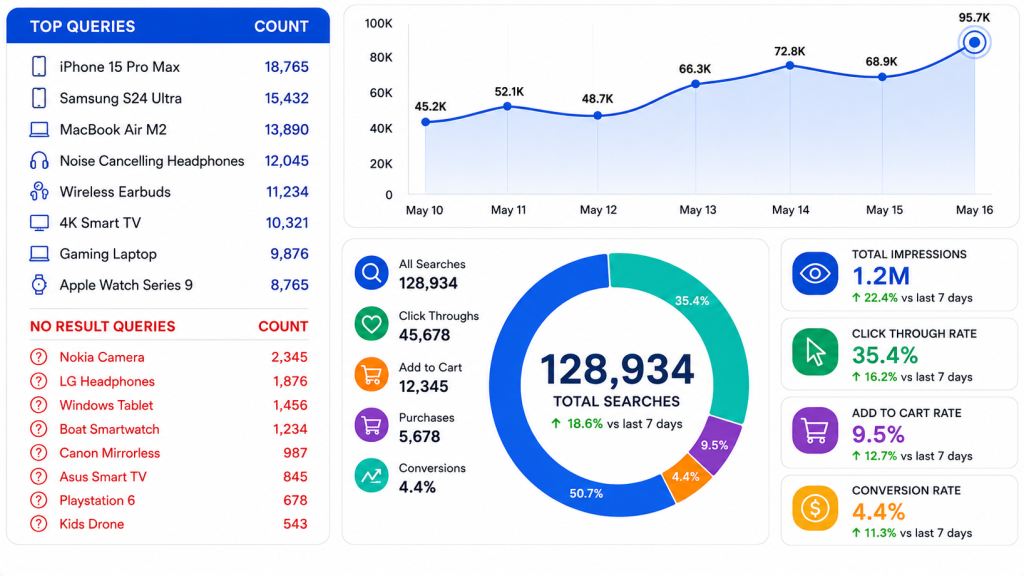
Analytics
Convert raw user behaviour into concrete next steps with a comprehensive analytics suite built for search, discovery, and recommendation intelligence.
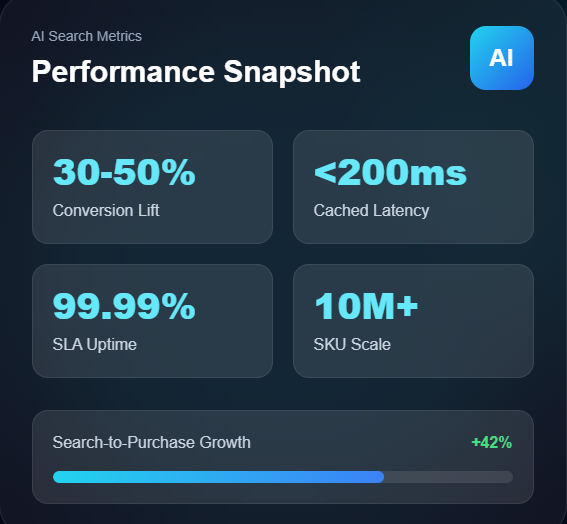
bCloud AI vs Bloomreach
Bloomreach sits firmly in the enterprise tier of search and digital experience platforms.
AI Recommendations
Leverage AI-driven behavioural signals to suggest products and content your audience genuinely wants — boosting engagement, cart size.
Frequently asked questions
What is a search engine for an e-commerce website?
Why do traditional search engines fail for e-commerce?
How much revenue does poor site search actually cost?
What features make a great search engine for an e-commerce website?
How does AI search handle typos and mobile shoppers?
How long does it take to implement AI search on an e-commerce website?