
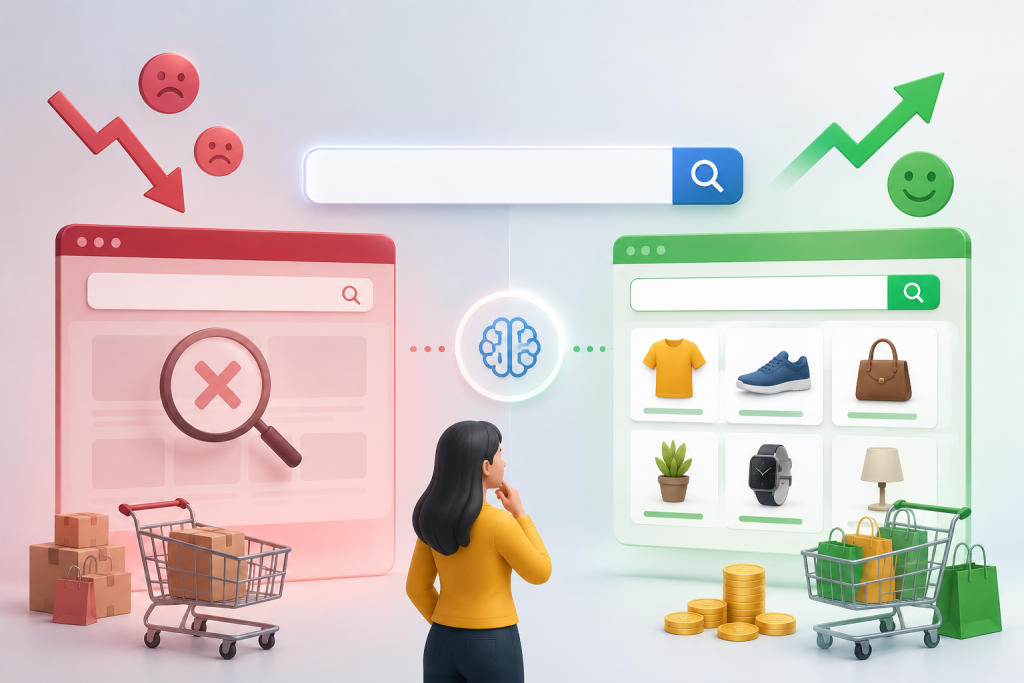
A customer searches for “comfortable running shoes for flat feet under $120” and gets irrelevant products. Another searches for “waterproof hiking boots” and sees zero results. The intent exists. The demand exists. The products may even exist. But poor search experiences prevent customers from finding them.
That’s why modern ecommerce brands are replacing traditional keyword-based search with AI-powered search experiences that understand intent, context, and natural language.
What is an ecommerce search engine?
Why traditional ecommerce search no longer works
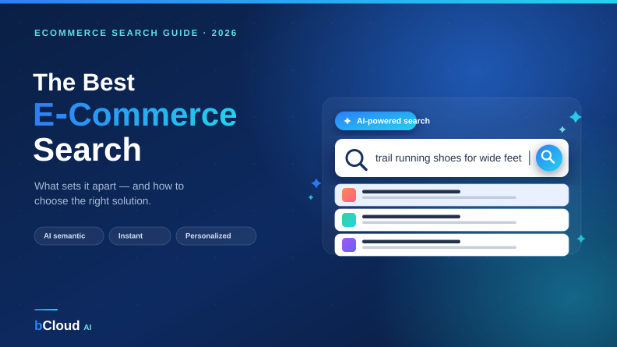
Customer behavior has changed dramatically. People no longer search using short keyword fragments — they search the way they’d talk to another person.
| How shoppers used to type | How shoppers search now |
|---|---|
| running shoes | comfortable running shoes for flat feet |
| office chair | best office chair for back pain |
| winter jacket | warm waterproof jacket for hiking in fall |
Traditional search struggles with these conversational queries because it focuses on literal keyword matching. Modern shoppers expect search to understand context, handle natural language, recognize synonyms, recover from typos, and recommend relevant alternatives automatically.
How poor search hurts revenue
Poor search performance affects much more than user experience. It directly impacts revenue, conversion rate, customer satisfaction, and retention.
Zero-result searches
The empty results page is one of the most expensive ecommerce problems. Shoppers leave immediately — often when the products exist in the catalog, but search fails to connect the query to inventory. Even small percentages add up to significant lost revenue.
Low relevance
Customers lose confidence when irrelevant products top the results. Someone searching “comfortable running shoes for women” shouldn’t see casual sneakers or children’s footwear. Poor relevance creates friction and cuts purchase intent.
Search abandonment
When shoppers repeatedly fail to find what they need, they stop searching altogether — raising bounce rates, reducing engagement, and sending customers to competitors with better discovery.
Manual search management
Legacy platforms need constant maintenance: synonyms, ranking rules, typo handling, attribute tuning. As catalogs grow, manual optimization becomes impossible to scale.
How AI-powered search changes ecommerce
AI search transforms product discovery by understanding meaning instead of simply matching words. Modern platforms combine multiple technologies:
Semantic Search
Vector Search
Behavioral Learning
Personalization
AI Ranking
Conversational Search
Generative AI Recommendations
These technologies work together to understand shopper intent and connect customers with products more accurately.
A modern Ecommerce Search Engine helps shoppers find the right products by understanding intent, context, and natural-language queries instead of relying only on exact keyword matching. Advanced search platforms use semantic search, vector search, personalization, behavioral learning, and AI-powered ranking to connect shoppers with products that better match their needs. By improving relevance, reducing zero-result searches, and adapting results to individual customer behavior, an intelligent ecommerce search engine can make product discovery faster, reduce search abandonment, and help online retailers turn high-intent searches into more conversions and revenue.
What makes AI search different?
AI-powered ecommerce search evaluates far more than keywords. It considers customer intent, historical interactions, behavioral signals, product relationships, and semantic meaning.
When someone searches for “comfortable shoes for long airport walks,” the system understands travel context, comfort requirements, and likely use cases — and instead of returning random products containing the word “comfortable,” it prioritizes products that genuinely match the shopper’s needs.
The role of semantic search
AI Search Grader by bCloud AI
Grade your ecommerce search in 10 quick questions
31% of ecommerce searches return zero results — and most shoppers who hit a dead end leave for a competitor. How does your store's search stack up?
Answer 10 short questions and get your AI search score, plus a personalized report to fix the gaps. Free, takes about 2 minutes.
No signup needed to take the quiz.
Understanding intent…
Scoring your answers across relevance, AI, experience, and insights.
Your AI search score is ready
Tell us where to send your personalized report. You'll see your score and recommendations right away.
Your score by pillar
Personalized recommendations
Fix the gaps in weeks, not quarters
bCloud AI replaces keyword-only search with hybrid AI retrieval — sub-200ms responses, 99.99% uptime, and conversion lifts of up to 40% across 50+ implementations.
Personalization is becoming essential
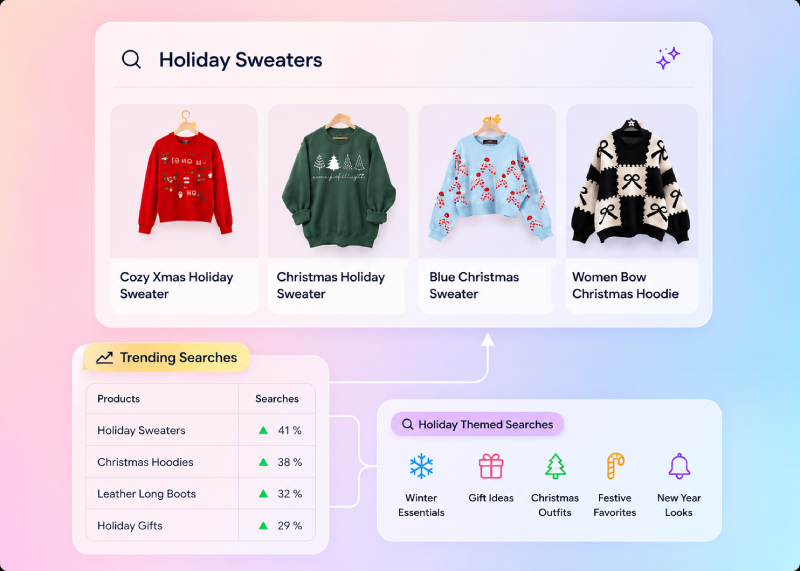
Every customer shops differently. Modern search engines personalize results using signals such as:
Purchase behavior
Location
Device type
Product preferences
Engagement patterns
Two shoppers entering the same query may receive completely different results, because the search engine adapts to their unique preferences and behavior.
Conversational search is changing ecommerce
Customers increasingly expect search experiences that feel like conversations. Instead of typing simple keywords like “red dress,” shoppers now ask:
“I need a red dress for a cocktail party next weekend.” Conversational AI can understand context, occasion, preferences, budget, style requirements, and follow-up questions — so the experience feels more like talking to a knowledgeable sales associate than using a search box.
What to look for in a modern ecommerce search platform
| Look for | Why it matters |
|---|---|
| Semantic understanding | Goes beyond keywords to interpret meaning |
| Natural language search | Understands conversational, full-sentence queries |
| Intelligent zero-result recovery | Prevents dead-end empty results pages |
| Personalization | Adapts results to each shopper’s behavior |
| Fast performance | Near-instant responses that keep shoppers engaged |
| Behavioral learning | Improves rankings automatically over time |
| Conversational AI capabilities | Supports guided, assistant-style shopping |
Common search mistakes to avoid
Relying entirely on keyword matching.
Ignoring search analytics and zero-result queries.
Manually managing thousands of synonyms.
Treating mobile search as an afterthought.
Failing to personalize results.
Using outdated ranking rules that never adapt.
How bCloud AI solves ecommerce search problems
Frequently asked questions
What is an ecommerce search engine?
An ecommerce search engine helps customers find products within an online store and determines which products appear for each search query.
Why do zero-result searches matter?
Zero-result searches often cause shoppers to abandon the site, creating lost revenue opportunities even when relevant products exist in the catalog.
What is semantic search?
Semantic search understands meaning and intent instead of relying solely on exact keyword matches, improving relevance and reducing failed searches.
How does AI improve ecommerce search?
AI understands customer intent, learns from behavior, personalizes results, improves ranking quality, and supports conversational product discovery.
What is conversational search?
Conversational search allows shoppers to interact naturally using full sentences and follow-up questions, creating a more intuitive shopping experience.
Turn search into a revenue engine.
bCloud AI helps ecommerce brands deliver faster, smarter, and more personalized product discovery with semantic search, conversational AI, and intelligent ranking optimization.
bcloud.ai