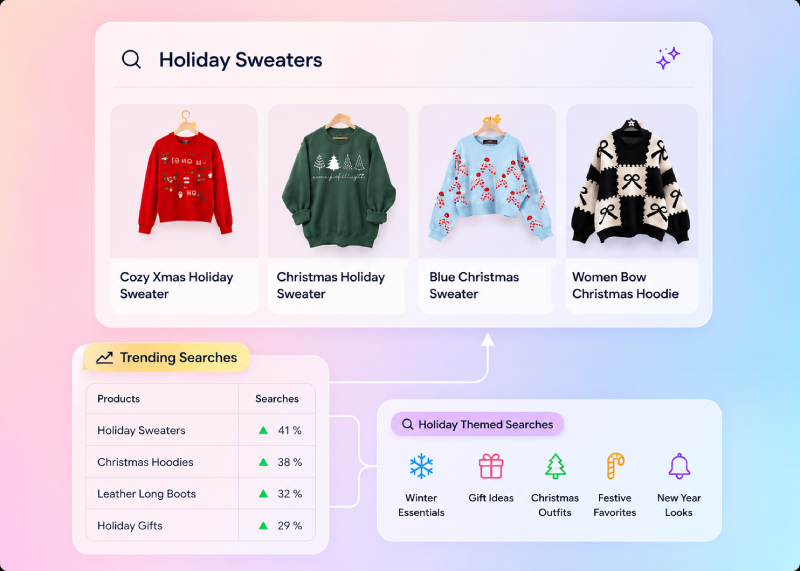

What Is an AI Shopping Assistant?
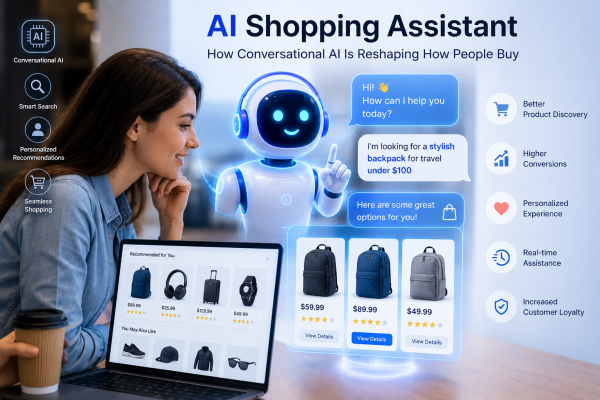
Why an AI Shopping Assistant Matters
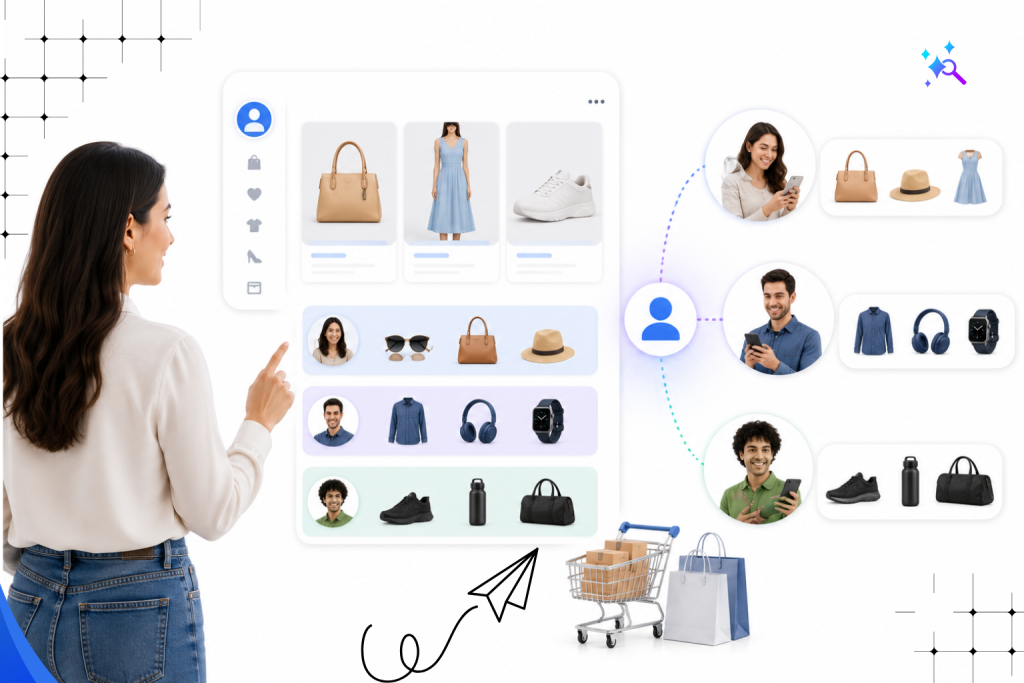
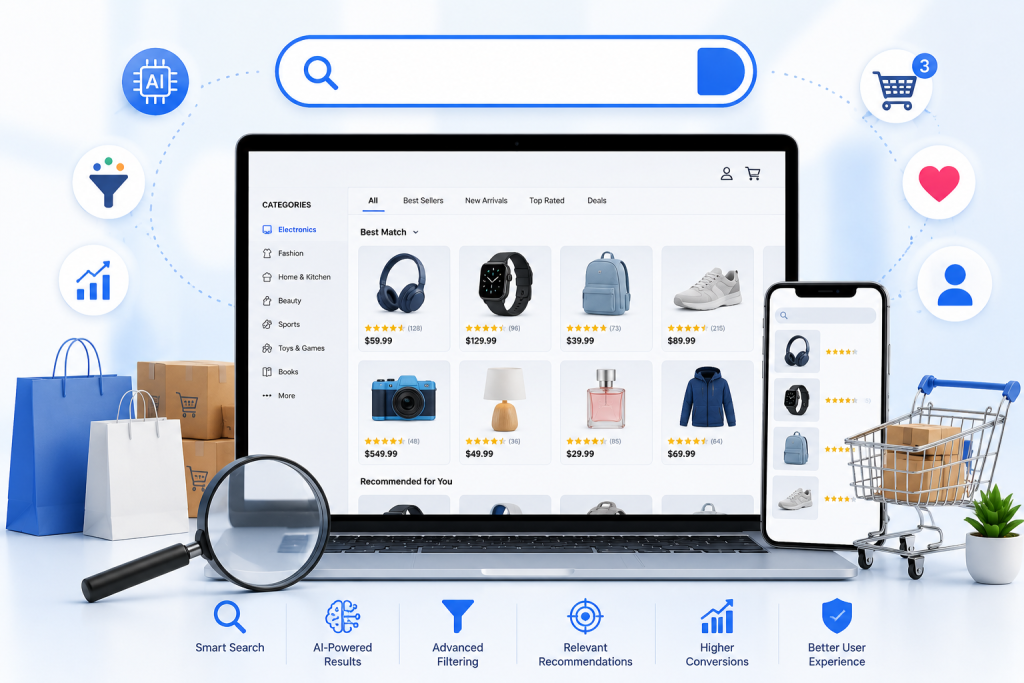
Shopper behavior has fundamentally shifted. People now type full sentences instead of keywords, expect stores to understand context, and increasingly start product research on AI tools before a retailer ever hears from them. A traditional search box can’t meet those expectations — but a conversational assistant can. It captures intent that keyword search loses, guides shoppers to a confident decision faster, and converts hesitation into purchases. For retailers, the assistant is also a strategic answer to a real market change: your customers may start shopping on ChatGPT before they reach your site, which means being both discoverable inside those platforms and offering a comparable experience onsite is now table stakes for competing on discovery. That ties directly to your broader AI visibility for ecommerce.
AI Search Grader by bCloud AI
Grade your ecommerce search in 10 quick questions
31% of ecommerce searches return zero results — and most shoppers who hit a dead end leave for a competitor. How does your store's search stack up?
Answer 10 short questions and get your AI search score, plus a personalized report to fix the gaps. Free, takes about 2 minutes.
No signup needed to take the quiz.
Understanding intent…
Scoring your answers across relevance, AI, experience, and insights.
Your AI search score is ready
Tell us where to send your personalized report. You'll see your score and recommendations right away.
Your score by pillar
Personalized recommendations
Fix the gaps in weeks, not quarters
bCloud AI replaces keyword-only search with hybrid AI retrieval — sub-200ms responses, 99.99% uptime, and conversion lifts of up to 40% across 50+ implementations.
How Does an AI Shopping Assistant Work?
Behind a smooth conversation is a coordinated stack of AI capabilities working together.
Natural Language Understanding
Large language models interpret what the shopper actually means, including intent, constraints, tone, and style — turning messy, human phrasing into structured queries.
Semantic and Vector Search
The assistant retrieves products by meaning using semantic search, so descriptive queries surface the right items even when there is no exact keyword match in titles.
Context and Memory
Good assistants remember what the shopper said earlier — budget, size, preferences — and refine results as the dialogue continues, matching how a human associate would guide the conversation.
Grounded, On-Brand Responses
To stay accurate, leading assistants ground every response in your verified catalog data so recommendations are real, in-stock, and on-brand — not invented by the model.
Personalization Across Sessions
Behavioral signals from browsing, saved items, and past purchases let the assistant tailor recommendations to each shopper across visits, not just within a single session.
Types of AI Shopping Assistants
The category has split into three distinct forms, and each matters for different reasons.
Onsite AI Shopping Assistants
Deployed directly on your store — usually as a chat widget or an intent-aware search experience — the onsite version is the surface you fully control. It gives every shopper the equivalent of a knowledgeable in-store associate, on demand, at scale.
Third-Party AI Assistants (ChatGPT, Gemini, Perplexity)
External AI platforms are increasingly acting as shopping assistants themselves, recommending specific products in response to natural-language buying requests. Getting cited here is a fast-growing discovery channel and a core piece of AI visibility.
Voice Shopping Assistants
Alexa, Google Home, Siri, and similar platforms let shoppers search and buy by speaking — the same conversational logic delivered through voice. This is the entry point for voice commerce.
9 Proven Wins From a Conversational AI Assistant
| # | Win | Why it matters |
|---|---|---|
| 1 | Captures intent search loses | Understands vague, descriptive, multi-part requests |
| 2 | Higher conversion | Guides shoppers to a confident decision faster |
| 3 | Larger baskets | Recommends relevant add-ons in the flow |
| 4 | Fewer zero-results | Semantic understanding recovers failed searches |
| 5 | Always-on service | Instant, personalized help 24/7 at any scale |
| 6 | Loyalty | A helpful assistant makes shopping feel effortless |
| 7 | Insight | Real conversations reveal exactly what customers want |
| 8 | AI visibility | Same catalog data feeds ChatGPT and Gemini answers |
| 9 | Future-ready | Built for how shoppers already prefer to buy |
Conversational Assistants vs. Traditional Search
The two do different jobs.
| Aspect | Traditional search | AI shopping assistant |
|---|---|---|
| Interaction | Type keywords, scan results | Describe needs in natural language |
| Discovery | Browse and filter | Guided recommendations and comparisons |
| Best for | Shoppers who know exactly what they want | Shoppers exploring or with complex needs |
| Help | FAQ pages and static content | Contextual, instant answers |
The two aren’t mutually exclusive — the strongest stores combine efficient search with a conversational layer for shoppers who want guidance, exactly the pattern covered in our conversational commerce guide.
Use Cases Where a Shopping Assistant Wins
Assistants deliver the most value where guidance matters most. Fashion and beauty use them for style advice and fit. Electronics and appliances use them to translate vague needs (“a quiet laptop for editing”) into the right specs. Home and furniture use them to navigate large, attribute-heavy catalogs. Health and wellness use them for sensitive, question-led discovery where a helpful conversation lowers friction. B2B distributors use them to help buyers describe complex requirements in plain language. In each case, the common thread is a catalog too deep or too technical to browse comfortably — exactly where a knowledgeable, always-available assistant shines.
How AI Shopping Assistants Improve the Buying Journey
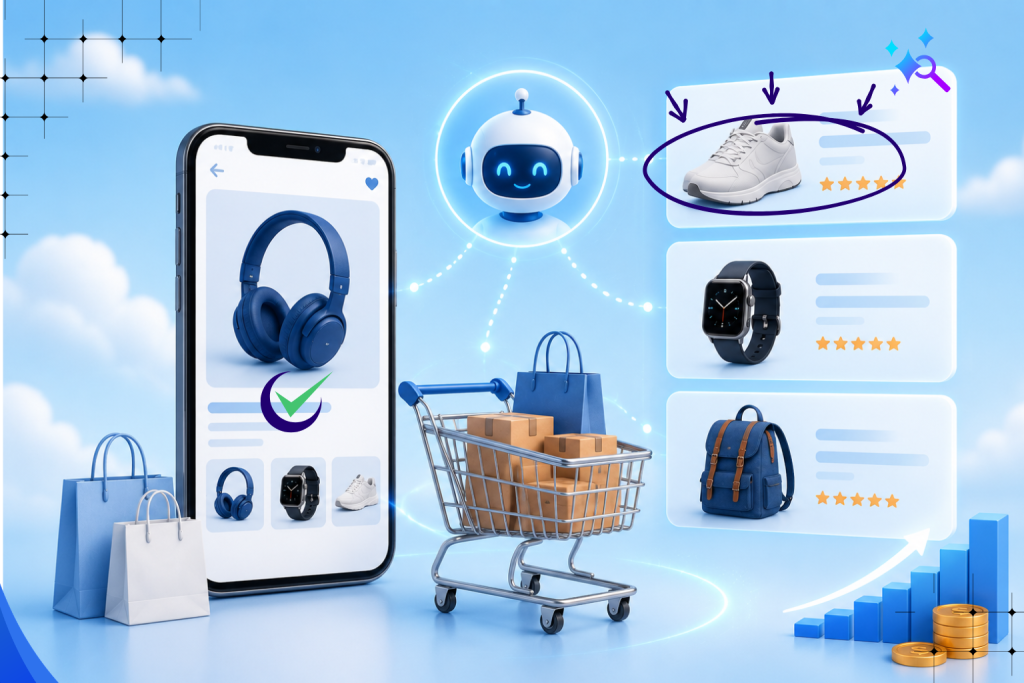
An AI shopping assistant can make the buying journey more efficient by helping shoppers move from uncertainty to a confident decision without forcing them through multiple searches, filters, and product pages. Instead of simply returning a list of products, it can understand the shopper’s goals, ask or interpret relevant constraints, compare suitable options, and refine recommendations as the conversation continues. This is especially valuable when shoppers are unsure about specifications, comparing several products, or searching for something that is difficult to describe with traditional keywords. By combining conversational understanding, semantic search, catalog data, and personalization, the assistant creates a more guided experience that reduces search friction while helping retailers turn product discovery into meaningful purchasing opportunities.
How to Add a Shopping Assistant to Your Store
Start with the foundation and build outward. First, upgrade your onsite search so it understands natural language and intent — a conversational layer on top of weak keyword search will hit a ceiling fast. Second, ground responses in clean, structured catalog data so every recommendation is accurate, in-stock, and on-brand; that’s where search enrichment pays off. Third, add the conversational layer — a chat widget or intent-aware search interface — that holds context and guides shoppers to a purchase. Fourth, layer in personalization so the dialogue adapts to each customer across visits. Finally, extend to third-party assistants, messaging, and voice as your onsite experience proves value. Sequencing matters: a solid conversational-search core first, channels on top.
Common Assistant Mistakes
A few mistakes limit results. Deploying a chatbot on top of weak, keyword-only search so it can’t actually find products. Letting the AI invent answers instead of grounding them in verified catalog data. Ignoring context, so the conversation forgets what the shopper just said. Optimizing only for the onsite assistant while ignoring how ChatGPT and Gemini describe your products. And treating the assistant as a gimmick rather than a core discovery experience with its own metrics. The fix is to build on real AI search, ground every response in clean data, connect it to your broader AI visibility strategy, and design the assistant to guide shoppers to a purchase — not just chat.
Measuring Assistant Performance
Treat the assistant as a first-class channel with its own metrics. Track assistant engagement rate, conversion rate on assisted sessions versus self-serve, average order value from assisted sessions, resolution rate before human handoff, and the topics shoppers raise most. Those topics are a goldmine — they reveal gaps in your catalog, product data, and content that, once fixed, improve every channel at once. Reviewing them monthly turns the assistant into a continuous source of shopper insight, not just a sales surface.
How bCloud AI Powers Your Shopping Assistant
bCloud AI is built for exactly this shift. Its intent-aware, conversational search understands natural, full-sentence requests; its hybrid semantic engine returns relevant products grounded in your catalog data; and its generative experiences turn results into guided, dynamic discovery — all sharing one platform with voice, visual, and personalization. Because every response is grounded in verified catalog data, recommendations are accurate, in-stock, and on-brand. And because the same engine feeds every surface, your store stays consistent whether a shopper reaches you through ChatGPT, on the site, or by voice. To compare AI-native platforms, see our roundup of the best ecommerce search engines for 2026.
Signs Your Store Needs an AI Shopping Assistant
Not every ecommerce business realizes when traditional search has reached its limits. If your store shows any of the signs below, an AI shopping assistant can significantly improve the customer experience.
Frequent Zero-Result Searches
Customers search using natural language, but your current search engine struggles to understand their intent.
Large Product Catalogs
As your catalog grows, shoppers need guided recommendations instead of manually browsing hundreds of products.
Repetitive Customer Questions
Support teams repeatedly answer the same product, compatibility, or buying questions that AI can handle instantly.
Low Search Conversion
Visitors search for products but leave without purchasing because they cannot quickly find the right item.
Bottom line: If shoppers struggle to discover products or frequently abandon searches, it’s a strong indicator that your store is ready for an AI shopping assistant that understands intent, guides decisions, and delivers personalized recommendations.
Frequently Asked Questions
What is an AI shopping assistant?
An AI shopping assistant is a conversational AI that helps customers discover, evaluate, and buy products through natural back-and-forth dialogue — either on a retailer’s own store or through platforms like ChatGPT, Gemini, and Perplexity. It understands descriptive requests and returns real, catalog-grounded recommendations.
How does an AI shopping assistant work?
It combines natural language understanding (LLMs interpreting meaning), semantic and vector search (retrieving products by meaning), context and memory (refining across a dialogue), grounded responses (answers based on verified catalog data), and personalization to tailor recommendations to each shopper.
What are examples of AI shopping assistants?
Examples include ChatGPT, Gemini, and Perplexity acting as third-party shopping assistants; onsite AI chat and intent-aware search on retailer stores; and voice assistants like Alexa, Google Home, and Siri that shoppers use to search and buy by voice.
Why is an AI shopping assistant important for retailers?
Shoppers increasingly start product research on AI platforms and expect natural-language experiences on retailer sites. An AI shopping assistant captures intent that traditional search loses, guides confident purchases, lifts conversion and order value, and connects to broader AI visibility across channels.
What is the difference between an AI shopping assistant and a chatbot?
Traditional chatbots follow scripts and struggle with anything off-script. An AI shopping assistant uses large language models and semantic search to understand intent, hold context, and recommend real products from a live catalog — turning conversation into a genuine discovery experience.
How do I add an AI shopping assistant to my store?
Start by upgrading onsite search to understand natural language, ground responses in clean catalog data, add a conversational chat or intent-aware search layer that holds context, layer in personalization, then extend to third-party assistants and voice. Sequence matters: solid AI search first, channels on top.
Does an AI shopping assistant increase sales?
Yes. By understanding intent, reducing dead-end searches, surfacing relevant recommendations, and guiding shoppers to a confident purchase, assistants commonly lift conversion, average order value, and repeat purchases while shortening time-to-buy.
What is the best AI shopping assistant platform for ecommerce?
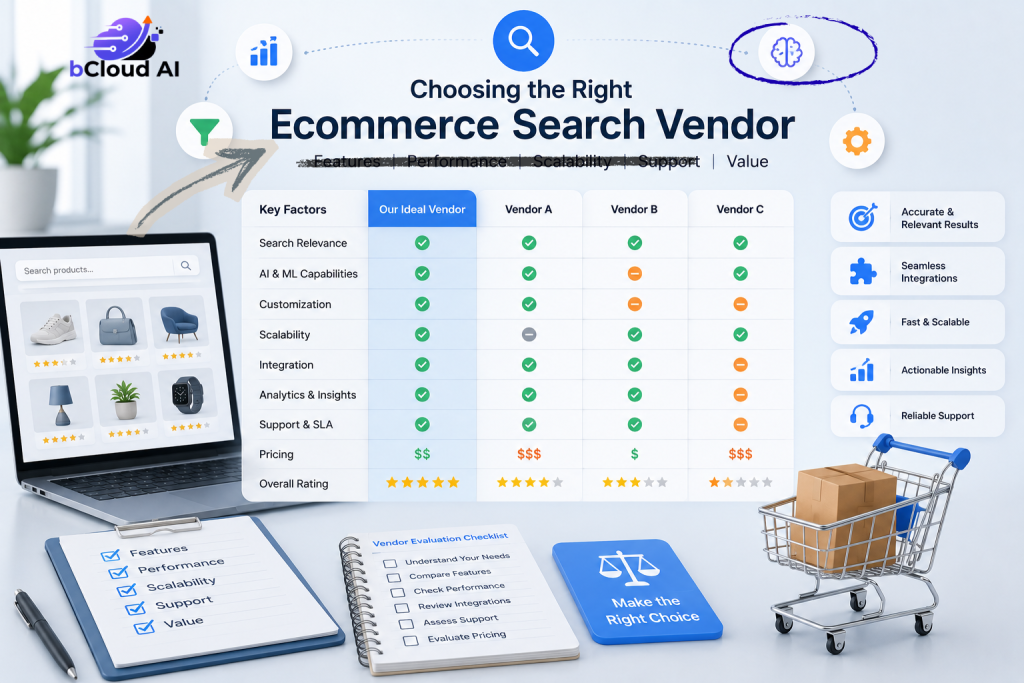
The best platform combines natural language understanding, semantic search, context and memory, and responses grounded in your catalog data — all sharing one engine with voice, visual, and personalization. Leading AI-native options include bCloud AI, whose IntentAI and generative experiences are built for this shift.
Give Every Shopper an Always-On Assistant
This conversational layer lifts conversion by matching how customers already want to buy. Start for free or book a demo to see conversational, catalog-grounded shopping on your store.
Related resources: Conversational Commerce · AI Visibility for Ecommerce · Voice Commerce · Best Ecommerce Search Engines for 2026