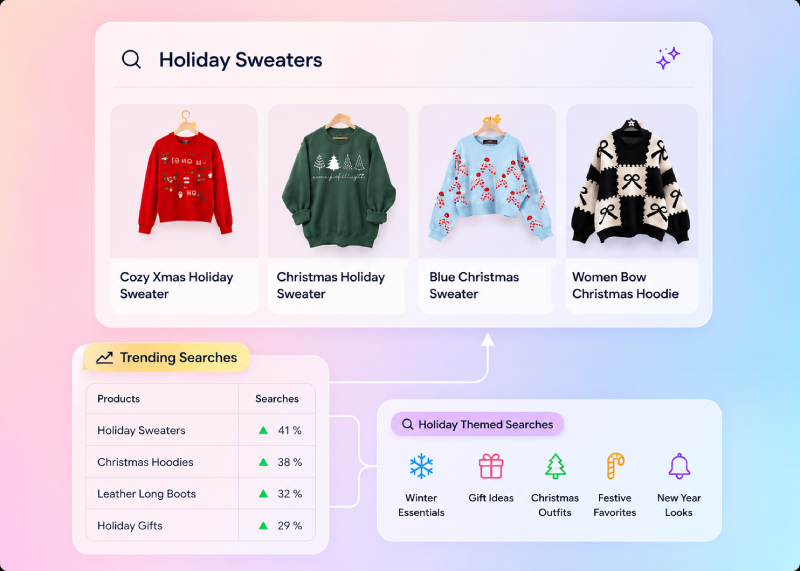

What Are AI Product Recommendations?
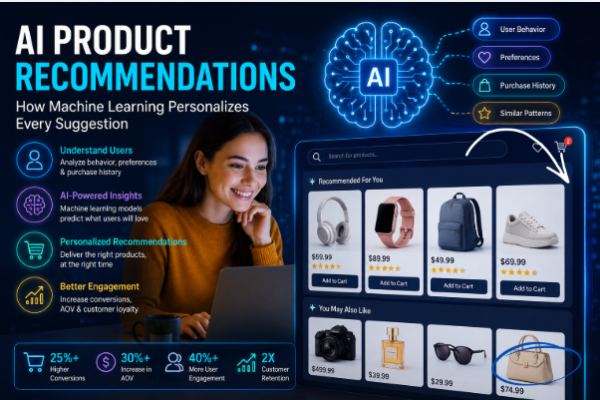
Why AI Recommendations Matter
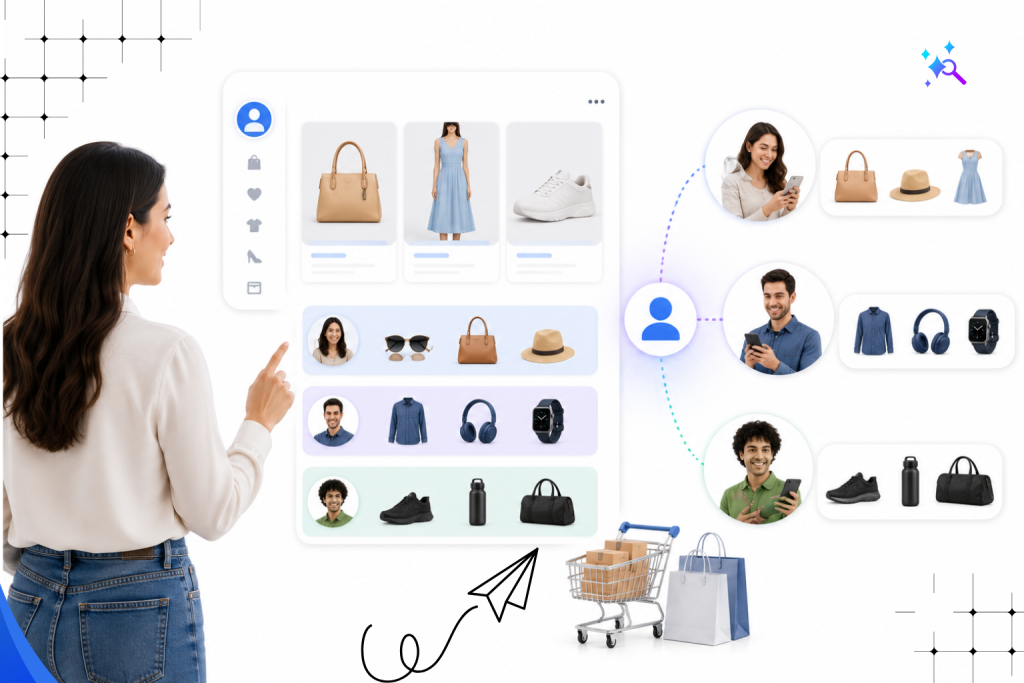
Recommendations already drive a significant share of ecommerce revenue, and AI raises the ceiling. Rule-based systems break down at scale: they can’t personalize across millions of shoppers, they miss real-time intent, and they treat first-time visitors the same as loyal customers. AI closes those gaps. It learns continuously from every click, view, and purchase; it adapts within a session as intent becomes clearer; and it handles cold-start cases by inferring from catalog and behavioral similarity. The result is more relevant suggestions in more places, which compounds into measurable lifts on the metrics that matter — average order value, conversion, and lifetime value. For the broader personalization picture, see our guide to ecommerce personalization.
AI Search Grader by bCloud AI
Grade your ecommerce search in 10 quick questions
31% of ecommerce searches return zero results — and most shoppers who hit a dead end leave for a competitor. How does your store's search stack up?
Answer 10 short questions and get your AI search score, plus a personalized report to fix the gaps. Free, takes about 2 minutes.
No signup needed to take the quiz.
Understanding intent…
Scoring your answers across relevance, AI, experience, and insights.
Your AI search score is ready
Tell us where to send your personalized report. You'll see your score and recommendations right away.
Your score by pillar
Personalized recommendations
Fix the gaps in weeks, not quarters
bCloud AI replaces keyword-only search with hybrid AI retrieval — sub-200ms responses, 99.99% uptime, and conversion lifts of up to 40% across 50+ implementations.
How AI Product Recommendations Work
Behind a simple “recommended for you” carousel sits a coordinated ML pipeline.
Data Ingestion
The system captures behavioral signals (views, clicks, add-to-cart, purchases), catalog data (attributes, prices, availability), and contextual signals (device, referrer, time). Clean, complete data is the foundation everything else builds on.
Machine Learning Models
Collaborative filtering finds shoppers with similar taste; content-based models match by attributes; deep learning captures subtle patterns across both. Modern platforms blend these approaches so recommendations stay strong across cold starts and long tails.
Real-Time Ranking
When a shopper loads a page, the engine ranks candidate products against that individual’s behavior and intent in milliseconds, so suggestions reflect what just happened — not last week.
Continuous Learning
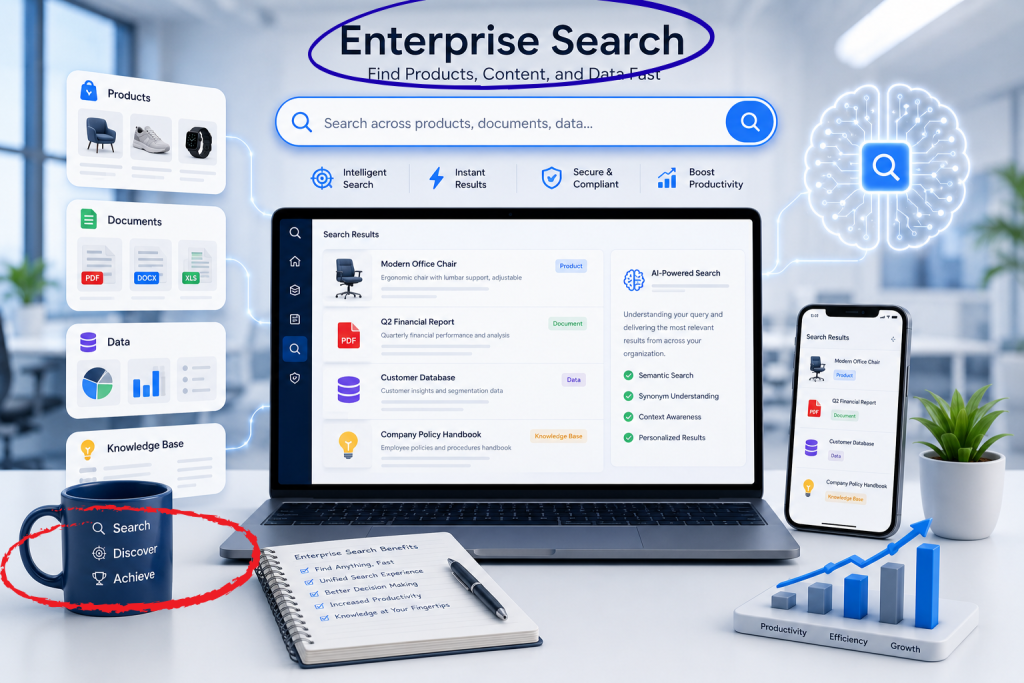
Every interaction feeds back into the models, so the system improves automatically. This is the same behavioral intelligence that powers modern AI search, applied to product suggestions.
Types of AI Product Recommendations
Modern platforms deliver several distinct recommendation types, each solving a different job.
Personalized “Recommended for You”
Homepage, category, and dedicated widgets tuned to the individual shopper’s history and inferred preferences.
Similar Products
Content-based suggestions on product pages — same style, price band, or attributes — helping shoppers explore alternatives without leaving the page.
Complementary and “Complete the Look”
Cross-sell suggestions that pair well with the current item, driving average order value through relevant additions rather than random attachments.
Frequently Bought Together
Bundle-style suggestions drawn from real co-purchase patterns, particularly effective in cart and checkout placements.
Trending and Real-Time Popular
Fast-moving items surfaced by current site behavior, useful for new visitors and cold starts where personal history is thin.
Post-Purchase and Email
Recommendations that follow the purchase into retargeting emails, next-order suggestions, and replenishment reminders — extending personalization beyond the site.
9 Proven Wins From AI Product Recommendations
| # | Win | Why it matters |
|---|---|---|
| 1 | Higher AOV | Relevant cross-sells lift basket size |
| 2 | Better conversion | Right product in front of the right shopper faster |
| 3 | More discovery | Long-tail items get surfaced, not just top-sellers |
| 4 | Repeat purchases | Personalization deepens the customer relationship |
| 5 | Cold-start handled | New visitors still see relevant suggestions |
| 6 | Consistency across surfaces | Home, PDP, cart, email — one intelligence layer |
| 7 | Continuous improvement | The system learns from every interaction |
| 8 | Better use of catalog | Deep catalogs feel curated, not overwhelming |
| 9 | Lower acquisition pressure | Higher LTV means every visitor is worth more |
AI Recommendations vs. Rule-Based Recommendations
| Aspect | Rule-based | AI-powered |
|---|---|---|
| Setup | Manual rules, per segment | Learns automatically from data |
| Scale | Breaks with catalog and audience size | Scales to millions of shoppers and SKUs |
| Personalization | Segment-level at best | True 1:1 in real time |
| Adaptation | Requires human updates | Continuously improves from every interaction |
| Best for | Small catalogs, static merchandising | Any store where relevance drives revenue |
Most modern platforms blend the two: AI for relevance and personalization, with rule-based controls where merchandisers need to override for promotions, brand priorities, or compliance.
Where to Place AI Recommendations
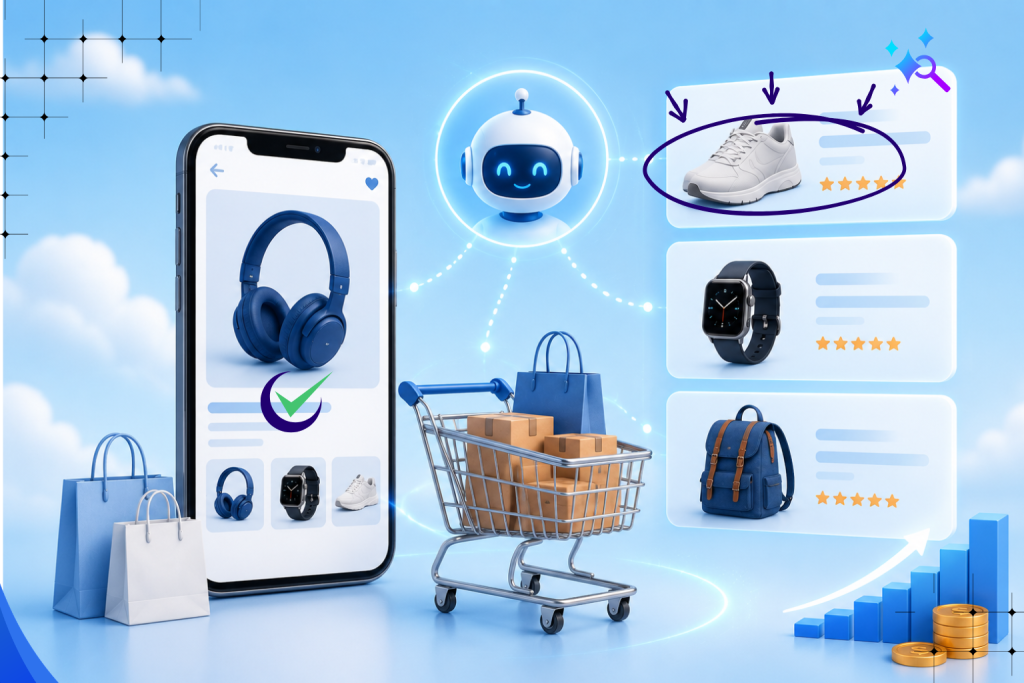
Placement decides impact. The highest-value spots are the homepage (set the tone for the visit), category and search-result pages (guide discovery), product detail pages (similar and complementary items), the cart (add-on and bundle suggestions), and post-purchase and email (drive repeat visits). The strongest programs treat these as one system, not disconnected widgets — so the recommendations a shopper sees on the homepage inform what they see in cart, and vice versa. This is where a platform that unifies search, browse, and recommendations pays off: one shared intelligence layer keeps every suggestion consistent with the shopper’s current intent.
How to Implement AI Recommendations
Start with the foundation. First, connect clean behavioral and catalog data — the model can only learn from what you give it, so catalog enrichment pays off here too. Second, choose a platform that unifies recommendations with search and personalization rather than a point tool that lives in isolation. Third, deploy the highest-impact placements first (usually PDP similar + cart cross-sell) and prove the lift with clean A/B testing. Fourth, expand to homepage, category, and email once the pattern is proven. Fifth, measure against clear KPIs — AOV lift, conversion lift, and revenue-per-visit from recommendation surfaces — so the program stays tied to business outcomes rather than clicks alone.
Common AI Recommendation Mistakes
A few mistakes recur across deployments. Running recommendations on thin, messy catalog data so even great models miss. Deploying widgets without measurement, so nobody knows what’s actually lifting revenue. Over-personalizing to the point suggestions feel repetitive or creepy. Treating recommendations as isolated widgets instead of one intelligence layer across surfaces. And ignoring merchandising controls, forcing merchandisers to fight the algorithm instead of guiding it. The fix is clean data, unified platform, clear measurement, and controls that let humans and AI collaborate rather than conflict.
Measuring AI Recommendation Performance
Track the metrics that show real business impact: recommendation-attributed revenue (revenue from sessions that clicked a recommendation), AOV lift on sessions with recommendation engagement versus without, conversion lift on placements, click-through rate as a diagnostic (not a goal), and repeat-visit rate over time. A well-run program shows steady lifts on all of these, and the fastest way to improve is to review the queries and placements that under-deliver — they usually point to data gaps or misplaced widgets rather than model problems.
AI Product Recommendations for Cold-Start and New Visitors
One of the biggest challenges any recommendation program faces is the cold start: a shopper who has no prior history on the site. Traditional systems either default to generic bestsellers (which convert poorly) or personalization based on paper-thin signals. Modern AI product recommendations solve cold start through content-based matching (finding products similar to whatever the shopper just viewed), contextual signals (device, referrer, time of day, entry page), and real-time in-session learning that adapts as the shopper clicks and browses. Within a few actions, AI product recommendations transition from generic to genuinely personalized — often within the same visit.
AI Product Recommendations Across the Shopper Journey
AI product recommendations become most powerful when they’re consistent across every stage of the journey. Discovery-stage shoppers on the homepage or category pages benefit from trending and exploratory suggestions. Consideration-stage shoppers on product pages benefit from similar-item and comparison recommendations. Purchase-stage shoppers in the cart benefit from cross-sell and bundle suggestions. And post-purchase shoppers benefit from replenishment reminders and next-visit recommendations. When one intelligence layer drives all of this, the shopper feels a coherent experience across the journey rather than disconnected widgets that don’t know each other exist. That coherence is what turns AI product recommendations from a feature into a strategy.
Measuring Long-Term Impact
Beyond immediate AOV and conversion lift, measure the long-term impact of AI product recommendations on customer lifetime value. Track repeat-visit rate, second-purchase timing, and category expansion (whether shoppers who engage with recommendations explore new categories over time). These metrics reveal whether the recommendation program is genuinely deepening customer relationships or just optimizing single sessions. Programs that raise LTV compound their value over years, not months, and the analytics from a mature AI product recommendations system make that impact visible.
How bCloud AI Powers AI Product Recommendations
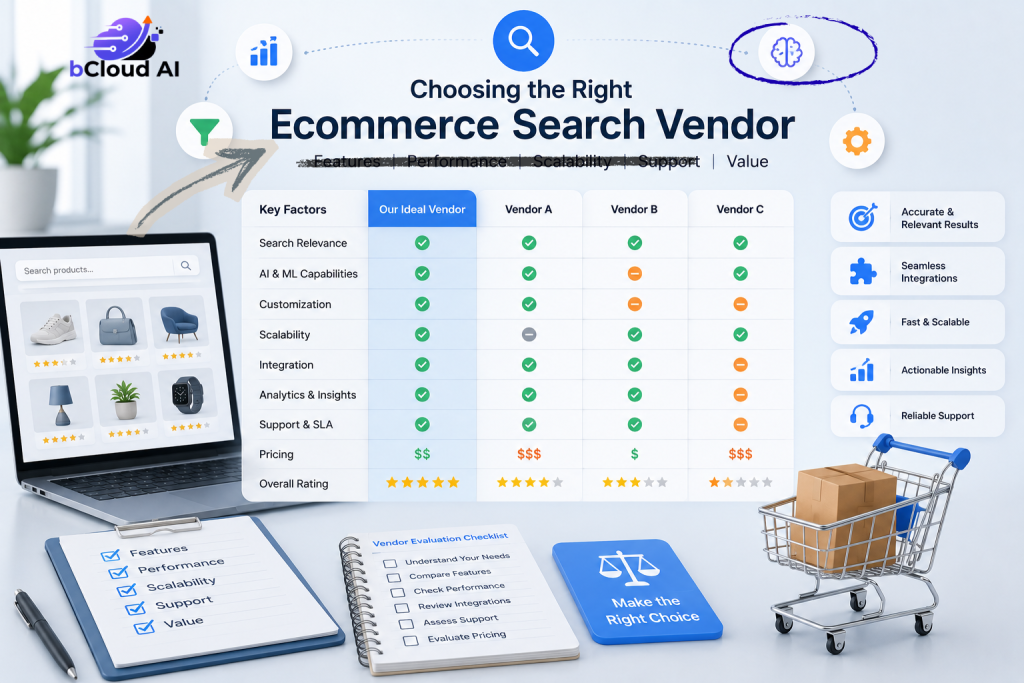
bCloud AI delivers AI recommendations as a native part of its AI-driven discovery platform — not a bolt-on. Machine learning models blend collaborative, content-based, and deep-learning signals; real-time personalization adapts every placement to the individual shopper; and because recommendations share the same engine and catalog as search, browse, and generative experiences, every surface stays consistent. AI data enrichment cleans and completes catalogs during onboarding, so the models have the clean signals they need to perform. To compare AI-native platforms, see the best ecommerce search engines for 2026 or the broader product recommendations guide.
Industries That Benefit Most from AI Product Recommendations
AI product recommendations improve product discovery across every ecommerce sector, but some industries see especially strong gains because shoppers often compare options, browse large catalogs, and purchase complementary products.
Fashion & Apparel
Recommend matching clothing, footwear, accessories, and complete outfits based on browsing history, style preferences, and seasonal trends.
Electronics
Suggest compatible accessories, upgrades, warranties, and alternative products to help customers make confident buying decisions.
Home & Furniture
Surface coordinated furniture, décor, lighting, and room collections that complement previous product selections.
Beauty & Personal Care
Recommend skincare routines, cosmetics, and replenishment products based on customer preferences and purchase frequency.
Grocery & Food
Increase basket size through complementary food suggestions, meal bundles, and frequently purchased items.
Automotive
Recommend compatible vehicle parts, maintenance products, and accessories using vehicle specifications and purchase history.
Key takeaway: Regardless of industry, AI product recommendations help shoppers discover relevant products faster, increase average order value, reduce decision fatigue, and create a more personalized shopping experience that drives long-term customer loyalty.
How AI Recommendations Adapt to Shopper Intent
AI product recommendations become more effective when they respond to what shoppers are trying to accomplish in the moment, not just what they purchased in the past. A shopper browsing a category may need discovery, while someone comparing products may need similar alternatives, and a shopper in the cart may be more interested in complementary products. AI can combine historical behavior with real-time clicks, views, product attributes, and session context to adjust recommendations as intent changes. This creates a more responsive shopping experience where product suggestions evolve throughout the journey, helping shoppers discover relevant products faster while giving retailers more opportunities to increase conversion, basket size, and long-term customer value.
Frequently Asked Questions About AI Product Recommendations
What are AI product recommendations?
AI product recommendations are personalized suggestions generated by machine learning that analyze shopper behavior, catalog data, and real-time context to predict what each individual is most likely to buy — replacing generic widgets with a dynamic, per-shopper experience.
How do AI recommendations work?
The pipeline ingests behavioral, catalog, and contextual signals; blends collaborative filtering, content-based, and deep-learning models; ranks candidate products in real time against each shopper’s intent; and continuously learns from every interaction, so results improve automatically.
What are the types of AI recommendations?
Main types include personalized “recommended for you,” similar products, complementary and “complete the look,” frequently bought together, trending and real-time popular, and post-purchase or email recommendations. The strongest programs use them together as one system.
How are AI recommendations different from rule-based ones?
Rule-based systems require manual segments and break at scale; AI learns automatically from every interaction and delivers real-time 1:1 personalization across millions of shoppers and SKUs. Most modern platforms blend AI relevance with rule-based merchandiser controls.
Where should I place AI recommendations?
High-value spots are the homepage, category and search pages, product detail pages, the cart, and post-purchase or email. Treat placements as one system driven by shared intelligence rather than disconnected widgets so suggestions stay consistent.
How do I implement AI recommendations?
Connect clean behavioral and catalog data, pick a platform that unifies recommendations with search and personalization, deploy the highest-impact placements first (usually PDP similar + cart cross-sell), prove lift with A/B tests, then expand and measure against AOV, conversion, and revenue-per-visit.
Do AI product recommendations actually lift revenue?
Yes. Personalized suggestions consistently lift average order value, conversion, and repeat purchases. The size of the lift depends on catalog quality, placement strategy, and how well the platform unifies recommendations with search and personalization.
What is the best AI product recommendations platform?
The best platform delivers recommendations as a native part of an AI-driven discovery system — one engine and catalog powering search, browse, and recommendations — with real-time personalization and clean data enrichment. Leading AI-native options include bCloud AI.
Lift AOV With Recommendations That Actually Personalize
Start for free or book a demo to see AI recommendations shared with search, browse, and personalization on one platform.