Why Your Product Search Engine Is Either Making or Costing You Millions
What Makes a Great Product Search Engine Different
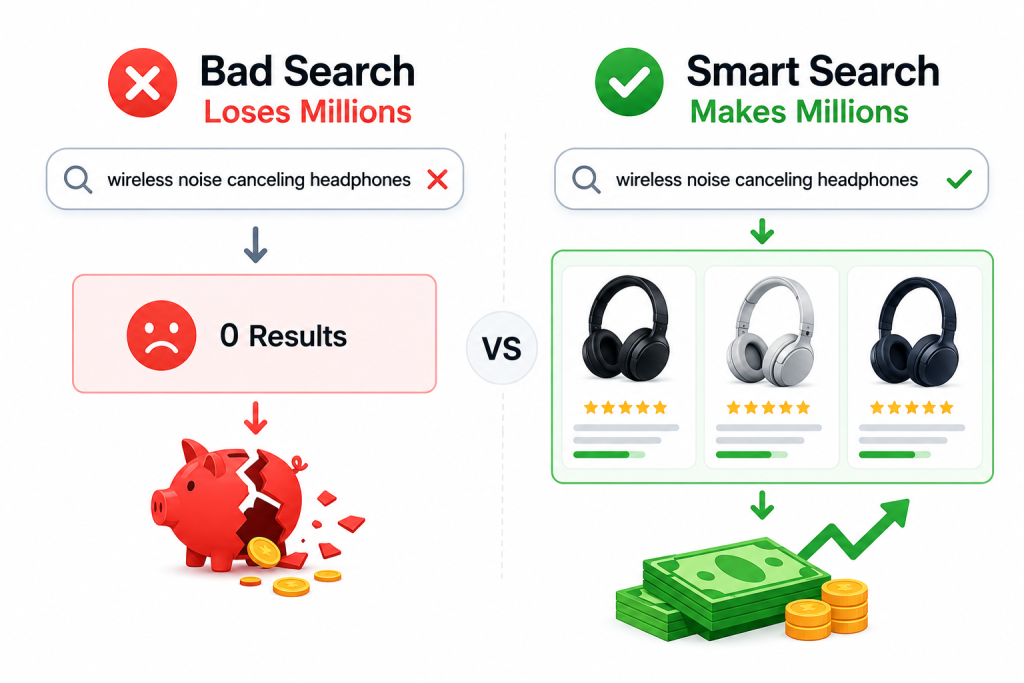
That’s not a small problem. It’s a multi-million dollar leak that compounds every single day. VenueMarketplace.com was losing $412,000 monthly to search failures before switching to bCloud AI’s intelligent product search engine. Within 90 days, they’d recovered that revenue and added $2.54 million more.
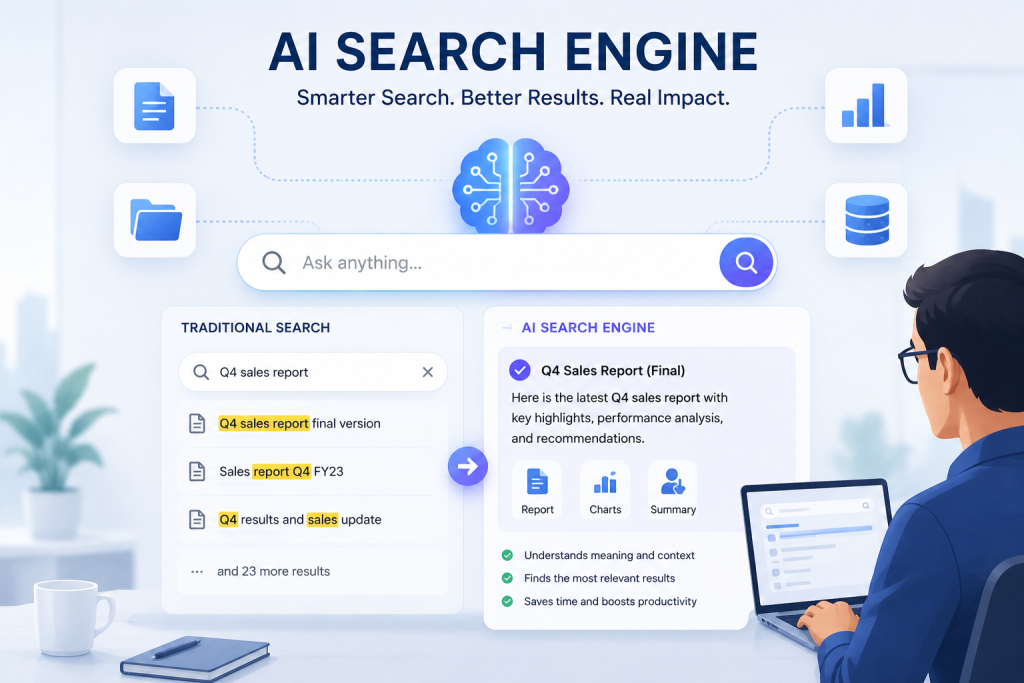
Traditional product search engines work like this: Customer types words. System matches those exact words in product titles and descriptions. If words match, show product. If words don’t match, show nothing. This worked adequately in 2010 when online shopping was simpler and customer expectations were lower.Intelligent product search engines work completely differently:
- They Understand Intent When someone searches "laptop for video editing," they're not asking to see all laptops. They need machines with powerful GPUs, 32GB+ RAM, fast processors, and large storage. An AI-powered product search engine interprets that intent and immediately filters to the handful of products that actually fit those requirements.
- They Learn from Behavior If 80% of customers searching "running shoes" click on trail runners rather than track spikes, the system adapts. Next time someone searches "running shoes," trail runners rank higher. This learning happens continuously across millions of searches, making your product search engine smarter every single day.
- They Handle Natural Language Customers don't search in keywords anymore. They ask questions: "What's the best laptop for college students under $800?" A keyword-based product search engine chokes on complexity. An LLM-powered platform parses every element—product category, use case, price constraint—and returns results that actually answer the question.
The Hidden Costs of Poor Product Search
📉
- Monthly searches: 500,000
- Zero-result rate: 31% (industry average)
- Failed searches: 155,000
- Conversion rate: 2.1%
- Average order value: $87
- Monthly lost revenue: $283,000
- Annual impact: $3.4 million
📊
- Customer lifetime value lost to competitors: 6x first purchase value
- Brand reputation damage from negative reviews
- Reduced organic traffic as site engagement metrics decline
- Increased customer service costs handling "can't find product" complaints
- Merchandising team time wasted managing synonym dictionaries
- Customer trust erosion leading to lower repeat purchase rates
- Increased paid advertising spend to recover lost conversions
How AI-Powered Product Search Engines Work
1. Large Language Models (LLM)
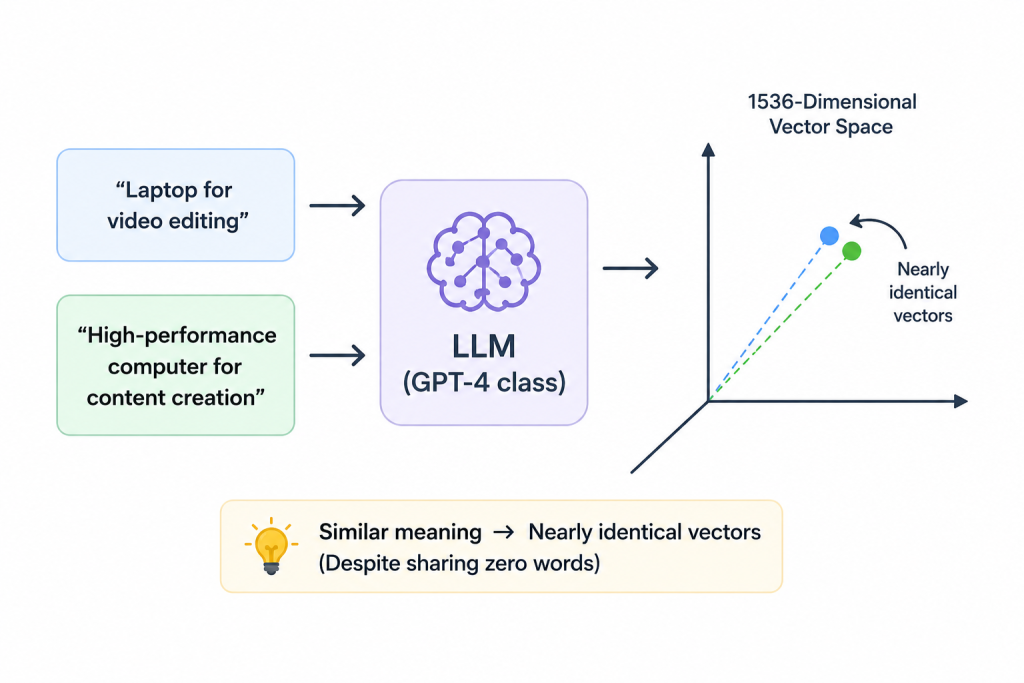
We use GPT-4 class models to understand natural language queries. "Something to help me sleep better" triggers results for weighted blankets, sound machines, blackout curtains, supplements, and sleep tracking devices—products that solve the problem, not just match keywords.
2. Vector Search
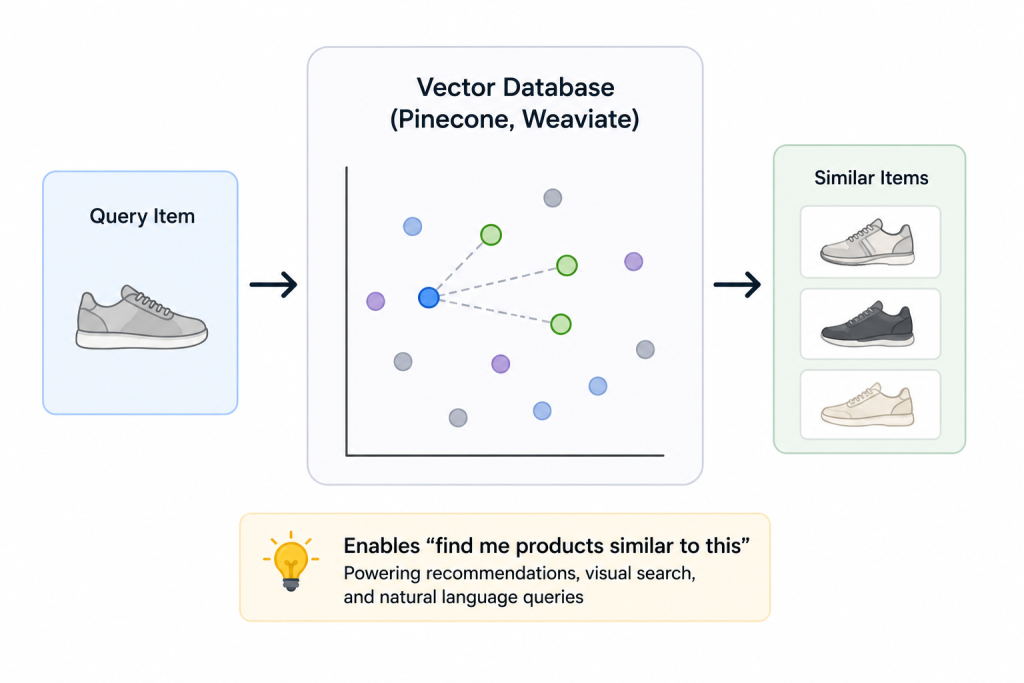
Every product in your catalog gets encoded as a 1536-dimensional vector that captures its semantic meaning. When customers search, we find products with similar meaning vectors, not just similar words. "Couch" and "sofa" map to nearly identical vectors, so your product search engine treats them as synonyms automatically.
3. Hybrid Ranking
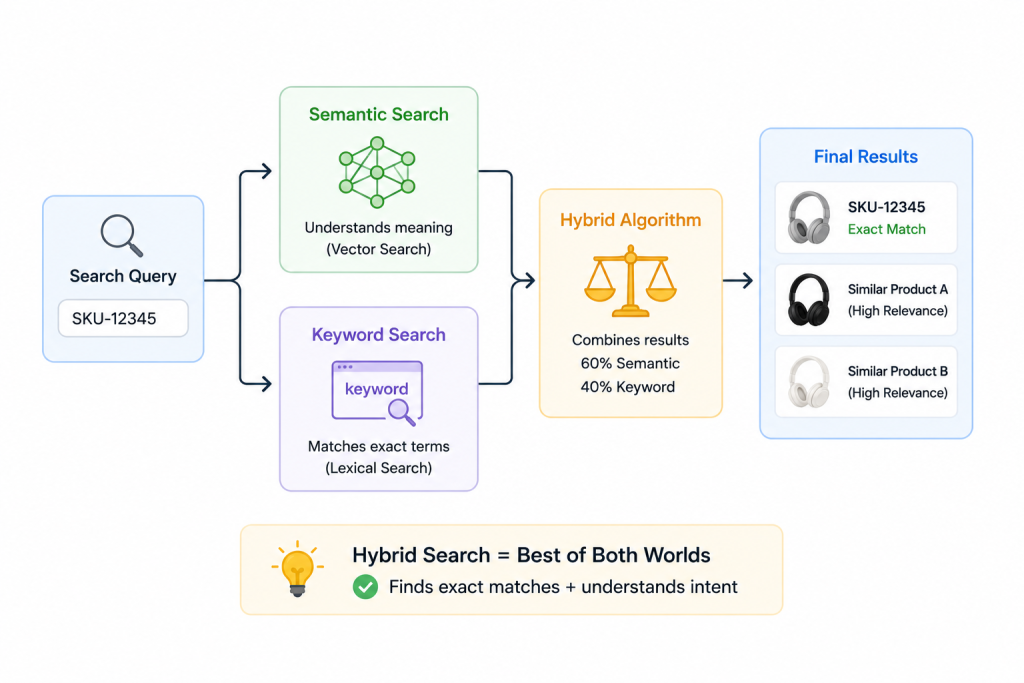
Pure semantic search sometimes misses exact matches. Pure keyword search misses intent. Our hybrid approach combines both: 60% semantic understanding, 40% keyword matching. This balance delivers the best of both worlds across all query types.
4. Machine Learning Optimization
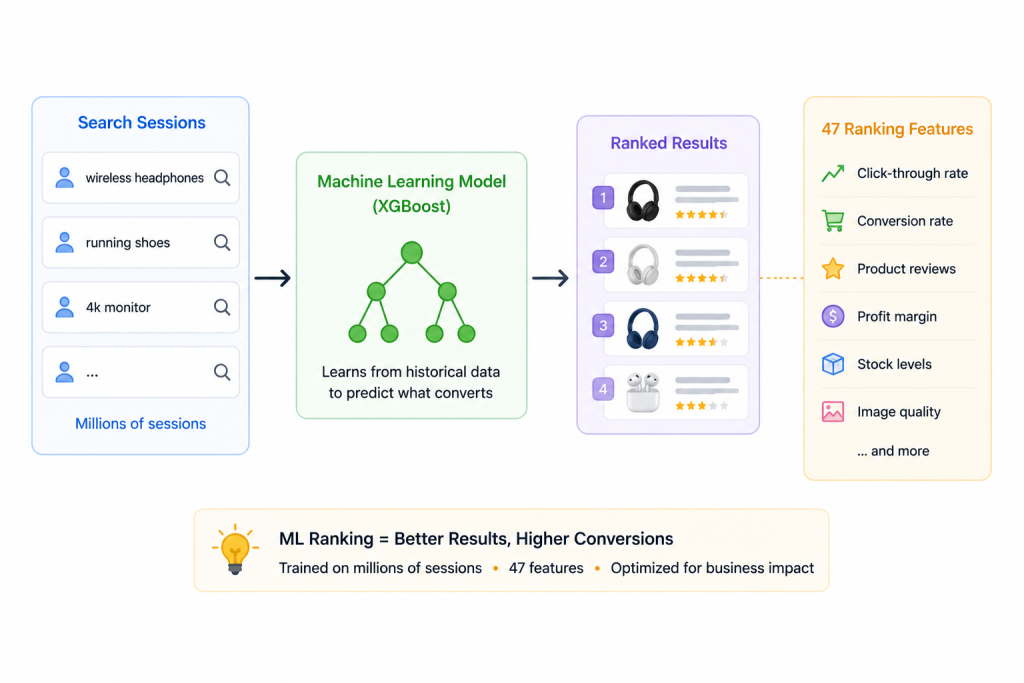
Our XGBoost models train on millions of search sessions, learning which results actually convert. 47 features inform ranking: historical click-through rate, conversion rate, profit margins, inventory levels, review ratings, image quality, and more. The product search engine continuously optimizes for revenue, not just relevance.
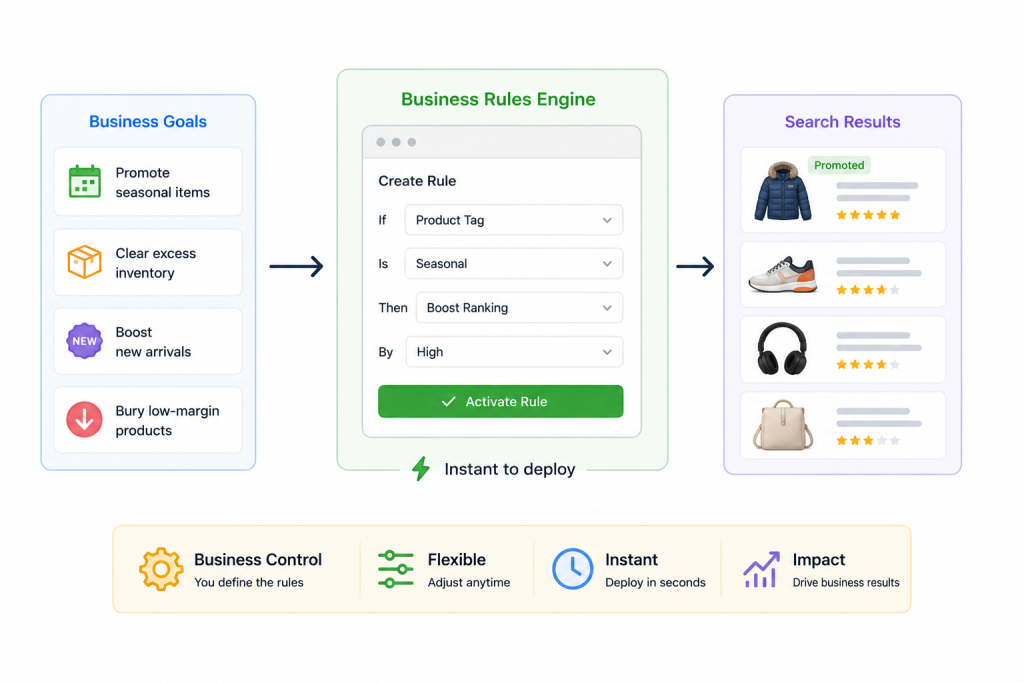
5. Business Rules Engine
Sometimes you need manual control: promote seasonal products, clear excess inventory, boost new arrivals. Our dashboard lets merchandisers configure rules in seconds: "Boost all products tagged 'summer' by 20%" or "Pin this product to position 1 for 'wireless headphones' searches."
Mobile Product Search: The 4-Inch Screen Challenge
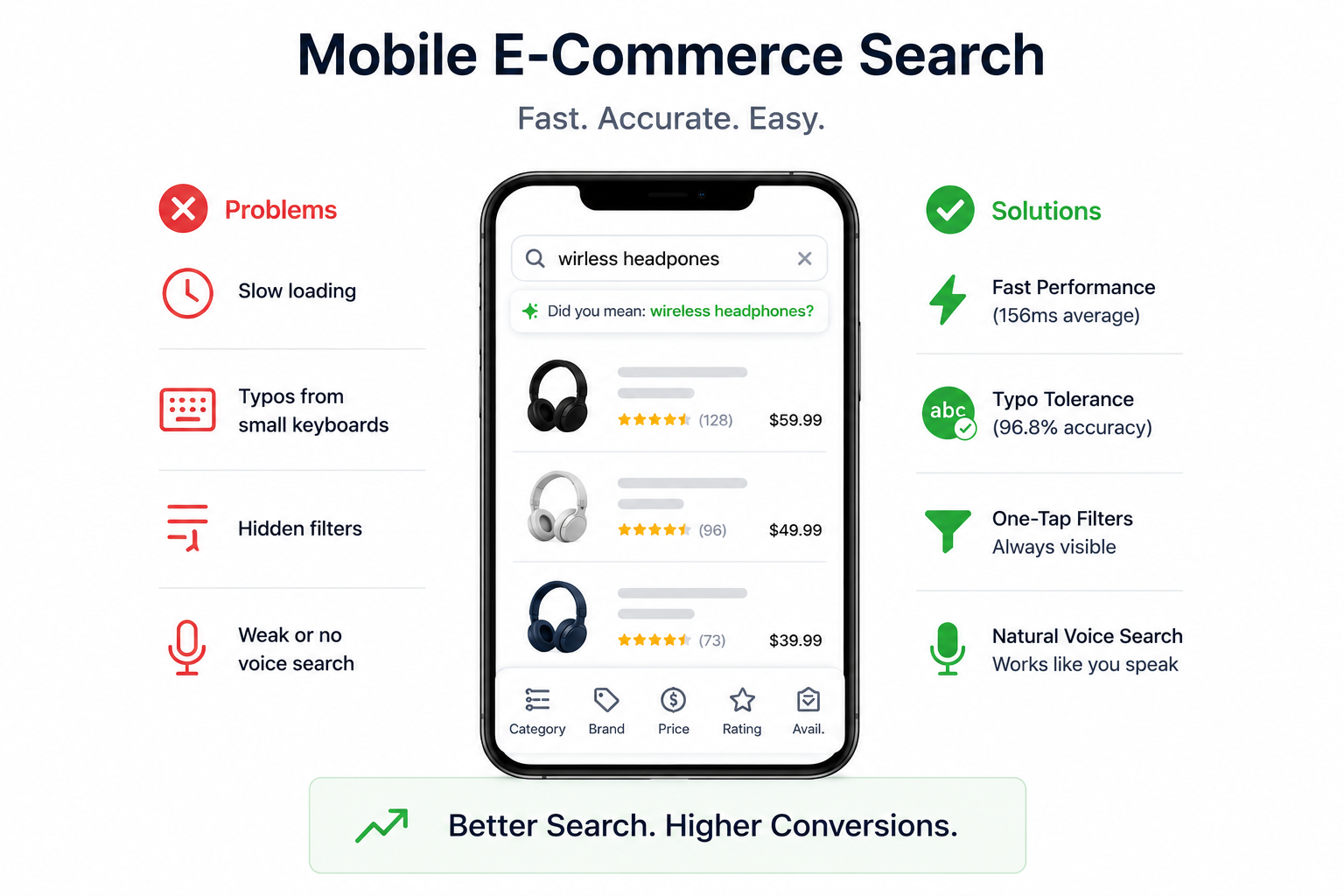
- 28% of mobile searches contain typos (vs. 8% desktop)
- Slow loading kills conversions (every 100ms delay = 1% conversion loss)
- Filters hidden behind multiple menus frustrate users
- Results don't adapt to portrait vs. landscape orientation
- Voice search either doesn't work or works poorly
- Typo Correction (96.8% accuracy)
- Lightning Performance (156ms average)
- One-Tap Filters
- Voice Search Ready
The Implementation Journey: From Zero to Hero in 6 Weeks

Merchandising Control That Doesn't Require a PhD
Option 1: Full algorithmic control
The system decides everything. You can't promote seasonal items, clear excess inventory, or feature new arrivals. Results are unpredictable and impossible to manage.
Option 2: Full manual control
You manually configure thousands of rules for thousands of queries. Requires full-time teams, never scales, and breaks constantly as catalog changes.
bCloud AI provides a third way: intelligent defaults with simple overrides.
Pin Products to Specific Searches
Lock your new winter coat collection to positions 1-3 for "winter coats" searches during November-January. Takes 30 seconds to configure, updates instantly, and automatically expires when winter ends.
Boost by Attribute
"Increase all Sale items by 15%" promotes your promotional products without manually selecting each one. "Boost products with >4.5 stars and 50+ reviews by 10%" rewards quality automatically.
Bury Poor Performers
"Demote products with <3 star ratings by 50%" protects customers from bad experiences while giving you time to improve or remove those items from the catalog.
A/B Test Everything
Split traffic 50/50 between two ranking strategies and let data decide which converts better. Our product search engine includes testing tools that make optimization continuous and evidence-based.
Real Results from Real Businesses
VenueMarketplace.com sells 185,000 SKUs across 12 categories—electronics, fashion, home goods, sports, automotive. Their old product search engine was failing customers constantly:
Before bCloud AI:
- 31% zero-result searches (151,000 monthly failures)
- 67% search abandonment
- 890ms average response time
- 2.1% search-to-purchase conversion
- Net Promoter Score: 12 (detractor zone)
01
02
After bCloud AI (90 days):
- 6.8% zero-result searches (78% reduction)
- 27% search abandonment (59% reduction)
- 156ms average response time (82% faster)
- 3.0% search-to-purchase conversion (43% increase)
- Net Promoter Score: 67 (promoter zone, +55 points)
Financial Impact:
- $2.54M incremental revenue (90 days)
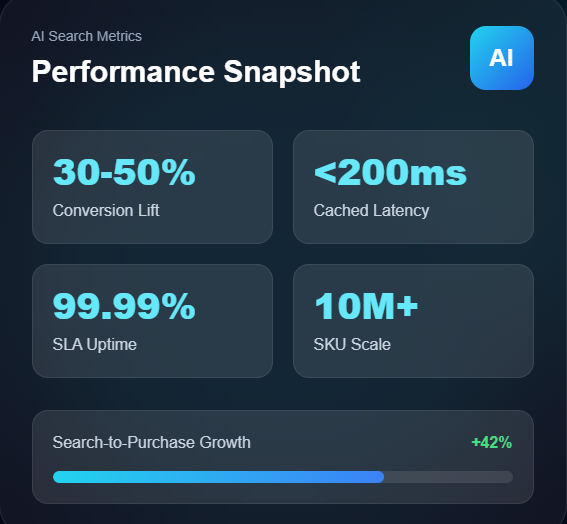
- 769% ROI
- 18-day payback period
03
Analytics That Actually Drive Decisions
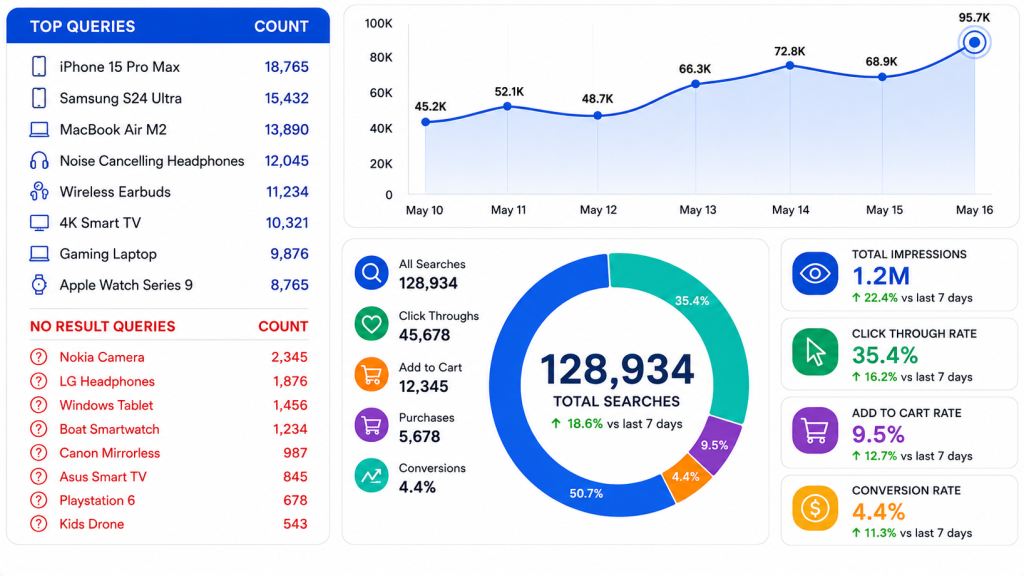
Data without insight is noise. bCloud AI’s product search engine analytics translate raw numbers into actionable intelligence:
Top Searches Dashboard
- Most common queries (where to focus optimization effort)
- Trending searches (emerging demand to capitalize on)
- Zero-result queries (gaps in your catalog)
- High-traffic, low-conversion searches (merchandising opportunities)
Product Performance Reports
- Which never appear despite strong inventory (discoverability problems)
- Which convert best when shown
- Which have high views but low conversion (pricing/review issues?)
- Which products appear in search most frequently
Conversion Funnel Breakdown
Where exactly do searches fail? Query → Results View → Product Click → Add to Cart → Purchase breakdown shows precisely where customers drop off and why.
Revenue Attribution Models
Understand search's true contribution with last-touch, first-touch, and multi-touch attribution. Most retailers discover their product search engine drives 40-60% of total revenue—making it the most important sales channel they weren't measuring properly.
Why Businesses Choose bCloud AI's Product Search Engine
“Search finally understands our customers.”
💬
Director of E-Commerce
$50M fashion retailer
“769% ROI in 90 days. We should have done this years ago.”
📈
CFO
Multi-category marketplace
“Customer complaints about search dropped 82%. Our support team can focus on actual problems now.”
⭐
Director of E-Commerce
$50M fashion retailer
“Implementation took 6 weeks. Results showed up in week 7. No other technology investment has returned this fast.”
🚀
CTO
Home goods store
Security, Compliance, and Enterprise-Grade Reliability
SOC 2 Type II certified
annual audits
GDPR compliant
(EU customers)
CCPA compliant
(California)
99.99% uptime SLA
(we've never missed it)
SOC 2 Type II certified
for data security
Search That Works Across All Your Channels
🔎
Website Search
Full-featured search bar, autocomplete, filters, and results that work identically on desktop, mobile, and tablet.
📱
Mobile App Search
Native SDKs for iOS and Android bring the same intelligent search capabilities to your mobile applications.
🎙️
Voice Commerce
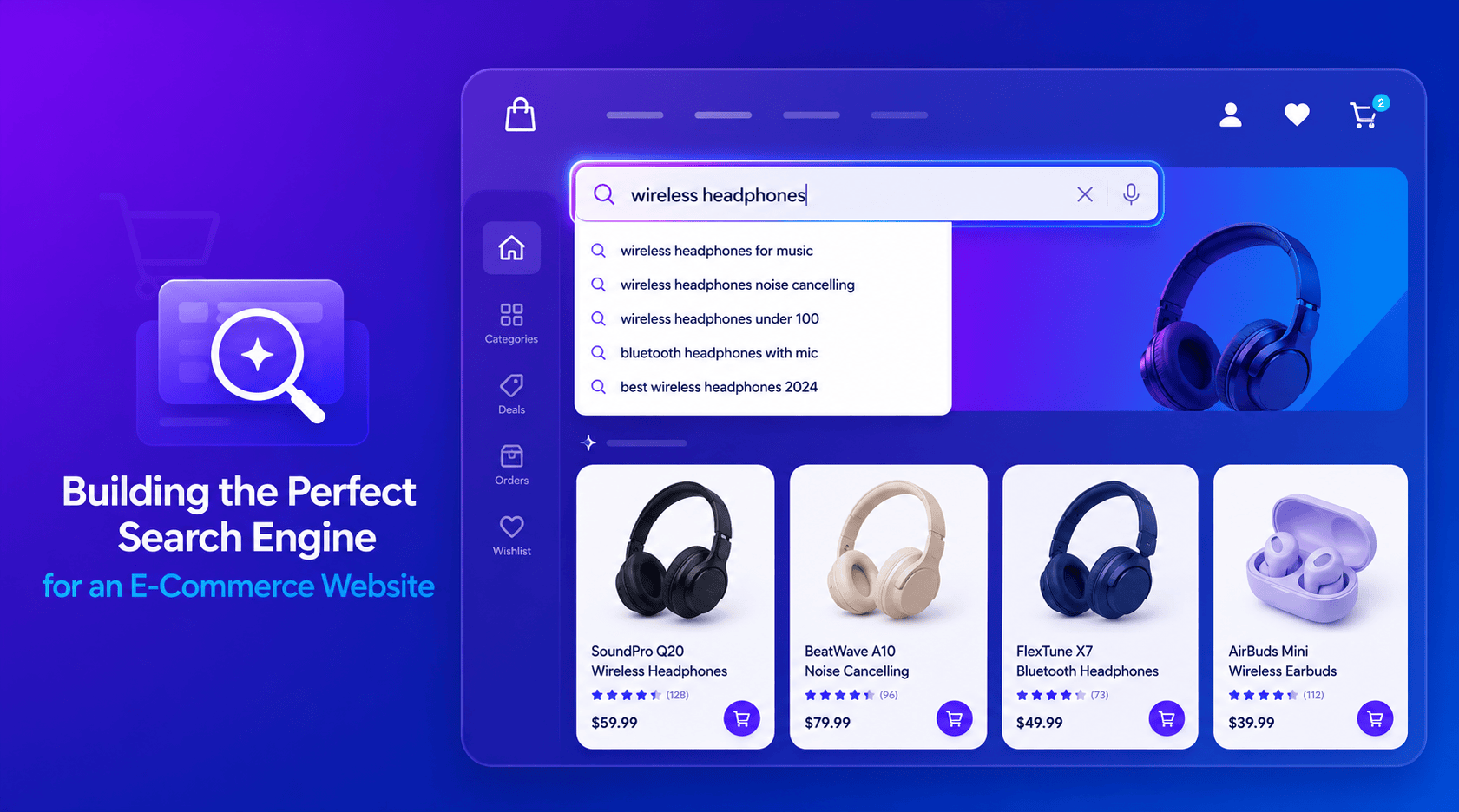
Alexa, Google Assistant, and other voice platforms can query your product search engine directly, enabling "Hey Google, ask [Your Store] for wireless headphones under $100."
🛍️
Social Commerce
Instagram Shopping, Facebook Shops, TikTok Shopping—all powered by the same search infrastructure that knows your catalog inside and out.
Related posts
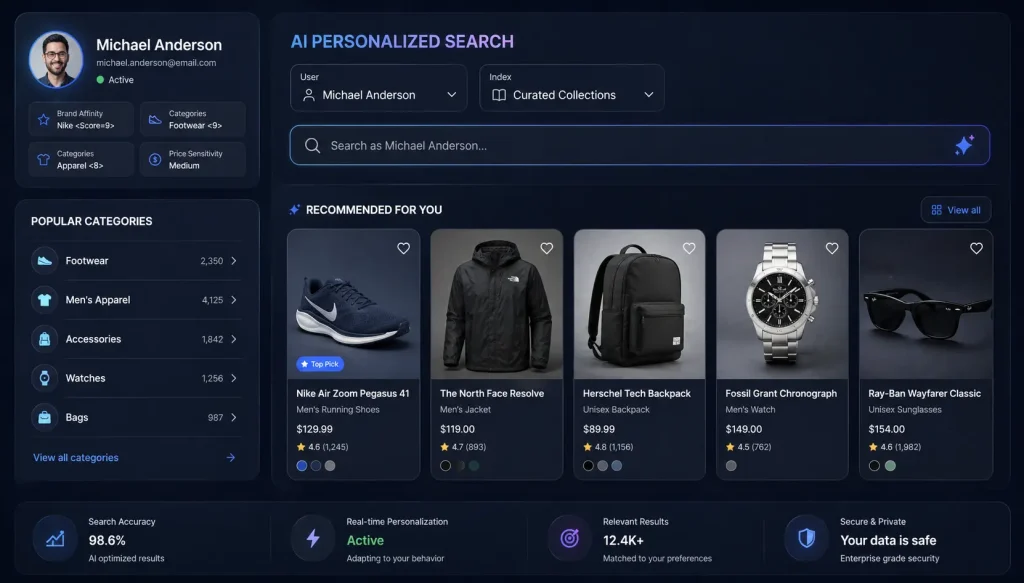
Personalization
Create dynamic, data-driven experiences that adapt in near real time.
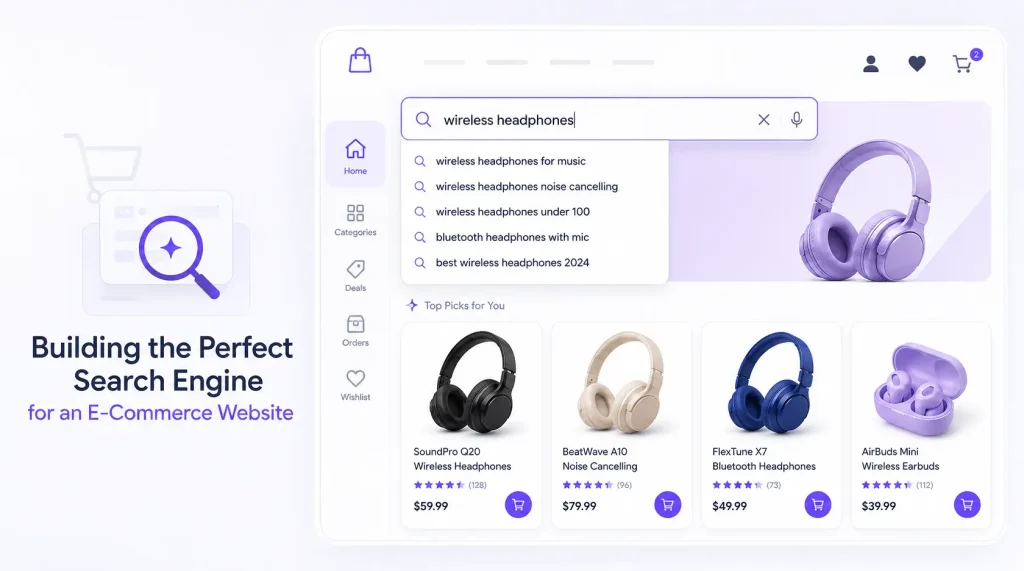
Search Engine for an E-Commerce Website
Semantic search applied to a product catalog is a retrieval system .
AI E-Commerce Search Guide
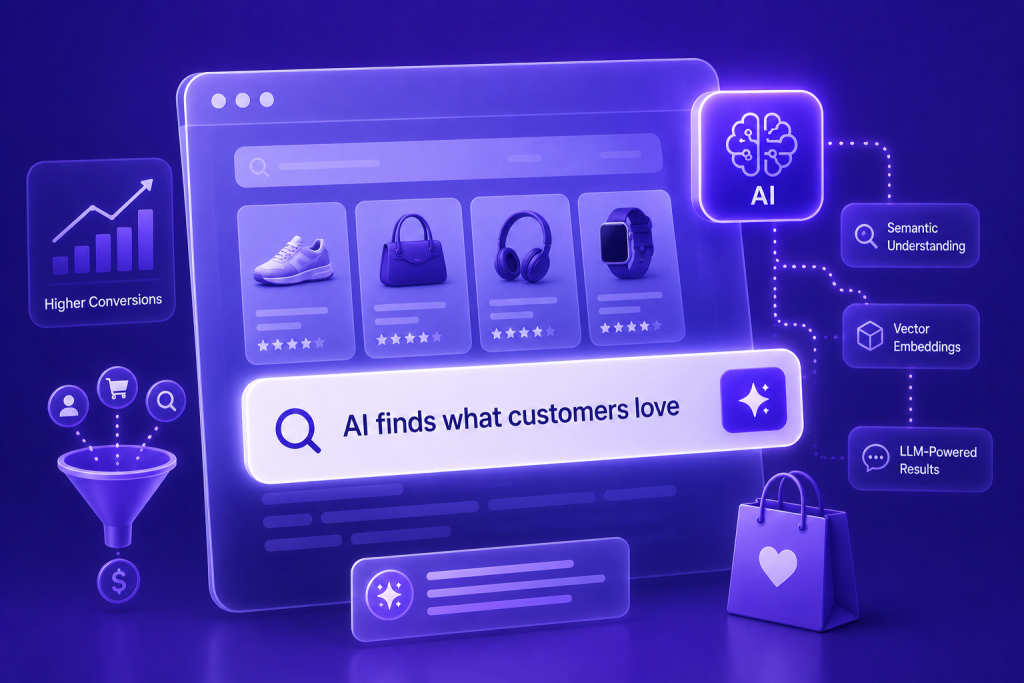
Discover how e-commerce AI search is revolutionizing product discovery.
E-Commerce Search Engine
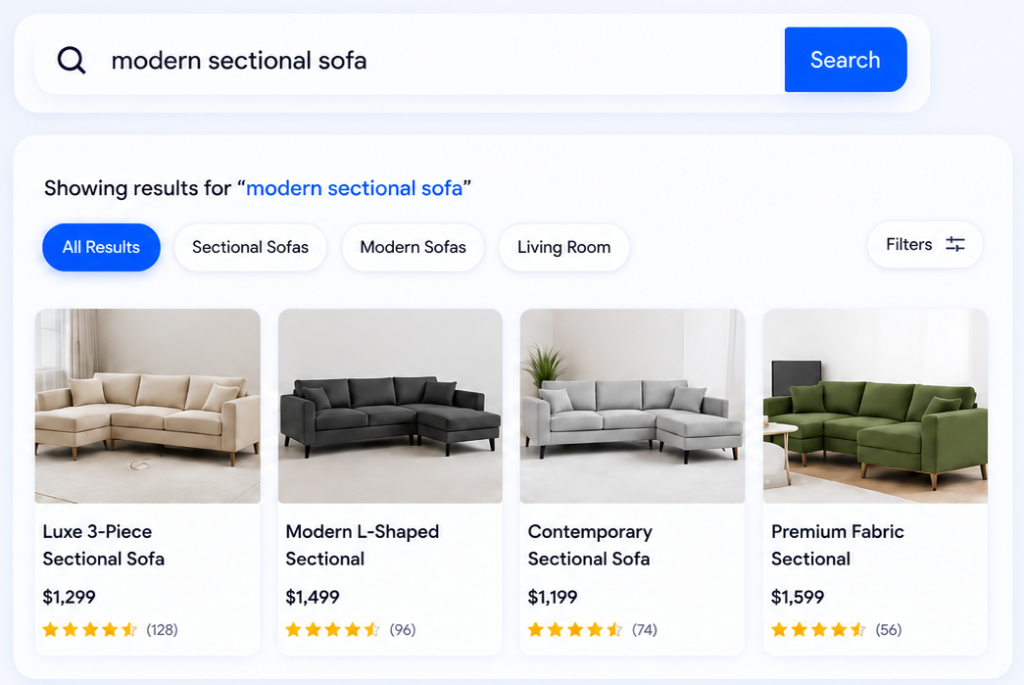
E-commerce search engine makes all the difference between a sale and an abandoned cart.
E-Commerce Search
Hawksearch is built on keyword matching and manual rules—technology from 2015.
AI Recommendations
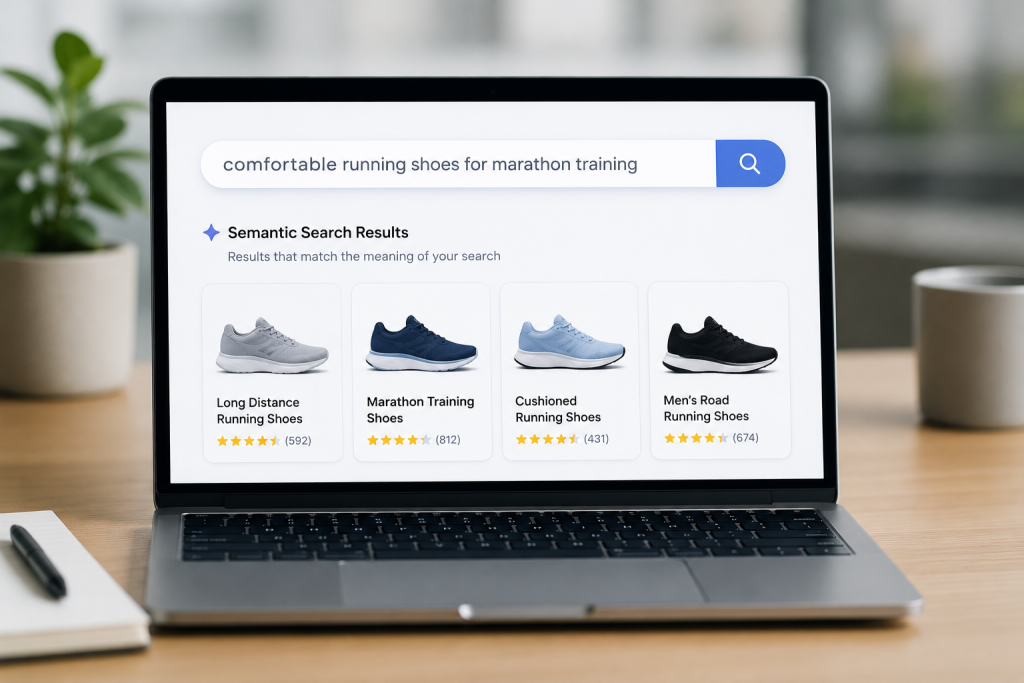
Leverage AI-driven behavioural signals to suggest products and content your audience genuinely wants .
Analytics
Convert raw user behaviour into concrete next steps with a comprehensive analytics suite built for search, discovery.
bCloud vs Bloomreach
Bloomreach sits firmly in the enterprise tier of search and digital experience platforms.
AI Search Engine
AI-feature depth, total cost of ownership, and the flexibility your growth team has to merchandise without filing engineering tickets.
Best e-commerce search
Eliminate silos. Automate workflows. Connect Shopify, Salesforce, Adobe Commerce and more.
Frequently asked questions
What is an AI-powered product search engine?
How is AI product search different from traditional keyword search?
How does semantic and vector search work?
Will an AI product search engine reduce my zero-result searches?
How long does implementation take?
How is bCloud AI's product search engine priced?
Can my merchandising team control results without a developer?
Does it handle typos, misspellings, and full questions?
Does the product search engine work well on mobile?
Can I use the same search across my website, app, and other channels?