
What a vector database management system does
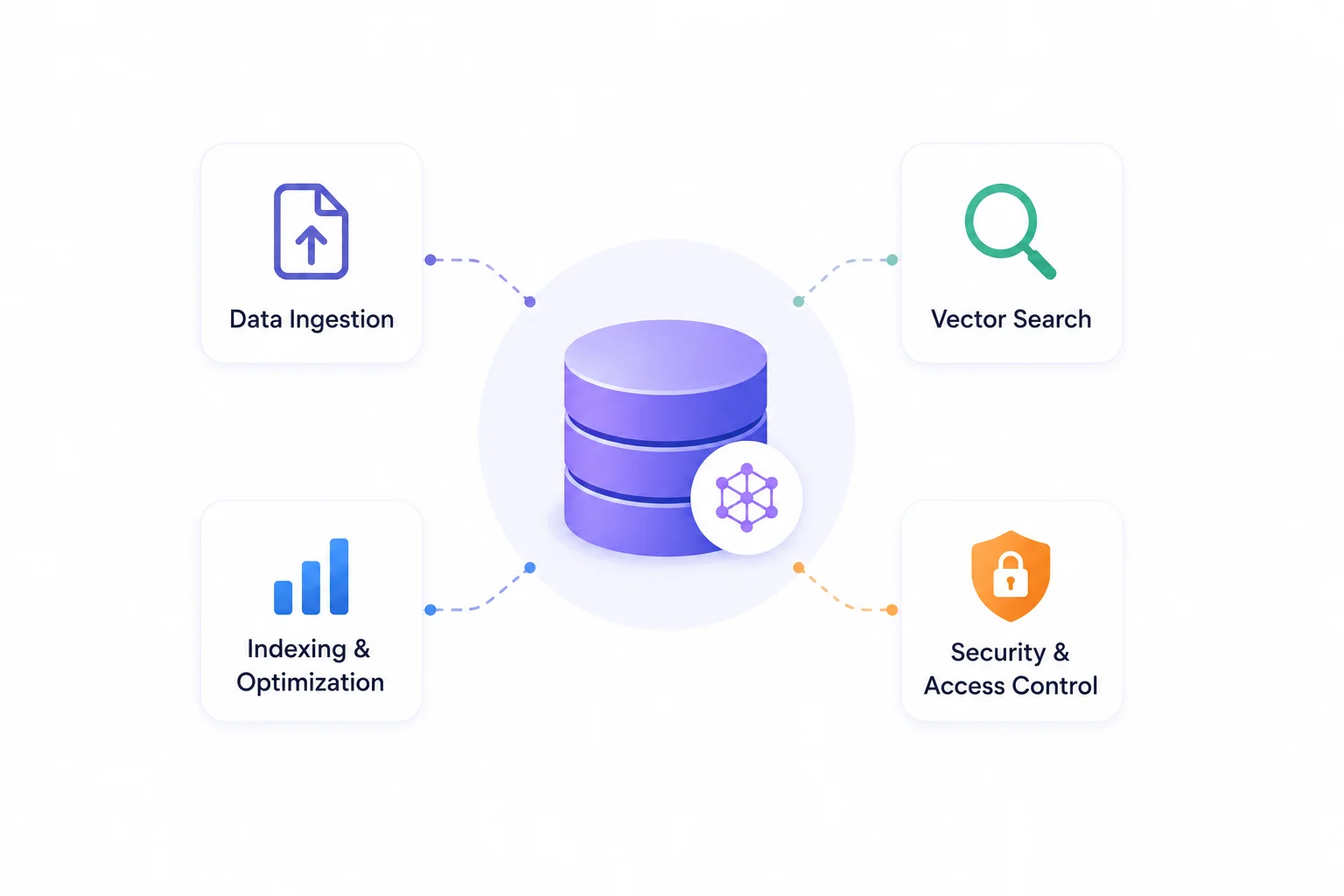
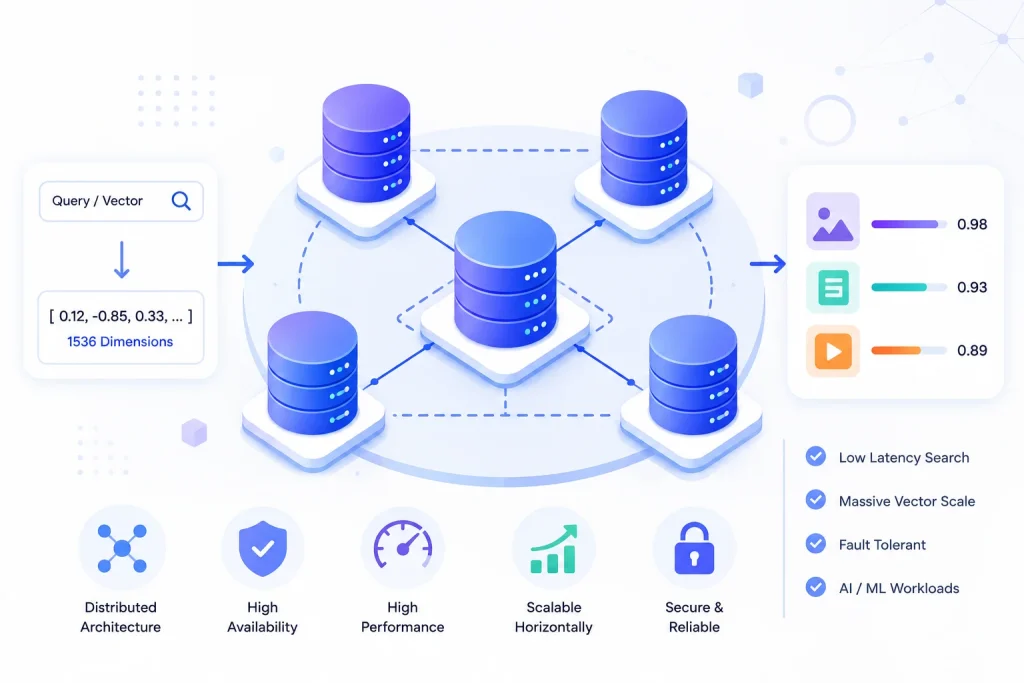
Six vector database management responsibilities distinguish it from a conventional DBMS:
Index lifecycle.
HNSW graphs — the structure from the original paper —, IVF partitions, and quantized indexes all need building, updating, and periodically rebuilding. Unlike a B-tree, an approximate index degrades as data changes, so rebuild scheduling is an ongoing concern.
Memory management.
Vector database management gets harder here, because vector indexes are RAM-hungry, and the system decides what stays in memory, what moves to disk, and how compression applies. Get this wrong and you either overpay or hit a wall.
Scaling and sharding.
Distributing vectors across nodes while keeping recall consistent is harder than sharding rows, because the index structure spans the data.
Consistency during writes.
Adding a vector means updating graph connections, which is far more expensive than inserting a row. The management layer decides how that happens without degrading query latency.
Backup and recovery.
Vector indexes are expensive to rebuild — potentially requiring full re-embedding — so snapshot and restore capability matters more than in a conventional database.
Access control and multi-tenancy.
Namespace isolation, role-based permissions, and per-tenant data separation.
If the underlying technology is unfamiliar, our vector database hub covers the fundamentals first.
The leading vector database management systems
Fully managed
Pinecone
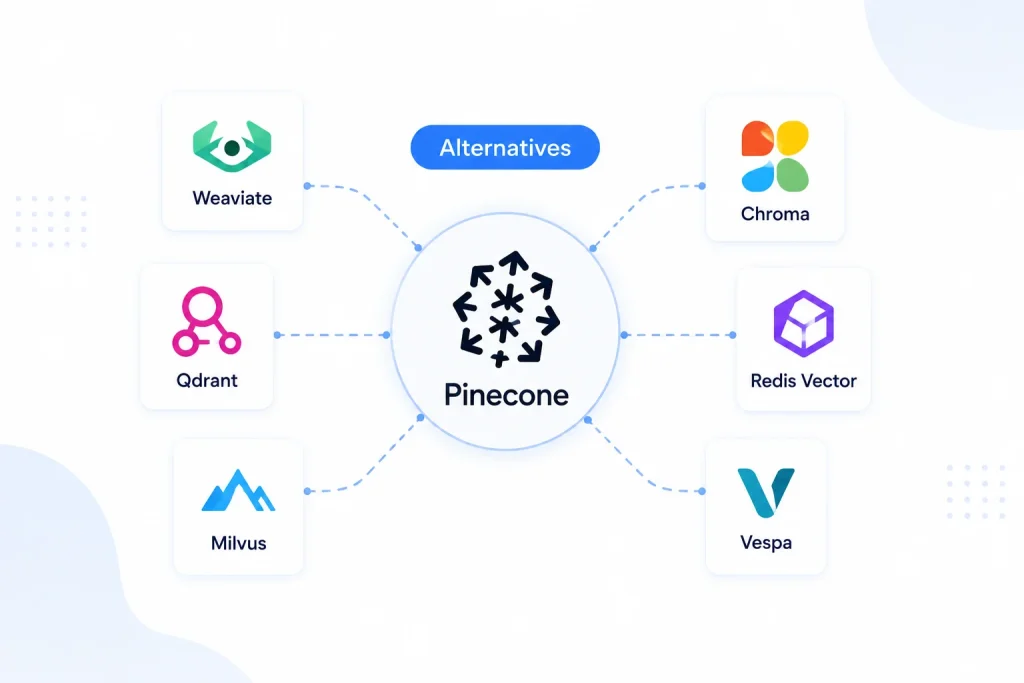
pioneered the managed category and removed capacity planning entirely with its serverless architecture — you never size a cluster. The trade-off is that there’s no self-hosting option at all, and serverless recall is fixed near 90% with no tuning. Consumption pricing means costs track query volume. Covered in depth in our Pinecone alternatives guide.
Zilliz Cloud
is managed Milvus, bringing distributed billion-scale architecture without the operational burden of running it yourself.
Weaviate Cloud
offers Shared and Dedicated tiers, with dimension-based pricing and BM25 hybrid included on Shared. Dedicated Cloud addresses compliance and data-residency requirements.
Qdrant Cloud
provides managed nodes with capacity-based pricing — no per-query charge, which inverts the economics favorably at high query volume.
Self-hosted and hybrid
Milvus
is the heavyweight: distributed, highest write throughput of the major options, with disk-based indexing that saves substantial RAM at very large scale. Correspondingly the most operationally demanding.
Qdrant
self-hosts cleanly and cheaply, with the strongest filtered-search performance in the category.
Weaviate
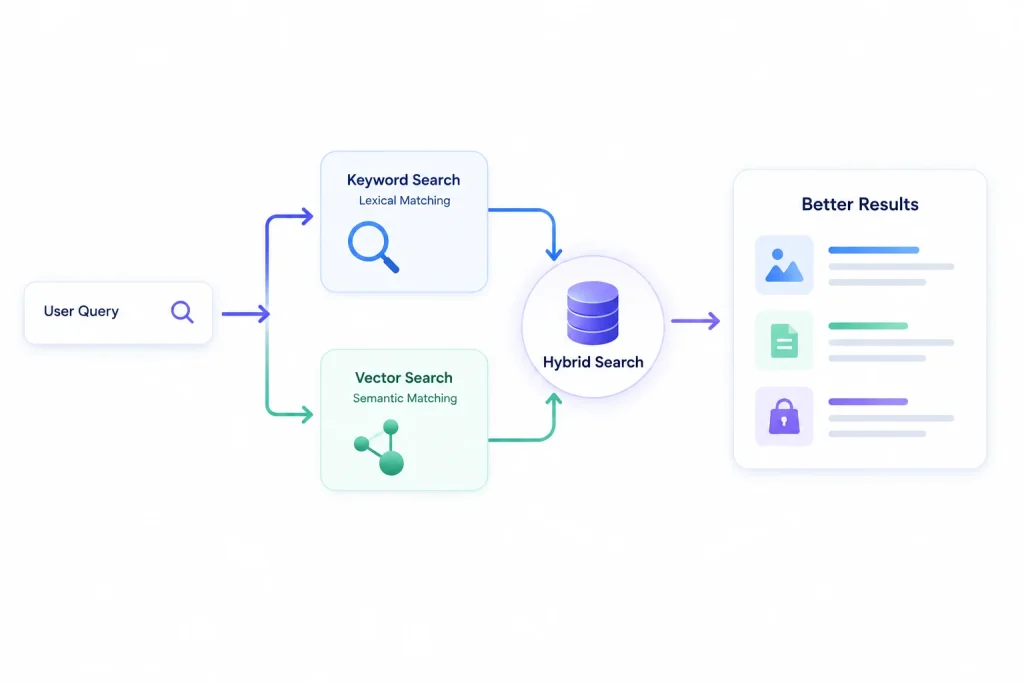
self-hosts with the caveat that it’s resource-hungry, and it remains the strongest native hybrid implementation — see vector database hybrid search.
pgvector
remains the vector database management approach most teams should try first: it isn’t a separate system at all, so your existing Postgres tooling — backups, monitoring, access control, replication — covers vectors too. That’s a genuine operational advantage the dedicated systems can’t match.
Inside existing platforms
Elasticsearch, OpenSearch, MongoDB Atlas, and Couchbase all added vector support to established platforms. If one is already in your stack, its management tooling is already familiar and already staffed.
For feature-level comparison see our vector database comparison.
AI Search Grader by bCloud AI
Grade your ecommerce search in 10 quick questions
31% of ecommerce searches return zero results — and most shoppers who hit a dead end leave for a competitor. How does your store's search stack up?
Answer 10 short questions and get your AI search score, plus a personalized report to fix the gaps. Free, takes about 2 minutes.
No signup needed to take the quiz.
Understanding intent…
Scoring your answers across relevance, AI, experience, and insights.
Your AI search score is ready
Tell us where to send your personalized report. You'll see your score and recommendations right away.
Your score by pillar
Personalized recommendations
Fix the gaps in weeks, not quarters
bCloud AI replaces keyword-only search with hybrid AI retrieval — sub-200ms responses, 99.99% uptime, and conversion lifts of up to 40% across 50+ implementations.
Vendor lock-in: the question worth asking early
“Best vector database to avoid vendor lock-in” is a real query in this category, and the concern is legitimate — but the risk is often misunderstood.
What doesn’t lock you in:
the vectors themselves. If you keep the same embedding model, vectors transfer between systems directly without re-embedding. That makes migration far cheaper than teams assume.
What actually locks you in:
three things. Egress charges on extracting large datasets from a managed provider. Query API differences, since filtering syntax and hybrid query construction vary enough that application code needs rewriting. And operational habits — monitoring, alerting, and runbooks built around one system’s behavior.
How to reduce it, cheaply:
keep source-of-truth embeddings in your own object storage, as covered in our vector embeddings storage guide. That single decision removes the egress problem entirely and turns migration from a project into a reindex. Abstracting your query layer behind an internal interface handles the second risk at modest cost.
Open-source options — Qdrant, Weaviate, Milvus, pgvector — reduce lock-in structurally, since you can always self-host the same software you were consuming as a service.
Operational questions that decide long-term fit
Ask these vector database management questions during evaluation, not after the incident.
How do index rebuilds work?
When you change parameters or quantization, does the system rebuild online without downtime, or does it require a maintenance window? At scale this is the difference between routine and disruptive.
What happens under heavy writes?
Adding vectors is expensive. Does query latency hold while a bulk import runs? Benchmark this specifically — a system that’s fast when idle tells you nothing about behavior during a catalog sync. Our real-time indexing guide covers why write isolation matters.
How does recall change as data grows?
Approximate indexes degrade silently. Does the platform surface recall metrics, or must you build ground-truth benchmarking yourself? See nearest neighbor search.
What’s the backup and restore story?
Snapshot frequency, restore time, and whether restoring requires re-embedding.
How does scaling work operationally?
Automatic, manual with downtime, or manual with a rebalancing process you supervise?
What monitoring is exposed?
Query latency percentiles, memory pressure, index health, and write lag. Systems that hide these make capacity planning guesswork.
What are the multi-tenancy primitives?
If you serve multiple customers, namespace isolation and per-tenant limits matter enormously.
Choosing a vector database management system
Five questions narrow the vector database management field fast.
How many vectors in two years, at what dimensionality?
This determines whether you need a distributed system or whether a single node — or Postgres — suffices. Do the arithmetic at twice your projection.
Managed or self-hosted?
Managed removes operations and adds cost plus dependency. Self-hosted reverses it. The honest test is whether you have someone whose job includes owning this, because a self-hosted system nobody owns becomes a liability within a year.
What are your compliance constraints?
Data residency, certifications, and air-gapped requirements narrow the field immediately and should be checked before any pilot rather than after.
What’s your write pattern?
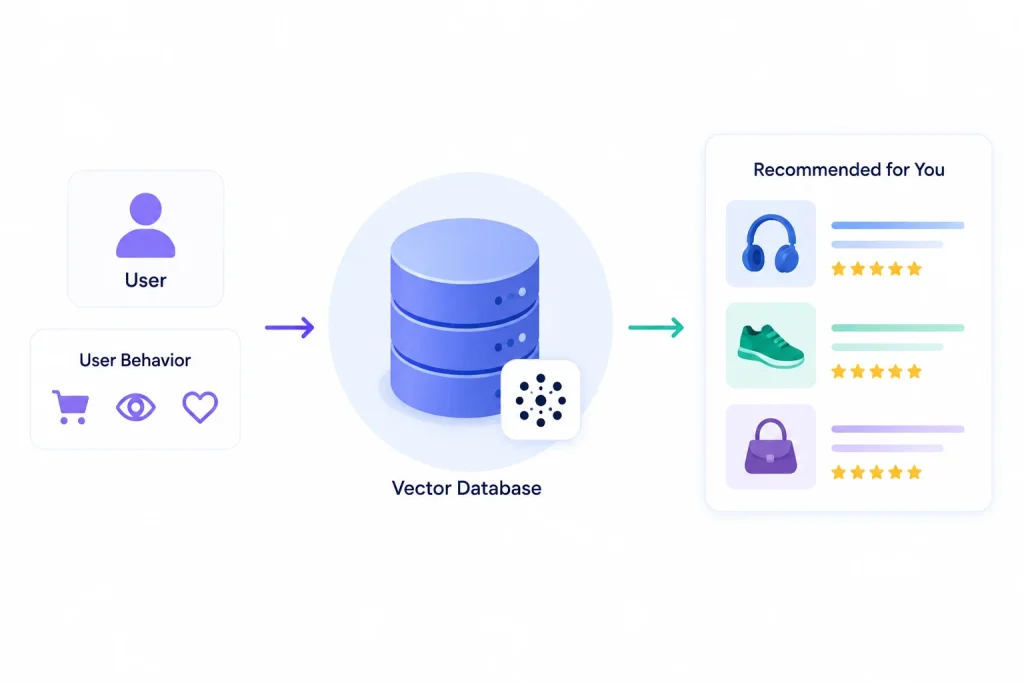
Heavy continuous updates — common with user vectors in a recommendation engine — favor systems built for write throughput.
Who operates it at 3am?
The least technical question and often the most decisive.
Total cost of ownership, honestly
Vector database management costs more than the line item suggests, and the hidden components are consistent across deployments.
Infrastructure
is the visible part — managed subscription or the compute, memory, and storage you provision. It’s also usually the smallest.
Engineering time
is the one that surprises. Initial setup, index tuning, monitoring configuration, and the ongoing attention that keeps recall from drifting. At self-hosted scale this realistically consumes a meaningful fraction of an engineer permanently, which frequently exceeds the subscription it replaced.
Embedding inference
runs continuously if your content changes, and it’s easy to forget when comparing storage prices.
Migration reserve.
You will eventually change something — model, platform, or index parameters — and each triggers a rebuild. Budget for it rather than treating it as an emergency.
The incident cost.
Vector indexes fail in ways conventional databases don’t: memory pressure during a bulk import, recall silently degrading after a parameter change, rebuilds that take longer than the maintenance window allows. Each is survivable and each consumes engineering attention.
The honest test when comparing managed against self-hosted vector database management: model three years fully loaded, including salary. Self-hosting usually wins on infrastructure and loses on total cost until you reach scale where the subscription genuinely dominates — and most teams overestimate how close they are to that point.
Migration and exit planning
Worth doing before you sign, because it’s cheapest then.
Negotiate export terms up front.
Configuration export, data portability, and contract terms that don’t penalize leaving are straightforward to secure during procurement and awkward to request later. A vendor confident in their product won’t resist.
Document your index configuration
— parameters, quantization settings, distance metrics, filter schemas — outside the vendor’s console. This is what you’d need to reproduce behavior elsewhere, and it’s routinely lost.
Test a restore annually.
Backups you’ve never restored aren’t backups. This applies with extra force to vector indexes, where restore may require re-embedding.
Keep query-layer abstraction shallow but real.
A thin internal interface over the vendor SDK costs little and means a future migration touches one module instead of your whole application.
One honest note if you’re evaluating vector database management for ecommerce search specifically.
The vector database is roughly a fifth of a product search stack. You’ll also own the embedding pipeline, keyword retrieval for SKUs, fusion logic, business-signal reranking, merchandising controls, and analytics — plus the operational surface described above, permanently.
That’s the right investment when discovery genuinely differentiates your business. For most retailers it isn’t, which is why managed search platforms exist: bCloud AI includes the vector index, embedding pipeline, hybrid retrieval, reranking, and merchandising as one service, so vector database management simply isn’t your team’s problem. Our top semantic search solutions for e-commerce roundup compares that category against building.
Either path works. The failure mode is choosing the build without recognizing the operational commitment attached to it.
Team and staffing realities
The question that decides most vector database management outcomes isn’t technical.
Who owns it?
Not “which team,” but which named person has this in their objectives. Systems without a clear owner drift: parameters stay at defaults nobody chose, recall degrades unmeasured, and the first incident becomes an archaeology exercise.
What happens when they leave?
Vector database management knowledge concentrates fast — one engineer understands the index configuration, and it isn’t written down. Documentation and a second person who can operate it are cheap insurance against an expensive gap.
Is the expertise transferable?
Postgres skills are common and hireable. Deep Milvus operational knowledge is not. That’s a real argument for pgvector at moderate scale, entirely separate from the technical comparison — you’re choosing a staffing market as much as a system.
What’s the escalation path?
Managed services provide support; self-hosted means your team is the support. For a system in the critical path of revenue, that distinction matters at 3am.
Frequently asked questions
What is a vector database management system?
A vector database management system is the software layer handling storage, retrieval, and administration of vector embeddings — index lifecycle, memory management, sharding, write consistency, backup and recovery, and access control. It differs from a conventional DBMS because approximate indexes degrade as data changes and consume far more memory than row storage.
What are the top vector database management systems?
Fully managed options include Pinecone, Zilliz Cloud, Weaviate Cloud, and Qdrant Cloud. Self-hosted options include Milvus for billion scale, Qdrant for filtered performance, Weaviate for hybrid search, and pgvector inside Postgres. Elasticsearch, OpenSearch, MongoDB Atlas, and Couchbase add vectors to existing platforms.
Which vector database avoids vendor lock-in best?
Open-source systems you can self-host — Qdrant, Weaviate, Milvus, and pgvector — reduce lock-in structurally. More important than vendor choice: keep source-of-truth embeddings in your own object storage, which eliminates egress costs, and abstract your query layer so API differences don’t require rewriting application code.
Should I use a managed or self-hosted vector database?
Managed removes operational burden and adds cost plus dependency; self-hosted reverses that. The deciding question is whether someone’s job actually includes owning it. A self-hosted system without a clear owner becomes a liability, while managed services suit teams who want to ship features rather than operate infrastructure.
How hard is a vector database to operate?
Harder than a conventional database in specific ways: index rebuilds, memory pressure from RAM-hungry indexes, expensive writes that can degrade query latency, and recall that degrades silently without monitoring. pgvector is the easiest path because your existing Postgres tooling already covers backups, monitoring, and access control.
What should I ask vendors during evaluation?
How index rebuilds work and whether they need downtime, what happens to query latency under heavy writes, whether recall metrics are exposed, backup and restore specifics, how scaling works operationally, what monitoring is available, and what multi-tenancy primitives exist.
Vector database management, handled.
bCloud AI runs the index, embedding pipeline, and retrieval as one managed service — no rebuilds, no memory tuning, no 3am pages.
bcloud.ai