

Ecommerce Site Search Software in 2026: A Complete Buyer's Guide
How Ecommerce Site Search Search Works
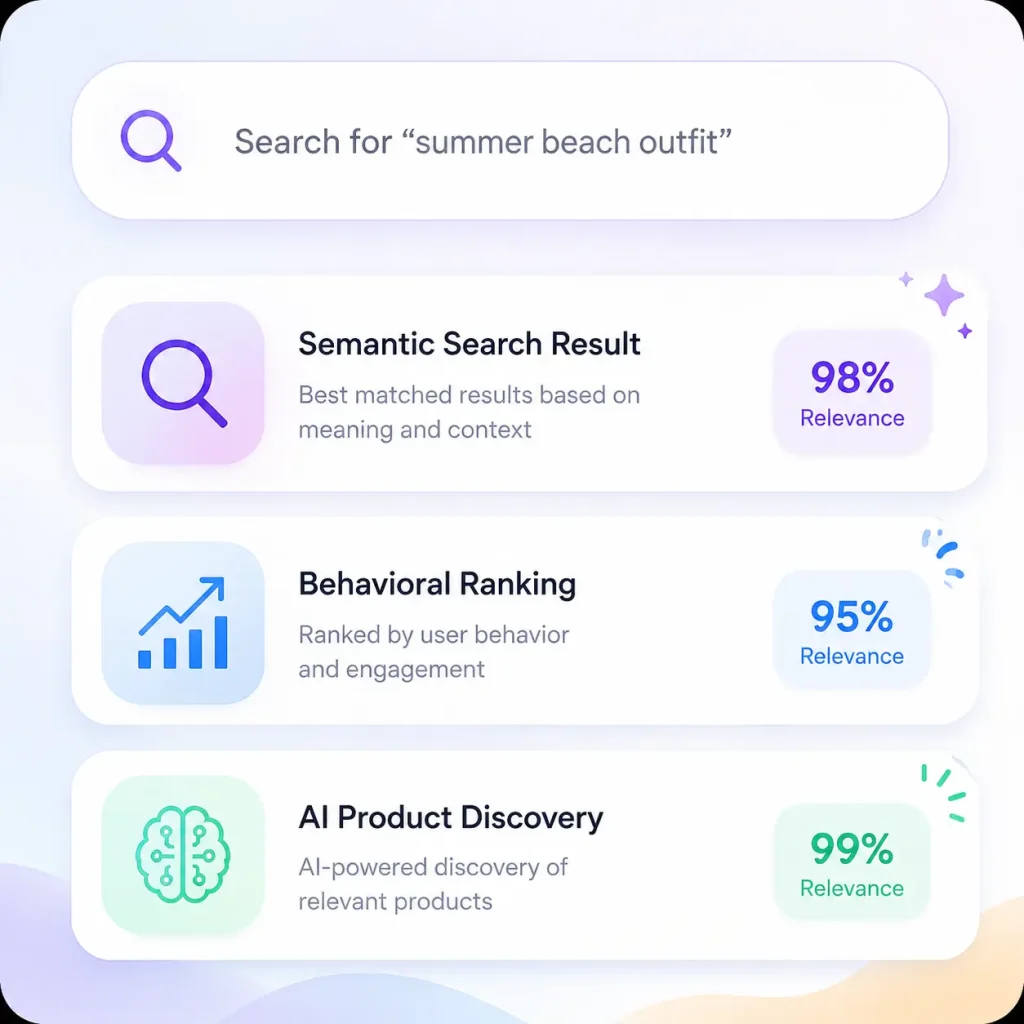
Indexing
Pulling product data from your PIM, ERP, or commerce platform and structuring it for retrieval.
Retrieval
Matching shopper queries to products using keyword, vector, or hybrid models to get the correct output.
Ranking
Ordering results based on relevance, business rules, inventory, margin, and behavior.
Merchandising & analytics
Letting growth teams pin, boost, bury, and measure outcomes without engineering.
The 7 evaluation criteria for ecommerce site search software
The four categories of ecommerce site search software
Category
Examples
Add Your Heading Text Here
How to pick the right ecommerce site search software
Catalog Size
The right pick depends on catalog size, monthly traffic, and engineering capacity.
Monthly Traffic
Stores under 10K SKUs with light traffic can validate any of the top tools quickly.
Engineering Capacity
Mid-market retailers benefit most from AI-native ecommerce site search software that includes semantic search by default.
Enterprise Scale
Enterprise platforms with dedicated search engineering can sometimes justify self-managed Elasticsearch.
Conversion Impact
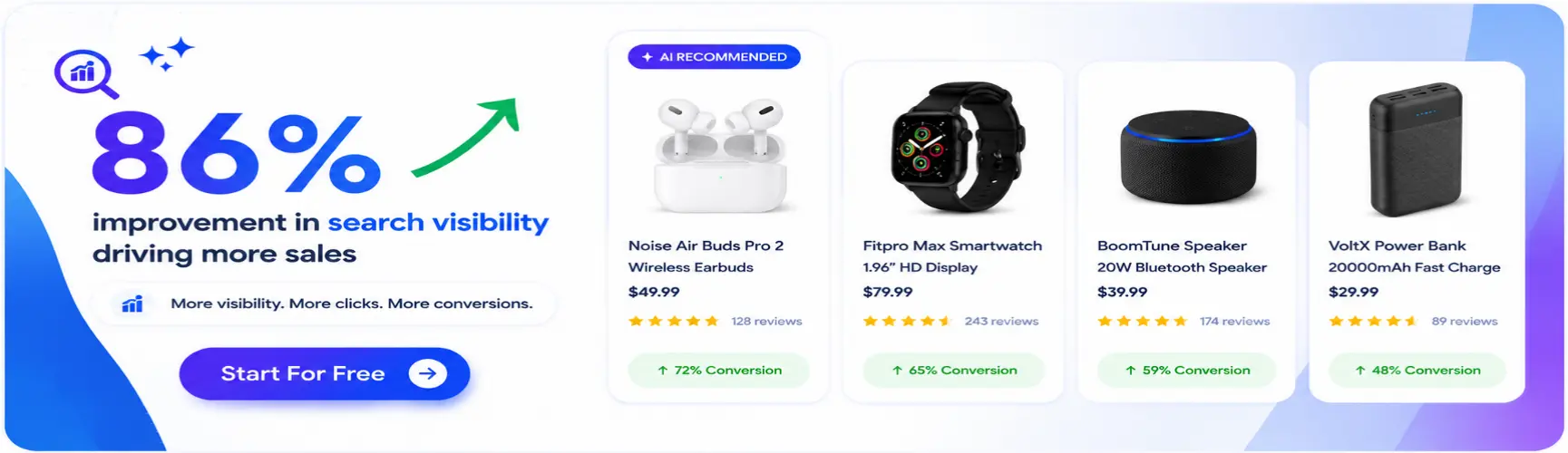
Whichever route you go, the right ecommerce site search software pays for itself in weeks — measurable lifts in click-through rate, lower zero-results pages, and 20–40% conversion gains are typical when teams move from default storefront search to a purpose-built platform.
Why bCloud AI Powers Smarter Product Search
Intent-Aware Search Engine
Goes beyond keyword matching — bCloud AI reads shopper intent, detects context, and ranks results the way a knowledgeable store associate would.
01
02
Grocery & Retail Native
Designed specifically for grocery and retail catalogs — understands pack sizes, dietary tags, brand variants, and category hierarchies out of the box.
Sub-100ms Response Time
Lightning-fast results even at high catalog volumes. bCloud AI is optimised for speed so shoppers never wait — reducing bounce and boosting add-to-cart rates.
03
04
Learns From Every Session
Continuously improves ranking models based on real shopper behaviour — clicks, purchases, and zero-result queries all feed back into the engine automatically.
Platform-Agnostic Integration
Works with Shopify, WooCommerce, Magento, BigCommerce, and custom stacks. Plug in via REST API or pre-built widgets — live in days, not months.
05
06
Search Analytics Dashboard
Real-time visibility into zero-result queries, top search terms, and conversion by keyword — so merchandisers can act on data, not guesswork.

Why Modern Ecommerce Search Matters
Higher conversion
$43K
Avg. annual revenue added per percentage point of conversion improvement
Revenue lift
20–40%
Uplift reported by merchants who replaced keyword search with AI-powered search
Latency hurts conversion
500ms+
Search delays beyond 500ms measurably reduce shopper engagement and add-to-cart rates
Related posts
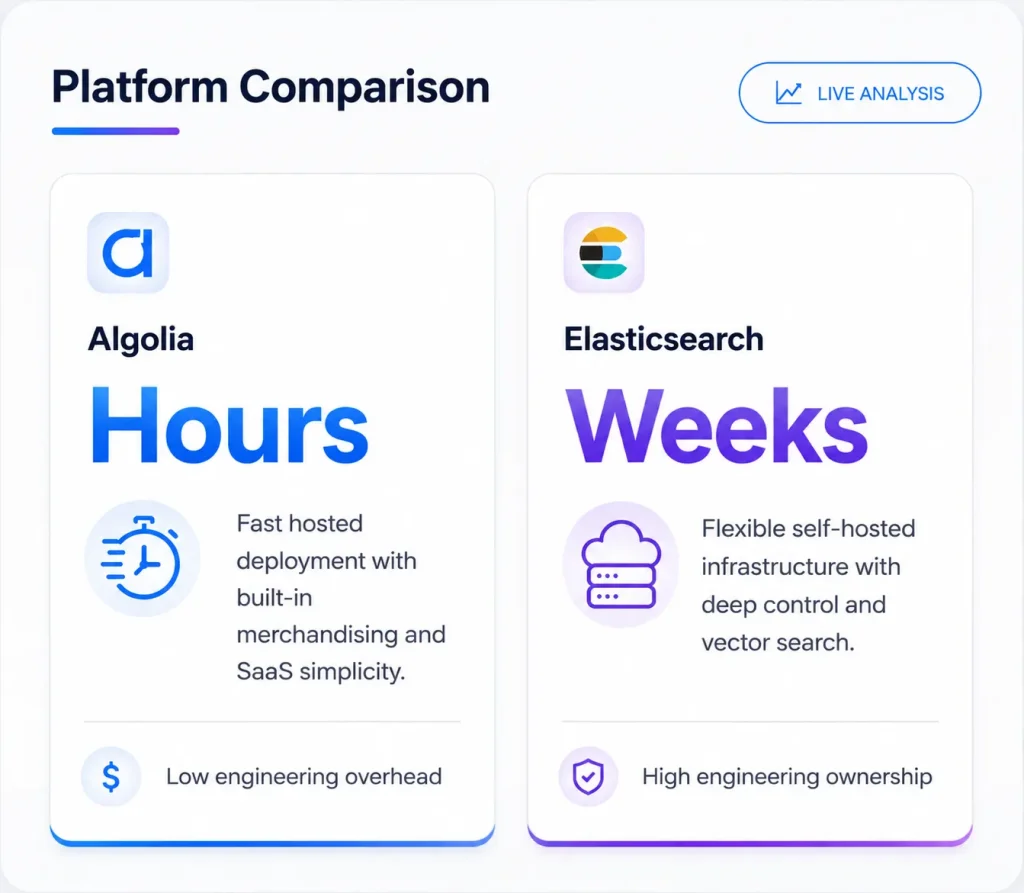
Algolia vs Elasticsearch
The Algolia vs Elasticsearch debate is one of the most common tech-stack decisions e-commerce and SaaS teams make.

Switch-From-Algolia
Algolia’s per-search pricing punishes you for scale. We charge one flat monthly fee that covers unlimited searches—plus our AI is 10x smarter.
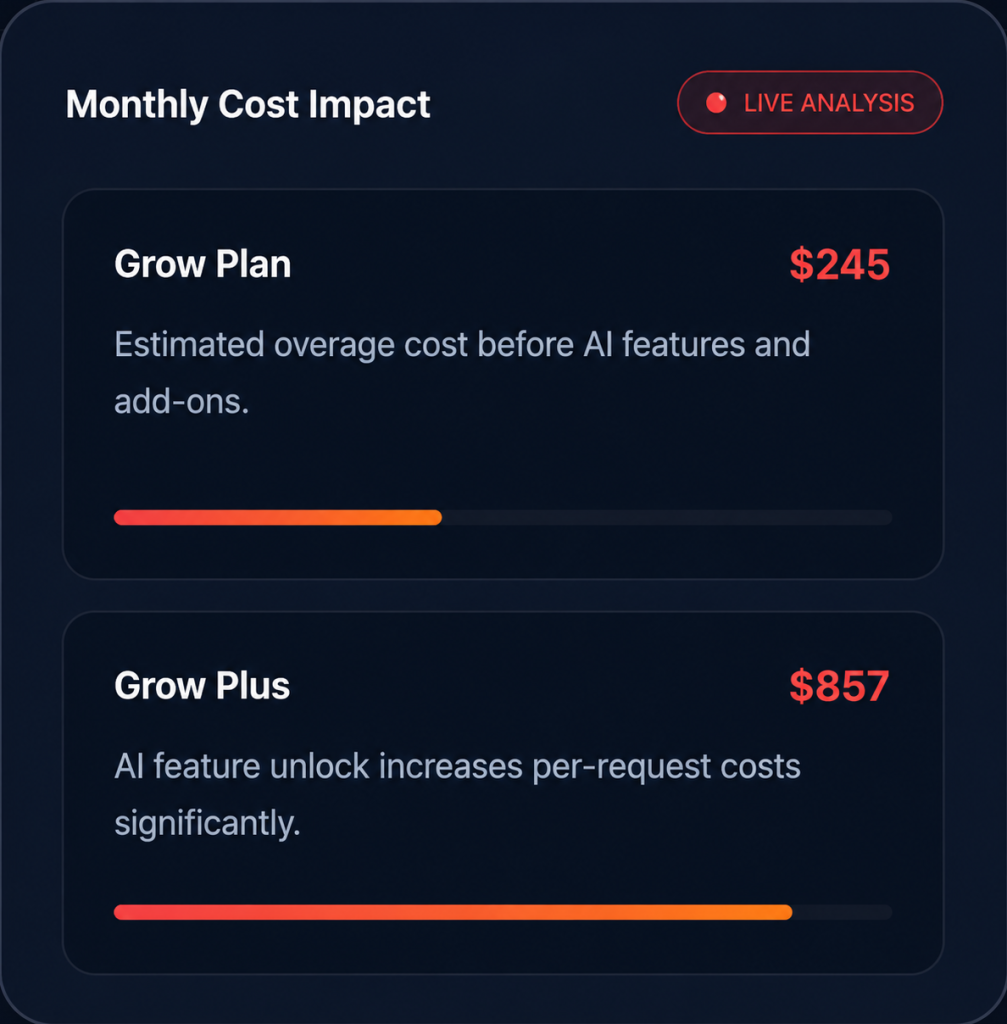
Algolia pricing
Understanding Algolia pricing matters because the published rates rarely reflect the real monthly invoice.
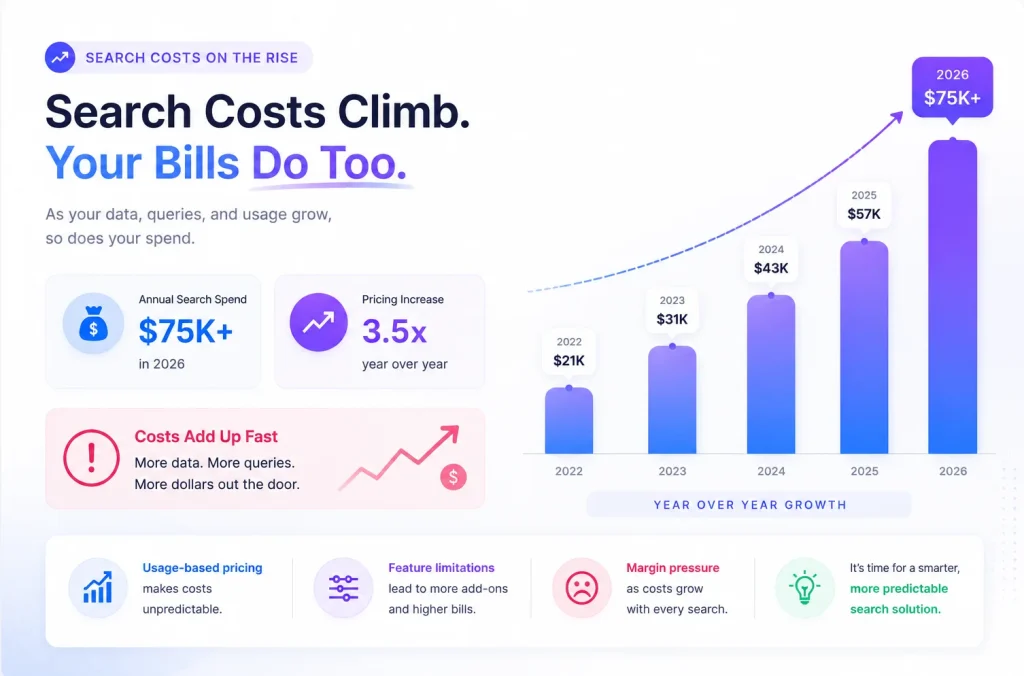
Algolia Too expensive
The real cost math behind search pricing at scale — and what fast-growing ecommerce teams switch to next.
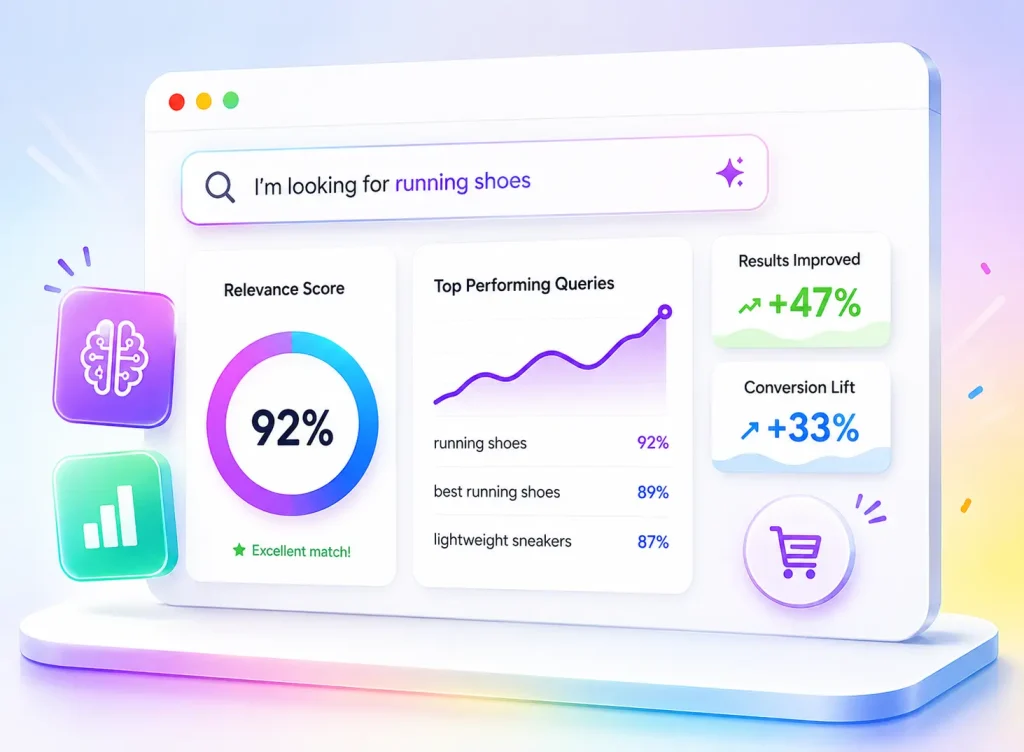
Algolia Alternative
If you’ve been searching for an Algolia alternative, you’re not alone.
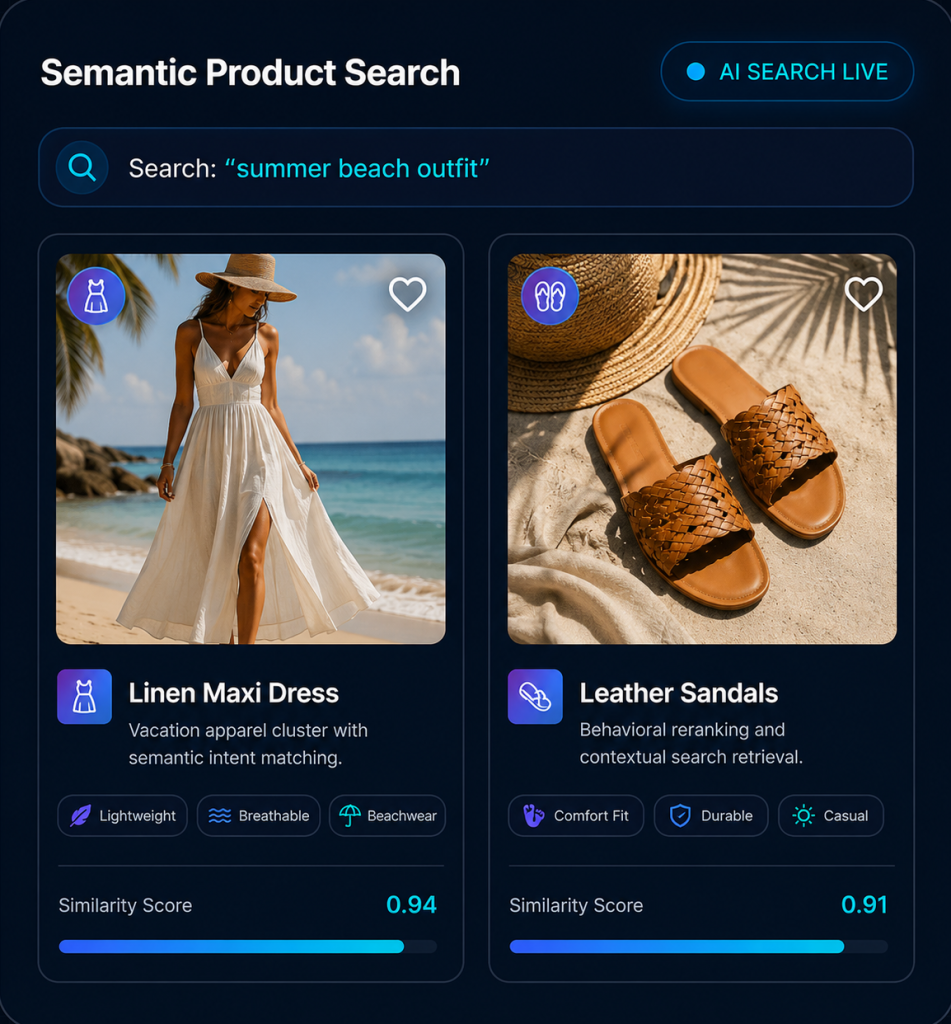
Hawksearch Alternative
Hawksearch has been a steady choice for B2B and B2C catalogs since the early 2010s, but as AI-powered retrieval has redefined search.

bCloud AI vs 50 Competitors
Hawksearch is built on keyword matching and manual rules—technology from 2015.
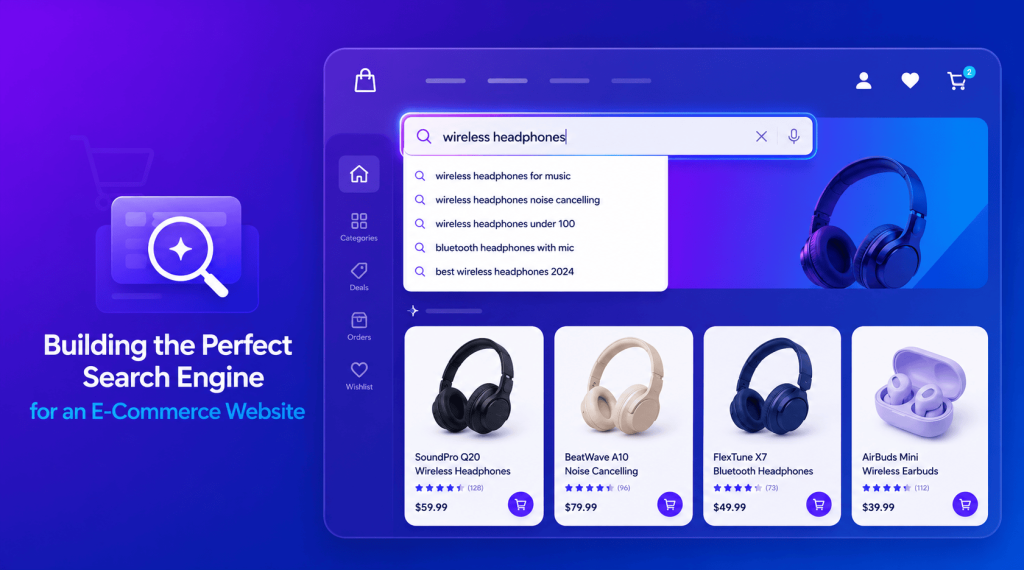
E-Commerce Search Advanced
Transform product discovery with AI-powered search.
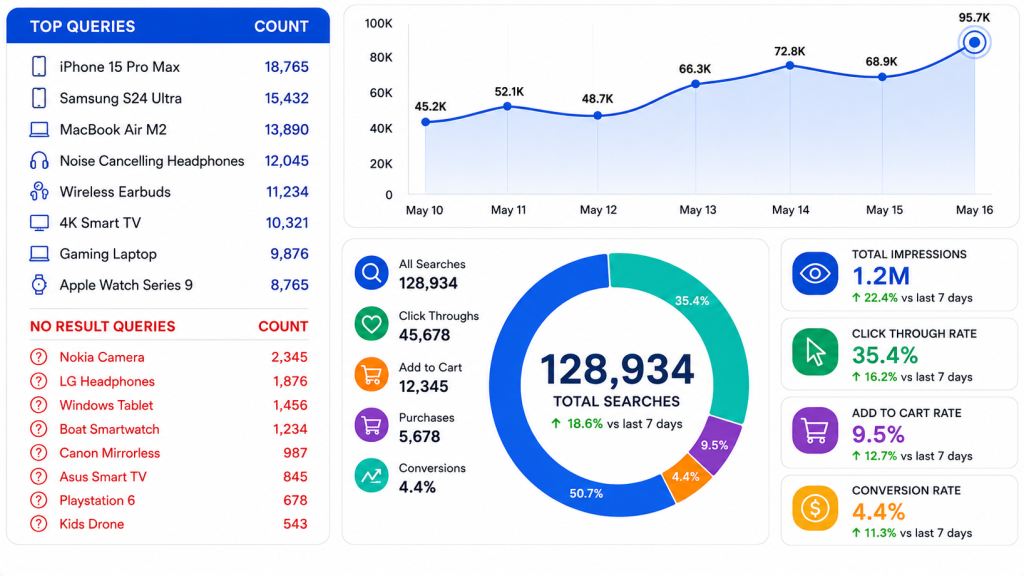
Analytics
Convert raw user behaviour into concrete next steps with a comprehensive analytics suite built for search, discovery, and recommendation intelligence.

AI Search
E-commerce search engine makes all the difference between a sale and an abandoned cart.
Frequently asked questions
What is ecommerce site search software and why does it matter?
What should I look for when evaluating ecommerce search tools in 2026?
How is AI-powered search different from traditional keyword search?
What makes bCloud AI different from other ecommerce search platforms?
How long does it take to integrate bCloud AI into my store?
What catalog size is bCloud AI designed for?
Can merchandisers control search rankings without writing code?
Does bCloud AI support multilingual search?