
As digital commerce continues to evolve, businesses are looking beyond traditional site search solutions to deliver faster, smarter, and more personalized customer experiences. While Algolia remains a popular choice, many organizations are exploring alternatives that offer better AI capabilities, flexible pricing, enhanced customization, and industry-specific features.
As businesses explore various Algolia alternatives, they often prioritize advanced AI features and user-friendly interfaces.
In this guide, we’ll explore the top Algolia alternatives in 2026 and help you determine which solution is best suited for your business.
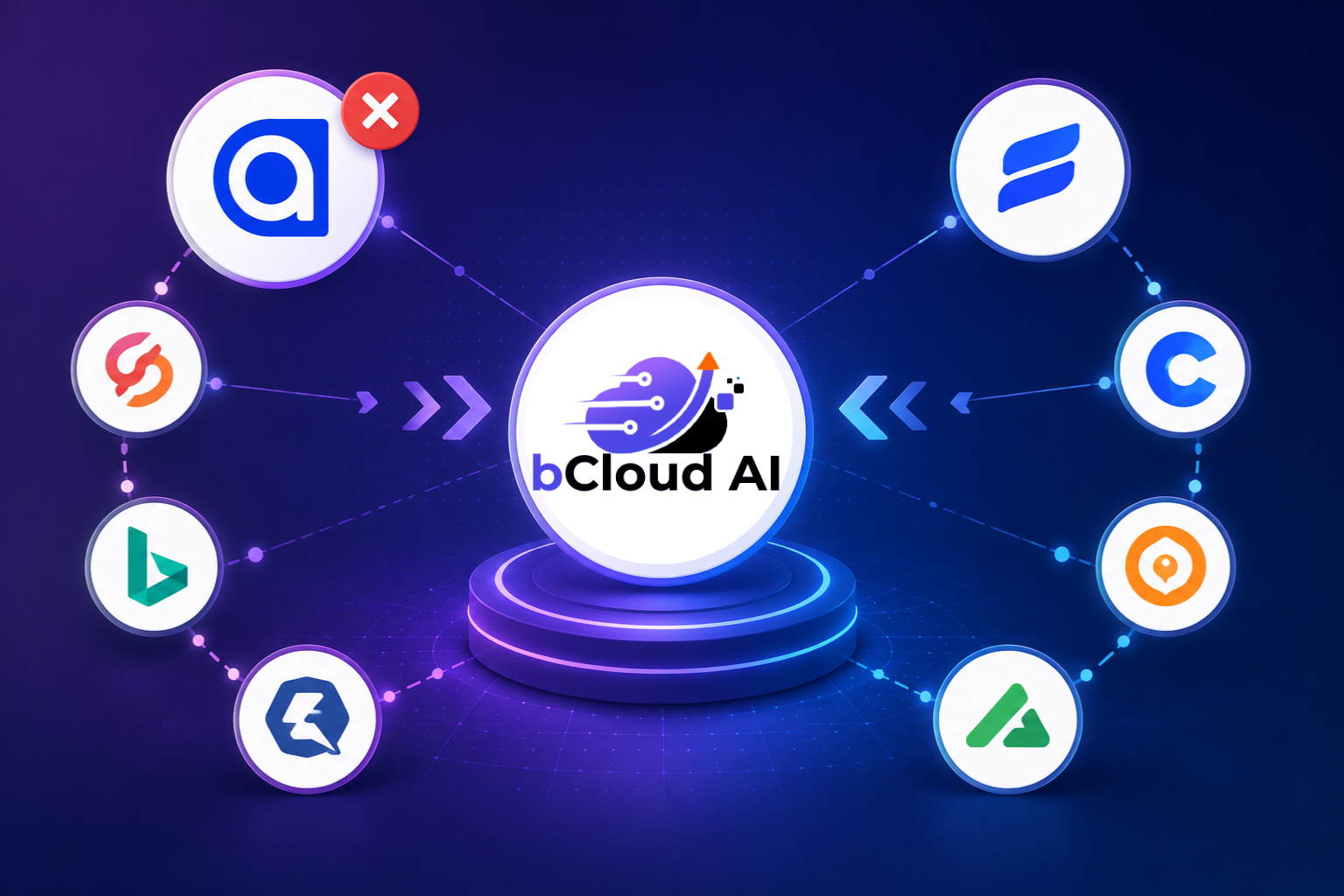
1. bCloud AI Search
Best For:
eCommerce businesses, online marketplaces, Shopify, BigCommerce, Magento, and WooCommerce stores.
Key Features
- AI-powered semantic search
- Vector and hybrid search
- Natural language queries
- Intelligent product recommendations
- Merchandising controls
- Real-time indexing
- Generative AI-powered product discovery
Advantages
The growing interest in Algolia alternatives reflects the demand for customizable search solutions.
- * Built specifically for modern eCommerce experiences
- * Optimized for higher conversions and customer engagement
- * Faster implementation with lower operational costs
- * Supports advanced AI search experiences out of the box
Ideal Use Cases
- * Retail brands
- * Multi-vendor marketplaces
- * Enterprise eCommerce stores
- * B2B commerce platforms
2. Coveo
Large enterprises requiring advanced personalization and knowledge management.
Key Features
- * AI relevance tuning
- * Personalized recommendations
- * Enterprise search
- * Customer service optimization
- * Analytics and reporting
Many teams are now considering Algolia alternatives that offer unique features and better pricing.
Pros
- * Strong AI capabilities
- * Excellent enterprise integrations
- * Advanced personalization engine
Cons
- * Higher implementation complexity
- * Premium pricing
3. Elasticsearch
Best For:
Organizations seeking complete control over their search infrastructure.
Key Features
- * Full-text search
- * Vector search
- * Hybrid search architecture
- * Open-source flexibility
- * Real-time analytics
Pros
Understanding the strengths of Algolia alternatives can provide your business a competitive edge.
- * Highly customizable
- * Scalable for large datasets
- * Strong developer community
Cons
- * Requires technical expertise
- * Higher maintenance requirements
4. Typesense
Best For:
Startups and growing SaaS companies.
Key Features
- * Instant search results
- * Typo tolerance
- * Vector search support
- * Open-source architecture
Pros
- * Easy deployment
- * Cost-effective
- * Developer-friendly
Cons
- * Limited enterprise features compared to larger platforms
5. Meilisearch
Best For:
Businesses looking for a lightweight and affordable search solution.
Key Features
- * Fast indexing
- * Typo-tolerant search
- * Open-source platform
- * Simple API integration
Pros
- * Easy to use
- * Fast setup
- * Cost-efficient
Cons
- * Fewer AI-driven capabilities
6. Constructor.io
Best For:
Enterprise retailers focused on maximizing revenue through AI-powered merchandising.
Key Features
- * Product recommendations
- * Personalized search results
- * Browse optimization
- * Retail-specific analytics
Pros
- * Strong retail performance
- * Advanced merchandising tools
Cons
- * Premium pricing model
7. Bloomreach Discovery
Best For:
Enterprise commerce brands seeking a unified search and personalization platform.
Key Features
- * AI-powered product discovery
- * Search and merchandising
- * Personalized shopping experiences
- * Customer behavior analytics
Pros
- * Commerce-focused platform
- * Excellent personalization capabilities
Cons
- * Higher implementation costs
AI Search Grader by bCloud AI
Grade your ecommerce search in 10 quick questions
31% of ecommerce searches return zero results — and most shoppers who hit a dead end leave for a competitor. How does your store's search stack up?
Answer 10 short questions and get your AI search score, plus a personalized report to fix the gaps. Free, takes about 2 minutes.
No signup needed to take the quiz.
Understanding intent…
Scoring your answers across relevance, AI, experience, and insights.
Your AI search score is ready
Tell us where to send your personalized report. You'll see your score and recommendations right away.
Your score by pillar
Personalized recommendations
Fix the gaps in weeks, not quarters
bCloud AI replaces keyword-only search with hybrid AI retrieval — sub-200ms responses, 99.99% uptime, and conversion lifts of up to 40% across 50+ implementations.
How to Choose the Right Algolia Alternative
Exploring Algolia Alternatives
Before selecting a search platform, consider the following factors:


Conclusion
While Algolia remains a strong contender, businesses now have access to a wide range of advanced alternatives that offer better AI capabilities, greater flexibility, and industry-specific features.
Businesses should continuously evaluate their search needs to determine the best Algolia alternatives available.
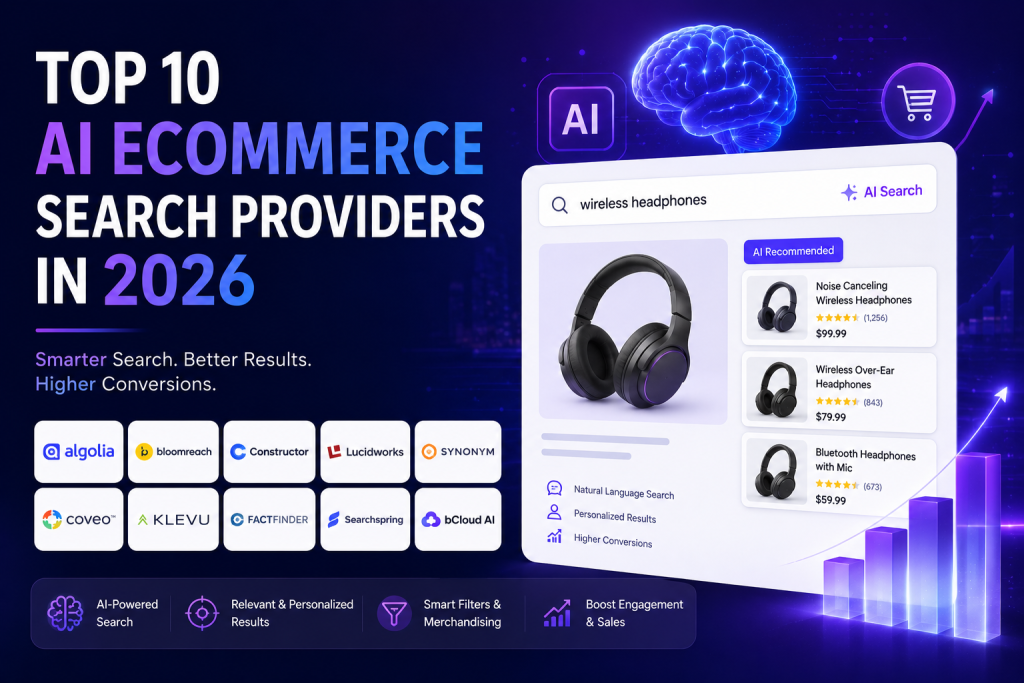
For eCommerce businesses looking to maximize product discovery and conversions, solutions like bCloud AI Search, Constructor.io, and Bloomreach Discovery provide powerful AI-first experiences. For organizations requiring custom infrastructure, Elasticsearch, Typesense, and Meilisearch remain excellent options.
Ultimately, investing in the right Algolia alternatives can lead to improved customer satisfaction and higher sales.
The right choice ultimately depends on your business goals, technical requirements, and long-term growth strategy.
As businesses increasingly prioritize AI-powered product discovery and personalized user experiences, the demand for reliable Algolia Alternatives continues to grow. Modern Algolia Alternatives offer advanced features such as semantic search, vector search, conversational AI, and intelligent recommendations that help users find exactly what they need faster. Whether you’re running a Shopify store, BigCommerce marketplace, Magento website, or a custom eCommerce platform, evaluating the best Algolia Alternatives can help improve search relevance, boost conversion rates, and reduce operational costs.
When comparing Algolia Alternatives, it’s important to consider factors such as scalability, AI capabilities, integration flexibility, and total cost of ownership. Leading Algolia Alternatives like bCloud AI Search, Constructor.io, Bloomreach, Elasticsearch, Typesense, and Meilisearch provide unique advantages for different business requirements. By choosing the right Algolia Alternatives, organizations can deliver superior search experiences, increase customer satisfaction, and stay competitive in an increasingly AI-driven digital commerce landscape. As search technology evolves, more businesses are exploring Algolia Alternatives that combine traditional keyword search with semantic understanding and generative AI capabilities.
Businesses exploring Algolia Alternatives are increasingly looking for search platforms that provide advanced AI capabilities, flexible customization, and better control over long-term search costs. Modern alternatives can combine semantic search, vector search, natural language understanding, personalized recommendations, and intelligent merchandising to create more relevant product discovery experiences. Whether you operate a Shopify store, BigCommerce marketplace, Magento website, WooCommerce store, or custom ecommerce platform, comparing the right Algolia Alternatives can help you improve search relevance, support business growth, and deliver a faster, more personalized shopping experience.
How to Choose the Best Algolia Alternative for Your Business
Selecting the right search platform is critical for delivering exceptional user experiences, increasing conversions, and supporting future business growth. Follow these steps to identify the best Algolia alternative for your needs.
Feature Comparison: Top Algolia Alternatives at a Glance
Choosing the right search platform depends on your business goals, AI requirements, scalability, and budget. The comparison below highlights the strengths of the leading Algolia alternatives to help you identify the best fit for your organization.
| Platform | AI Search | Vector Search | Personalization | Best For | Ease of Setup |
|---|---|---|---|---|---|
| bCloud AI Search | ★★★★★ | ✔ | ★★★★★ | Modern eCommerce | Easy |
| Coveo | ★★★★★ | ✔ | ★★★★★ | Enterprise | Moderate |
| Elasticsearch | ★★★★☆ | ✔ | ★★★☆☆ | Custom Infrastructure | Advanced |
| Typesense | ★★★☆☆ | ✔ | ★★☆☆☆ | Startups | Easy |
| Meilisearch | ★★☆☆☆ | Limited | ★★☆☆☆ | Small Businesses | Very Easy |
| Constructor.io | ★★★★★ | ✔ | ★★★★★ | Retail Enterprise | Moderate |
| Bloomreach Discovery | ★★★★★ | ✔ | ★★★★★ | Commerce Brands | Moderate |
Quick Takeaway
If you’re looking for an AI-first search platform built specifically for modern ecommerce, solutions like bCloud AI Search, Constructor.io, and Bloomreach Discovery provide the strongest combination of semantic search, vector search, personalization, and merchandising. Businesses seeking maximum customization may prefer Elasticsearch, while Typesense and Meilisearch are excellent choices for teams prioritizing simplicity and affordability.