
What is ecommerce personalization?
How AI personalization works
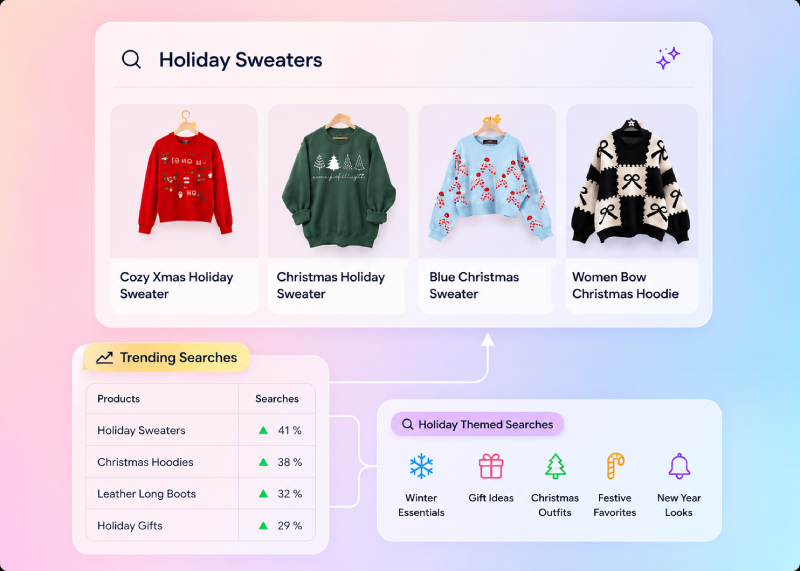
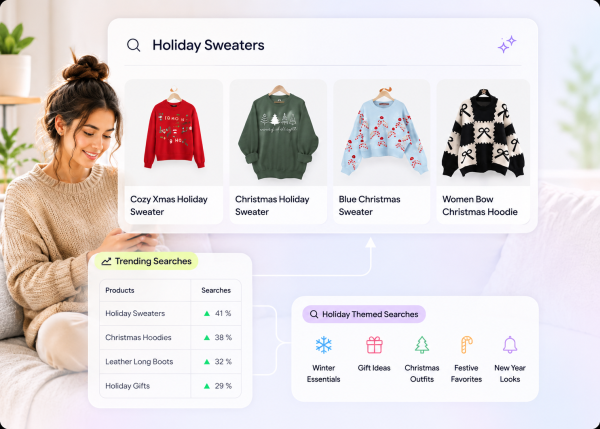
Modern personalization runs on the same engine as intelligent search: signals in, models in the middle, a tailored experience out.
AI Personalization for Ecommerce ensures that both new and returning customers receive relevant recommendations that align with their shopping behavior.
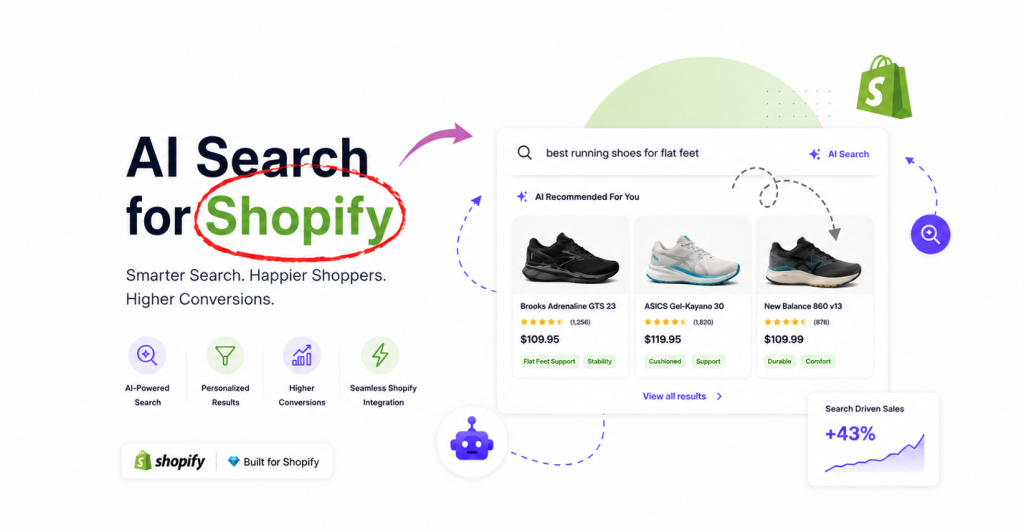
The practical upshot: with real-time personalization, no two customers see the same search results. The experience reshapes itself around each person as they shop.
AI Search Grader by bCloud AI
Grade your ecommerce search in 10 quick questions
31% of ecommerce searches return zero results — and most shoppers who hit a dead end leave for a competitor. How does your store's search stack up?
Answer 10 short questions and get your AI search score, plus a personalized report to fix the gaps. Free, takes about 2 minutes.
No signup needed to take the quiz.
Understanding intent…
Scoring your answers across relevance, AI, experience, and insights.
Your AI search score is ready
Tell us where to send your personalized report. You'll see your score and recommendations right away.
Your score by pillar
Personalized recommendations
Fix the gaps in weeks, not quarters
bCloud AI replaces keyword-only search with hybrid AI retrieval — sub-200ms responses, 99.99% uptime, and conversion lifts of up to 40% across 50+ implementations.
Where personalization shows up on your store
Personalization isn’t one feature in one place — it’s a layer across the journey:
-
🎯
Personalized search results.
The same query returns different, better-fit products depending on who’s searching. -
💡
Product recommendations.
“You may also like,” “frequently bought together,” and “recommended for you” surface complementary, higher-margin items. -
📂
Category and collection ordering.
The products a given shopper is most likely to buy rise to the top of the page. -
🛍️
Merchandising that respects intent.
Bestsellers and seasonal picks adapt to the individual instead of a one-size-fits-all rule.
AI personalization makes the ecommerce journey more relevant by adapting the experience to what each shopper is showing interest in at that moment. Instead of relying only on broad customer segments, an intelligent system can combine browsing behavior, search activity, purchase history, and real-time context to determine which products and experiences are most useful. As shoppers interact with the store, these signals become richer and allow search results, recommendations, category ordering, and merchandising to adjust accordingly. This creates a more responsive shopping experience where customers spend less time filtering through irrelevant products and more time discovering items that match their needs.
The business case: why personalization pays
25–40%
conversion lift with AI-driven search and personalization
20–27%
average order value climb as relevant add-ons surface
↑ LTV
repeat-purchase and lifetime-value gains as experience sharpens
How to choose an AI personalization platform
The market is full of tools that claim to “personalize.” When you evaluate a personalization platform for ecommerce, insist on these:
A quick gut-check in any demo: browse a few products, then search. If the results visibly shift to match what you just looked at, you’re seeing real personalization. If they don’t, you’re seeing static rules.
Common personalization mistakes to avoid
AI Personalization for Ecommerce is essential for businesses aiming to thrive in a competitive market by meeting the unique needs of each shopper.
-
⏱️
Batch over real-time.
Personalizing on yesterday’s data misses today’s intent. -
🔀
Siloing search and recommendations.
Two disconnected tools means two half-pictures of the shopper. -
🆕
Over-personalizing too soon.
A brand-new visitor has little history; lean on smart defaults and similar-shopper patterns until signals accumulate. -
🔒
Ignoring privacy.
Personalization built on shaky data practices is a liability, not an asset. -
📊
No measurement.
If you can’t tie it to conversion and revenue, you can’t defend or improve it.
How to Measure the Success of Ecommerce Personalization
Launching AI personalization is only the beginning. The real value comes from measuring how it improves customer engagement and business performance. By tracking the right metrics, retailers can continuously refine their personalization strategy and maximize return on investment.
Conversion Rate
Measure how many visitors complete a purchase after interacting with personalized search results, recommendations, or landing pages.
Average Order Value
Monitor whether personalized recommendations encourage shoppers to purchase additional or higher-value products.
Repeat Purchases
Successful personalization builds loyalty by encouraging customers to return for future purchases.
Recommendation Performance
Track click-through rate, add-to-cart rate, and purchases generated from personalized product recommendations.
Key KPIs to Monitor
CTR
Recommendation Click Rate
AOV
Average Order Value
LTV
Customer Lifetime Value
ROI
Revenue Generated
Best Practice: Run A/B tests comparing personalized and non-personalized experiences. Measuring incremental improvements in conversion, revenue, and engagement provides clear evidence of the business impact of AI personalization.
Frequently asked questions
Understanding the nuances of AI Personalization for Ecommerce can help you avoid common pitfalls and maximize your platform’s potential.
See personalization that pays for itself.
bCloud AI unifies intelligent search and real-time personalization in one engine — no two customers see the same results, and every interaction makes it smarter. See it on your catalog.