bCloud AI

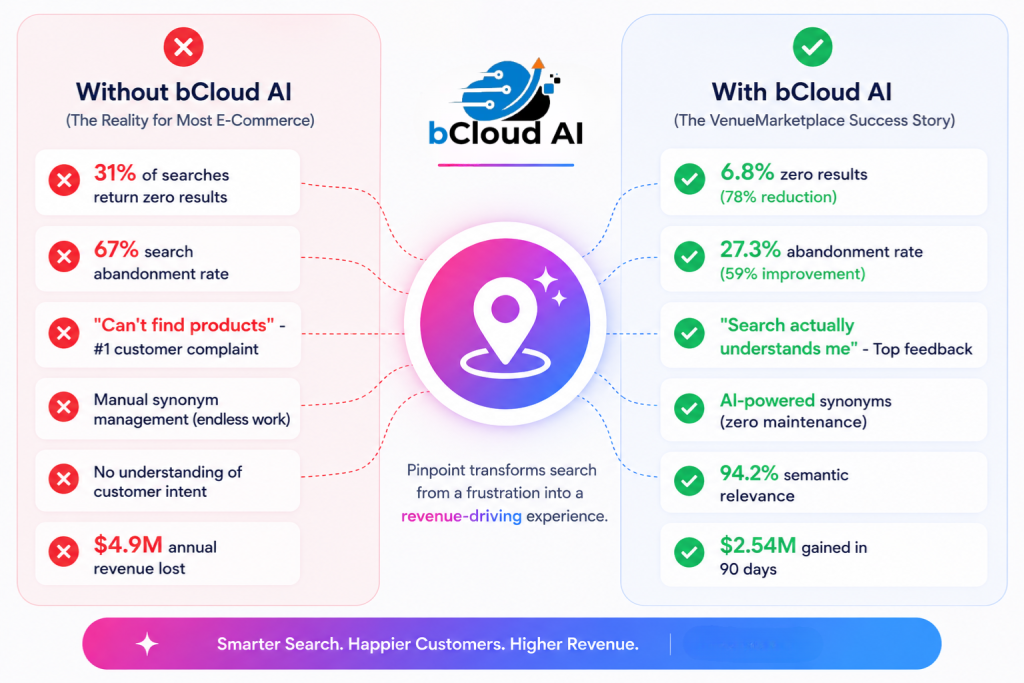
FREE White Paper: How AI Search Generated $2.54M in 90 Days
⚡AI Search Engine

Transform How Your Organization Finds Information
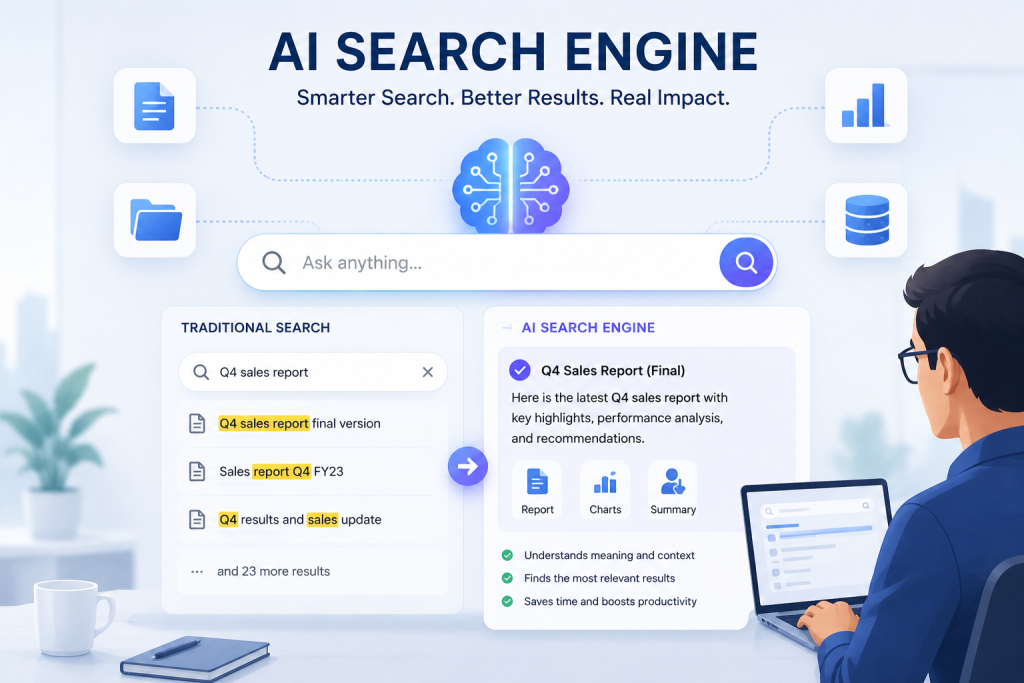
An AI search engine represents one of the most transformative technologies available to modern organizations.
ai search engine

AI Search Engine: The Complete Guide to Modern Enterprise Search Solutions

Unlike traditional search platforms that match keywords, an AI search engine understands meaning, context, and intent. This fundamental difference produces dramatically better results for users and measurable business impact.
This comprehensive guide explains what an AI search engine is, how it works, why every organization needs one, and how to evaluate solutions for your specific situation. Whether you’re evaluating your first AI search engine or upgrading from legacy search infrastructure, this guide will help you make informed decisions.

What Exactly Is an AI Search Engine?

Key capabilities of a modern AI search engine:

How enterprise AI news applies to your industry depends heavily on your specific business. Here’s what enterprise AI news is showing us about major sectors:

🧠

Semantic Understanding

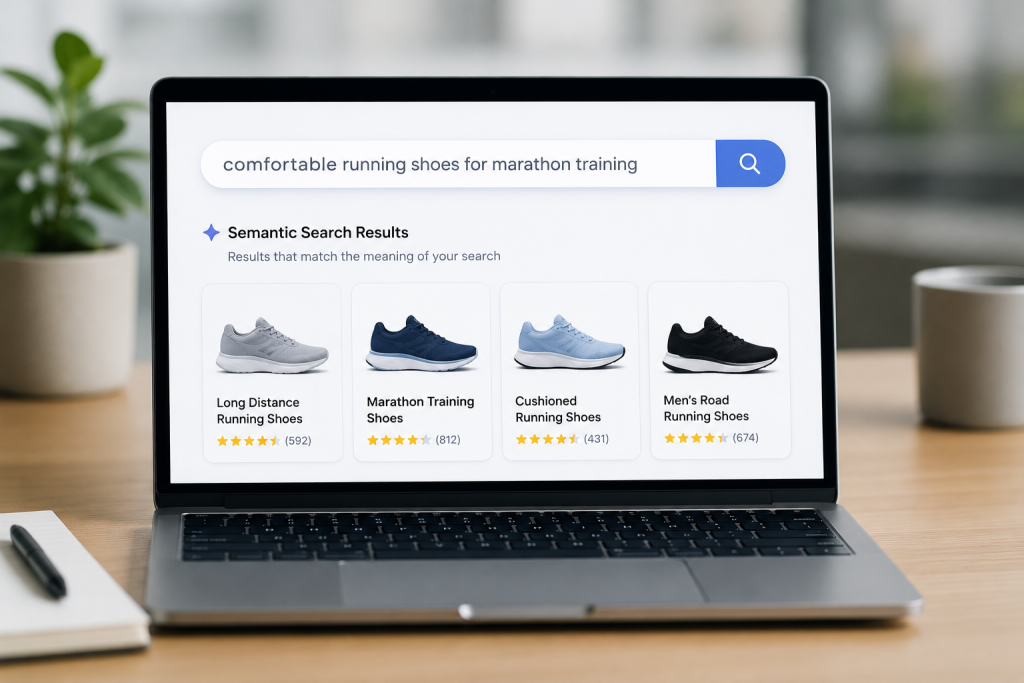
An AI search engine understands concepts, not just keywords. It knows that "running shoes" and "athletic footwear" mean similar things.

🎯

Intent Recognition

An AI search engine determines whether you're trying to research something, make a purchase, or solve a problem—then delivers appropriately targeted results.

👤

Personalization

An AI search engine can adapt results based on user history, role, department, and context.

🌐

Multi-language Support

An AI search engine with proper training understands multiple languages and can search across language barriers.
🔎

Contextual Results

An AI search engine with proper training understands multiple languages and can search across language barriers.

How an AI Search Engine Actually Works

Understanding how an AI search engine works helps you evaluate solutions and plan implementations.

The basic AI search engine process:

Content Ingestion and Processing

Your AI search engine needs to understand all available content. This involves reading documents, web pages, product catalogs, and structured data. Modern AI search engine systems automatically extract meaning from this content.

Vector Embedding Creation

This is where the "AI" part gets interesting. Your AI search engine converts content into mathematical representations called "embeddings" that capture meaning. These embeddings allow the AI search engine to understand that "automobile" and "car" are related.

Query Processing

When a user searches, your AI search engine converts their query into the same type of embedding, then finds content with similar embeddings.

Ranking and Personalization

An AI search engine doesn't just find relevant content—it ranks results by relevance, freshness, popularity, and personalization factors.

Result Delivery and Refinement

Finally, your AI search engine delivers results and learns from user interactions to continuously improve.

AI Search Engine vs. Traditional Search: The Differences That Matter

If you’re familiar with traditional search systems, you’re probably wondering what actually changes when you switch to an AI search engine.
The most important differences:
Result Quality – An AI search engine dramatically reduces zero-result searches. Where traditional search might return nothing relevant, an AI search engine finds what users actually need.
Implementation Complexity – Setting up an AI search engine is more complex than traditional search, but the business impact justifies the effort.
Infrastructure Requirements –An AI search engine requires more computational power than traditional search, but cloud solutions have made this increasingly affordable.
Cost Structure – An AI search engine typically has higher software costs but lower support costs and higher ROI.
User Experience – The end-user experience with an AI search engine is dramatically better. Users get relevant results faster and with less frustration.
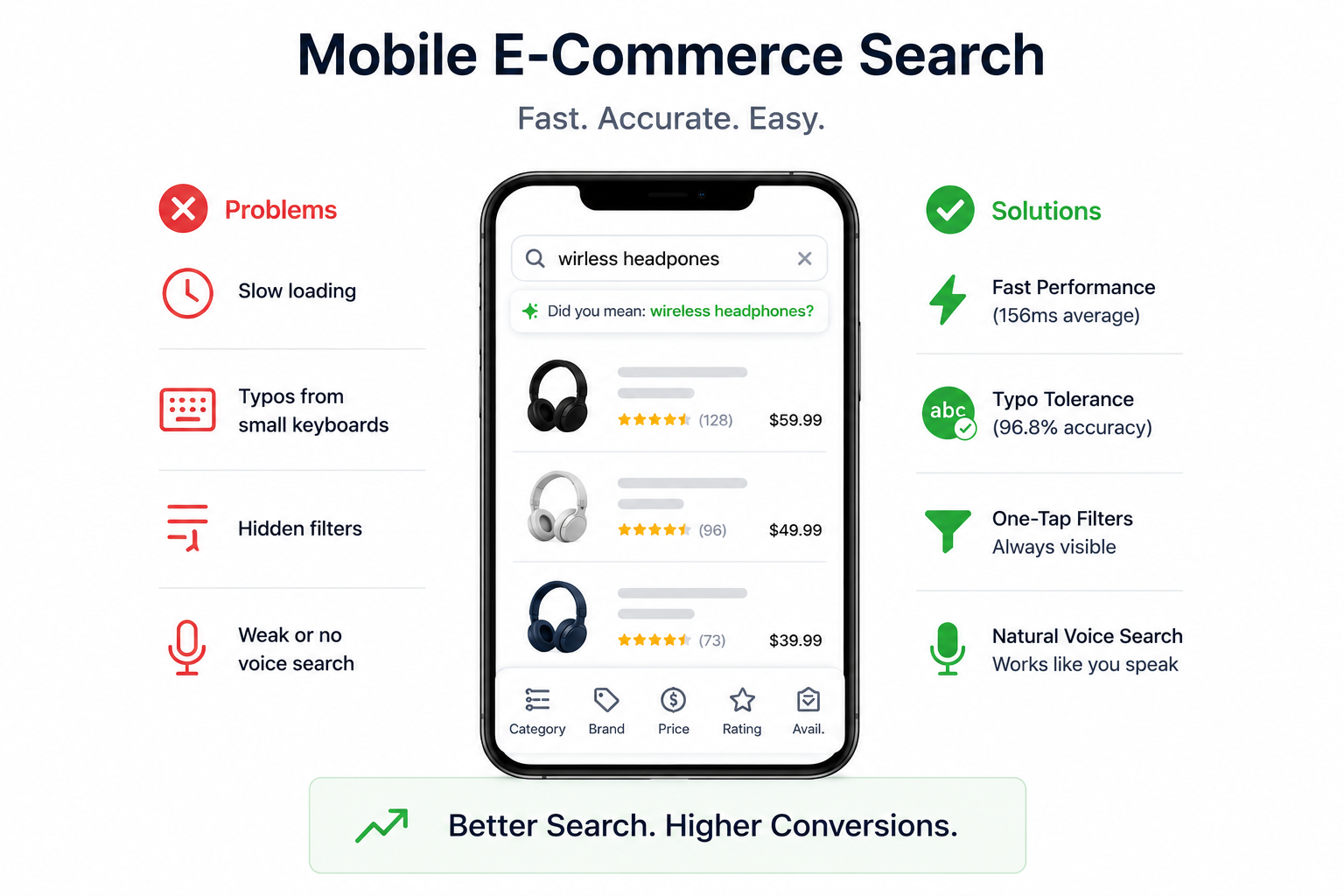
Mobile search

When to Implement an AI Search Engine

Not every organization needs an AI search engine immediately, but most do. Here’s how to assess whether your organization is ready:
Your organization is ready for an AI search engine if:

AI Search Engine Implementation: Real-World Timeline and Costs
Timeline: An AI search engine implementation typically takes 8-16 weeks from contract to full deployment.

Weeks 1-2: Requirements Gathering and Platform Selection
Conduct stakeholder interviews, identify business objectives, define search use cases, audit existing data sources, and evaluate enterprise search platforms based on scalability, security, and integration requirements.
Weeks 3-4: Content Ingestion and Initial Configuration
Connect data repositories, ingest documents and knowledge sources, configure search indexes, establish user permissions, and set up metadata structures to ensure accurate and secure information retrieval.
Weeks 5-8: Testing, Refinement, and Team Training
Perform relevance testing, optimize ranking algorithms, validate security controls, collect user feedback, refine search experiences, and train administrators and key teams on platform management and best practices.
Weeks 9-12: Staged Deployment to Users
Launch the solution to selected departments or pilot groups, monitor performance and adoption metrics, address issues quickly, and gather insights to further improve search accuracy and user satisfaction.Launch the solution to selected departments or pilot groups, monitor performance and adoption metrics, address issues quickly, and gather insights to further improve search accuracy and user satisfaction.
Weeks 13-16: Full Launch and Continuous Optimization
Roll out the platform organization-wide, track KPIs such as search success rates and productivity gains, implement ongoing improvements, expand integrations, and continuously optimize the search experience based on user behavior and feedback.

Pricing That Makes Sense

Annual plan

Enterprise Plus

Enterprise-scale AI Search

Volume-based discounts Custom search requests and records
Everything in Enterprise, Plus:

Free to start, then pay as you go

Enterprise

Everything you need for scale

10K search requests /month included then $1.10 per additional 1K search requests 100K records included then $0.40 per additional 1K records
EVERYTHING IN Premium, Plus:

Premium

Leverage advanced features

10K search requests /month included then $0.40 per additional 1K search requests 100K records included then $0.40 per additional 1K records
INCLUDES:

Core

Get started quickly and grow

Get started building your best search experiences ever with access to our full suite of features to try for free.
INCLUDES:

Related posts

Enterprise Search: Modern Solutions For Organizational Information Access

The ability to quickly find information across documents, databases.

bCloud AI vs Glean

Glean sits firmly in the enterprise tier of search and digital experience platforms. It’s a capable system with deep features — but enterprise knowledge search, not e-commerce product retrieval.

Data Transformation

Streamline data preparation and elevate data quality — automatically cleaning, structuring, and optimising records before they reach your search index.

Semantic Search: Understanding Meaning, Not Just Keywords

Semantic search can find results that don’t use your exact terminology but address your actual need.

Whitepaper_2026

A comprehensive case study with technical implementation details, ROI analysis, and lessons learned from a successful AI search deployment on BigCommerce.

AI Search Engine: Complete Implementation Guide

An AI search engine represents one of the most transformative technologies available to modern organizations.

AI E-Commerce Search Guide

Discover how e-commerce AI search is revolutionizing product discovery, conversion rates, and customer experience.

bCloud AI vs Sinequa

AI-feature depth, total cost of ownership, and the flexibility your growth team has to merchandise without filing engineering tickets.

bCloud AI vs OpenSearch

Comparing OpenSearch and bCloud as your e-commerce search engine? See the head-to-head on AI capability, deployment, pricing, and merchandising.

AI Search: Revolutionizing How Organizations Find Answers

E-commerce search engine makes all the difference between a sale and an abandoned cart.

Evaluating AI Search Engine Solutions

The market for AI search engine platforms has grown dramatically. Here’s how to evaluate options:

Semantic Understanding Quality

Does this AI search engine truly understand meaning, or is it doing sophisticated keyword matching? Test with queries your users actually perform.

Performance and Scale

Can this AI search engine handle your content volume and user load? Test with your actual data.

Integration Capabilities

Does this AI search engine integrate with your existing systems (ecommerce platforms, knowledge bases, document management)?

Customization Options

Can you customize this AI search engine for your specific domain, terminology, and business logic?

Support and Professional Services

Does the vendor provide implementation support, training, and ongoing optimization to the user?

Pricing Transparency

Understand the total cost of ownership for this AI search engine, including software, hosting, implementation, and support.

AI Search Engine Success Stories

Real results from well-executed AI grocery implementations across different retail formats.

Case Study: Ecommerce Retailer
This online retailer implemented an AI search engine across their 50,000-product catalog. Result: 34% reduction in zero-result searches, 28% increase in search-driven conversion rate, $2.1M additional annual revenue.
Case Study: Enterprise Software Company
This SaaS company implemented an AI search engine for their internal knowledge base. Result: 60% reduction in support tickets related to “how do I find X,” 25% faster customer issue resolution.
Case Study: Healthcare Organization
This healthcare system implemented an AI search engine for clinical information. Result: Clinicians spend 40% less time searching for patient information, 15% improvement in diagnostic accuracy through better information access.

The Role of AI in Grocery Stores: Creating Inclusive Shopping Experiences

AI grocery store women considerations in modern retail technology include:

Multimodal Search

Future AI search engines will search across images, video, text, and structured data simultaneously.

01

02

Agentic Capabilities

Advanced AI search engines will take action based on search results, not just return information.

Hyper-Personalization

As AI search engines become smarter, personalization will become more sophisticated, with results uniquely tailored to each user's context.

03

04

Industry-Specific Intelligence

Expect specialized AI search engines optimized for healthcare, legal, financial, and other regulated industries.
To better understand the technologies behind modern search experiences, explore our Semantic Search guide, which explains how AI search engines understand meaning, context, and intent rather than relying solely on keyword matching. Organizations looking to modernize internal knowledge discovery should review our Enterprise Search guide, which covers how AI-powered search solutions help employees find information faster across documents, databases, and business applications. Together, these resources provide a comprehensive foundation for planning, implementing, and optimizing AI search engine technology.

Frequently Asked Questions About AI Search Engines

Is an AI search engine right for our organization?
Most organizations with significant content volume (10,000+ items) or complex search needs benefit from an AI search engine. We can assess your specific situation.
Modern AI search engines work well out-of-the-box for many use cases. Domain-specific customization improves results but isn’t always necessary.
This involves proper training, ranking configuration, and user feedback mechanisms. Quality improves over time as the AI search engine learns.

Ready to Transform Your Search Infrastructure?

An AI search engine isn’t a luxury—it’s increasingly essential for organizations that want to compete effectively. The question isn’t whether to implement one, but when and how.
Scroll to Top