
Why ecommerce returns run higher than store returns
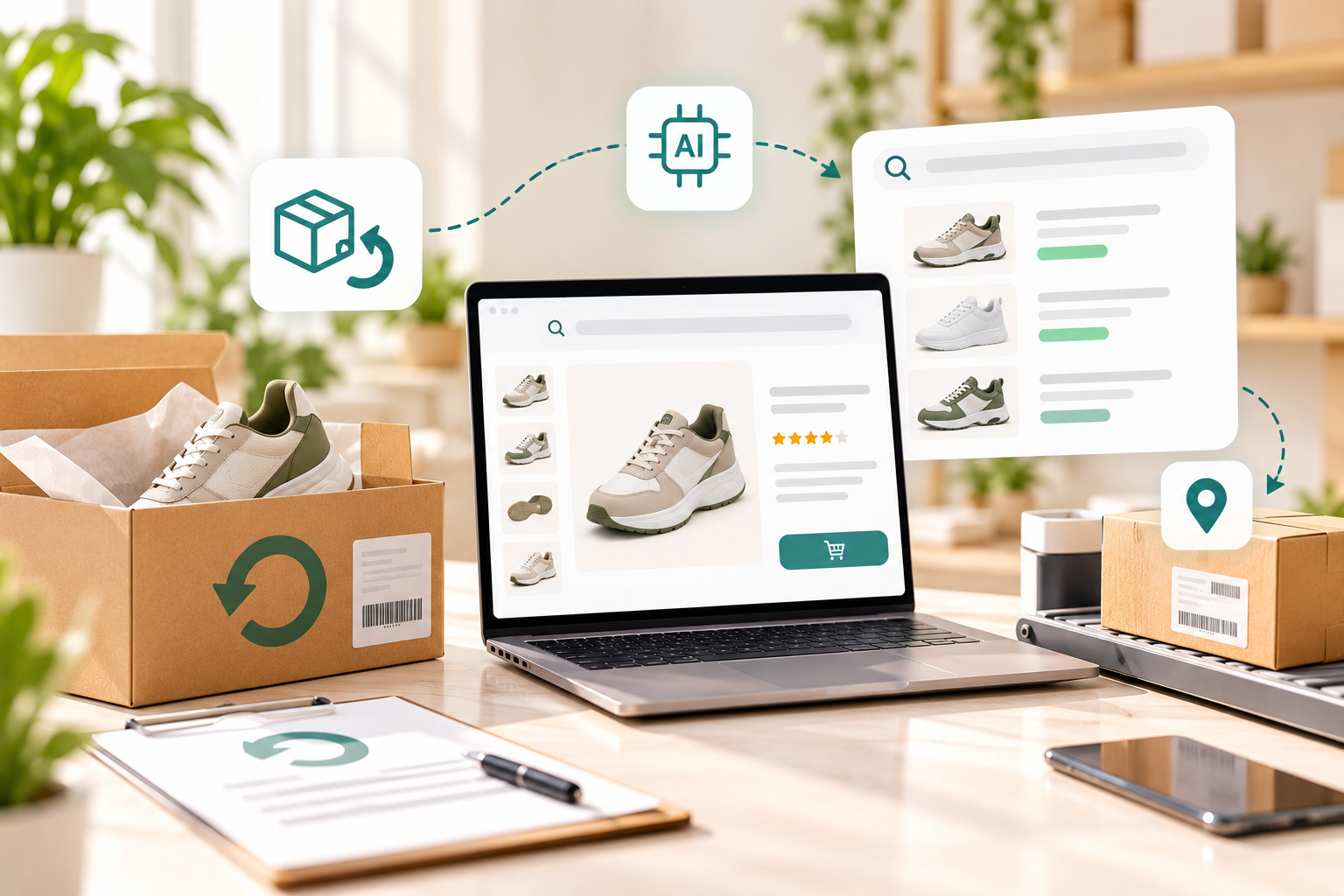
So when product information is thin, shoppers guess. They order two sizes and send one back. They buy a part that looks right but does not fit their model. They pick a color from a photo that renders differently on their screen. In each case, the gap between expectation and reality turns into a return.
That gap is partly a discovery problem. If the right product never appeared, or appeared without the detail that mattered, the shopper settled for a near miss.
AI Search Grader by bCloud AI
Grade your ecommerce search in 10 quick questions
31% of ecommerce searches return zero results — and most shoppers who hit a dead end leave for a competitor. How does your store's search stack up?
Answer 10 short questions and get your AI search score, plus a personalized report to fix the gaps. Free, takes about 2 minutes.
No signup needed to take the quiz.
Understanding intent…
Scoring your answers across relevance, AI, experience, and insights.
Your AI search score is ready
Tell us where to send your personalized report. You'll see your score and recommendations right away.
Your score by pillar
Personalized recommendations
Fix the gaps in weeks, not quarters
bCloud AI replaces keyword-only search with hybrid AI retrieval — sub-200ms responses, 99.99% uptime, and conversion lifts of up to 40% across 50+ implementations.
The honest split: preventable and unavoidable returns
Before promising anything, it helps to be precise. Not all ecommerce returns are the same, and search affects only some of them.
The right column is real and significant. NRF’s research found that 9 percent of all returns are fraudulent, which is a policy and operations problem, not a search one. However, the left column is where discovery quality pays off, and most retailers never measure it separately.
7 ways AI search reduces ecommerce returns
1. Make compatibility searchable
For parts, accessories and replacements, the most common avoidable return is “does not fit.” Searching by model, equipment or vehicle removes most of the guesswork. Auto parts retailers proved this with structured fitment data. See AI search for auto parts and manufacturer search.
2. Turn sizing and fit into filters
If size, fit and dimensions live only in descriptions, shoppers cannot filter on them. Moving them into structured fields makes “wide fit,” “petite” or “fits a 24-inch gap” searchable. As a result, shoppers land on items that actually fit. See faceted search.
3. Match intent, not just keywords
A shopper searching “waterproof hiking boots” who receives water-resistant sneakers may buy them anyway, then return them after the first rainy walk. Intent-aware retrieval understands that “waterproof” is a requirement, not a suggestion. See query understanding.
4. Fill the attributes shoppers compare on
Material, weight, dimensions and care instructions prevent “not as described” returns. They also help shoppers choose between similar products. Thin data is often the root cause of high ecommerce returns. See product data enrichment.
5. Make variants clear in results
When colors, sizes and models are separate products with similar titles, shoppers pick the wrong one. Grouping variants and showing the right swatch in results reduces mistaken orders.
6. Show accurate stock and delivery dates
A shopper who needs an item by Friday and receives it Monday often returns it. Fresh availability and honest delivery estimates in search results reduce those late-arrival returns. See real-time indexing.
7. Feed return reasons back into search
This is the step most teams skip. Return reasons are search data. If many shoppers return a product as “too small,” surface size guidance in results. If a part is often returned as “incompatible,” tighten its fitment data. Over time, the return log teaches your search engine what shoppers misunderstood.
How to measure savings on ecommerce returns
You can estimate the value of fewer ecommerce returns with four numbers.
Multiply monthly orders by the preventable return rate, then by the average cost per return. That is your monthly cost of preventable returns. Next, track whether it falls after each discovery change.
Two cautions apply. First, reason codes are noisy, because shoppers often pick the first option on a list. Treat trends as more reliable than any single month. Second, measure net revenue, not just return rate. A change that cuts returns but also cuts conversion is not a win. See A/B testing for ecommerce search for how to test cleanly.
Ecommerce returns by category: where discovery matters most
Return drivers vary a lot by category. That is why a single return rate for the whole store hides the real story.
Apparel and footwear.
Fit is the dominant issue. Size filters, fit notes and accurate measurements matter more than anything else here.
Auto parts and industrial supplies.
Compatibility drives most preventable ecommerce returns. Fitment search and part-number cross-references are the main levers.
Home and furniture.
Dimensions and color accuracy cause the most surprises. “Fits a 30-inch alcove” is a search requirement, not a nice-to-have.
Electronics and accessories.
Model compatibility and connector types cause many mistaken orders. Search by device model prevents a large share of them.
So segment your return reasons by category first. Then focus discovery work where the preventable share is highest.
A simple example
Picture a store that sells phone cases. A shopper searches “case for the new model with camera bump.” Keyword search matches “case” and returns hundreds of results, sorted by popularity. The shopper picks a bestseller for an older model, because the titles look almost identical.
A week later, the case comes back as “does not fit.” The store paid for shipping twice, plus handling, and may not be able to resell it at full price.
Now replay it with better discovery. Search recognizes the device model, filters to compatible cases and labels each result clearly. The same shopper buys the right case first time. Multiply that by thousands of orders, and the effect on ecommerce returns becomes visible on the P&L.
What to ask a search vendor about ecommerce returns
If returns matter to your business, raise them in any platform evaluation. Ask three questions.
1. Can we search and filter by compatibility, size and dimensions?
If not, the most common preventable returns stay untouched.
2. Can we feed return reasons back into ranking or merchandising rules?
This turns your return log into a tuning signal.
3. Can we measure returns by search session?
Without it, you cannot prove the effect.
Our guide to semantic search optimization platforms covers the broader evaluation.
Returns affect more than cost
Ecommerce returns also shape what happens next. A shopper who receives the wrong item twice rarely comes back a third time. Conversely, a shopper who gets the right item first time is far more likely to reorder.
So fewer avoidable returns protect repeat revenue as well as margin. We explore that link in customer lifetime value. Returns also interact with basket size, since bracketing inflates order value before the refund lands. See average order value.
Ecommerce returns and the holiday spike
Returns peak after the holidays. Gift purchases come back in January, often because the buyer guessed at size, model or taste on someone else’s behalf.
That makes peak-season discovery doubly important. Gift shoppers search by recipient and budget, not by product detail, so they are more likely to order the wrong variant. Clear sizing, compatibility and gift guidance in search results reduce January ecommerce returns before they happen. Our Black Friday search checklist covers the peak-week side.
The forecast: returns become a discovery metric
Here is how we expect ecommerce returns to evolve over the next few years.
Return costs keep rising.
Shipping, labor and processing costs make every avoidable return more expensive. Retailers will look for prevention, not just recovery.
Return policy becomes product data.
AI assistants already compare price, shipping and returns when shortlisting products. Google’s product structured data documentation covers merchant listings, which can include return policy details (Google Search Central). Clear, accurate return terms will influence which products get recommended.
Discovery teams will own a returns number.
Today, returns sit with operations. Increasingly, search and merchandising teams will report on preventable returns, because they control the information that prevents them.
For the wider context, see our future of ecommerce forecast and AI shopping decisions.
Where to start on ecommerce returns this month
1. Export six months of return reasons.
Group them into preventable and unavoidable using the table above.
2. Find the top ten products by preventable returns.
Check their attributes, sizing and fitment data.
3. Search for those products the way shoppers do.
Note where the right item fails to appear or appears without key details.
4. Fix the data and the search rules.
Then watch the preventable return rate for those products over the next two months.
This small pilot usually shows whether discovery is a meaningful driver of ecommerce returns for your catalog.
If it is, expand the same approach category by category. If it is not, you have learned that your returns problem sits mostly in policy, fulfilment or product quality, which is equally useful to know before you invest.
The bottom line on ecommerce returns
Better search will not end ecommerce returns. Shoppers will still change their minds, and some will still bracket.
However, a meaningful share of returns starts with a shopper who could not find, or could not understand, the right product. Fix the compatibility, sizing and attribute gaps behind those returns, and you protect margin and repeat business at the same time.
Frequently asked questions
How much do US consumers return each year?
The National Retail Federation estimates US consumers will return $849.9 billion in merchandise in 2025, with retailers expecting 15.8 percent of annual sales to be returned.
What is the average online return rate?
NRF estimates that 19.3 percent of online sales will be returned in 2025, higher than the overall retail return rate of 15.8 percent.
Can AI search reduce ecommerce returns?
It can reduce returns caused by finding the wrong product, such as wrong fit, incompatible parts, confusing variants or incomplete descriptions. It cannot prevent returns caused by changed minds, deliberate bracketing, shipping damage or fraud.
Which returns are preventable?
Returns where the shopper ordered the wrong item because size, fit, compatibility, variant or attribute information was missing or hard to find. These are usually visible in return reason codes such as “does not fit” or “not as described.”
How do I measure the cost of preventable returns?
Multiply monthly online orders by the preventable return rate and by the average cost per return, including shipping, handling, inspection and markdowns. Track the trend after each search or data change.
How do return reasons help improve search?
Return reasons reveal what shoppers misunderstood. Frequent “too small” returns suggest surfacing size guidance, while frequent “incompatible” returns suggest tightening fitment data.
Do fewer returns improve customer loyalty?
Generally, yes. Shoppers who receive the right item first time are more likely to buy again, so preventing avoidable returns supports repeat revenue as well as margin.
How much of ecommerce returns is fraud?
NRF research found that 9 percent of all returns are fraudulent. That is an operations and policy issue rather than a search issue.
Where should a retailer start?
Group six months of return reasons into preventable and unavoidable, find the products with the most preventable returns, and check how well search surfaces the right items and details for them.
Find the returns your search is causing.
Share your return reasons and search log with bCloud AI. We will map preventable ecommerce returns to the missing attributes and search gaps behind them, and show which fixes pay back first.
bcloud.ai