

AI Search for Fashion Ecommerce: Style, Fit, and the Returns Problem
Why fashion search breaks standard tools
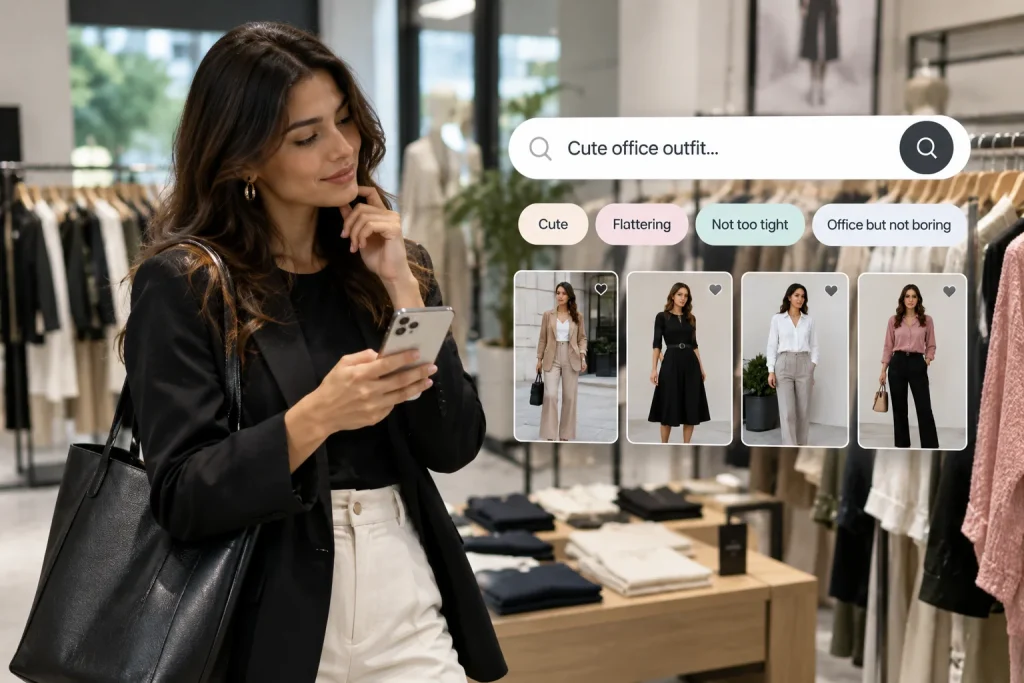
Fashion ecommerce shoppers search subjectively.
"Cute," "flattering," "not too tight," "office but not boring." These describe impressions, not attributes. There's no field to match against, which is why keyword systems return almost nothing useful.
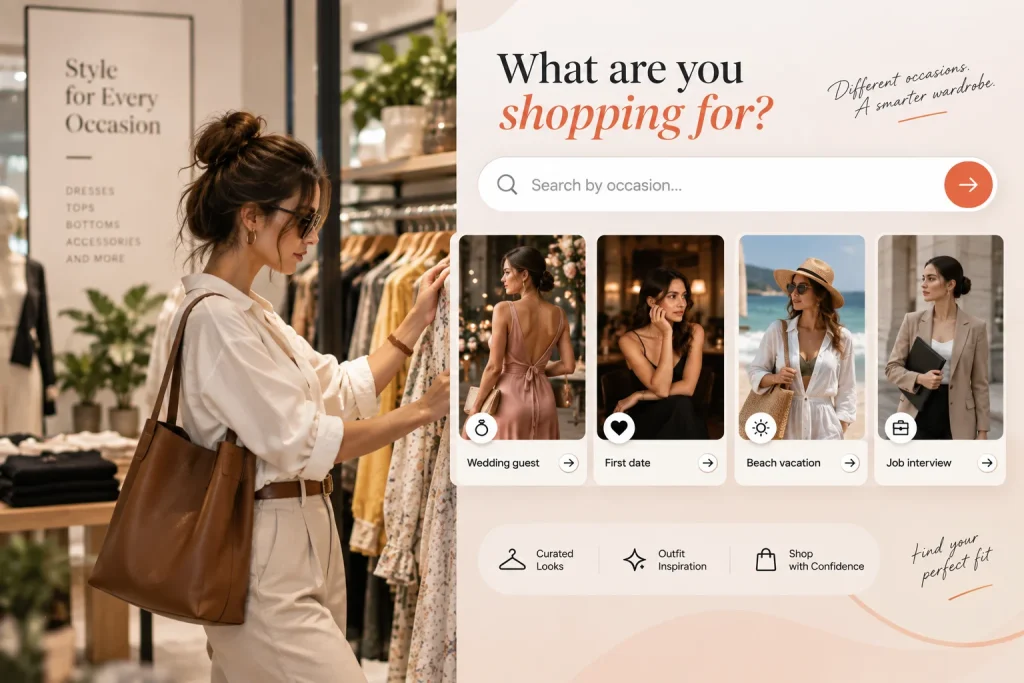
In fashion ecommerce, occasion is the real query.
"Wedding guest," "first date," "beach vacation," "job interview." The shopper names an event and expects you to infer the garment category, formality, and season.
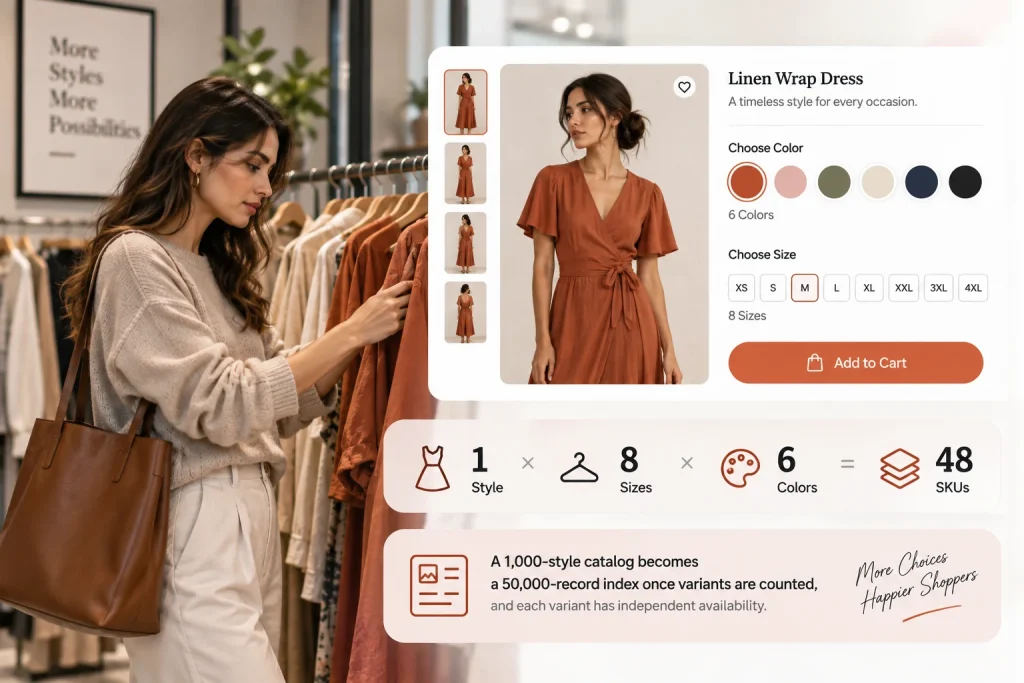
Fashion ecommerce variants multiply everything.
One style in eight sizes and six colors is forty-eight SKUs. A thousand-style catalog is a fifty-thousand-record index once variants are counted, and each variant has independent availability.
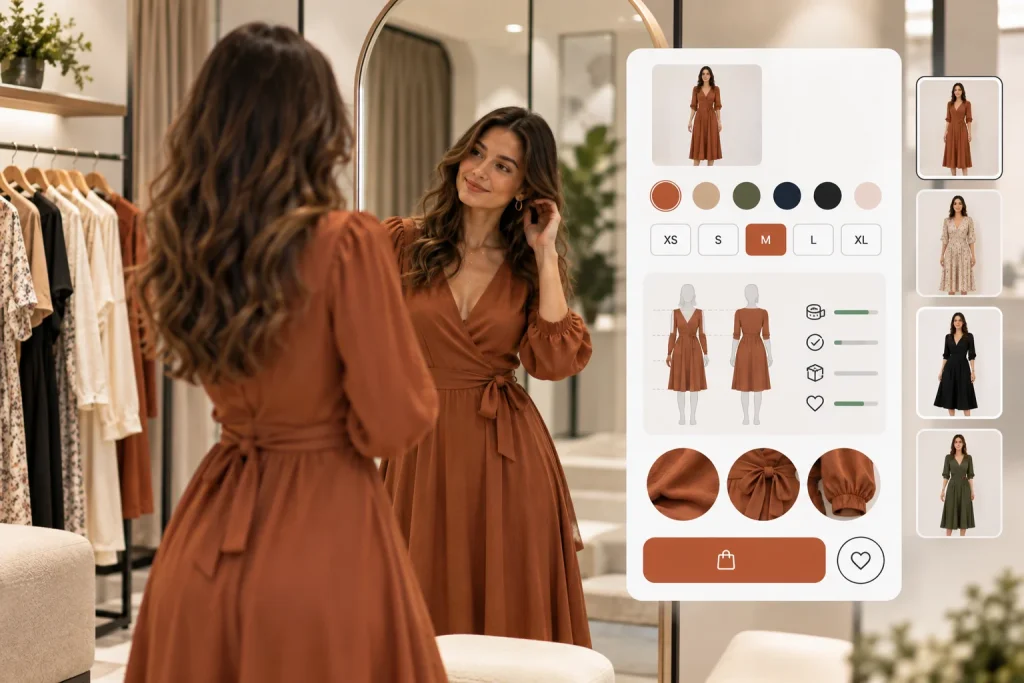
Fit decides whether the sale sticks.
More on this below, because it's the commercial centre of the whole problem.
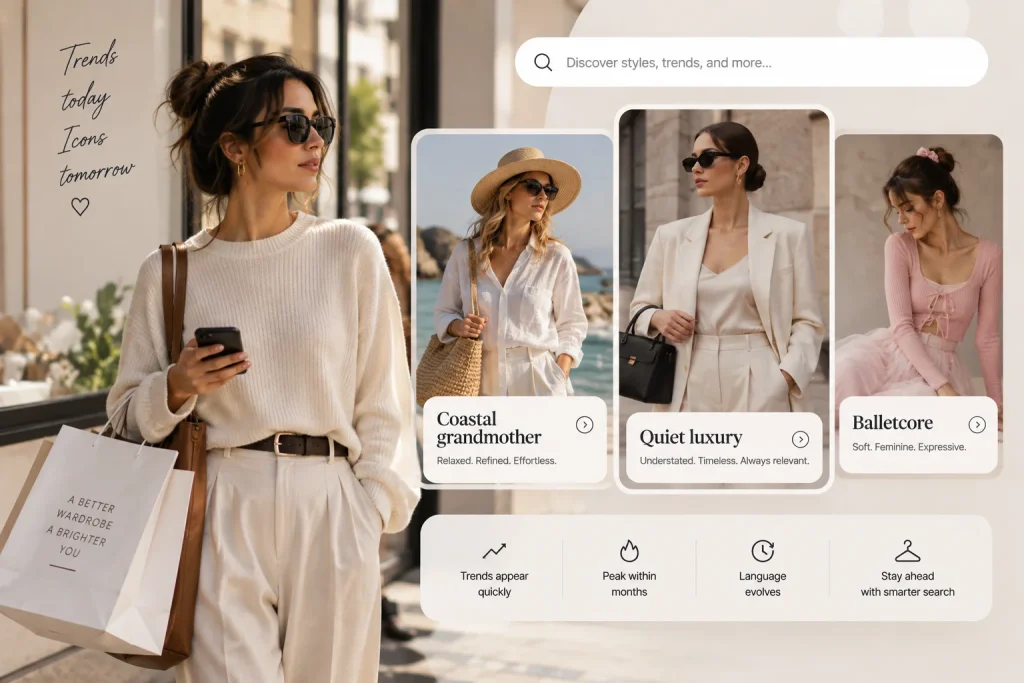
Fashion ecommerce vocabulary moves fast.
"Coastal grandmother," "quiet luxury," "balletcore" — trend language appears, peaks, and fades within months. A synonym list tuned last season is already stale.
Visual matters more than text.
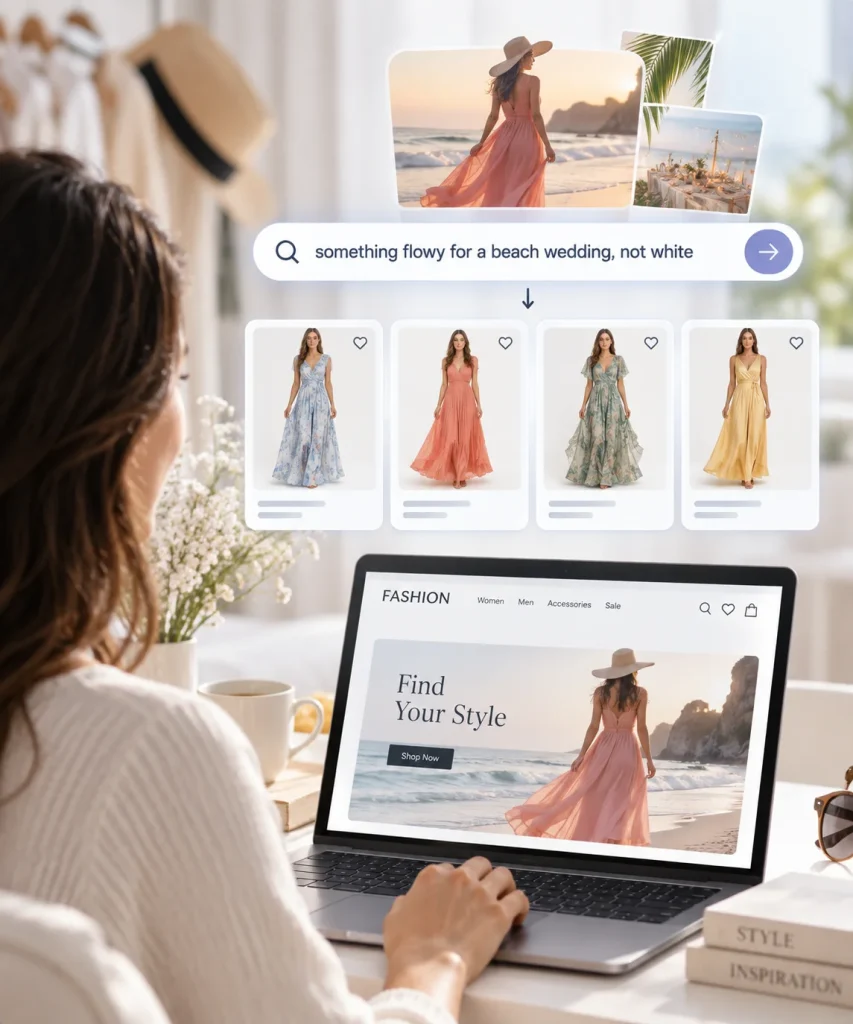
Shoppers judge with their eyes. In most verticals images support the decision; in fashion ecommerce search, they frequently are the decision.
The returns economics that justify the investment
And processing isn’t free — cost per return commonly runs $10 to $65 depending on category and handling.

Semantic search for fashion: matching feeling to product
Two requirements make it work in practice.
Your descriptions have to contain the meaning.
This is the constraint most brands underestimate. "Cotton midi dress, machine washable" gives a model nothing about drape, formality, or occasion. Adding "relaxed through the waist, works for daytime events, unlined so it moves" creates matchable surface. Supplier-supplied copy almost never does this.
Hybrid retrieval keeps precision intact.
Shoppers also search by style number, brand, and exact product name. Pure vector search approximates on those, so pair semantic with keyword matching — see our hybrid search guide.
AI shopping search for fashion: the visual dimension
Where visual search underdelivers:
when your imagery is inconsistent. Mixed backgrounds, varied lighting, and model-versus-flat-lay shots in the same catalog degrade similarity matching considerably. Fix photography standards before buying visual search.
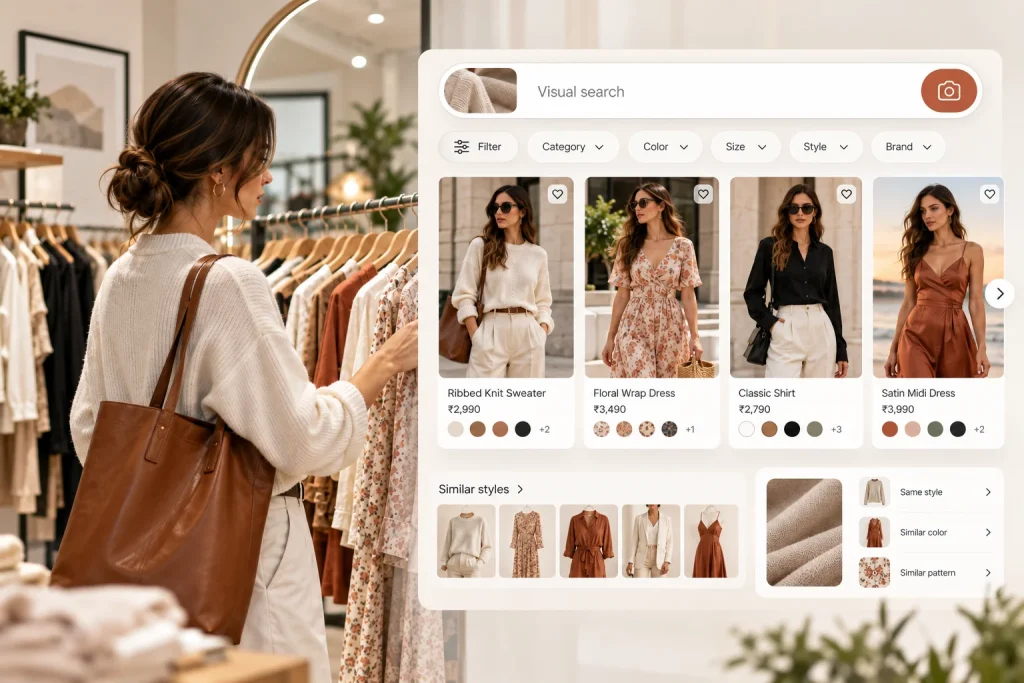
Image similarity
lets a shopper upload a photo — a street style shot, a screenshot, something they own — and find comparable pieces. The technique is content-based image retrieval, and multimodal embeddings now place images and text in the same vector space, so "like this but in green" becomes a single query rather than two.
Visual attributes as search dimensions.
Sleeve length, neckline, pattern, silhouette, rise. Shoppers filter on these constantly and most catalogs don't tag them, which means the facets either don't exist or are populated on a fraction of products.
Complete-the-look retrieval.
This one is genuinely different from similarity. "What goes with this" is complementarity, not resemblance — a blazer and the trousers that pair with it sit far apart in embedding space because they aren't alike at all. Solving it needs co-purchase signals or explicit styling relationships, not nearest-neighbor search. Our vector database for recommendations guide covers the architecture.
Fit and sizing inside search
Surface fit signals in fashion ecommerce search results.
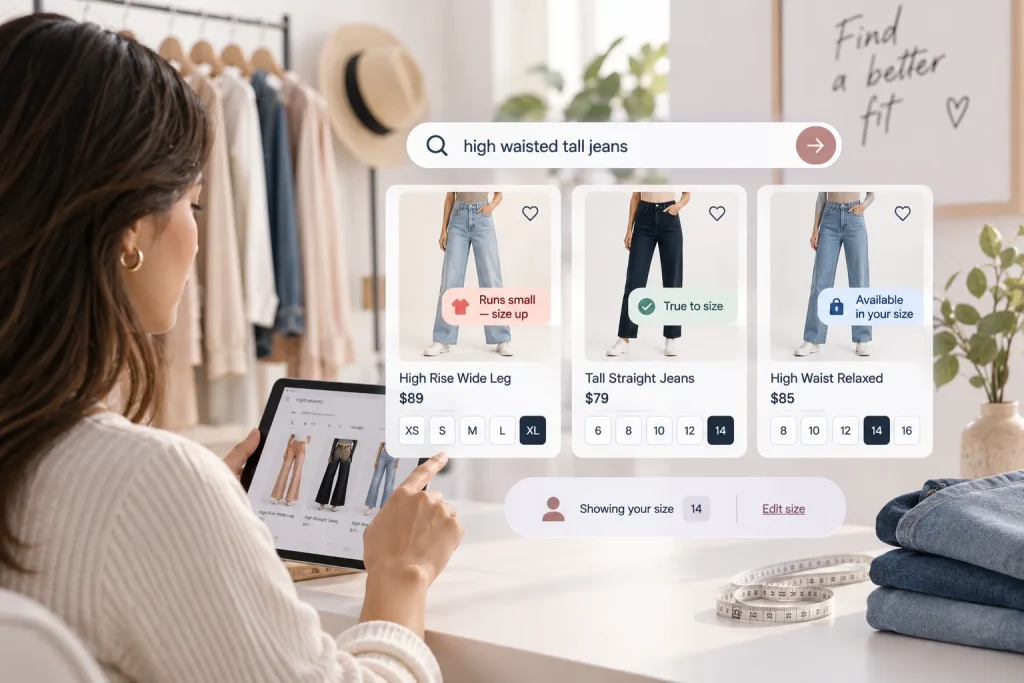
"Runs small — size up" as a result-level badge changes purchase decisions before the click, not after. Most brands bury this in reviews where it's discovered too late.
Make fit attributes searchable.
"Petite," "tall," "curve," "relaxed fit," "high rise" should be query-parseable, not just filter chips. A shopper typing "high waisted tall jeans" has given you three constraints — extract them.
Personalize by known size.
For returning customers, filtering to their sizes by default — with an obvious override — is one of the highest-value personalizations available in fashion ecommerce, and it directly reduces the bracketing behavior that inflates returns.
Show size availability in results.
A product displayed to a size-14 shopper that's sold out in 14 wastes the click and erodes trust. Variant-level availability needs to reach the results page, which requires real-time indexing across a catalog where sizes sell out independently — see our real-time indexing guide.
How fashion brands can improve product discovery with AI
01
Enrich descriptions with style and occasion language.
The highest-leverage work available, and it's content rather than engineering. Add drape, formality, occasion, and styling notes to your top-selling and highest-margin styles first. This is what makes semantic search for fashion actually function.
02
Tag visual attributes systematically
the core of AI fashion product discovery. Neckline, sleeve, silhouette, pattern, rise, length. AI-assisted tagging from product imagery can do most of this now, which removes the traditional excuse.
03
Get variant-level availability into search results.
Prevents the click-then-disappointment pattern that drives both abandonment and support contacts.
04
Mine your failed searches weekly.
In fashion they sort into trend vocabulary you haven't adopted, styles you don't carry, and products you do carry that search couldn't surface. The third bucket is recovered revenue; the second is a merchandising signal.
05
Refresh fashion ecommerce trend vocabulary seasonally.
Your synonym and attribute language needs a review each season. This is the maintenance task most brands skip, and it's why search quality decays visibly between refreshes.
How AI product discovery increases fashion ecommerce conversion
Category and collection ordering
is the highest-volume fashion ecommerce surface and most often left at whatever the platform defaults to.
Recommendations that understand style
rather than just category. A shopper looking at a minimalist linen shirt should see other minimalist pieces, not every shirt you stock.
Zero-result recovery
matters more here than elsewhere, because subjective queries fail more often. Offer adjacent styles rather than an empty page — our no-results guide covers the design.
Session personalization
works within two or three interactions and needs no history, which suits fashion's heavy anonymous and first-time traffic. See our vector search personalization guide.
Measuring fashion search
The future of fashion ecommerce search
Discovery is moving off your site.
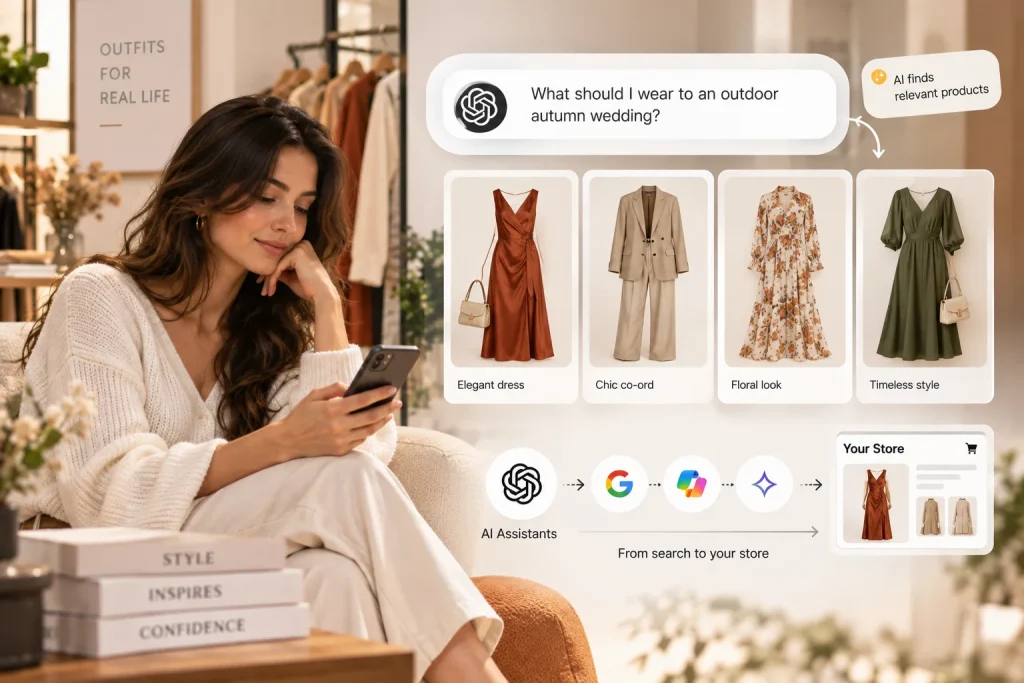
Shoppers increasingly ask AI assistants for recommendations — "what should I wear to an outdoor autumn wedding" — before visiting any brand. Whether you appear depends on whether your catalog is readable to those systems, covered in our how LLMs find products and AI visibility. For fashion specifically, this rewards the same descriptive enrichment that improves on-site search — one investment, two channels.
The future of fashion ecommerce search is conversational.
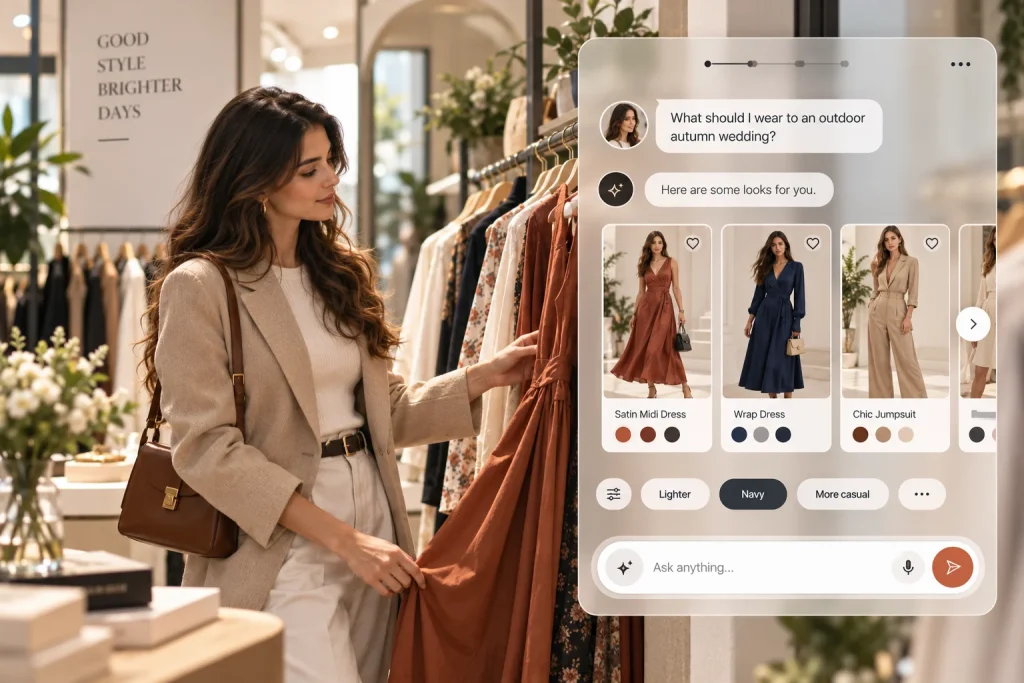
Refinement suits fashion unusually well. "Something lighter," "in navy," "more casual" is exactly how people shop clothing, and multi-turn context makes that natural rather than a filter exercise. Our conversational search engine guide covers when it's worth the cost.
Fit technology is converging with search.
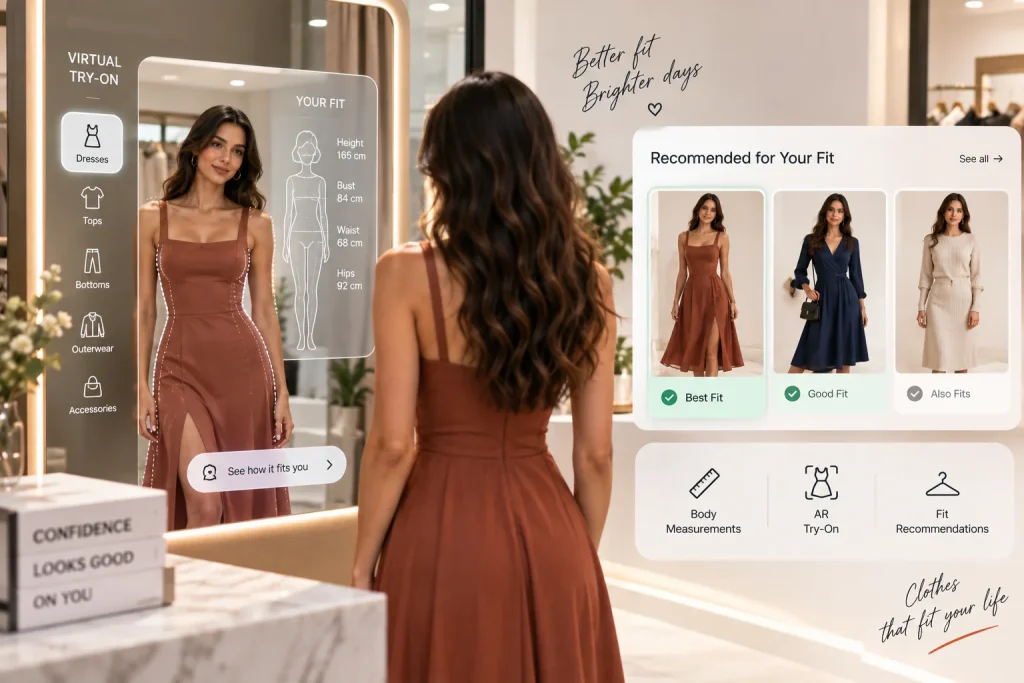
Body-measurement tools, AR try-on, and fit prediction are maturing, and the interesting version connects them to retrieval — filtering results to what will actually fit this shopper rather than showing everything and hoping. That's still early, but it's the development most likely to move the returns number materially.
Ecommerce FAQs
What is AI search for fashion ecommerce?
Why do fashion ecommerce brands need different search than other retailers?
How does search affect fashion return rates?
Does visual search actually work for fashion?
What is AI fashion product discovery?
How do fashion brands improve product discovery with AI?
What's next for fashion ecommerce search?