
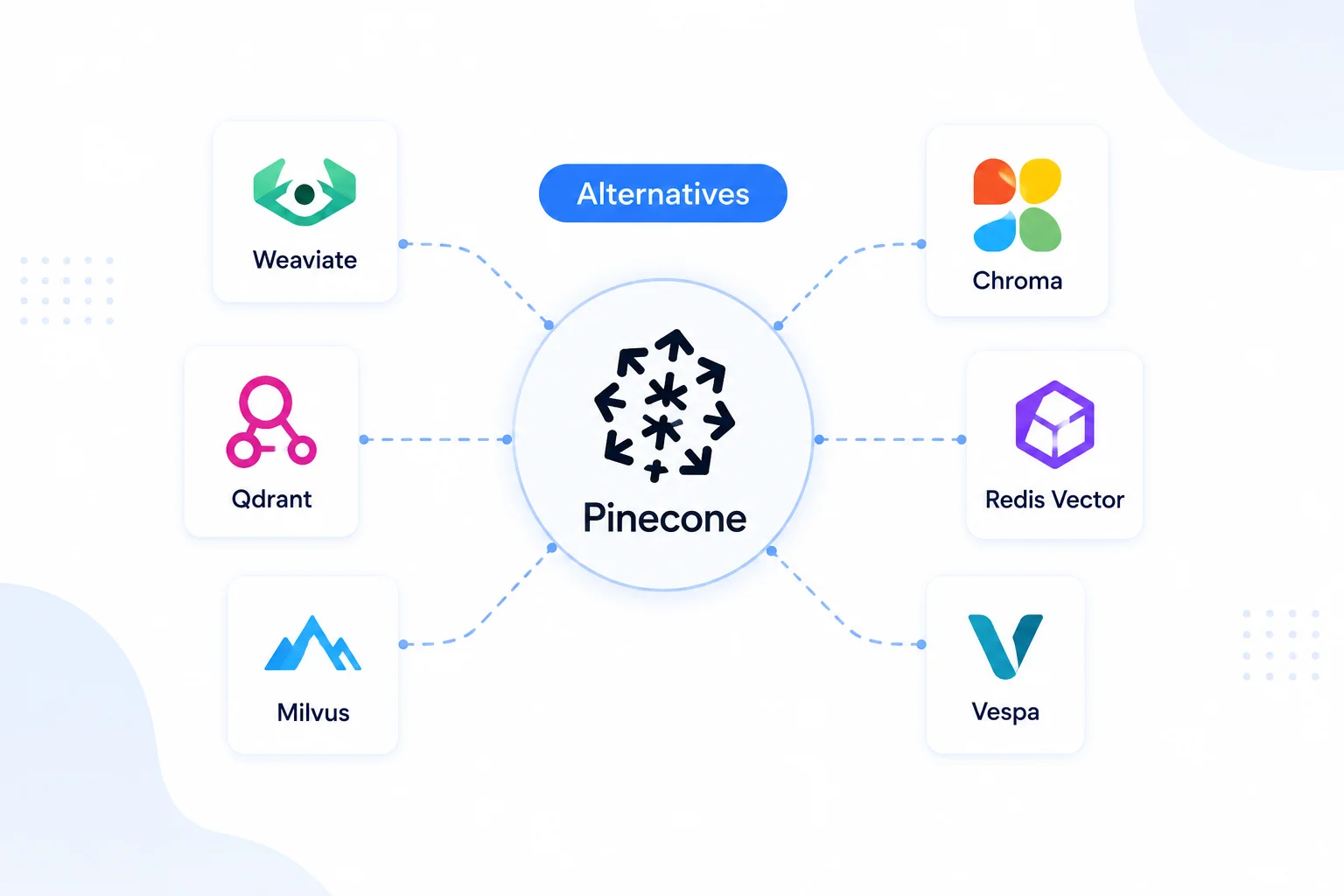
Why teams look for Pinecone alternatives
No self-hosting, period.
There’s no on-premise or private-cloud option. For teams with data residency requirements, air-gapped environments, or a policy against single-vendor dependency, that’s disqualifying regardless of how good the product is.
Recall is fixed.
Serverless recall sits around 90% with no tuning available. Most applications never notice; applications where a missed result costs real money notice a great deal, and having no dial to turn is the frustration.
Lock-in anxiety.
If pricing changes or the service degrades, there’s no fallback deployment. That concern drives a meaningful share of alternative-shopping.
None of this makes Pinecone wrong. It makes it a specific product — excellent for teams who want zero operations and predictable-enough spend, poorly suited to teams needing control or facing high query volumes.
The 9 best Pinecone alternatives
1. Qdrant — best all-around of the Pinecone alternatives
Rust-based, with rich payload filtering and the strongest filtered-search performance in the category — it holds low latency where several competitors slow 2–3× once constraints are applied. Since virtually every production query carries filters, that matters more than raw benchmarks suggest. Cloud pricing starts around $0.014/hour per node, roughly $65/month at 10M vectors, and self-hosting is free. Latency runs 15–30ms in-memory. Best for: most teams leaving Pinecone over cost or control.
2. Weaviate — best of the Pinecone alternatives for hybrid search
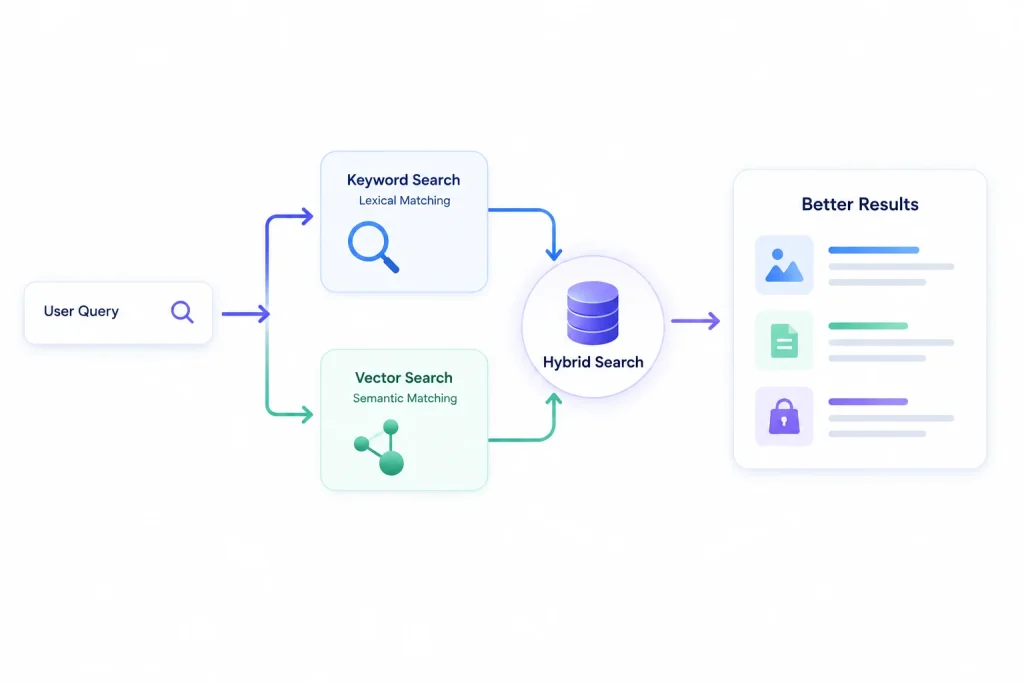
The strongest native hybrid implementation, fusing BM25 and vectors in a single query with an adjustable balance, plus built-in vectorization modules so raw text embeds automatically. Dimension-based pricing (~$0.095 per million dimensions/month on Shared) puts 10M vectors near $135/month — though binary quantization drops that toward $30. Best for: teams needing keyword and semantic retrieval together, covered in our vector database hybrid search guide.
3. Milvus / Zilliz — Pinecone alternatives built for billion scale
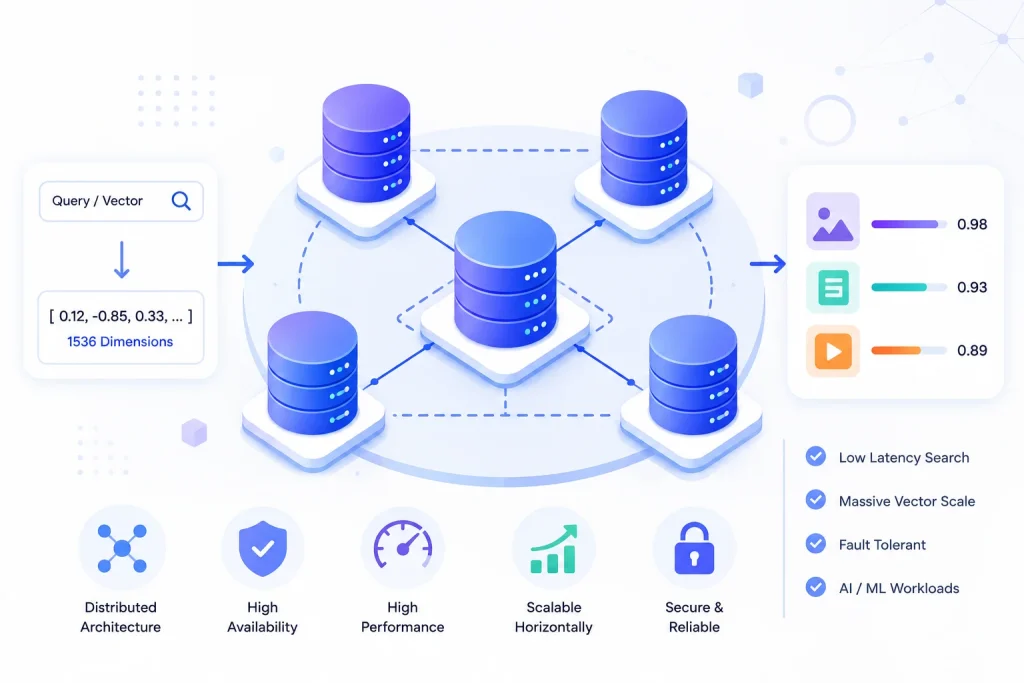
Distributed architecture with the highest write throughput of the major options and disk-based indexing that saves substantial RAM cost at very large scale. Open-source with Zilliz Cloud as the managed option. Operationally heavier. Best for: past a billion vectors, or heavy write workloads.
4. pgvector — simplest of the Pinecone alternatives
The alternative most teams overlook. A free Postgres extension adding vector search to a database you already operate — no new service, no sync layer, no additional vendor. Around $45/month on RDS at 10M vectors, which is really just your existing instance. Since HNSW indexing arrived it performs comparably to dedicated systems at moderate scale. Best for: under a few million vectors with Postgres already in the stack.
5. Turbopuffer — best cost at scale
Serverless and object-storage-native, with very low cost per gigabyte. A newer entrant built specifically to attack the economics of storing large vector sets. Best for: large, relatively cold indexes where storage cost dominates.
6. Chroma — best for prototyping
Developer-friendly and the fastest way to stand up vector search locally, now with a managed cloud offering. Less battle-tested at large production scale. Best for: experiments and small-scale production.
7. LanceDB — best for multimodal
Embedded and columnar, with strong support for multimodal data. Runs in-process rather than as a service. Best for: applications mixing text, images, and structured data.
8. MongoDB Atlas / Couchbase Vector Search — best if you’re already there
Both added vector search inside their existing platforms. Same logic as pgvector: if the database is already in your stack, adding vectors avoids a new system entirely. Best for: teams standardized on either.
9. Vespa — best ranking sophistication
A search and ranking engine that predates the vector database category, with native vector support and unusually deep ranking expressions. Steeper learning curve. Best for: teams who’ll actually use the ranking depth.
For the full field including how these compare on indexing and filtering, see our vector database comparison and vector database management systems guides.
AI Search Grader by bCloud AI
Grade your ecommerce search in 10 quick questions
31% of ecommerce searches return zero results — and most shoppers who hit a dead end leave for a competitor. How does your store's search stack up?
Answer 10 short questions and get your AI search score, plus a personalized report to fix the gaps. Free, takes about 2 minutes.
No signup needed to take the quiz.
Understanding intent…
Scoring your answers across relevance, AI, experience, and insights.
Your AI search score is ready
Tell us where to send your personalized report. You'll see your score and recommendations right away.
Your score by pillar
Personalized recommendations
Fix the gaps in weeks, not quarters
bCloud AI replaces keyword-only search with hybrid AI retrieval — sub-200ms responses, 99.99% uptime, and conversion lifts of up to 40% across 50+ implementations.
Comparing Pinecone alternatives on real cost
Headline prices across Pinecone alternatives mislead, because vendors meter different units. Three pricing shapes exist:
Consumption
(Pinecone, Turbopuffer) — pay for storage, reads, and writes. Cheap when idle, but query-heavy applications get surprised because reads meter independently.
Capacity
(Qdrant Cloud, self-hosted Weaviate or Milvus) — pay for the RAM, CPU, and disk you reserve. No per-query charge, so a high-QPS application gets cheaper per query as it scales. This inversion is the single strongest argument for capacity-based Pinecone alternatives at volume.
Dimension-based
(Weaviate Cloud) — meters vector dimensions stored monthly, so a 1,536-dimension OpenAI embedding costs twice a 768-dimension one. Quantization changes this math substantially.
At 10 million vectors the rough spread is Qdrant ~$65, Pinecone ~$70, Weaviate ~$135 (or ~$30 quantized), pgvector ~$45. At 100 million the gap widens sharply, which is why modeling at your projected scale rather than today’s matters.
The migration detail nobody mentions
Evaluating Pinecone alternatives means confronting one detail vendors rarely raise: moving vectors out of a managed service creates egress charges. Pulling 100 million vectors from a cloud provider generates a meaningful bill purely in data transfer, on top of the engineering time.
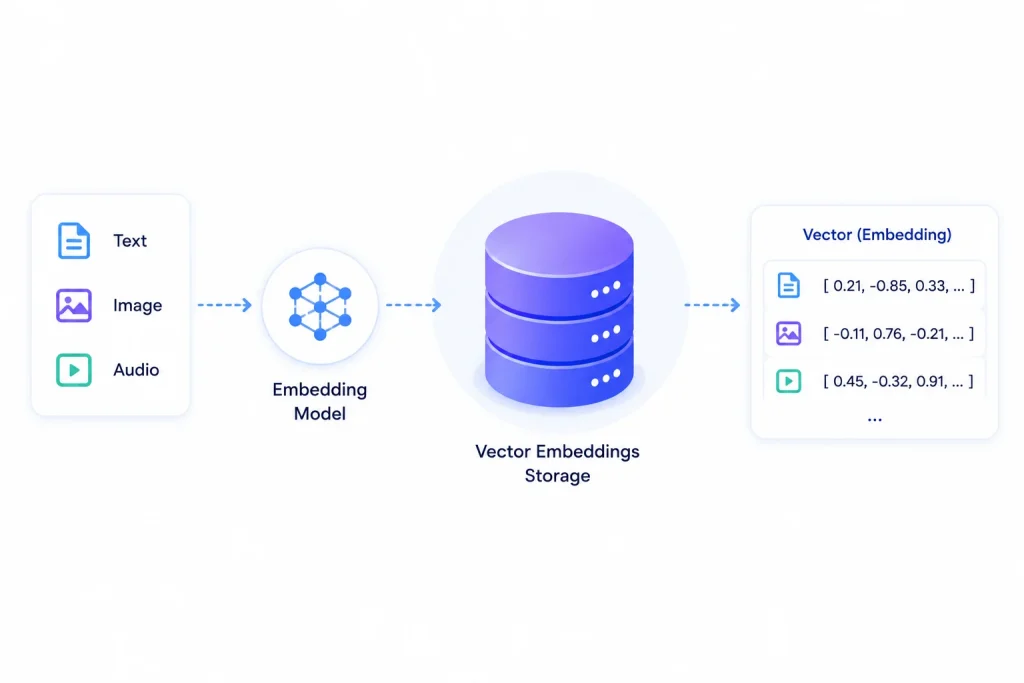
The defense is architectural and worth adopting before you ever need it: store your source-of-truth embeddings in cold storage — S3, GCS, or Parquet files — separately from whatever vector database indexes them. Then re-hydrating a new system means reading from your own object storage rather than paying egress to the incumbent. Our vector embeddings storage guide covers the pattern in depth.
Two more migration realities. Re-embedding may not be needed — if you keep the same embedding model, vectors transfer directly, which makes migration far cheaper than teams assume. And recall will differ, because index parameters vary between systems; benchmark the new setup against brute-force ground truth rather than assuming parity, per our nearest neighbor search guide.
A migration checklist
If you’ve decided to move, this sequence keeps the switch boring — which is the goal.
Export embeddings before touching any of the Pinecone alternatives.
Before touching a new provider, pull your vectors into S3, GCS, or Parquet. This is your insurance and your migration source, and it removes the egress problem permanently.
Index in parallel, don’t cut over.
Stand up the new system alongside the incumbent and index the full dataset while Pinecone keeps serving traffic. Cost overlaps for a few weeks; risk drops to almost nothing.
Benchmark recall against brute force.
Index parameters differ between systems, so equivalent settings don’t mean equivalent results. Run exhaustive search on a sample of real queries and compare — this catches quality regressions before shoppers do.
Test with your real filters.
Filtered performance varies more between Pinecone alternatives than any other characteristic. Take your most restrictive facet combinations and measure p95 and p99 under load.
Ramp traffic in steps.
Route 5% of queries, watch latency and result quality, then increase. Most application layers make this a routing decision rather than a rebuild.
Keep the old index warm briefly.
Rollback capability for a week costs little and removes the pressure that causes bad decisions during a cutover.
Teams who follow this describe migration as a two-to-four-week overlap. Teams who skip the parallel run describe it as an incident.
Watch the newer entrants
The Pinecone alternatives category is still moving, and a few options worth tracking didn’t exist when most Pinecone alternatives lists were written.
Turbopuffer
attacks storage economics directly by building on object storage rather than keeping everything in RAM, which produces a dramatically different cost curve for large but relatively cold indexes.
LanceDB
takes the embedded route — running in-process rather than as a service, columnar, with strong multimodal support. For applications that don’t need a separate service, this eliminates an entire operational surface.
Vector support inside existing platforms
may be the most consequential trend. MongoDB Atlas, Couchbase, and Postgres all added it, and the logic is compelling: if the database is already in your stack, adding vectors avoids a new system, new monitoring, and new expertise entirely.
The strategic read is that “vector database” may not remain a separate product category indefinitely for mainstream workloads. Dedicated systems will keep winning at extreme scale and specialized requirements, while a large middle segment gets absorbed into general-purpose databases. That’s worth factoring into a decision you’ll live with for years.
Fair is useful when weighing Pinecone alternatives. Pinecone remains the right call when you want genuinely zero operations, when your workload is spiky enough that scale-to-zero saves real money, when your team has no infrastructure capacity, or when you’re early enough that engineering time costs more than the bill. “Best for startups” is a fair summary — zero fixed cost and no capacity planning is worth a lot when you’re small.
The teams who genuinely benefit from Pinecone alternatives are the ones past that: high sustained query volume where read metering bites, data residency requirements, or a need to tune recall.
If this is for ecommerce search
One shortcut worth knowing. If you’re evaluating Pinecone alternatives to build product search, the vector database is one component — you’ll also build the embedding pipeline, keyword retrieval for SKUs, fusion, business-signal reranking, merchandising controls, and analytics.
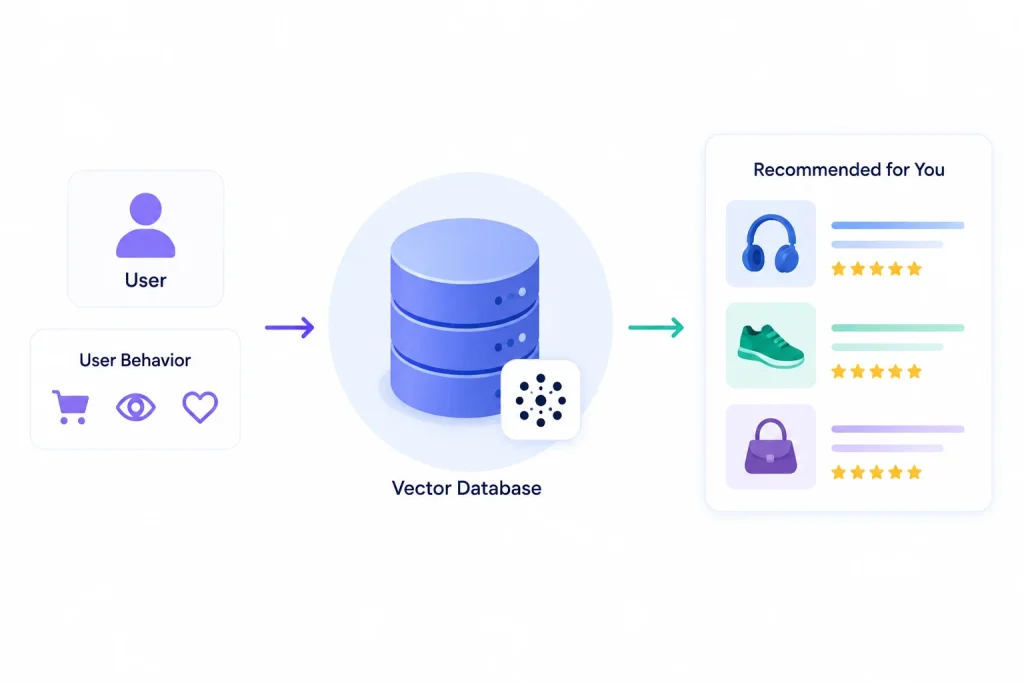
A managed search platform includes all of it. bCloud AI ships hybrid retrieval, real-time indexing, reranking, and merchandising as one service, live in about four weeks rather than a multi-month build. Our top semantic search solutions for e-commerce roundup compares that category, and vector database for recommendations covers the recommendations use case specifically.
Choosing between the shortlist
If you’ve narrowed to two or three Pinecone alternatives, four questions usually settle it.
What does your query pattern look like?
Sustained high QPS favors capacity-based pricing, where cost per query falls as volume rises. Spiky or low volume favors consumption pricing. This single factor flips the cost ranking between Pinecone alternatives more than any other.
How restrictive are your filters?
If most queries carry several constraints, filtered performance dominates everything else, and Qdrant’s advantage becomes decisive.
Do you need keyword matching too?
If exact identifiers matter, native hybrid support saves you building fusion logic — which pushes toward Weaviate.
Who operates it?
Self-hosted Pinecone alternatives are cheaper in license and more expensive in staff time. If nobody’s job includes owning it, managed is the honest answer regardless of the spreadsheet.
Frequently asked questions
What are the best Pinecone alternatives?
Qdrant is the strongest all-around alternative on cost and filtered performance, Weaviate for native hybrid search, Milvus or Zilliz at billion scale, pgvector if you already run Postgres, and Turbopuffer for low-cost storage at scale. Chroma, LanceDB, MongoDB Atlas, Couchbase, and Vespa serve narrower cases.
Why do teams switch away from Pinecone?
Consumption pricing that meters reads and scales with query volume, no self-hosting or on-premise option, serverless recall fixed near 90% with no tuning, and concerns about single-vendor dependency with no fallback deployment.
How much does Pinecone cost in 2026?
Serverless pricing runs approximately $0.33 per GB per month for storage, $8.25 per million read units, and $2.00 per million write units. That’s roughly $70/month at 10 million vectors and $700+ at 100 million, though your actual bill depends heavily on query volume. Verify current rates directly with Pinecone.
Is there a free Pinecone alternative?
Several. pgvector is a free Postgres extension, and Qdrant, Weaviate, Milvus, and Chroma can all be self-hosted at no license cost — you pay in infrastructure and engineering time instead. Most also offer free managed tiers for evaluation.
How hard is it to migrate off Pinecone?
Easier than most teams expect if you keep the same embedding model, since vectors transfer directly without re-embedding. The real costs are egress charges on large datasets and re-benchmarking recall, since index parameters differ between systems. Storing source-of-truth embeddings in object storage avoids the egress problem entirely.
Which Pinecone alternative is best for filtered search?
Qdrant leads on filtered performance, maintaining low latency with complex metadata constraints where other systems slow considerably. Weaviate also performs well. This matters because nearly every production query carries filters.
Building product search rather than infrastructure?
bCloud AI includes the vector index plus embeddings, hybrid retrieval, reranking, and merchandising — no stack to assemble.
bcloud.ai