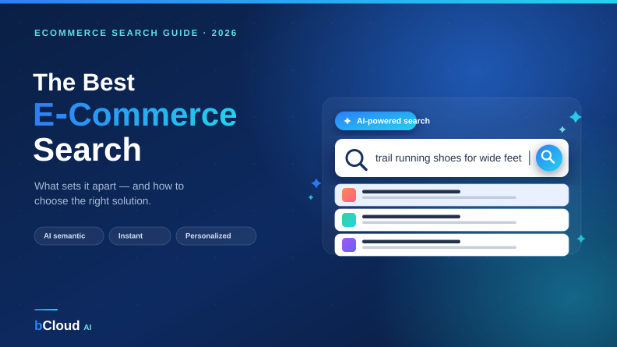
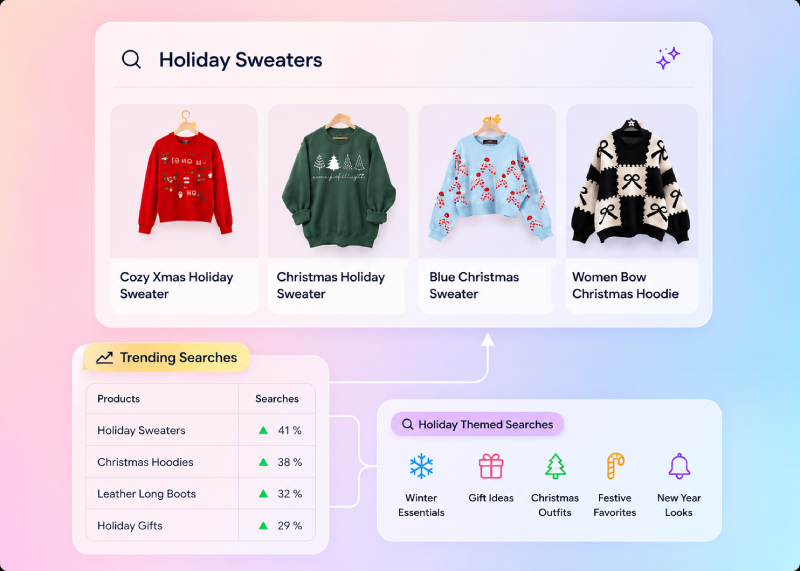
What makes a search engine “semantic”?

How we chose the top semantic search solutions for e-commerce
Each platform is scored on six criteria: (1) semantic relevance quality, (2) natural-language and synonym handling, (3) hybrid keyword-plus-vector blending, (4) merchandising control, (5) speed and scale, and (6) pricing transparency.
The top semantic search solutions for e-commerce, ranked
[bcloud.ai] — best overall semantic search for commerce
[bcloud.ai] delivers [hybrid semantic + keyword] relevance with [real-time indexing] and built-in merchandising. Best for: retailers wanting strong meaning-based relevance without managing ML.
Algolia (NeuralSearch) — keyword speed plus a semantic layer
Algolia added NeuralSearch to combine its fast keyword engine with vector relevance. Best for: teams already valuing Algolia’s speed and tooling who want a semantic upgrade. Watch-outs: usage-based pricing at scale.
Constructor — intent and revenue-optimised semantics
Constructor optimises semantic relevance toward conversion and revenue outcomes. Best for: larger retailers wanting outcome-based ranking. Watch-outs: enterprise, sales-led.
Coveo — enterprise NLP and personalisation
Coveo brings mature ML ranking and personalisation across commerce and support. Best for: enterprises with complex needs. Watch-outs: heavier implementation.
Bloomreach Discovery — commerce-trained semantics
Bloomreach uses commerce-specific AI for search and merchandising. Best for: retailers wanting search + merchandising together. Watch-outs: suite pricing.
Klevu — self-learning semantic search
Klevu offers strong out-of-the-box semantic relevance that learns from behaviour. Best for: mid-market teams wanting low-effort gains. Watch-outs: less control for highly custom catalogs.
Searchspring — search + merchandising for retail
Searchspring focuses on retail search and merchandising with relevance tooling. Best for: retailers wanting a commerce-focused platform. Watch-outs: evaluate the depth of its semantic/vector features for your needs.
Elastic — semantic via ELSER / kNN, self-managed
Elastic offers semantic capabilities (learned sparse retrieval and kNN vectors) for teams that want control. Best for: engineering-led teams. Watch-outs: you build and operate relevance yourself.
Comparison table
| Platform | Semantic approach | NL queries | Merchandising | Pricing | Managed? |
|---|---|---|---|---|---|
| [bcloud.ai] | Hybrid semantic+keyword | ✅ Strong | ✅ Built-in | [tiered] | ✅ |
| Algolia | NeuralSearch (hybrid) | ✅ | ✅ | Usage-based | ✅ |
| Constructor | Intent/revenue ML | ✅ | ✅ | Enterprise | ✅ |
| Coveo | Enterprise NLP/ML | ✅ | ✅ | Enterprise | ✅ |
| Bloomreach | Commerce AI | ✅ | ✅ | Suite | ✅ |
| Klevu | Self-learning AI | ✅ | ✅ | Tiered | ✅ |
| Searchspring | Retail search/merch | ✅ | ✅ | Tiered | ✅ |
| Elastic | ELSER / kNN | ✅ | DIY | Infra/licence | ❌ self-managed |
How to choose among the top semantic search solutions for e-commerce
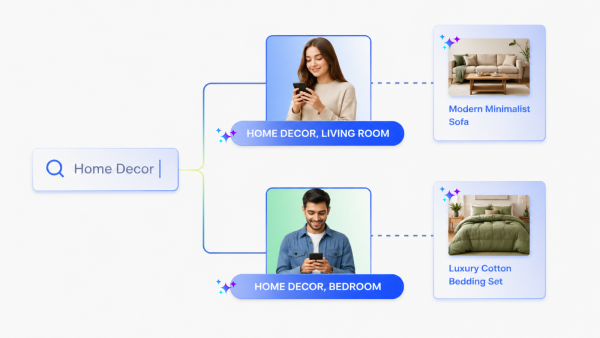
Signs It’s Time to Upgrade to Semantic Search
Many ecommerce businesses continue using traditional keyword search long after it starts affecting conversions. If your store experiences any of the situations below, upgrading to a semantic search solution can significantly improve product discovery and customer satisfaction.
High Zero-Result Searches
Customers frequently receive “No Products Found” even though relevant items exist in your catalog.
Shoppers Use Natural Language
Customers search using complete phrases like “comfortable shoes for office” instead of simple product names.
Your Catalog Is Growing Rapidly
As product counts increase, manually maintaining synonyms and search rules becomes increasingly difficult.
Search Isn’t Driving Revenue
If visitors use search but rarely convert, better semantic relevance can help surface products that truly match shopper intent.
Businesses that recognize these warning signs early can improve search relevance, reduce customer frustration, and create a more intuitive shopping experience by adopting a modern semantic search platform.
FAQ
What’s the difference between semantic search and keyword search?
Keyword search matches exact words and configured synonyms; semantic search matches meaning and intent using embeddings and language understanding, so it handles paraphrases and descriptive queries far better.
Is semantic search the same as vector search?
Closely related. Vector/embedding search is the most common technique used to deliver semantic search results.
Does semantic search work for small stores?
It helps most when shoppers use descriptive or natural-language queries. Small catalogs with mostly exact-match searches see smaller gains.
Can I add semantic search to my existing platform?
Often yes — many platforms (and Elastic) let you layer semantic/vector relevance onto existing keyword search as hybrid search.
How were these top semantic search solutions for e-commerce selected?
Each was scored on relevance quality, natural-language handling, hybrid blending, merchandising control, speed/scale and pricing transparency, then ranked for commerce use.