Algolia vs Elasticsearch: Which Search Engine Wins in 2026?
The Algolia vs Elasticsearch
debate is one of the most common tech-stack decisions e-commerce and SaaS teams make. Both power millions of search experiences, but they sit at opposite ends of the build-vs-buy spectrum.
The Algolia vs Elasticsearch cost comparison
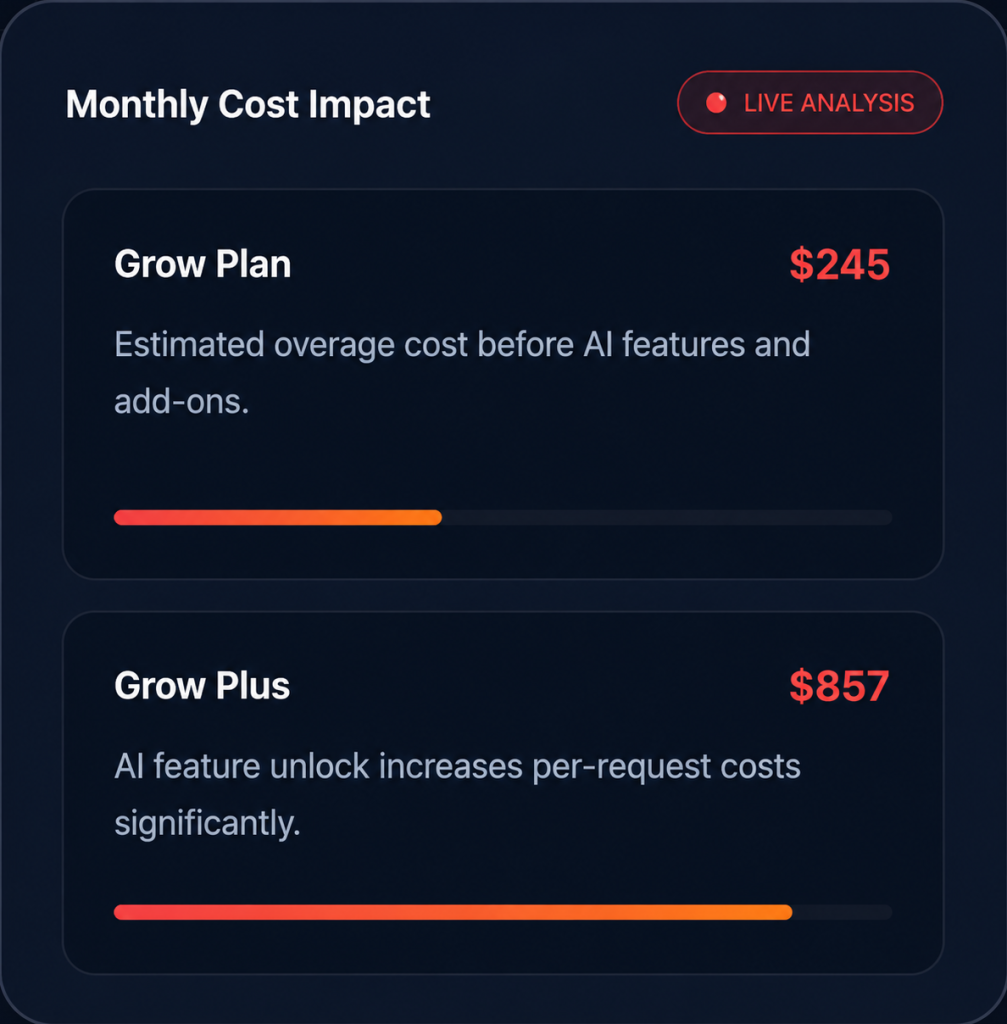
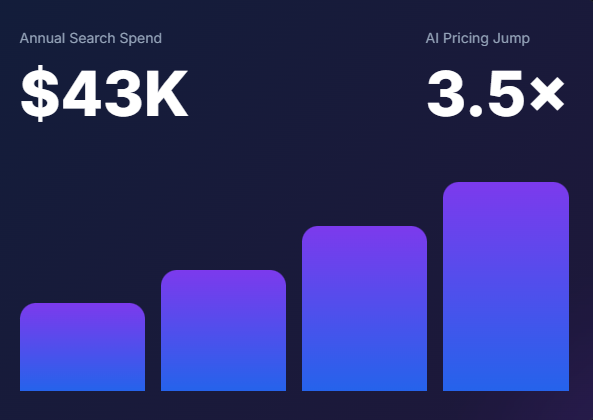
is misleading at the surface. Algolia’s per-request billing is predictable but expensive at scale.
Elasticsearch is “free” only on paper. Vendor TCO data shows $50K–$300K annually for self-managed infrastructure, plus 1–3 dedicated engineers.
For most e-commerce teams without a search team, Algolia delivers lower TCO. For platforms with engineering depth and very high query volume, Elasticsearch wins.
Go Live Speed
<1 Day
Single async script deployment with minimal setup overhead.
Response Time
<200ms
Global CDN edge-cached semantic search performance.
CTR Improvement
+40%
Average lift in product discovery engagement after migration.
When to
choose each
Choose Algolia
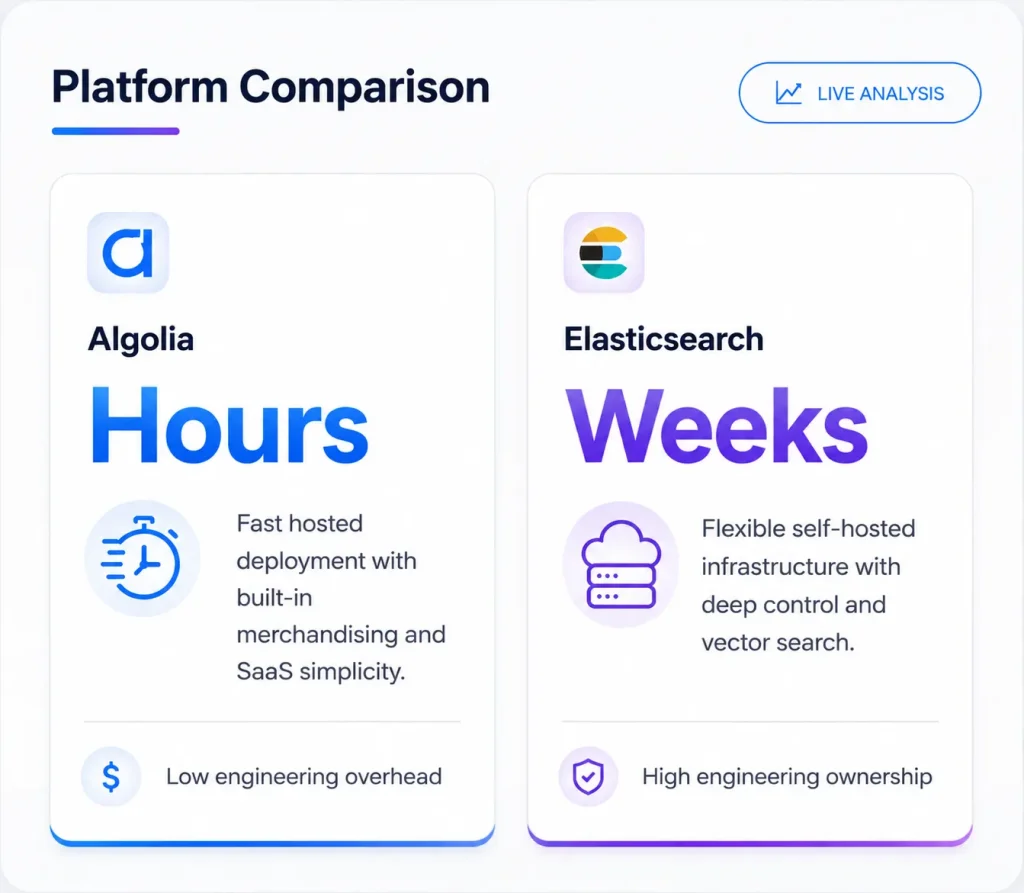
Choose Algolia if your priority is fast deployment, minimal infrastructure management, and a hosted search platform that can go live quickly without building an internal search engineering team.
01
02
Choose Elasticsearch
Choose Elasticsearch if you have a search engineering team, need full control over relevance and ranking, want native vector search without a paywall, or operate at a query volume where SaaS billing becomes prohibitive.
Why Choose Between
Algolia and Elasticsearch?
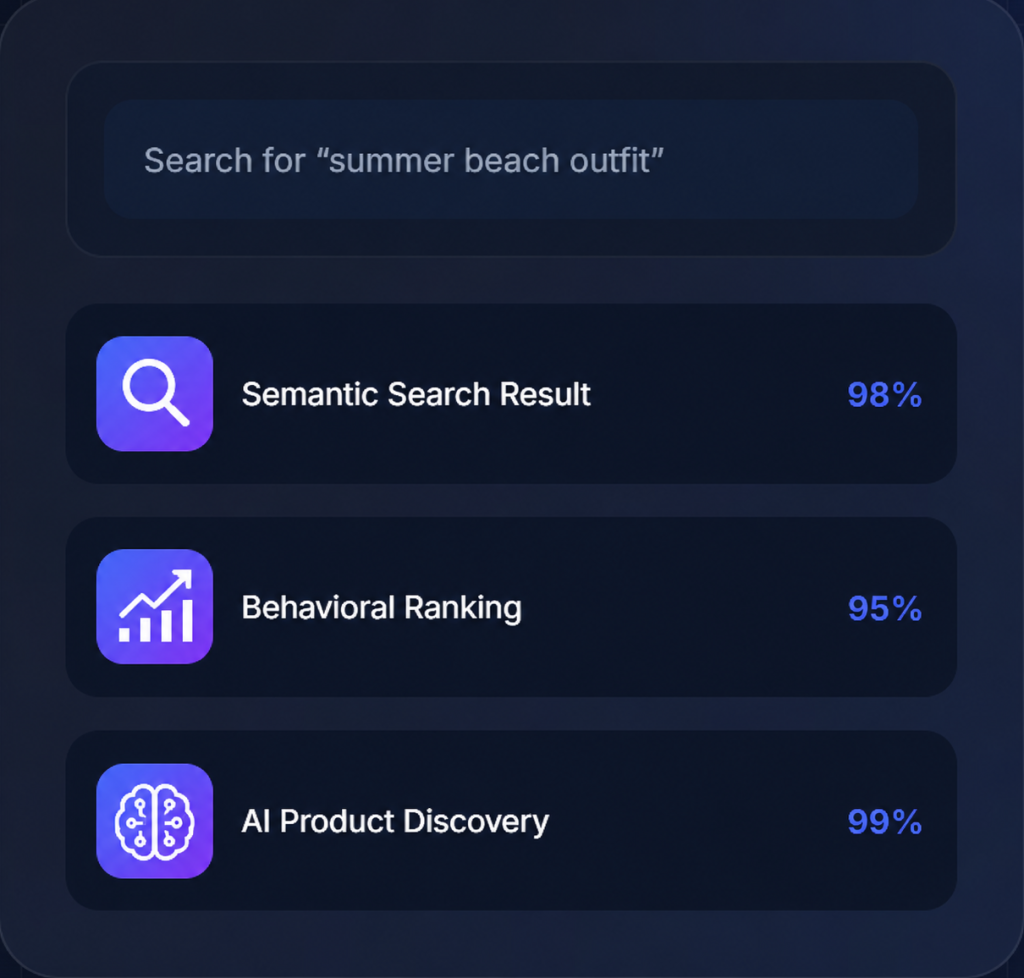
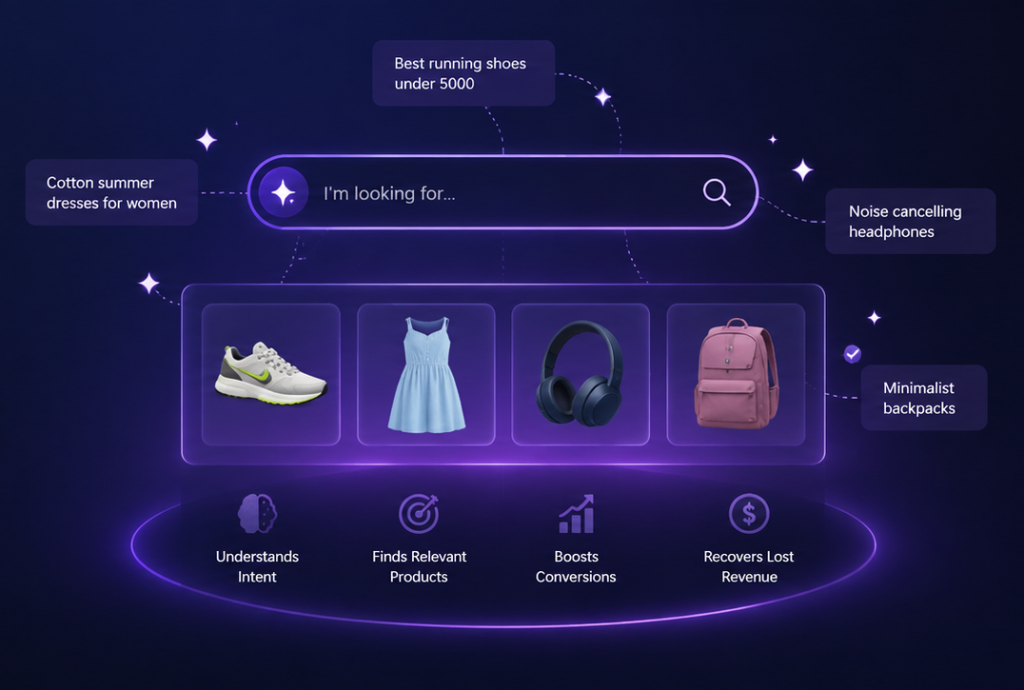
Modern ecommerce teams shouldn’t have to choose between ease of use and powerful search capabilities. AI-native search platform i.e bCloud AI combine the simplicity of hosted search with advanced semantic and vector search technologies—without the engineering overhead or unpredictable pricing. Why bCloud AI
is best over other lets discuss in detail-
⚡
AI-Powered Search
Deliver natural language, semantic, and vector search experiences that understand customer intent, not just keywords.
💰
Predictable Pricing
Avoid expensive AI add-ons, hidden overage charges, and complex enterprise licensing models.
🛒
Built for Ecommerce
Increase product discoverability, improve conversion rates, and create a seamless shopping experience.
🚀
Fast Deployment
Launch in days instead of months with minimal engineering effort and zero infrastructure management.
bCloud AI Everything You Need in One Search Platform
✓ Semantic Search
✓ Vector Search
✓ Natural Language Queries
✓ Product Recommendations
✓ Personalized Results
✓ Enterprise Scalability
Ready to Upgrade Your Search Experience?
Stop compromising between usability and flexibility. Discover how AI-powered ecommerce search can improve customer experiences while reducing costs.
Increasingly, the answer in the Algolia vs Elasticsearch debate is “neither.” Modern AI-native platforms like bCloud AI combine Algolia’s hosted simplicity with Elasticsearch-grade vector search capabilities, all at a predictable price — without the engineering overhead or the AI-tier paywall.
If the Algolia vs Elasticsearch comparison still leaves you on the fence, the next step is usually a budget reality check — see our full breakdown of Algolia pricing to model your real monthly cost, or jump straight to the shortlist of Algolia alternatives that bundle semantic search at every tier. Teams replacing legacy platforms also benefit from our Hawksearch alternative guide. For the full landscape view across every option in the market, our roundup of the best e-commerce search platforms walks through the side-by-side matrix.
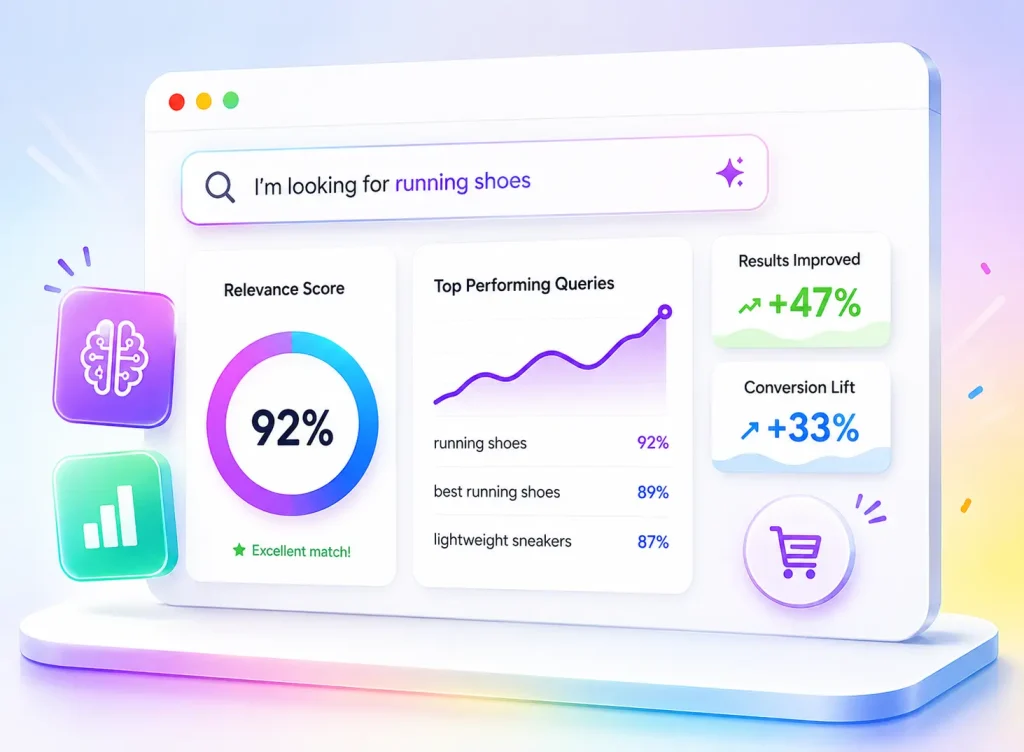
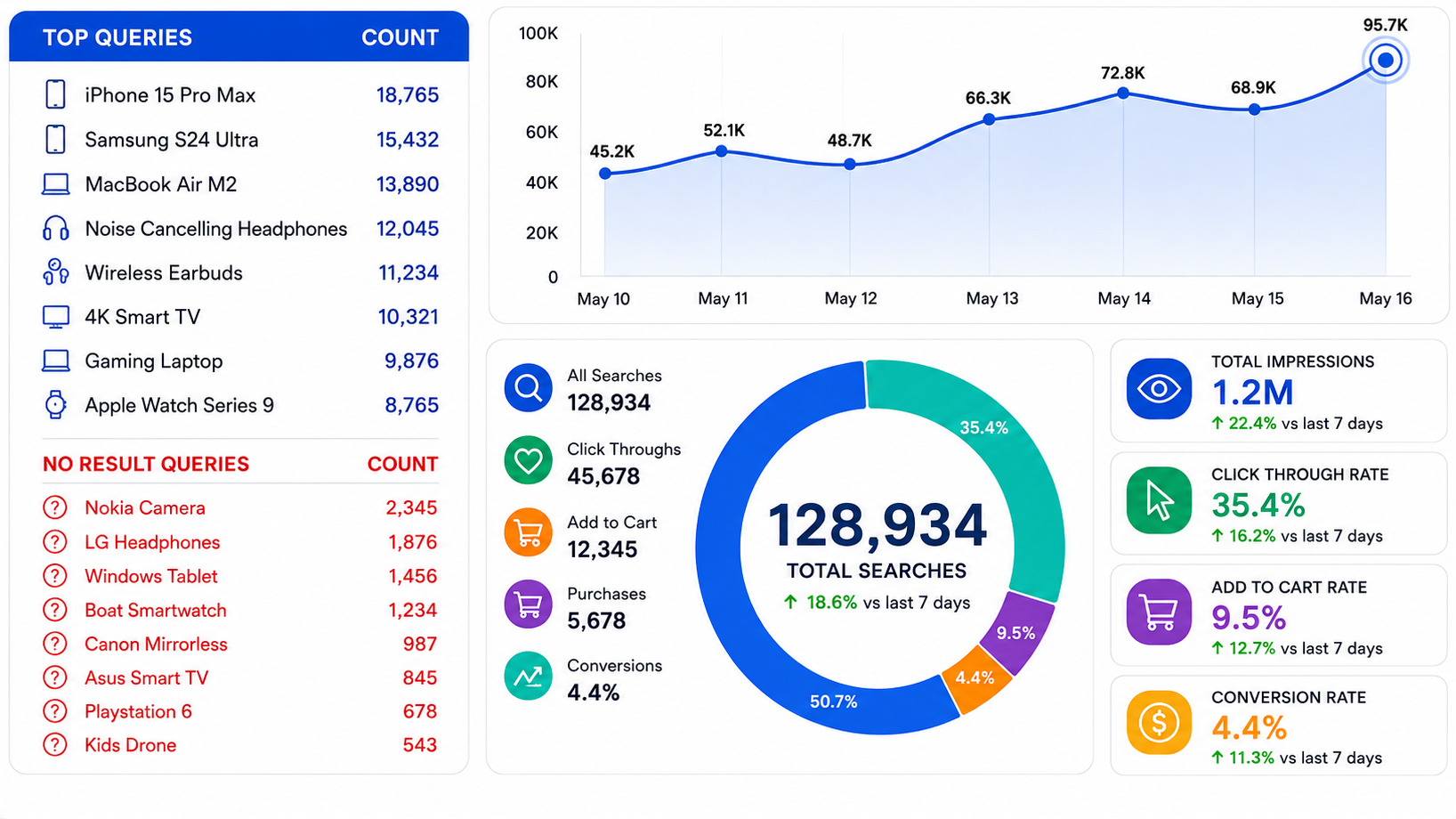
Convert raw user behaviour into concrete next steps with a comprehensive analytics suite built for search, discovery, and recommendation intelligence.
Frequently asked
questions
Which is better, Algolia or Elasticsearch?
Neither wins outright. Algolia wins on deployment speed, hosted simplicity, and built-in ecommerce features like merchandising and A/B testing. Elasticsearch wins on flexibility, index control, and infrastructure ownership. The right pick depends on whether you have a dedicated search engineering team and how predictable you need billing to be.
Is Elasticsearch really free?
The open source software is free, but running it in production is not. Vendor TCO data puts self-managed Elasticsearch at $50K to $300K per year in infrastructure, plus 1 to 3 dedicated engineers for cluster operations, scaling, and relevance tuning. Elastic Cloud removes some of that burden but starts around $95 per month and grows with usage.
How much does Algolia cost compared to Elasticsearch?
Algolia charges per request and per record, so billing is predictable but can get expensive at scale. Elasticsearch looks free on paper but carries heavy infrastructure and engineering costs. For teams without a search team, Algolia usually delivers lower total cost of ownership. For platforms with engineering depth and very high query volume, Elasticsearch wins.
How long does it take to implement Algolia vs Elasticsearch?
Algolia typically goes live in hours, often under a day, using a hosted index, JavaScript SDK, and a single async script with minimal setup overhead. Elasticsearch usually takes days to weeks because you have to shape the index, mappings, and analyzers and stand up the cluster before launch.
Does Elasticsearch support semantic and vector search?
Yes. Elasticsearch includes native kNN and vector fields, but you have to build and tune the semantic pipeline yourself. On Algolia, semantic search is available on the Elevate tier only. AI-native platforms like bCloud AI include semantic search, vector search, and natural language queries out of the box.
Find the Best Search Solution for Your Growth
Compare deployment speed, scalability, customization, and total cost of ownership to determine whether Algolia’s managed simplicity or Elasticsearch’s flexibility best fits your search strategy.