
What is Bloomreach, and why look for an alternative?
So why seek a Bloomreach alternative? Cost and complexity top the list. Bloomreach uses quote-based, module- and usage-based pricing with no public price list; Discovery-only deployments are commonly reported in the $60K–$120K+ per year range, and the full suite around $150K. Catalog “documents” (every variant, SKU, and regional view) count separately, so costs balloon on large catalogs. Real-time personalized search requires both the Discovery and Engagement modules. And implementations typically run 3–6 months. If you want great search without buying — and standing up — an entire DXP, the platforms below are worth a look.
The 6 best Bloomreach alternatives for 2026
1. bCloud AI — best for great search without the DXP overhead
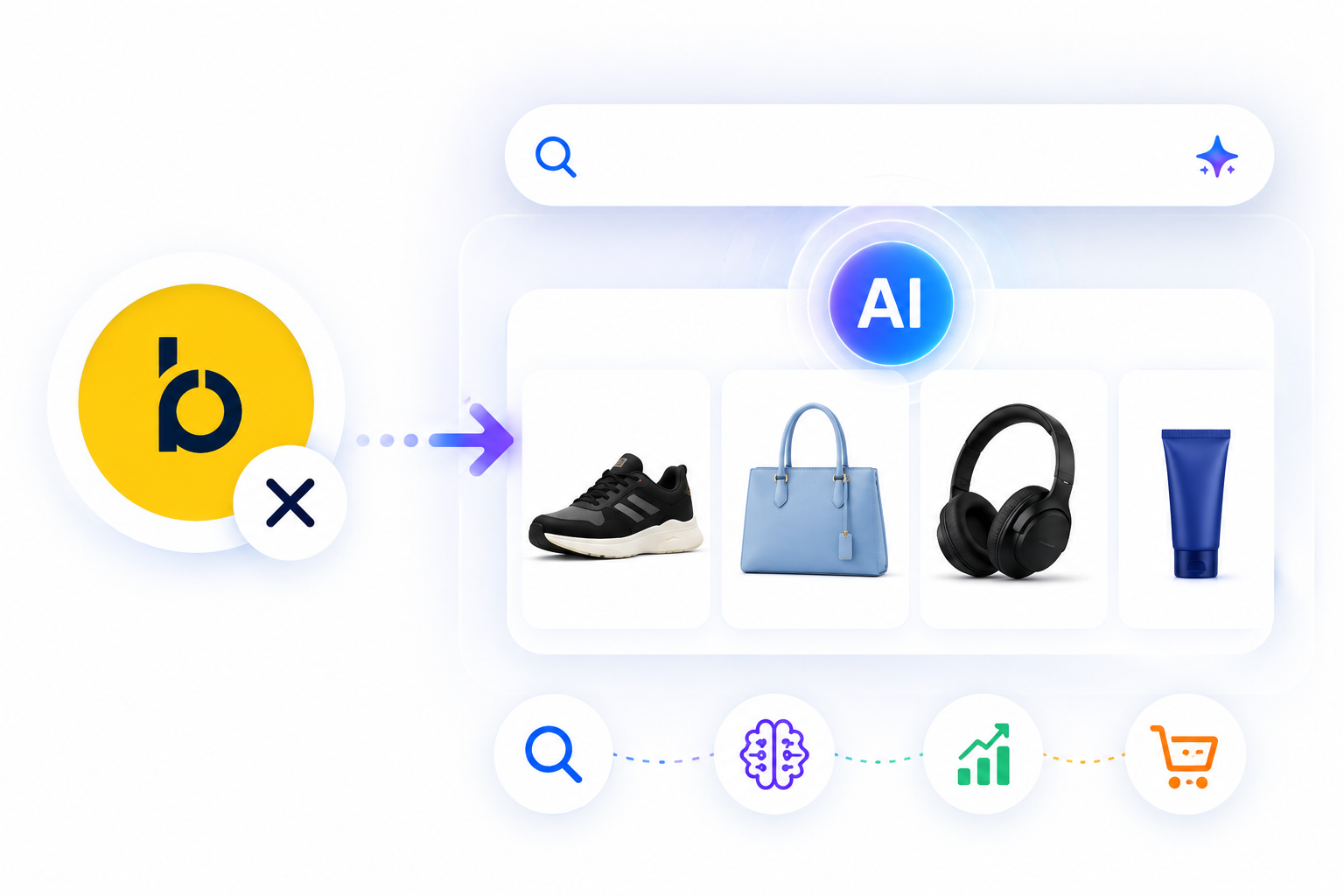
bCloud AI is an AI-native search platform that delivers hybrid keyword + vector search, real-time indexing, conversational commerce, and 40+ language support in a focused package — not a sprawling suite. Results return in under 200ms, implementation takes about four weeks, and pricing is based on catalog size and features rather than opaque per-document licensing. Best for: mid-market and enterprise retailers who want best-in-class AI search and discovery quickly and affordably, without committing to a full CDP + CMS platform.
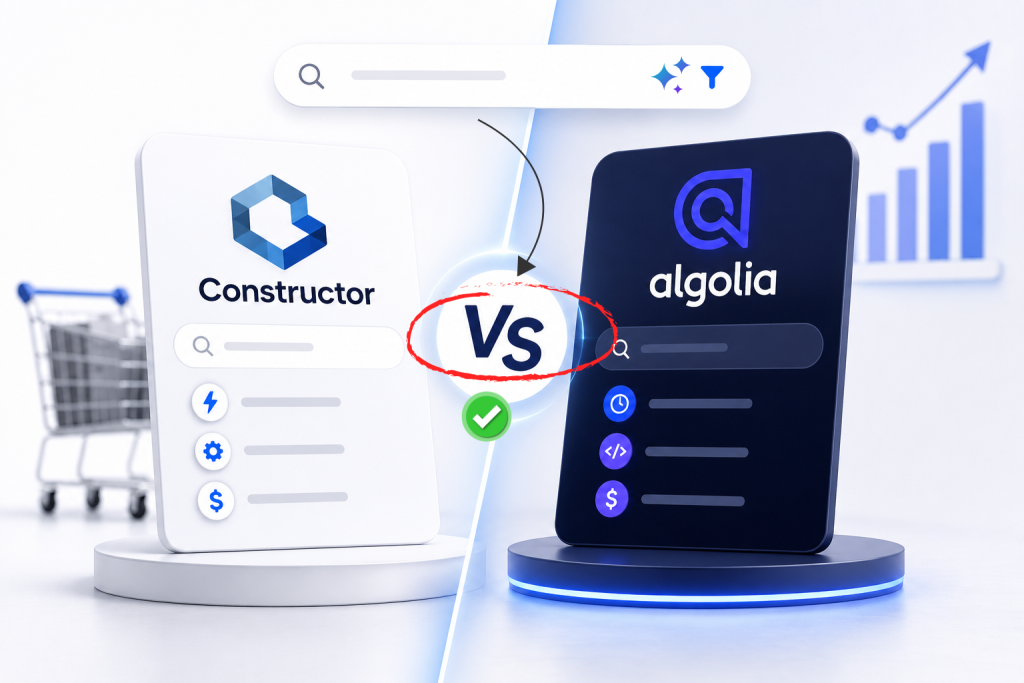
2. Constructor — best lighter enterprise discovery
Constructor.io is a revenue-focused product-discovery platform that optimizes search, browse, and recommendations toward conversion using behavioral data. It delivers much of Bloomreach’s commerce-tuned discovery without the full content-and-marketing suite. Pricing is custom and sales-led. Best for: enterprise retailers focused on search-driven revenue at high SKU counts.
3. Algolia — best for search-only at lower cost
Algolia is a developer-first search API with a free Build tier (10,000 requests/month) and usage-based pricing that’s typically far cheaper than Bloomreach for search-only use cases. Its NeuralSearch AI layer sits on the top enterprise tier. Best for: teams that want fast, flexible search without DXP commitment — see our Algolia alternatives guide for the wider field.
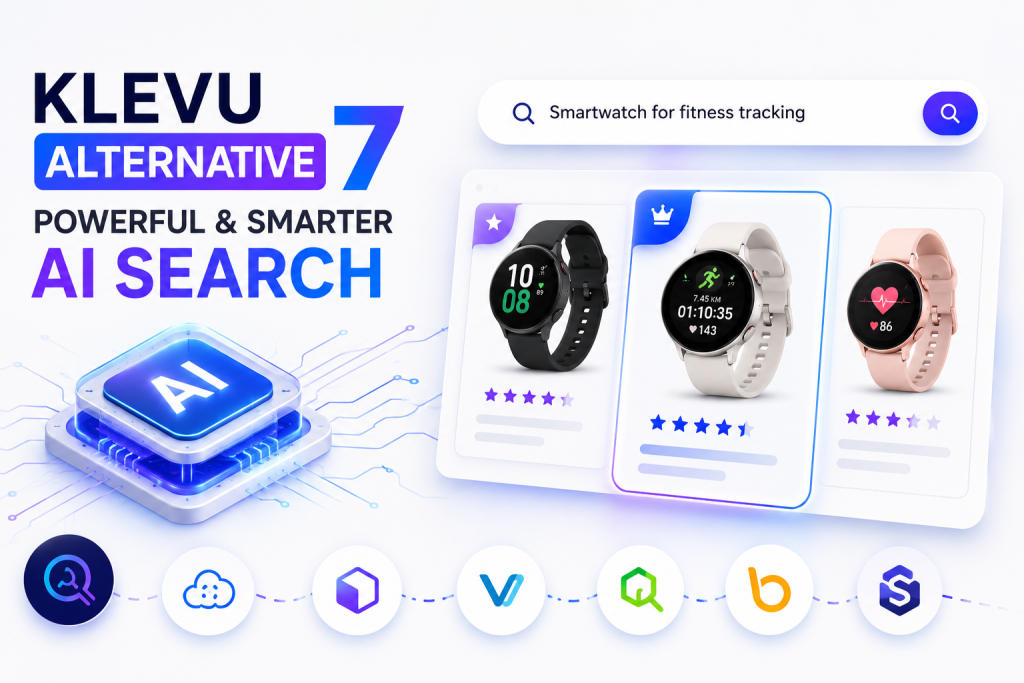
4. Klevu — best for Shopify/Magento mid-market
Klevu offers AI search and discovery with strong NLP and merchandising automation, popular with Shopify and Magento retailers. It’s lighter and faster to adopt than Bloomreach, though also premium-priced. Best for: mid-market catalog retailers on Shopify or Magento.
5. Coveo — best for cross-property enterprise search
Coveo provides mature ML ranking and personalization across commerce and support/service — useful if you need unified search beyond the storefront. Best for: enterprises with complex, multi-property search needs. Watch-out: heavier implementation.
6. Searchspring — best for merchandising control
Searchspring centers on ecommerce merchandising and personalized search with granular product-ranking control. Best for: catalog-heavy retailers whose merchandising team wants hands-on control without a full DXP.
AI Search Grader by bCloud AI
Grade your ecommerce search in 10 quick questions
31% of ecommerce searches return zero results — and most shoppers who hit a dead end leave for a competitor. How does your store's search stack up?
Answer 10 short questions and get your AI search score, plus a personalized report to fix the gaps. Free, takes about 2 minutes.
No signup needed to take the quiz.
Understanding intent…
Scoring your answers across relevance, AI, experience, and insights.
Your AI search score is ready
Tell us where to send your personalized report. You'll see your score and recommendations right away.
Your score by pillar
Personalized recommendations
Fix the gaps in weeks, not quarters
bCloud AI replaces keyword-only search with hybrid AI retrieval — sub-200ms responses, 99.99% uptime, and conversion lifts of up to 40% across 50+ implementations.
How to choose the right Bloomreach alternative
Match the platform to what you actually need:
- Do you need search only, or a full suite? If it’s search and discovery, a focused platform beats a DXP on cost and speed.
- Total cost of ownership — factor implementation, module dependencies, and how pricing scales with your catalog and traffic, not just the headline quote.
- AI depth — semantic + hybrid vector relevance and conversational search, ideally without gating behind a top tier.
- Time to value — weeks vs the multi-month enterprise norm.
- Integrations — native connectors for your platform plus an API for headless.
- Merchandising and personalization — control over results, tailored per shopper.
Bloomreach’s own strength — being named a Gartner leader for search and product discovery via the Gartner Magic Quadrant — is worth respecting; the question is whether you need that full platform or just excellent search. For a side-by-side of the leaders, see the best AI ecommerce search platforms, and to understand the underlying technology, our AI ecommerce search guide.
When Bloomreach is the right choice
In fairness, Bloomreach is the strongest option when you genuinely need the whole stack: search, content (CMS), customer data (CDP), and marketing automation, unified under one agentic AI, with enterprise compliance and governance. For a large brand consolidating multiple vendors into a single composable platform — and with the budget and technical resources to implement it — Bloomreach is arguably the most complete agentic commerce platform available. The alternatives above win when you want just great search and discovery, faster and for less.
What to untangle before moving to a Bloomreach alternative
Leaving a suite is harder than leaving a single tool. The modules are connected.
If you run Discovery alongside Engagement or Content, replacing search alone leaves loose ends. Therefore map these four before you sign anything new.
Which modules feed search?
Personalization may draw on customer data held elsewhere in the suite. List those dependencies, or the replacement launches without signals it expected.
Where does the product feed come from?
A suite often normalises catalog data on the way in. Consequently your new platform may need that transformation rebuilt upstream.
What have merchandisers built?
Years of rules, pins and campaigns live in the admin. Export them early and give the team time to rebuild before cutover, not during it.
When does the contract end?
Enterprise terms often auto-renew with long notice periods. Check the date first, since it sets your realistic timeline more than any technical work does.
In short, run both systems in parallel and route a small traffic share first. Export your current conversion and zero-result numbers too, so you can prove the switch worked. Our search relevance metrics guide covers that baseline.
Questions to Ask Before Choosing a Bloomreach Alternative
Every AI search platform promises better relevance and personalization, but the right choice depends on your business goals. Asking the right questions before making a decision helps you avoid unnecessary costs and ensures the platform will continue meeting your needs as your business grows.
Does it solve your biggest challenge?
Identify whether your priority is AI search, merchandising, personalization, faster deployment, or lower operating costs before comparing platforms.
Will pricing remain predictable?
Understand how costs change as your catalog, traffic, and product variants grow to avoid unexpected licensing expenses later.
Can your team manage it?
Consider implementation time, technical expertise, and ongoing maintenance requirements—not just the feature list.
Will it support future growth?
Choose a platform that can scale with larger catalogs, multilingual storefronts, personalization, and evolving AI capabilities without requiring another migration.
Final recommendation: The best Bloomreach alternative isn’t necessarily the one with the longest feature list—it’s the one that delivers the search experience your customers expect while fitting your team’s budget, implementation timeline, and long-term ecommerce strategy.
Frequently asked questions
What is the best Bloomreach alternative?
It depends on your needs. For AI-native hybrid search with conversational commerce and predictable pricing (without a full DXP), bCloud AI is a strong fit. For revenue-optimized enterprise discovery, Constructor; for lower-cost search-only, Algolia; for Shopify/Magento mid-market, Klevu.
Why do retailers look for a Bloomreach alternative?
Usually cost and complexity: quote-based pricing commonly running $50K+ per year, per-document licensing that scales with large catalogs, module dependencies (real-time personalized search needs both Discovery and Engagement), and 3–6 month implementations.
How much does Bloomreach cost?
Bloomreach uses custom, quote-based pricing with no public price list. Discovery-only deployments are commonly reported around $60K–$120K+ per year, with the full suite near $150K. Costs scale with catalog size (documents), traffic, and modules.
Is there a cheaper alternative to Bloomreach Discovery?
Yes. Algolia’s usage-based pricing is typically far lower for search-only, open-source Elasticsearch costs only infrastructure, and platforms like bCloud AI price on catalog size and features — all generally more affordable than a full Bloomreach deployment.
Do Bloomreach alternatives integrate with Salesforce Commerce Cloud and SAP?
Many do, and most integrate with Shopify, BigCommerce, and Magento plus a REST API for headless and custom stacks. Confirm specific connectors for your platform during evaluation.
Get enterprise-grade search without the enterprise platform.
bCloud AI delivers hybrid, conversational, sub-200ms search and discovery in about four weeks, priced on your catalog — not per opaque “document.” Start free or book a demo.
bcloud.ai