
bCloud AI

FREE White Paper: How AI Search Generated $2.54M in 90 Days
⚡AI Semantic Search

Semantic Search: The Complete Guide to Meaning-Based Information Discovery

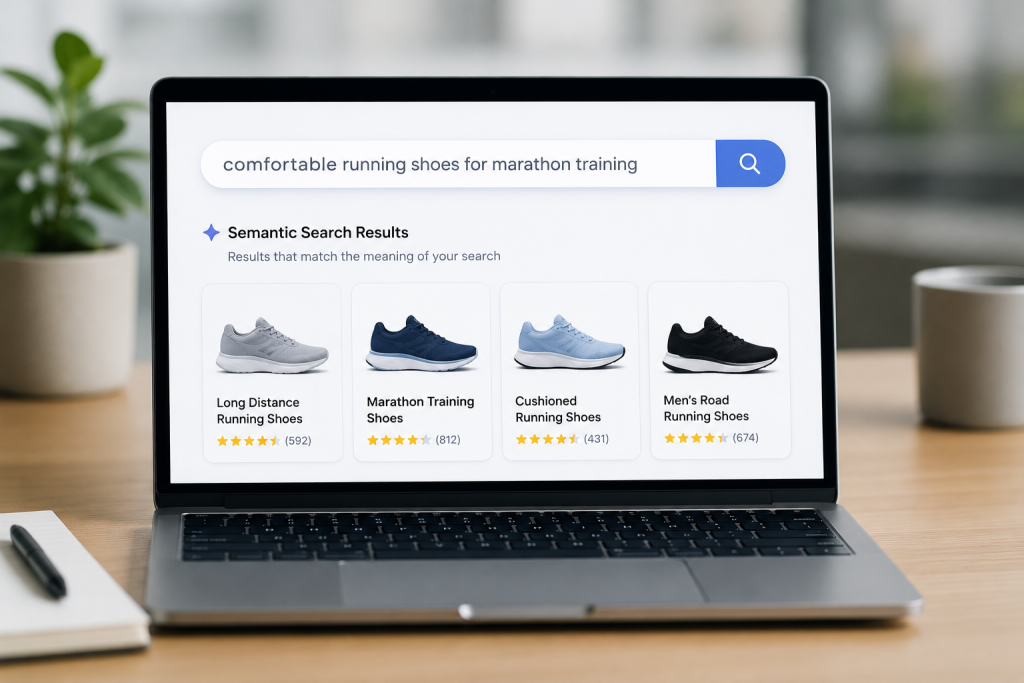
Semantic search can find results that don’t use your exact terminology but address your actual need.
semantic search

The Technology Transforming Information Discovery

Semantic search represents a fundamental evolution in how we retrieve information. For decades, search has been about matching keywords. Semantic search changes everything by making systems understand meaning. This guide explains what semantic search is, why it matters, how it works, and why your organization needs to understand semantic search for modern information systems.

Understanding Semantic Search Basics

Key characteristics of semantic search

How enterprise AI news applies to your industry depends heavily on your specific business. Here’s what enterprise AI news is showing us about major sectors:

🧠

Meaning-Based Matching

Semantic search understands that "automobile," "car," and "vehicle" all refer to the same concept, even though they use different words.

🎯

Intent Understanding

Semantic search determines whether you're researching, comparing, or trying to purchase something—then adjusts results accordingly.

🔍

Context Awareness

Semantic search considers surrounding information and your history to better understand what you're looking for.

🔗

Synonym and Concept Handling

Semantic search knows related concepts and similar terms, improving result coverage.

💬

Phrase and Question Understanding

Semantic search handles natural language queries, not just keyword phrases.
Why Semantic Search Matters Now

Why are organizations urgently adopting semantic search? What problems does semantic search solve?

Reduced Zero-Result Searches

One of the most frustrating search experiences is when nothing relevant appears. Semantic search dramatically reduces this.

Better Ecommerce Performance

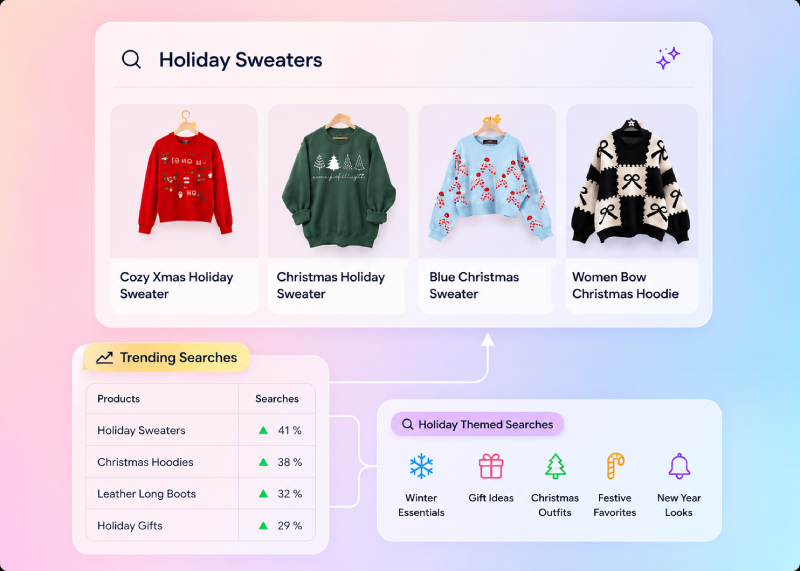
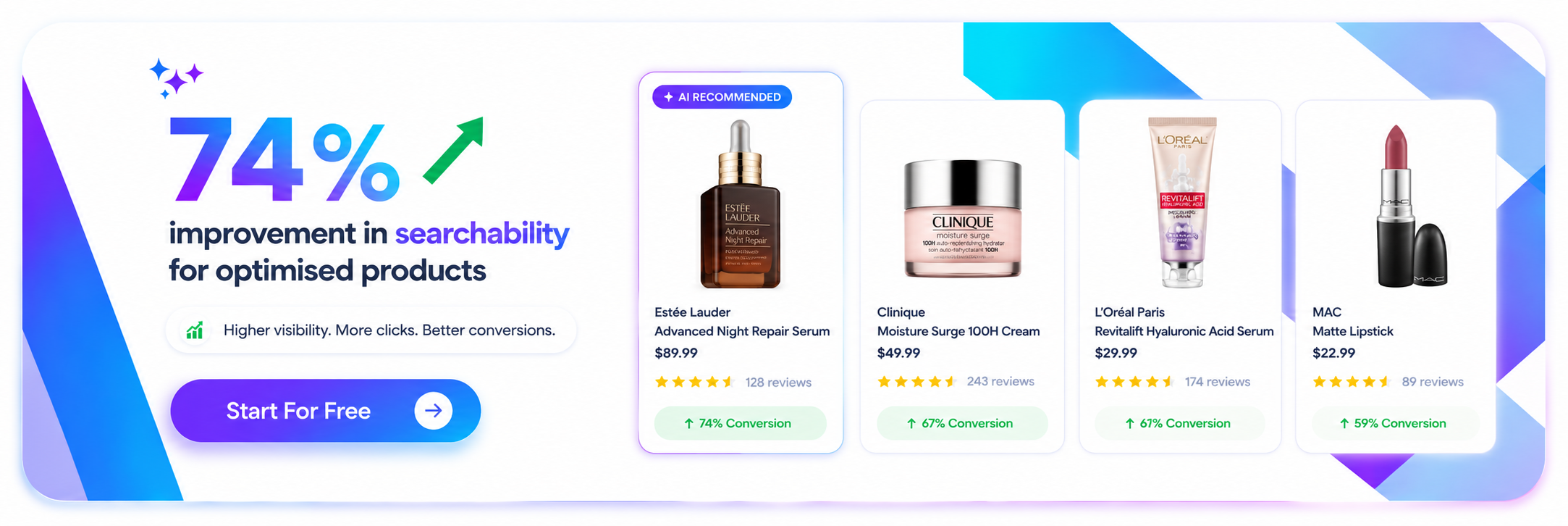
For product discovery, semantic search is increasingly table stakes. Organizations with strong semantic search implementations see significantly higher conversion rates.

Improved Internal Search

Employees can find answers to questions faster when semantic search understands what they're actually asking.

Enhanced User Experience

Users get more relevant results, find what they need faster, and become more satisfied with your platform.
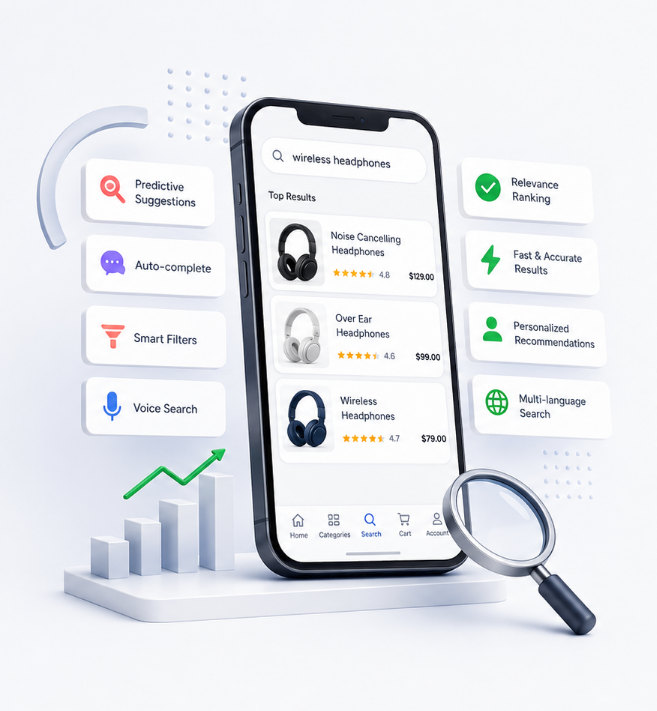
Mobile search

When to Implement Semantic Search

Not every search application needs semantic search immediately, but many do. Here’s how to assess your situation:
Your organization is ready for semantic search if:

Why Semantic Search Matters Now

Why are organizations urgently adopting semantic search? What problems does semantic search solve?

Reduced Zero-Result Searches

One of the most frustrating search experiences is when nothing relevant appears. Semantic search dramatically reduces this.

Better Ecommerce Performance

For product discovery, semantic search is increasingly table stakes. Organizations with strong semantic search implementations see significantly higher conversion rates.

Improved Internal Search

Employees can find answers to questions faster when semantic search understands what they're actually asking.

Enhanced User Experience

Users get more relevant results, find what they need faster, and become more satisfied with your platform.

Measurable Business Impact

In ecommerce, semantic search typically improves conversion rates 20-35%, directly impacting revenue.

The Semantic Search Implementation Process

Timeline: Semantic search implementations typically span 8-12 weeks.

Weeks 1–2: Platform Evaluation and Selection
The first phase focuses on understanding organizational requirements and selecting the right enterprise search platform. Teams evaluate existing search challenges, identify key business objectives, and define success metrics. Different vendors and technologies are compared based on scalability, security, AI capabilities, integration options, and total cost of ownership. By the end of this phase, stakeholders should have selected a platform that aligns with both current needs and future growth plans.
Weeks 3–4: Content Preparation and Ingestion
Once the platform has been selected, attention shifts to preparing content for indexing. Existing documents, databases, cloud repositories, and business applications are audited to identify valuable information sources. Content is cleaned, organized, and enriched with metadata where necessary. Connectors are configured to securely ingest information from multiple systems, ensuring the search platform has access to the data users need to find.
Weeks 5–7: Testing and Optimization
During this stage, the enterprise search solution is thoroughly tested to ensure relevance, accuracy, and performance. Search queries are evaluated across different departments and use cases to identify gaps in results. Ranking models, semantic search settings, and filtering options are fine-tuned to improve user experience. Security permissions and compliance requirements are also validated to ensure users only see information they are authorized to access.
Weeks 8–10: User Training and Staged Rollout
Successful enterprise search adoption depends on user confidence and engagement. Training sessions are conducted to familiarize employees with new search capabilities, advanced query techniques, and productivity features. The platform is then introduced through a phased rollout, starting with selected teams or departments. Feedback collected from early users helps identify improvement opportunities and ensures a smoother organization-wide deployment.
Weeks 11–12: Full Deployment and Ongoing Optimization
The final phase focuses on launching the enterprise search platform across the entire organization. Usage analytics, search performance metrics, and user feedback are continuously monitored to measure business impact and identify optimization opportunities. Teams refine relevance settings, expand content coverage, and implement governance processes to maintain search quality over time. This ongoing optimization ensures the platform continues delivering value as content volumes and business requirements evolve.

Pricing That Makes Sense

Annual plan

Enterprise Plus

Enterprise-scale AI Search

Volume-based discounts Custom search requests and records
Everything in Enterprise, Plus:

Free to start, then pay as you go

Enterprise

Everything you need for scale

10K search requests /month included then $1.10 per additional 1K search requests 100K records included then $0.40 per additional 1K records
EVERYTHING IN Premium, Plus:

Premium

Leverage advanced features

10K search requests /month included then $0.40 per additional 1K search requests 100K records included then $0.40 per additional 1K records
INCLUDES:

Core

Get started quickly and grow

Get started building your best search experiences ever with access to our full suite of features to try for free.
INCLUDES:

Semantic Search vs. Keyword-Based Search: The Real Differences

If you’re still using traditional keyword-based search, you should understand what’s different about semantic search:

📈

Result Quality

Semantic search typically returns more relevant results. Compare the same query in keyword-based vs. semantic search systems and the difference is striking.

📉

Zero-Result Rate

Traditional search has high zero-result rates. Semantic search dramatically reduces these frustrating experiences.

👤

User Satisfaction

Users find what they need faster with semantic search, leading to higher satisfaction.

🧠

Query Refinement

With semantic search, users need fewer refinements to find what they want.

Evaluating Semantic Search Solutions

The semantic search market has grown significantly. Here’s how to compare solutions:
Key evaluation criteria:
Search Quality– Does this semantic search solution actually deliver relevant results for your content? Test thoroughly.
Language Support – What languages does this semantic search solution support?
Customization –Can you customize this semantic search for your domain and terminology?
Scalability –Can this semantic search grow with your content volume?
Integration –Does this semantic search integrate with your existing platforms?
Performance – How fast does this semantic search return results?
Support –Will the vendor help you implement and optimize semantic search?

Real-World Semantic Search Results

The best evidence for semantic search value comes from actual implementations.
Case Study: Ecommerce Apparel Retailer
Implemented semantic search for their product catalog. Results: 38% reduction in zero-result searches, 26% increase in search-driven conversion rate, 19% increase in average order value.
Case Study: SaaS Company
Implemented semantic search for customer support and documentation. Results: 45% reduction in support tickets about “how do I,” 28% improvement in customer satisfaction.
Case Study: Healthcare System
Implemented semantic search for clinical information access. Results: Clinicians spend 35% less time finding information, diagnosis accuracy improved 12%.

Advanced Semantic Search Techniques

Once you understand basics, here are advanced semantic search considerations:

Custom Domain Training

Semantic search can be fine-tuned for specific domains like healthcare, finance, or technology, improving accuracy.

01

02

Personalized Semantic Search

Results can be personalized based on user history and context.

Multimodal Semantic Search

Advanced systems can search across images, text, and structured data simultaneously.

03

04

Federated Semantic Search

Semantic search can be deployed across multiple data sources and systems.

Semantic Search for Specific Use Cases

Semantic search applies differently depending on your use case. Here are common applications:

Ecommerce Product Search Semantic search

Helps customers find products even when they don't use exact product names. A customer searching for "comfy outdoor shoes" will find athletic footwear even if the product title is "Performance Trail Runner."

Enterprise Knowledge Search

Employees searching for "budget approval process" can find relevant documents even if the document uses the term "financial authorization workflow."

Customer Support Search

Customers can find answers to "why can't I log in" even when your help center uses technical terminology like "authentication failure."

Healthcare Information Search

Patients can search for "arthritis help" and find information about "osteoarthritis management," though the exact terminology differs.
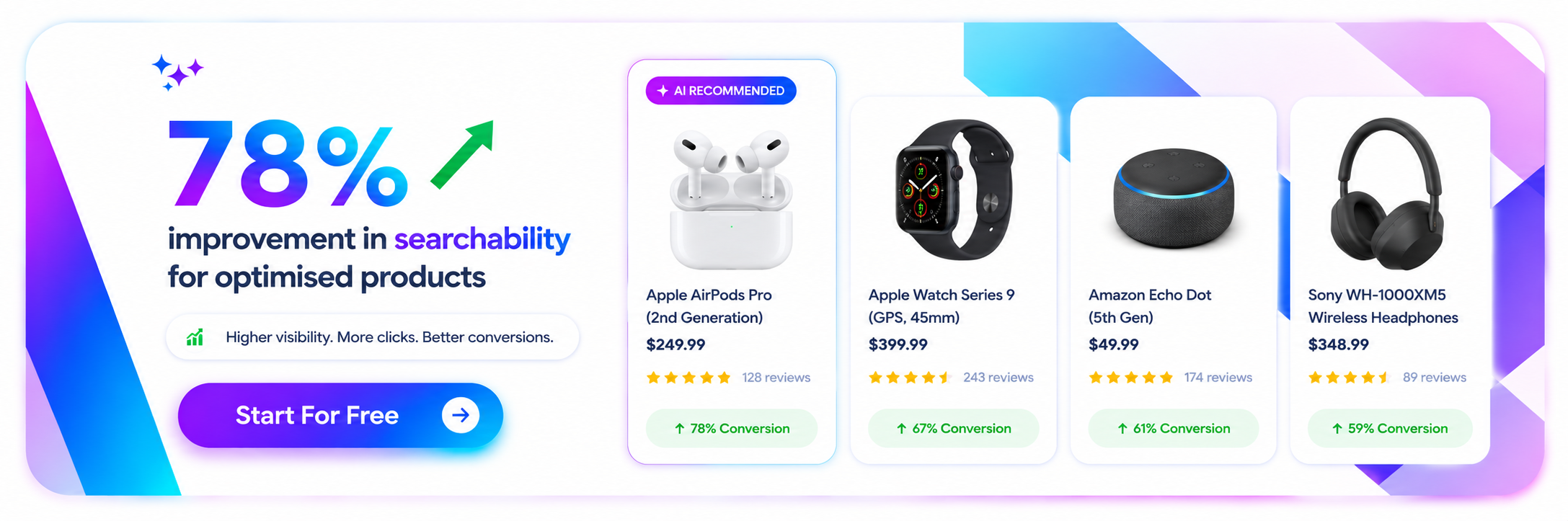
To understand the role of artificial intelligence in modern search experiences, explore our AI Search guide, which explains how AI technologies power advanced search systems and why semantic search delivers significantly better results than traditional keyword-based approaches. For a deeper look at search platform capabilities, our AI Search Engine guide explores how modern search solutions use semantic understanding to provide more accurate, relevant, and personalized results. Organizations looking to modernize knowledge discovery should also review our Enterprise Search guide, which explains how enterprises are incorporating semantic technologies into their search infrastructure to improve productivity and information access.

Frequently Asked Questions About AI Search Engines

Is semantic search ready for production, or is it still experimental?
Semantic search is production-ready. Thousands of organizations use it successfully. It’s no longer experimental—it’s the new standard.
Users see immediate improvements upon rollout. Improvements continue as the semantic search system learns from interactions.
Yes. Many organizations start with critical search use cases and expand semantic search over time.

Ready to Transform Your Search Experience with Semantic Search?

Semantic search isn’t the future—it’s the present. Organizations that understand semantic search and implement it strategically are gaining significant competitive advantages.
Scroll to Top