
What Is a Comparison Shopping Engine?
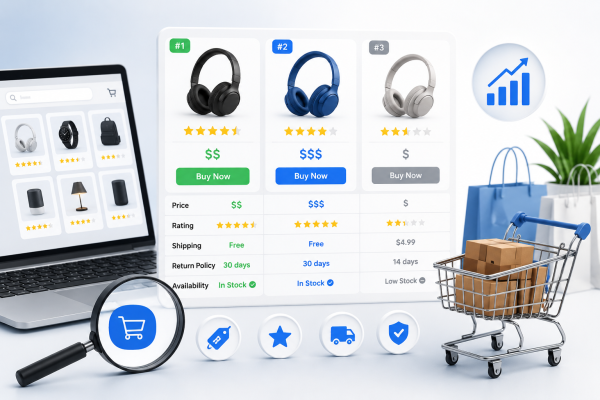
How Does a Comparison Shopping Engine Work?
Behind every CSE is a simple pipeline. First, retailers submit a product feed containing each item’s title, description, price, image, availability, and identifiers. The engine ingests and indexes that data, matching listings for the same product across stores. When a shopper searches, the engine ranks the relevant offers and displays them together, typically influenced by price, data quality, relevance, seller rating, and sometimes paid bids. The shopper compares and clicks through to a store to complete the purchase. Because the whole system runs on your feed, the quality and completeness of your product data largely determines how well you perform — the same principle that makes search enrichment so valuable.
AI Search Grader by bCloud AI
Grade your ecommerce search in 10 quick questions
31% of ecommerce searches return zero results — and most shoppers who hit a dead end leave for a competitor. How does your store's search stack up?
Answer 10 short questions and get your AI search score, plus a personalized report to fix the gaps. Free, takes about 2 minutes.
No signup needed to take the quiz.
Understanding intent…
Scoring your answers across relevance, AI, experience, and insights.
Your AI search score is ready
Tell us where to send your personalized report. You'll see your score and recommendations right away.
Your score by pillar
Personalized recommendations
Fix the gaps in weeks, not quarters
bCloud AI replaces keyword-only search with hybrid AI retrieval — sub-200ms responses, 99.99% uptime, and conversion lifts of up to 40% across 50+ implementations.
Examples of Comparison Shopping Engines
These engines come in several forms. Google Shopping is the largest, surfacing product listings directly in search. Bing Shopping plays the same role on Microsoft’s engine. Marketplace aggregators and dedicated price-comparison sites line up offers across retailers, and niche or vertical engines focus on specific categories. Increasingly, AI assistants like ChatGPT and Perplexity act as comparison engines too, recommending and comparing products conversationally. Each is a distinct surface, but they share the same requirement: a clean, structured product feed they can read and trust.
Why Comparison Shopping Engines Matter
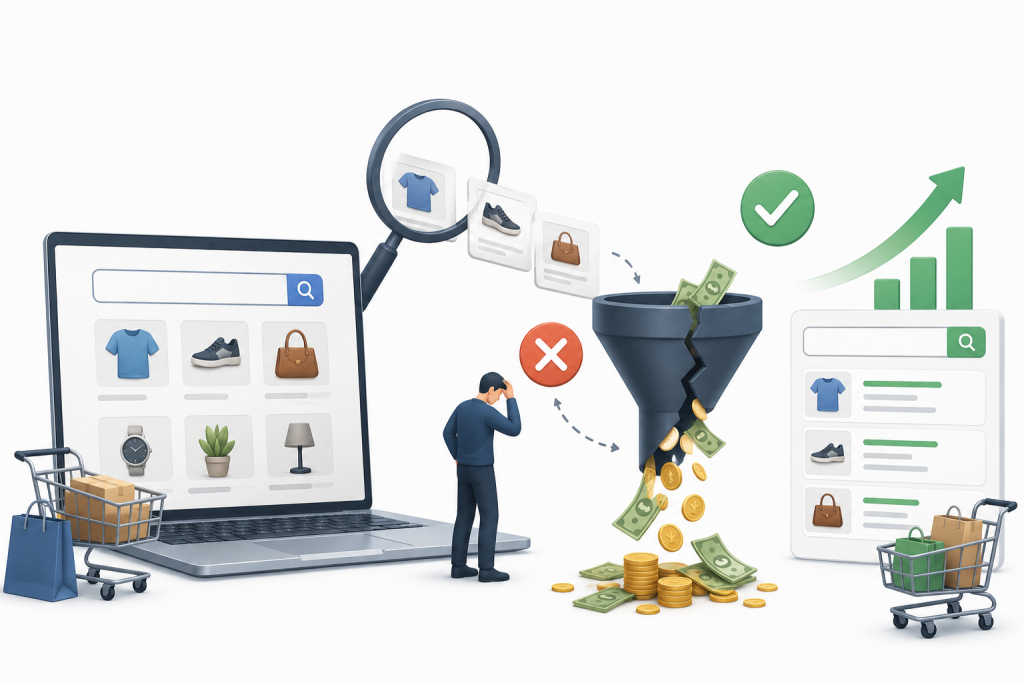
These channels capture buyers at the bottom of the funnel, when intent is highest and the decision often comes down to price, reviews, and availability. Appearing prominently means reaching shoppers who are ready to purchase right now; being absent means handing those sales to competitors. For many retailers, these channels drive a meaningful share of revenue at strong return, because the traffic is pre-qualified. As discovery fragments across Google, marketplaces, and AI assistants, maintaining a strong presence on every comparison surface is how you capture demand wherever shoppers choose to compare. This complements the broader picture covered in our shopping search engine guide.
How Products Rank on a Comparison Shopping Engine
Ranking on these engines is driven by a handful of factors you can influence.
Feed Quality and Completeness
Accurate, fully populated feeds with correct titles, attributes, categories, and identifiers rank better and match more searches. Thin or messy data is the most common reason listings underperform.
Competitive Price
Most engines weigh price heavily. Transparent, competitive pricing and accurate availability keep your offers visible and clickable.
Reviews and Seller Rating
Ratings and seller reputation influence both ranking and click-through, building the trust that wins the sale.
Relevance and Identifiers
Correct product identifiers (GTIN, MPN, brand) help the engine match your item to the right searches and competing offers.
Monitoring and Reporting Your Rankings
You cannot improve what you do not measure, so monitoring your comparison shopping engine rankings is essential. Track where your products appear, how your prices compare to competitors, your click-through and conversion from each channel, and any feed errors or disapprovals that quietly remove listings. Regular reporting turns scattered data into a clear picture of which products win, which lose, and why — so you can fix feeds, adjust prices, and double down on what performs. Whether you use a dedicated monitoring tool or your channel’s own dashboards, the goal is the same: continuous visibility into ranking, so no listing silently disappears and no opportunity goes unnoticed.
7 Proven Ways to Win on Comparison Shopping Engines
| # | Tactic | Why it works |
|---|---|---|
| 1 | Send clean, complete feeds | Feed quality drives ranking and match rate |
| 2 | Use correct identifiers | GTIN/MPN/brand match you to the right searches |
| 3 | Price competitively | Most engines rank heavily on price |
| 4 | Earn and show reviews | Ratings lift both ranking and click-through |
| 5 | Keep availability accurate | Out-of-stock or wrong stock kills trust and rank |
| 6 | Monitor rankings and errors | Catch disapprovals and slippage before they cost sales |
| 7 | Convert the click onsite | Great onsite search turns the visit into a purchase |
Comparison Shopping Engines vs. Onsite Search
It helps to separate the engines you optimize for from the experience you own.
| Aspect | Comparison shopping engine | Onsite store search |
|---|---|---|
| Role | Get found and compared across the web | Convert the shopper once they arrive |
| You control | Your feed, price, and data quality | The full search and discovery experience |
| Key lever | Clean feeds + competitive price | AI relevance + personalization |
The two work together: the engine sends you pre-qualified buyers, and strong onsite search makes sure they find the product and check out instead of bouncing.
Common Comparison Shopping Engine Mistakes
A few mistakes quietly drain results: submitting incomplete or error-filled feeds, missing product identifiers so the engine can’t match your items, ignoring price competitiveness, letting reviews go uncollected, and never monitoring rankings so disapprovals and slippage go unnoticed. The deepest mistake is optimizing hard to get the click but neglecting the onsite search that has to convert it. The fix is a single, clean, well-structured catalog feeding every channel — plus great onsite discovery to close the sale.
Comparison Shopping Engines and AI Discovery
The newest shift is that AI assistants increasingly do the comparing. When a shopper asks ChatGPT, Gemini, or Perplexity to recommend the best option in a category, the assistant compares products much like a traditional price-comparison site — drawing on the same structured product data, reviews, and pricing that feed the established channels. That means the work you do to perform well on classic channels, especially clean structured data and strong reviews, increasingly determines whether AI assistants name your products too. Retailers who treat both the established engines and AI assistants as one connected discovery surface will capture comparison-driven demand wherever it happens, rather than optimizing for yesterday’s channels alone.
How Product Data Improves Comparison Shopping Visibility
Strong comparison shopping performance starts with product data that search engines and shopping platforms can easily understand and trust. Complete titles, accurate attributes, product identifiers, pricing, availability, and high-quality images give comparison engines the information they need to match products with relevant searches and rank competing offers effectively. The same structured data is increasingly important as shoppers use AI assistants to compare products and receive recommendations. By keeping product information accurate and consistent across every channel, retailers can improve visibility on traditional comparison engines while also creating a stronger foundation for AI-driven product discovery, helping more high-intent shoppers find and evaluate their products.
Which Products Belong on Comparison Channels
Not every product performs equally on price-comparison surfaces. Items where shoppers actively compare on price and specs — electronics, appliances, commodities, and branded goods with clear identifiers — tend to do best, because buyers arrive ready to choose between near-identical offers. Unique, custom, or strongly branded products may rely less on these channels and more on your own store and content. The practical approach is to prioritize the products and categories where comparison behavior is strongest, make those feeds flawless, and measure which listings actually convert. Spreading a thin, error-prone feed across everything performs worse than a focused, high-quality feed for the products that matter.
Feeds Are the Foundation
Across every comparison channel, one factor decides whether you show up: the quality of your product feed. A clean, complete, well-structured feed with accurate titles, identifiers, prices, and availability is what each engine lists, ranks, and trusts. Investing in feed and catalog quality is therefore the single highest-leverage move, because it lifts performance on every channel at once rather than one at a time — and it is exactly the data that strong onsite search depends on too.
Start With Your Best Sellers
If you are just beginning, focus your first effort on your best-selling, most-compared products. Get their feeds flawless, their prices competitive, and their reviews flowing, then prove the return before expanding to the long tail. A focused start on proven winners builds momentum and data faster than trying to optimize the entire catalog at once.
How bCloud AI Helps You Win Comparison Shopping
bCloud AI strengthens both sides of comparison shopping. Its AI data enrichment cleans titles, completes attributes, and structures your catalog — the exact data quality that comparison engines, Google Shopping, and AI assistants reward, improving how your products match and rank. And its hybrid AI search gives you a best-in-class onsite experience that converts the pre-qualified traffic those engines send you. Getting found across comparison channels also ties into your broader AI visibility, since the same structured data feeds both. To compare AI-native platforms, see our roundup of the best ecommerce search engines for 2026.
Quick Comparison Shopping Engine Audit
Before investing more budget into comparison shopping channels, review your product listings against this quick checklist. A few small improvements can significantly increase visibility and click-through rates.
Product Data
- Product titles are descriptive.
- GTIN, Brand, and MPN are included.
- High-quality product images are uploaded.
- Specifications are complete.
Offer Quality
- Pricing is competitive.
- Inventory status is always updated.
- Shipping information is accurate.
- Customer reviews are actively collected.
Performance
- Feed errors are reviewed regularly.
- Top-performing products are monitored.
- Clicks and conversions are tracked.
- Product feeds are refreshed frequently.
Pro Tip: Comparison shopping engines reward retailers that consistently maintain accurate product data and pricing. Performing a quick audit every few weeks helps prevent feed issues, improves ranking consistency, and keeps your products competitive across multiple shopping channels.
Frequently Asked Questions About Comparison Shopping Engines
What is a comparison shopping engine?
A comparison shopping engine is a platform that aggregates product listings — title, image, price, and availability — from multiple online stores and displays them side by side so shoppers can compare offers and click through to buy. Retailers feed their catalog data to the engine, which indexes and ranks the listings.
How does a comparison shopping engine work?
Retailers submit a product feed with each item’s title, price, image, availability, and identifiers. The engine ingests and indexes that data, matches listings for the same product across stores, and ranks competing offers by price, data quality, relevance, and seller rating when a shopper searches.
What are examples of comparison shopping engines?
Examples include Google Shopping, Bing Shopping, marketplace and price-comparison aggregators, and niche category engines. Increasingly, AI assistants like ChatGPT and Perplexity also act as comparison shopping engines by recommending and comparing products conversationally.
How do products rank on a comparison shopping engine?
Ranking is driven by feed quality and completeness, competitive price, reviews and seller rating, and correct product identifiers like GTIN, MPN, and brand. Clean, complete data that matches shopper searches is the foundation of strong rankings.
How do I monitor my comparison shopping engine rankings?
Track where your products appear, how your prices compare, click-through and conversion per channel, and any feed errors or disapprovals. Regular reporting — through a monitoring tool or your channel’s dashboards — shows which products win and why, so listings never silently disappear.
Why are comparison shopping engines important for ecommerce?
They capture buyers at the bottom of the funnel when intent is highest and the decision comes down to price, reviews, and availability. Appearing prominently reaches ready-to-buy shoppers, while being absent hands those sales to competitors.
What is the difference between a comparison shopping engine and onsite search?
A comparison shopping engine helps shoppers find and compare your products across the web, while onsite search is the experience on your own store that converts them into buyers. External engines bring pre-qualified traffic; strong onsite search turns it into sales.
How can I improve my comparison shopping engine performance?
Send clean, complete feeds with correct identifiers, price competitively, earn and show reviews, keep availability accurate, monitor rankings and errors, and ensure your onsite search converts the clicks. A clean, structured catalog feeds and improves every channel at once.
Win the Click and Convert It
Success on any comparison shopping engine starts with a clean, structured catalog and an onsite search that converts. Start for free or book a demo to see how bCloud AI helps your products get found and bought.