
What Are Product Recommendations?
Why Product Recommendations Matter
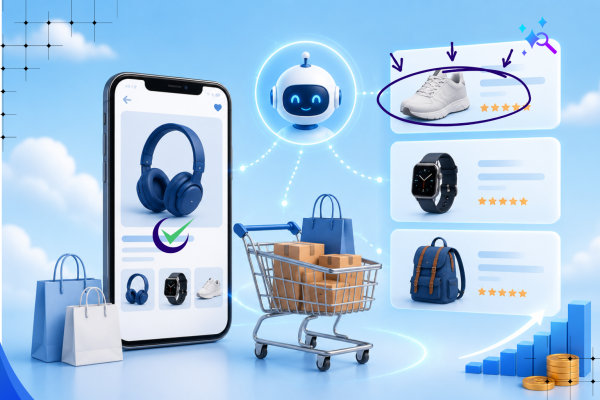
Recommendations are one of the most reliable revenue levers in ecommerce. They surface products shoppers would never have found on their own, turning a single-item visit into a larger basket and helping customers discover the breadth of your catalog. They lift average order value through cross-sells and upsells, increase conversion by reducing the effort of discovery, and deepen engagement by making the store feel helpful. Because they monetize attention you have already paid to acquire, well-executed recommendations deliver some of the highest return on investment of any on-site feature — which is why they pair so naturally with ecommerce personalization.
AI Search Grader by bCloud AI
Grade your ecommerce search in 10 quick questions
31% of ecommerce searches return zero results — and most shoppers who hit a dead end leave for a competitor. How does your store's search stack up?
Answer 10 short questions and get your AI search score, plus a personalized report to fix the gaps. Free, takes about 2 minutes.
No signup needed to take the quiz.
Understanding intent…
Scoring your answers across relevance, AI, experience, and insights.
Your AI search score is ready
Tell us where to send your personalized report. You'll see your score and recommendations right away.
Your score by pillar
Personalized recommendations
Fix the gaps in weeks, not quarters
bCloud AI replaces keyword-only search with hybrid AI retrieval — sub-200ms responses, 99.99% uptime, and conversion lifts of up to 40% across 50+ implementations.
How a Product Recommendation Engine Works
A recommendation engine predicts relevant products using a few core techniques, usually in combination.
Collaborative Filtering
It learns from collective behavior: “shoppers who bought this also bought that.” Patterns across many customers reveal which products go together, even when they are not obviously related.
Content-Based Filtering
It matches products by their attributes — category, style, brand, price — recommending items similar to what a shopper is viewing or has bought, which depends on clean product data.
Hybrid and AI Models
The strongest engines blend both approaches and add AI: vector embeddings capture product meaning, and machine learning weighs many signals to rank suggestions, the same foundation behind modern AI search.
Real-Time Personalization
Top engines adapt in the moment, factoring in what a shopper is doing right now alongside their history, so suggestions stay relevant as intent shifts within a session.
Types of Product Recommendations
Different recommendation types serve different moments in the journey.
Frequently Bought Together
Complementary items shown on product and cart pages — the classic cross-sell that lifts basket size.
Similar and Related Products
Alternatives to what a shopper is viewing, helping them compare and find the best fit without leaving the page.
Recommended for You
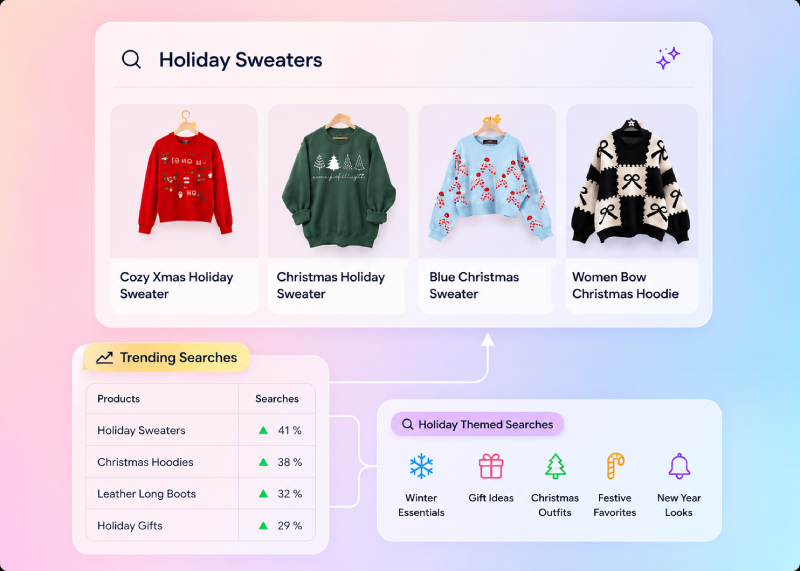
Personalized suggestions based on the individual’s full behavior and history — the most powerful type when data is rich.
Trending and Popular
Social-proof-driven suggestions highlighting what others are buying, useful for new visitors with little history.
Recently Viewed
A simple, high-converting reminder that helps shoppers return to products they were considering.
7 Powerful Ways Product Recommendations Boost Sales
| # | Tactic | Impact |
|---|---|---|
| 1 | Frequently bought together | Higher average order value |
| 2 | Personalized “for you” | Relevant discovery, higher conversion |
| 3 | Cart cross-sells | Adds margin at the decision point |
| 4 | Similar products | Recovers interest when one item misses |
| 5 | Post-purchase suggestions | Drives repeat orders and loyalty |
| 6 | Recommendations in search | Fills and enriches result pages |
| 7 | Email recommendations | Re-engages shoppers off-site |
How AI Makes Product Recommendations More Relevant
AI-powered product recommendations make ecommerce discovery more relevant by combining product relationships with the shopper’s current intent and behavior. Instead of relying only on past purchases or simple “customers also bought” patterns, modern recommendation engines can understand product attributes, semantic relationships, browsing activity, searches, and real-time interactions to determine which products are most useful in each moment. This allows recommendations to change as shoppers explore the catalog, compare products, or add items to their cart. When these signals are combined with accurate product data and personalization, retailers can create recommendations that feel timely and helpful while increasing product discovery, conversion, and average order value.
Where to Place Product Recommendations
Placement determines impact. On the homepage, recommendations create a personalized entry point. On product pages, “similar items” and “frequently bought together” aid comparison and cross-sell. In the cart, complementary suggestions lift order value at the moment of decision. Within search results, recommendations enrich pages and rescue thin or zero-result queries. And in email and post-purchase flows, they re-engage shoppers and drive repeat orders. The best programs place recommendations at each of these moments, tuned to what the shopper needs there.
Recommendations, Search, and Personalization Are One System
Recommendations work best when they share an engine with search and personalization rather than running as a bolt-on. All three answer versions of the same question — what is this shopper most likely to want — using the same behavioral signals and product understanding. When they are unified, a shopper’s search behavior informs their recommendations, their recommendations reflect their personalized profile, and the whole experience feels coherent. Stitching together separate tools for each, by contrast, produces inconsistent suggestions and duplicated effort. Treating discovery as one intelligent system is what makes personalization, search, and recommendations reinforce each other.
How to Get Great Product Recommendations
Strong recommendations rest on three things: data, a capable engine, and testing. Capture behavioral signals and keep product data clean and complete so the engine can match accurately, which is where enrichment pays off. Choose an engine that blends collaborative and content-based methods with AI and real-time personalization. Then test relentlessly — placement, recommendation type, and the number of items shown all affect results — and measure the lift in conversion and order value against a control. Good recommendations are tuned continuously, not configured once.
Common Product Recommendations Mistakes
A few mistakes undercut results: recommending irrelevant or out-of-stock items because of thin or stale data; showing the same generic “popular products” to everyone instead of personalizing; cluttering pages with too many carousels that dilute attention; and recommending items a shopper just bought. The fix is clean data, a real AI engine that personalizes, disciplined placement, and continuous testing — so every recommendation feels genuinely helpful rather than random.
Product Recommendations by Industry
The most effective recommendation types vary by what you sell. Fashion stores lean on “complete the look” and style-based similar items. Electronics rewards accessory and compatibility suggestions — the case, cable, or charger that goes with a device. Grocery and consumables thrive on reorder and “buy it again” prompts. Beauty benefits from routine-building and replenishment ideas. And marketplaces with vast catalogs depend on personalized discovery to help shoppers navigate breadth. The underlying engine is the same, but tuning which types appear where — and how heavily each is weighted — to your category is what separates a generic carousel from a genuine revenue driver.
How to Measure Recommendation Performance
Recommendations should earn their place with data. Track click-through rate on recommended products, the conversion rate of sessions that engage with them, attributed revenue (sales that flowed from a recommendation click), and the lift in average order value versus sessions without them. Measuring against a control group reveals the true incremental impact rather than sales that would have happened anyway. Watching these metrics by placement and type shows exactly which carousels deserve prime real estate and which to cut, turning the feature into a continuously optimized contributor to revenue.
Avoid the “Filter Bubble” Trap
One subtle risk is over-narrowing: if suggestions only ever show more of what a shopper already viewed, discovery suffers and the experience grows stale. Good engines balance relevance with sensible variety and serendipity, introducing complementary categories and fresh products alongside the obvious matches. The goal is to feel helpful and slightly surprising, not repetitive — which keeps shoppers exploring rather than feeling boxed in.
The Future of AI Recommendations
This space is getting smarter as AI advances. Modern engines increasingly understand products and intent at a semantic level, generate explanations for why an item is suggested, and adapt within a single session as a shopper’s goal becomes clear. As conversational and visual shopping grow, suggestions will surface inside those experiences too — woven into a chat response or shown alongside a visual search result. The retailers who treat this as part of one intelligent discovery system, rather than an isolated widget, will be best placed to ride these advances as they arrive.
Start With Your Highest-Traffic Pages
If you are improving this, start where traffic and intent are highest — product pages and the cart — where relevant suggestions have the most immediate impact on order value. Prove the lift there, refine based on what shoppers actually click, then extend to the homepage, search, and email. A focused start delivers quick wins and builds the data to make every later placement smarter.
How bCloud AI Powers Product Recommendations
bCloud AI delivers AI recommendations as part of one discovery engine that also powers search and personalization. It blends collaborative and content-based signals with vector embeddings and real-time behavior, so suggestions are relevant to each shopper and each moment — on product pages, in the cart, within search, and beyond. Because recommendations share the same catalog understanding and per-shopper intelligence as the rest of the platform, they stay consistent with what a shopper searches and sees elsewhere, and they improve continuously as the engine learns. To compare AI-native platforms, see our roundup of the best ecommerce search engines for 2026.
Best Practices for Product Recommendations
Even the most advanced recommendation engine delivers poor results if it’s configured incorrectly. The highest-performing ecommerce stores continually refine their recommendation strategy by combining AI, quality product data, and ongoing optimization. Following these best practices ensures recommendations remain relevant, helpful, and revenue-driving.
Prioritize Relevance
Always recommend products that genuinely match the shopper’s intent instead of simply promoting popular products.
Update Recommendations in Real Time
Adapt suggestions instantly as shoppers browse, search, filter products, or add items to their cart.
Maintain High-Quality Product Data
Clean titles, categories, attributes, and product descriptions help AI understand relationships between products.
Continuously A/B Test
Experiment with widget placement, recommendation types, layouts, and the number of products displayed to maximize performance.
Combine Search and Recommendations
The best ecommerce experiences use one AI engine for search, recommendations, and personalization, creating a consistent shopping journey.
Measure and Improve
Monitor click-through rate, conversion rate, average order value, and recommendation-driven revenue to continually optimize results.
Pro Tip: Product recommendations perform best when they are powered by the same AI platform that understands search intent, shopper behavior, catalog relationships, and real-time interactions. This unified approach delivers more accurate recommendations while creating a seamless shopping experience.
Frequently Asked Questions About Product Recommendations
What are product recommendations?
Product recommendations are personalized or contextual product suggestions a store presents to aid discovery and encourage additional purchases, such as “frequently bought together” and “recommended for you.” They are produced by a recommendation engine that analyzes catalog data and shopper behavior.
Why are product recommendations important?
Recommendations surface products shoppers would not have found alone, lifting average order value through cross-sells and upsells, increasing conversion, and deepening engagement. Because they monetize traffic you have already acquired, they offer some of the highest ROI of any on-site feature.
How does a product recommendation engine work?
It uses collaborative filtering (learning from collective behavior), content-based filtering (matching product attributes), and hybrid AI models with vector embeddings and machine learning, often with real-time personalization that factors in what a shopper is doing right now.
What are the types of product recommendations?
Common types include frequently bought together, similar and related products, recommended for you (personalized), trending and popular, and recently viewed. Each serves a different moment in the shopping journey.
Where should product recommendations be placed?
Place them on the homepage, product pages, in the cart, within search results, and in email and post-purchase flows — each tuned to what the shopper needs at that moment, with disciplined use to avoid clutter.
How do product recommendations increase average order value?
By surfacing complementary and relevant items at the right moments — especially “frequently bought together” and cart cross-sells — recommendations encourage shoppers to add more to their basket, raising average order value and total revenue.
How are recommendations related to search and personalization?
All three predict what a shopper wants using the same behavioral signals and product understanding. When they share one engine, search behavior informs recommendations and recommendations reflect the personalized profile, creating a coherent, more effective experience.
What is the best product recommendations engine?
The best engine blends collaborative and content-based methods with AI and real-time personalization, and shares one platform with search and personalization. Leading AI-native options include bCloud AI, which builds recommendations into its discovery engine.
Turn Recommendations Into Bigger Baskets
Great product recommendations lift average order value by helping shoppers discover more. Start for free or book a demo to see AI recommendations working with search and personalization.
Related resources: Ecommerce Personalization · AI Recommendations · AI Search · Best Ecommerce Search Engine: Top 10 for 2026