What Is Ecommerce Merchandising?
Why Ecommerce Merchandising Matters
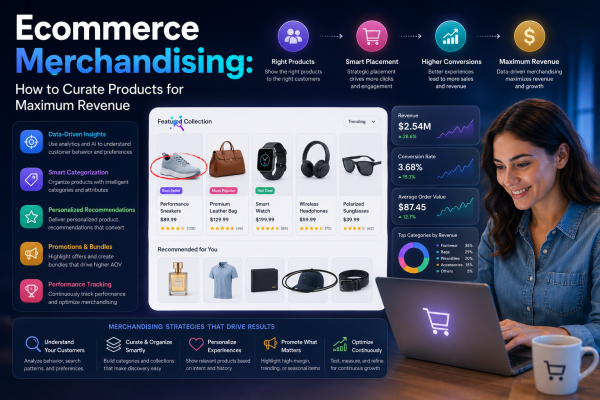
Merchandising decides what shoppers see, and what they see decides what they buy. Strong merchandising lifts conversion on every page it touches — search results that lead with the right products convert far better than results in random order, and homepage collections that reflect current intent outperform static hero images. It’s also how you promote higher-margin lines, clear inventory, hit brand goals, and give the store a coherent voice. Neglecting merchandising doesn’t just leave revenue on the table — it makes the store feel generic, which quietly erodes trust and repeat visits.
AI Search Grader by bCloud AI
Grade your ecommerce search in 10 quick questions
31% of ecommerce searches return zero results — and most shoppers who hit a dead end leave for a competitor. How does your store's search stack up?
Answer 10 short questions and get your AI search score, plus a personalized report to fix the gaps. Free, takes about 2 minutes.
No signup needed to take the quiz.
Understanding intent…
Scoring your answers across relevance, AI, experience, and insights.
Your AI search score is ready
Tell us where to send your personalized report. You'll see your score and recommendations right away.
Your score by pillar
Personalized recommendations
Fix the gaps in weeks, not quarters
bCloud AI replaces keyword-only search with hybrid AI retrieval — sub-200ms responses, 99.99% uptime, and conversion lifts of up to 40% across 50+ implementations.
How AI Changes Digital Merchandising
Traditional merchandising is manual: teams write rules, curate collections, and update seasonal campaigns by hand. AI transforms the discipline without replacing merchandisers. It personalizes ranking so two shoppers see different, individually relevant orderings on the same page. It handles the long tail — millions of SKU-shopper combinations no human team could hand-curate. And it frees merchandisers to focus on strategy: brand priorities, seasonal storytelling, and the rules AI should honor. The best programs are collaborations — AI handles relevance and scale, humans handle brand and business goals, and both work through one interface.
Core Techniques
A capable practice draws on a shared set of techniques.
Category and Search-Result Ranking
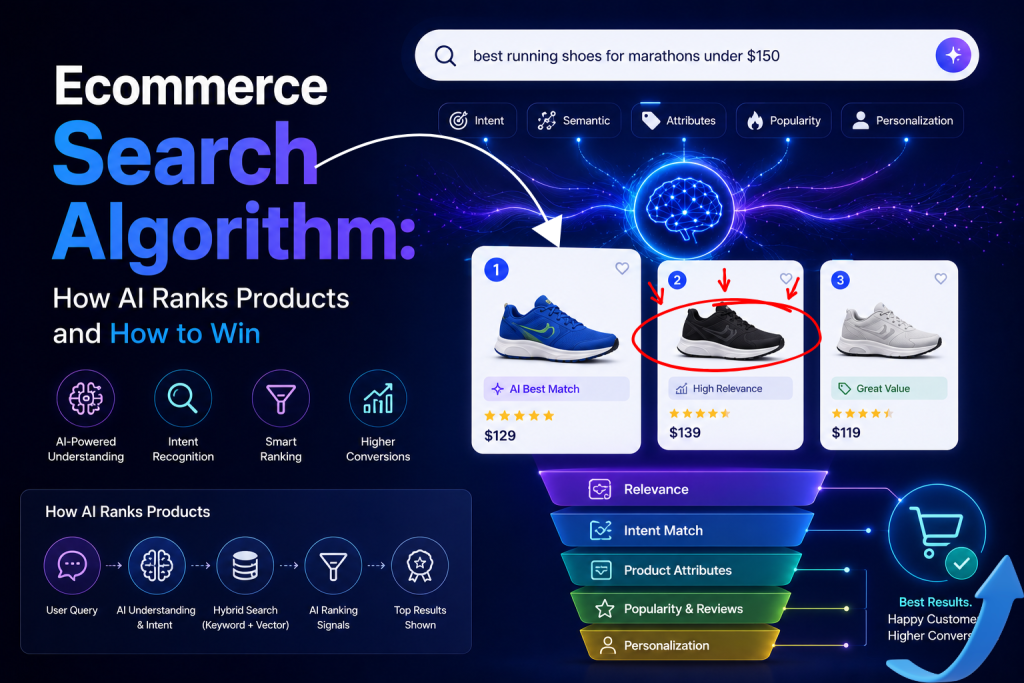
Ordering products on category pages and search results is where merchandising has the biggest revenue impact — small ranking changes on high-traffic pages compound quickly.
Merchandising Rules and Boosts
Explicit rules (“boost new arrivals in this category,” “bury out-of-stock items”) let merchandisers override or shape AI ranking for specific business goals.
Curated Collections
Editorial collections and landing pages tell brand stories, seasonal moments, and promotional themes that pure algorithms miss.
Cross-Sell and Upsell Placements
Related products, “complete the look,” and cart add-ons drive AOV when they reflect real relevance, not random attachments.
Personalized Merchandising
The same slot on the same page shows different products to different shoppers based on their behavior and preferences, powered by ecommerce personalization.
Merchandising Analytics
Analytics show what’s working — click-through, add-to-cart, revenue-per-visit — so merchandising decisions rest on evidence, not just instinct.
9 Proven Wins From Better Ecommerce Merchandising
| # | Win | Why it matters |
|---|---|---|
| 1 | Higher conversion | Right products in front of the right shoppers |
| 2 | Bigger baskets | Relevant cross-sells lift AOV |
| 3 | Faster inventory turn | Boost the products you need to move |
| 4 | Strong brand voice | Curated stories, not algorithm chaos |
| 5 | Personalized at scale | Two shoppers, two experiences, one team |
| 6 | Better seasonal moments | Campaigns land on time, everywhere |
| 7 | Reduced zero-results | Merchandising rules recover failing searches |
| 8 | Merchandiser control | Business rules honored alongside AI relevance |
| 9 | Continuous improvement | Analytics reveal exactly what to test next |
Digital vs. Traditional Merchandising
| Aspect | Traditional (physical) | Ecommerce |
|---|---|---|
| Space | Aisles, shelves, windows | Homepage, category, PDP, cart, email |
| Personalization | One store layout for everyone | Per-shopper on every page |
| Speed to update | Days to weeks | Minutes |
| Measurement | Sales lift, hard to isolate | Click-through, conversion, revenue per slot |
| Scale | Bounded by store size | Millions of SKUs, millions of shoppers |
The instincts are similar — guide attention, tell a story, drive purchases — but online, personalization and measurement change what’s possible.
Merchandising Tools
Modern merchandising runs on integrated tooling rather than scattered plugins. A capable merchandising console typically includes search and category ranking controls, drag-and-drop collection builders, boost-and-bury rules, promotional banners, personalization controls, A/B testing, analytics dashboards, and preview modes that show how changes will affect real shopper cohorts. The best tools sit alongside — or inside — the search platform, because search ranking and merchandising rules share the same underlying engine. Fragmented tooling forces merchandisers to fight the algorithm; integrated tooling lets them steer it.
Merchandising Best Practices
A few habits separate strong programs from weak ones. Start with data: know your top-converting queries, categories, and placements before making changes. Prioritize the highest-traffic pages — a small ranking change on a top category page moves more revenue than perfect merchandising on a long-tail page. Let AI handle relevance and use rules for business intent, not for every ranking decision. Test changes with clean A/B experiments so lifts are provable. Review analytics weekly, not quarterly. And treat merchandising as continuous — the strongest programs are running experiments constantly, not making a big seasonal push and going dark.
Common Merchandising Mistakes
Common mistakes recur. Overriding AI ranking with too many manual rules until the algorithm can’t do its job. Setting up merchandising once and never revisiting it, so campaigns go stale. Merchandising by opinion instead of data. Ignoring the long tail — merchandising every top-100 SKU while leaving the deep catalog untouched. And treating merchandising as separate from search: they’re the same discipline in modern ecommerce, and splitting them creates conflict rather than clarity. The fix is disciplined, data-driven merchandising built on tooling that unites AI ranking and human control.
How Ecommerce Merchandising Improves Shopper Experience
Effective ecommerce merchandising makes product discovery more relevant by connecting what shoppers want with the products a business wants to prioritize. Instead of presenting the same static assortment to everyone, modern merchandising can combine shopper behavior, product relevance, inventory, promotions, and business rules to create more useful product ordering across search, category pages, recommendations, and other shopping surfaces. This helps shoppers reach relevant products faster while giving retailers greater control over campaigns, margins, inventory, and brand presentation. When merchandising decisions are continuously measured and refined, better product visibility becomes a consistent driver of engagement, conversion, and revenue.
Merchandising for Seasonal and Promotional Moments
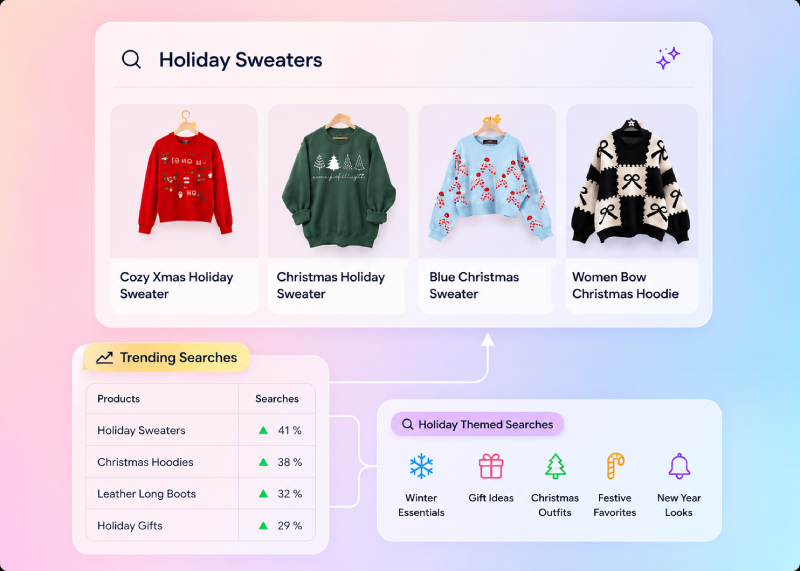
Seasonal and promotional moments are where ecommerce merchandising visibly proves its value. Holiday campaigns, new-arrival launches, clearance events, and category-of-the-month promotions all depend on coordinated changes across homepage, category, search, and cart placements — often on tight timelines. Strong merchandising tooling makes these campaigns fast to set up, easy to schedule, and simple to measure. When AI ranking runs alongside merchandiser rules, promotional products get their moment while overall relevance stays intact, and the campaign performance shows up cleanly in analytics after the fact so the next moment learns from the last.
How AI Improves Ecommerce Merchandising
AI makes ecommerce merchandising more responsive by combining product relevance, shopper behavior, inventory, and business priorities when deciding what products to show and where to place them. Instead of relying only on fixed rankings or manually curated lists, AI can personalize product ordering for different shoppers while allowing merchandisers to maintain control through boosts, promotions, and business rules. This approach helps retailers manage large catalogs at scale, improve product discovery, and adapt merchandising decisions as shopper intent changes. When combined with continuous analytics and experimentation, AI-powered merchandising creates a more relevant shopping experience while helping businesses improve conversion, basket size, inventory movement, and overall revenue.
Merchandising for Mobile and Multi-Channel
Mobile shoppers see less at once, so merchandising decisions matter more per pixel. The top three products on a mobile category page carry disproportionate weight, and small ranking changes have outsize effects. The same logic extends to multi-channel: what a shopper sees in a native app, on the web, or through an AI assistant should feel like one coherent brand experience, not disconnected implementations. Merchandising that runs on the same platform as search and recommendations delivers this consistency automatically — the rules and priorities you set apply everywhere shoppers encounter your catalog.
The Future of Merchandising
The direction of travel is clear: more AI, more personalization, more channels, and more measurement. The merchandiser role isn’t disappearing — it’s evolving from spreadsheet-and-rules work into strategy, storytelling, and system design. The strongest teams in 2026 already treat merchandising as continuous experimentation on an AI-driven platform, with humans setting priorities and AI handling relevance and personalization at scale. Retailers who invest in this shift now will compound advantage over the next few years as AI-driven discovery matures.
How bCloud AI Powers Ecommerce Merchandising
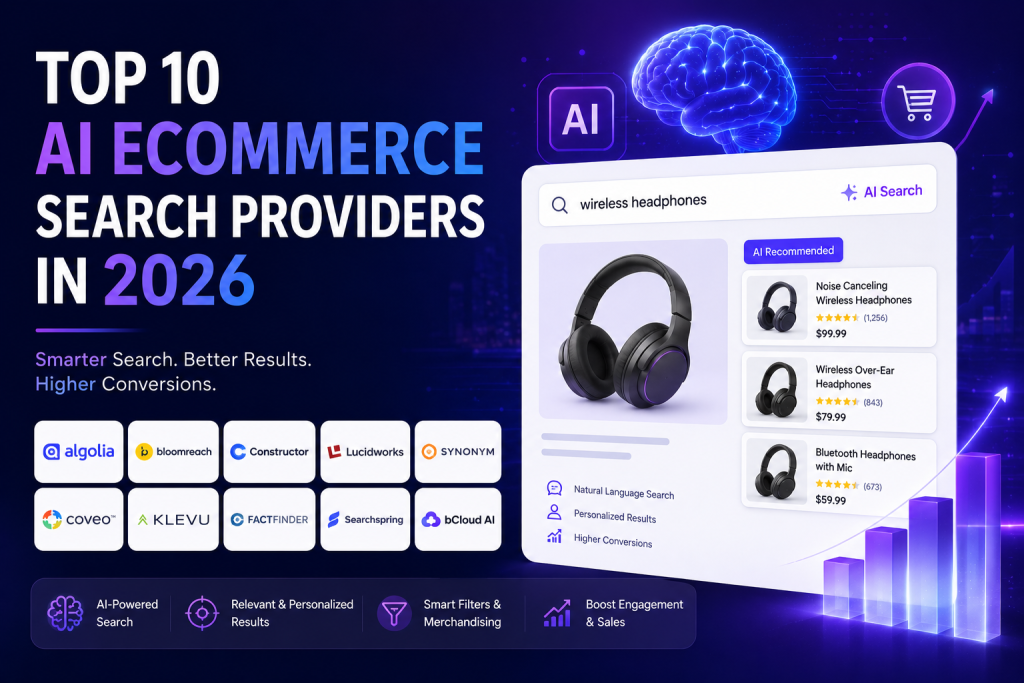
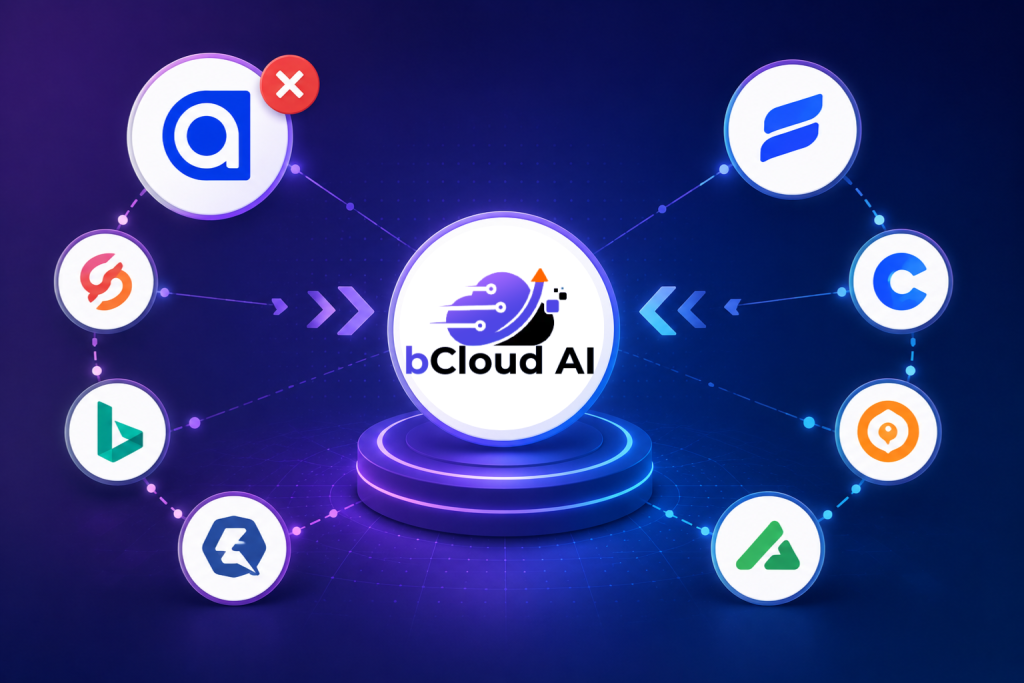
bCloud AI unifies merchandising with search, browse, and recommendations on one platform. Merchandisers control ranking rules, boost-and-bury logic, curated collections, and promotional slots through a single console, while AI-driven relevance and real-time personalization handle the per-shopper adaptation no human team can. Because search, browse, and merchandising share the same engine and catalog, business rules apply consistently across every surface — search results, category pages, homepage, cart, and email — without duplication or conflict. Analytics show revenue-per-visit and lift per placement so merchandisers know exactly what’s working. To compare AI-native platforms, see the best ecommerce search engines for 2026.
Successful Ecommerce Merchandising: Do’s & Don’ts
High-performing online stores don’t just display products—they continuously optimize product visibility based on customer behavior and business goals. The comparison below highlights habits that separate successful merchandising strategies from ineffective ones.
✓ Do
- Prioritize products using real customer data.
- Refresh merchandising rules for every campaign.
- Combine AI recommendations with business priorities.
- Highlight best sellers and new arrivals strategically.
- Measure performance and refine continuously.
✕ Don’t
- Leave product rankings unchanged for months.
- Override AI with excessive manual rules.
- Promote low-performing products without analysis.
- Ignore mobile merchandising experiences.
- Make decisions without reviewing merchandising analytics.
Takeaway: Effective ecommerce merchandising isn’t about showcasing more products—it’s about presenting the right products to the right shopper at the right moment. Consistent optimization creates better shopping experiences while increasing conversions and revenue.
Frequently Asked Questions About Ecommerce Merchandising
What is ecommerce merchandising?
Ecommerce merchandising is the practice of choosing which products to display, where, and in what order across an online store — homepage collections, category ordering, search ranking, product-page cross-sells, cart placements, and email — to guide shoppers toward the right purchase and maximize revenue.
How does ecommerce merchandising work?
It blends human judgment about brand, seasons, and business priorities with AI that personalizes ranking per shopper. Merchandisers set rules, curated collections, and priorities; the platform combines those with AI relevance and behavioral signals to deliver ordering that’s both on-brand and individually relevant.
Why is ecommerce merchandising important?
What shoppers see decides what they buy. Strong merchandising lifts conversion on every surface it touches, moves target inventory, tells a coherent brand story, and personalizes the experience — while neglect quietly erodes trust and repeat visits.
How does AI improve ecommerce merchandising?
AI personalizes ranking so different shoppers see different orderings on the same page, handles the long tail no human team could curate, and continuously learns from behavior — freeing merchandisers to focus on brand strategy, seasonal campaigns, and rules the AI should honor.
What are the main techniques of ecommerce merchandising?
Category and search ranking, merchandising rules and boosts, curated collections, cross-sell and upsell placements, personalized merchandising, and analytics-driven optimization. The strongest programs use them together as one continuous discipline.
What tools do I need for ecommerce merchandising?
An integrated merchandising console with search and category ranking, collection builders, boost-and-bury rules, personalization controls, A/B testing, analytics, and preview modes. The best tooling sits inside the search platform because ranking and merchandising share the same engine.
How is online merchandising different from physical merchandising?
The instincts are the same — guide attention, tell a story, drive purchases — but online, merchandising is per-shopper, updates in minutes, and can be measured precisely on every slot. Personalization and analytics fundamentally change what’s possible.
What is the best ecommerce merchandising platform?
The best platform unifies merchandising with search, browse, and recommendations under one engine and catalog, gives merchandisers control alongside AI relevance, and provides clear analytics. Leading AI-native options include bCloud AI.
Turn Merchandising Into a Continuous Revenue Driver
Start for free or book a demo to see AI-powered merchandising unified with search, browse, and personalization.
Related resources: Ecommerce Personalization · AI Search product · Ecommerce Search Platform · Best Ecommerce Search Engines for 2026