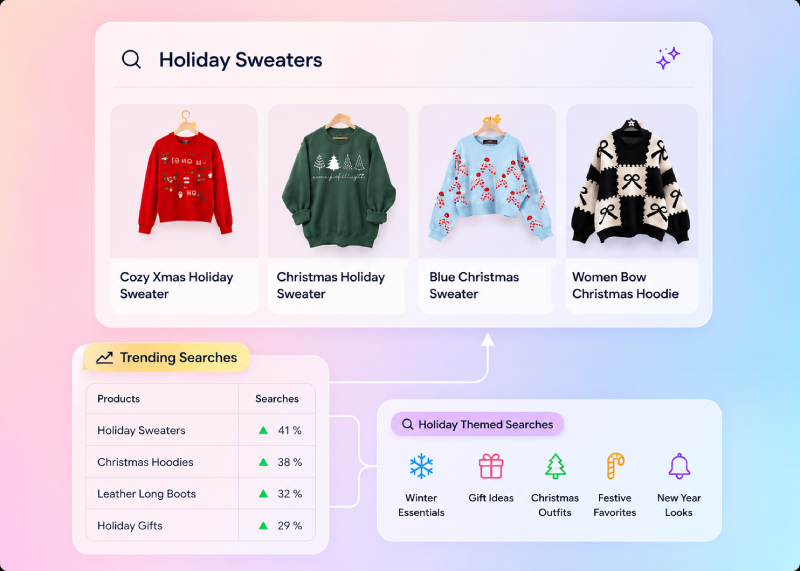

What Is Ecommerce Personalization?
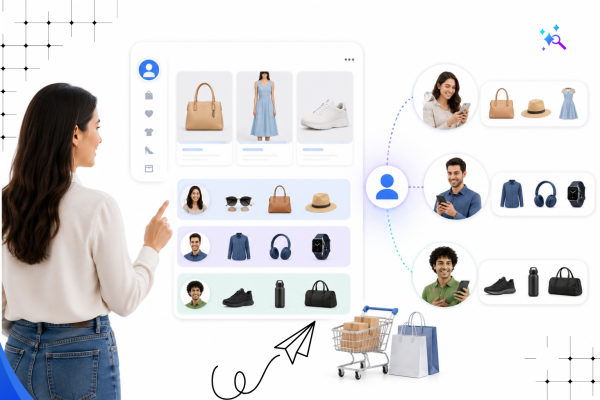
Why Ecommerce Personalization Matters
Relevance drives revenue. When shoppers see products suited to their tastes and needs, they convert at higher rates, buy more per order, and come back. Shoppers now expect this: a generic, one-size-fits-all store feels dated next to the tailored experiences they get everywhere else. Personalization also deepens loyalty, because a store that consistently understands a customer earns repeat visits. In a competitive market where acquiring traffic is expensive, making each visit more relevant is one of the highest-return investments a retailer can make — it lifts the value of the traffic you already have.
AI Search Grader by bCloud AI
Grade your ecommerce search in 10 quick questions
31% of ecommerce searches return zero results — and most shoppers who hit a dead end leave for a competitor. How does your store's search stack up?
Answer 10 short questions and get your AI search score, plus a personalized report to fix the gaps. Free, takes about 2 minutes.
No signup needed to take the quiz.
Understanding intent…
Scoring your answers across relevance, AI, experience, and insights.
Your AI search score is ready
Tell us where to send your personalized report. You'll see your score and recommendations right away.
Your score by pillar
Personalized recommendations
Fix the gaps in weeks, not quarters
bCloud AI replaces keyword-only search with hybrid AI retrieval — sub-200ms responses, 99.99% uptime, and conversion lifts of up to 40% across 50+ implementations.
How Ecommerce Personalization Works
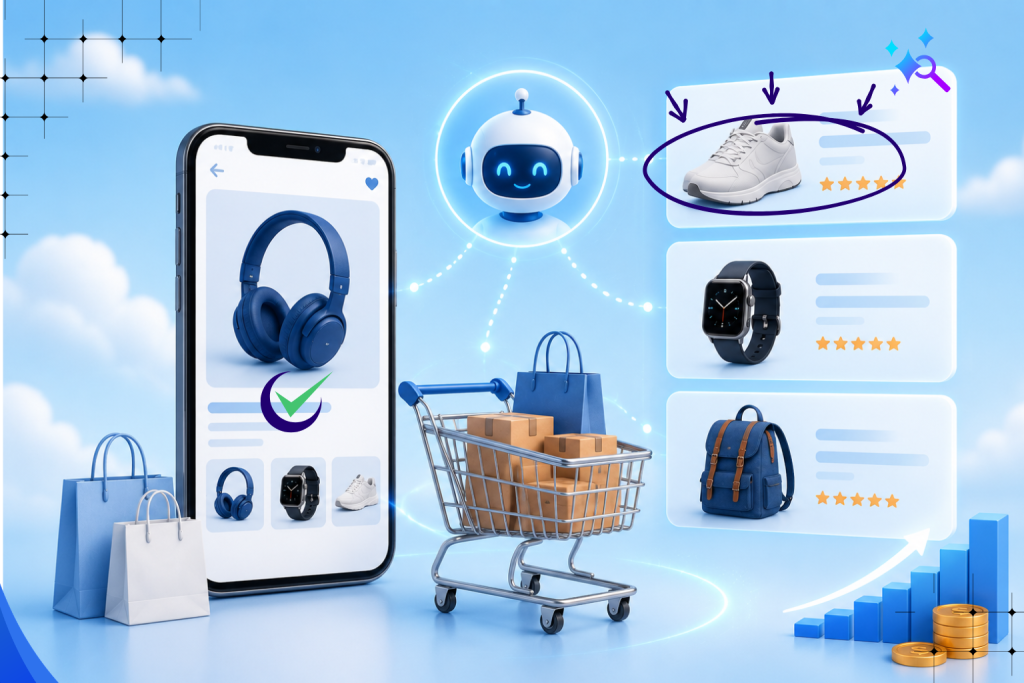
Personalization runs on data and AI. It starts with signals — what a shopper browses, searches, clicks, adds to cart, and buys, plus context like device and source. AI models turn those signals into an understanding of intent and preference, then adapt the experience in real time: reordering results, choosing recommendations, and selecting content for that specific visitor. The best systems combine in-session behavior (what someone is doing right now) with longer-term history, and they improve continuously as they learn. This is the same machine-learning foundation that powers modern AI search, applied to the entire experience.
Types of Ecommerce Personalization
Personalization shows up across the store in several forms.
Personalized Search Results
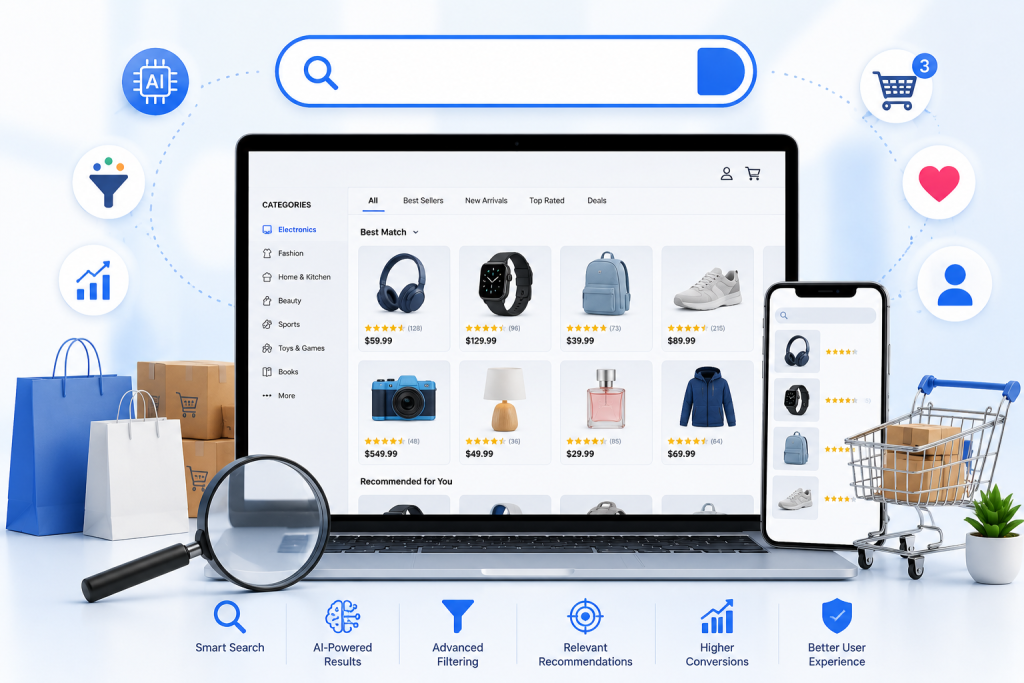
Two shoppers who search the same term see results ordered for each of them — the highest-impact and most overlooked form of personalization.
Product Recommendations
“Recommended for you,” “similar items,” and “frequently bought together” surface relevant products throughout the journey. See our guide to product recommendations for depth.
Personalized Content and Homepage
Banners, categories, and featured products adapt to each visitor’s interests, making the homepage a tailored entry point rather than a static billboard.
Personalized Offers
Targeted promotions and incentives reach the shoppers most likely to respond, improving margin and conversion without blanket discounting.
Email and Retargeting
Personalization extends beyond the site into email and ads, with product and content selections tailored to each customer’s behavior.
9 Proven Ways Ecommerce Personalization Boosts Sales
| # | Tactic | Impact |
|---|---|---|
| 1 | Personalized search ranking | Right products first for each shopper |
| 2 | “Recommended for you” | Relevant discovery, higher engagement |
| 3 | Frequently bought together | Larger baskets and order value |
| 4 | Recently viewed | Easy return to considered products |
| 5 | Personalized homepage | Faster path to relevant categories |
| 6 | Tailored offers | Higher conversion, protected margin |
| 7 | Geo and context targeting | Relevant by location, device, season |
| 8 | Behavioral email | Re-engagement with relevant products |
| 9 | Cart and post-purchase | Smart cross-sells at the right moment |
Personalization Starts With Search
The most valuable place to personalize is the search box, because searchers have the highest intent. When the ranking adapts to each shopper — surfacing the brands, styles, and price points they prefer — relevance and conversion climb immediately. Yet many stores personalize the homepage and emails while leaving search one-size-fits-all, missing the biggest opportunity. Personalized search ranking, powered by the same engine that handles relevance, turns your highest-intent moment into your most tailored one. It is why personalization and search work best as one system rather than separate tools.
How to Get Started With Ecommerce Personalization
Start with the data and the highest-impact surfaces. Make sure you are capturing behavioral signals — searches, clicks, carts, purchases — and that your product data is clean enough for AI to match shoppers to products, which is where enrichment helps. Then prioritize: personalize search ranking and recommendations first, since they touch the most shoppers at the highest intent, before extending to content, offers, and email. Choose a platform that personalizes in real time and learns continuously, measure the lift against a control group, and expand from there. The key is sequencing high-impact surfaces first rather than trying to personalize everything at once.
Privacy and Personalization
Personalization and privacy must go together. Shoppers expect relevance, but they also expect their data handled responsibly, so build on consent, lean on first-party behavioral data, and be transparent about how you use it. Done right, this is not a trade-off: privacy-respecting, first-party personalization is both more durable as third-party tracking declines and more trusted by customers. The most effective programs treat respectful data use as part of the experience, not an afterthought.
Common Ecommerce Personalization Mistakes
A few mistakes limit results: leaving search un-personalized while focusing only on the homepage; relying on thin data so recommendations feel random; being creepy instead of helpful by over-personalizing in ways that unsettle shoppers; and treating personalization as a one-time setup rather than a system that learns. The fix is to ground personalization in clean data and real AI, start with the highest-intent surfaces like search, and let the system improve continuously while respecting the shopper.
How to Measure Personalization Success
Personalization should always be measured against a control group so you know the lift is real. Track conversion rate, average order value, and revenue per visit for personalized versus non-personalized experiences, plus engagement signals like click-through on recommended products and return-visit rate. Watch for the rare downside too — over-personalization that narrows discovery so much shoppers never see anything new. The strongest programs run continuous A/B tests, treating personalization as an ongoing optimization rather than a feature that is switched on once and forgotten.
Ecommerce Personalization by Industry
Personalization pays off across categories, but the highest-impact tactics differ. Fashion and apparel lean on style affinity and “complete the look” suggestions. Beauty benefits from routine- and shade-based personalization and replenishment reminders. Electronics rewards compatibility-aware recommendations and comparison help. Grocery and consumables thrive on reorder personalization and predictive shopping lists. And home and furniture use room- and style-based tailoring to navigate large catalogs. In every case the principle is the same — use what you know about a shopper to reduce the effort of finding the right product — but the signals and surfaces that matter most vary by what people are buying and how often they return.
How AI Makes Ecommerce Personalization More Effective
AI makes ecommerce personalization more effective by turning shopper behavior and context into real-time decisions across the shopping journey. Instead of relying only on previous purchases or fixed customer segments, modern personalization engines can combine searches, clicks, browsing activity, cart actions, product preferences, device, and other contextual signals to understand what a shopper is likely to want next. This allows search results, recommendations, content, and offers to adapt as intent changes during a session. When powered by clean product data and continuous learning, AI personalization creates a more relevant experience for each visitor while helping retailers improve product discovery, engagement, conversion, and customer value.
Personalizing for New vs. Returning Shoppers
A common challenge is the “cold start” — how to tailor the experience for a first-time visitor you know nothing about. The answer is to lean on context and in-session behavior: entry page, search terms, device, location, and the products they click in the first moments. Even within a single session, a store can adapt quickly to what a new shopper is showing interest in. For returning shoppers, richer history unlocks deeper tailoring across visits. The best systems handle both gracefully, starting with sensible, popularity- and context-based defaults for newcomers and layering in individual history as it accumulates, so the experience improves the more a customer engages.
Personalization and Merchandising Work Together
Tailoring the experience does not mean giving up control. The strongest setups blend automated, per-shopper relevance with merchandising rules that reflect business goals — promoting high-margin lines, new arrivals, or overstock — layered on top of personalized results rather than overriding them. This balance lets you serve each shopper well while still steering the catalog toward strategic priorities, capturing the upside of automation without losing the editorial judgment that experienced merchandisers bring.
The Payoff Compounds Over Time
Unlike a one-off campaign, this compounds. Every search, click, and purchase feeds the system better data, which produces more relevant experiences, which earns more engagement and still better data. Retailers who invest early build a widening advantage: their store understands customers more deeply each month, while competitors relying on generic experiences stand still. That compounding loop — better data to better relevance to more engagement — is what makes it a long-term strategic asset rather than a quick tactical fix.
How bCloud AI Powers Ecommerce Personalization
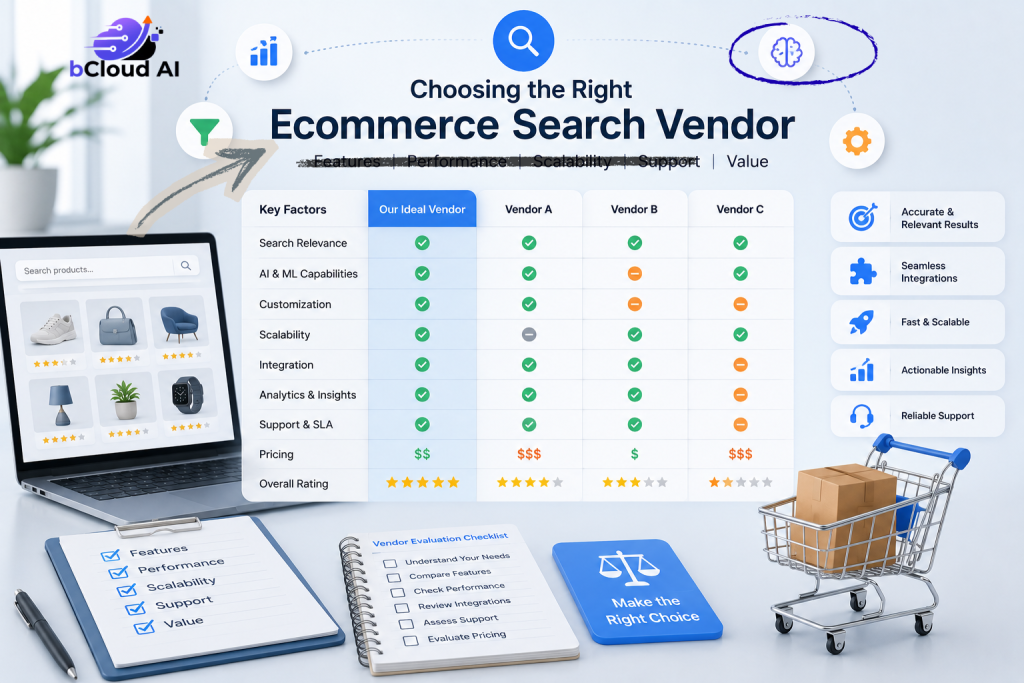
bCloud AI builds ecommerce personalization into the core of discovery. Its engine layers real-time personalization onto search and browse, so two shoppers entering the same query see results ordered for each of them based on behavior and context. It learns continuously from clicks and conversions, powers AI recommendations across the journey, and applies the same per-shopper intelligence everywhere — all grounded in your catalog data. Because personalization shares one engine with semantic search and recommendations, the experience stays consistent and relevant from the first search to checkout. To compare AI-native platforms, see our roundup of the best ecommerce search engines for 2026.
5 Signs Your Ecommerce Store Needs Better Personalization
Many retailers believe they already personalize their stores because they display product recommendations or send targeted emails. However, true personalization goes much deeper. If your store experiences any of the following issues, it may be time to upgrade your personalization strategy.
Low Search Conversions
Visitors search for products but rarely purchase because every shopper receives the same search results instead of personalized rankings.
Small Average Order Value
If customers usually buy only one product, personalized cross-sells and recommendations can increase basket size.
Few Returning Customers
A generic shopping experience gives customers little reason to come back. Personalized experiences encourage repeat purchases and loyalty.
Long Product Discovery Time
When shoppers spend too much time browsing categories, AI personalization can surface relevant products much earlier in the journey.
High Bounce Rate
If visitors leave after viewing only one page, showing products that match their interests immediately can significantly improve engagement.
Bottom line: Personalization is not simply about recommending products—it’s about making every shopper’s journey faster, more relevant, and more engaging from the first search to the final purchase.
Frequently Asked Questions About Ecommerce Personalization
What is ecommerce personalization?
Ecommerce personalization is the use of data and AI to adapt an online store to each shopper in real time — tailoring search results, recommendations, content, and offers based on behavior, preferences, history, and context, so each visitor sees the products most relevant to them.
Why is ecommerce personalization important?
Relevance drives revenue. Personalization lifts conversion, average order value, and loyalty by showing each shopper suitable products. Shoppers now expect tailored experiences, and personalizing makes the traffic you already have more valuable.
How does ecommerce personalization work?
It collects behavioral signals (searches, clicks, carts, purchases) plus context, uses AI to understand intent and preference, and adapts the experience in real time — reordering results, choosing recommendations, and selecting content for each visitor, improving continuously as it learns.
What are the types of ecommerce personalization?
The main types are personalized search results, product recommendations, personalized content and homepage, personalized offers, and personalized email and retargeting. Personalized search ranking is often the highest-impact and most overlooked.
Where should I start with ecommerce personalization?
Start with high-intent surfaces: personalize search ranking and recommendations first, since they touch the most shoppers at the highest intent. Ensure you capture behavioral data and have clean product data, then expand to content, offers, and email.
Does personalization improve search?
Yes. Personalized search ranking surfaces the brands, styles, and price points each shopper prefers, lifting relevance and conversion at the highest-intent moment. Personalization and search work best as one system.
Is ecommerce personalization compatible with privacy?
Yes. Effective personalization is built on consent and first-party behavioral data with transparent use. Privacy-respecting personalization is more durable as third-party tracking declines and builds more customer trust.
What is the best ecommerce personalization platform?
The best platform personalizes in real time, learns continuously, and shares one engine across search, recommendations, and browse. Leading AI-native options include bCloud AI, which builds personalization into its search and discovery platform.
Make Every Shopper Feel Understood
Ecommerce personalization turns the same traffic into more sales by showing each shopper what they want. Start for free or book a demo to see real-time personalization on your catalog.
Related resources: Product Recommendations · Personalization · AI Search · Best Ecommerce Search Engine: Top 10 for 2026