bCloud AI

FREE White Paper: How AI Search Generated $2.54M in 90 Days
💬Conversational Product Discovery

Natural Language Product Search:

The Complete UX & Technology Guide

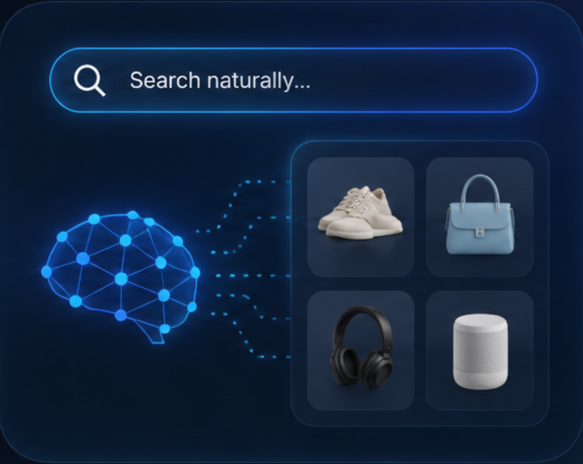
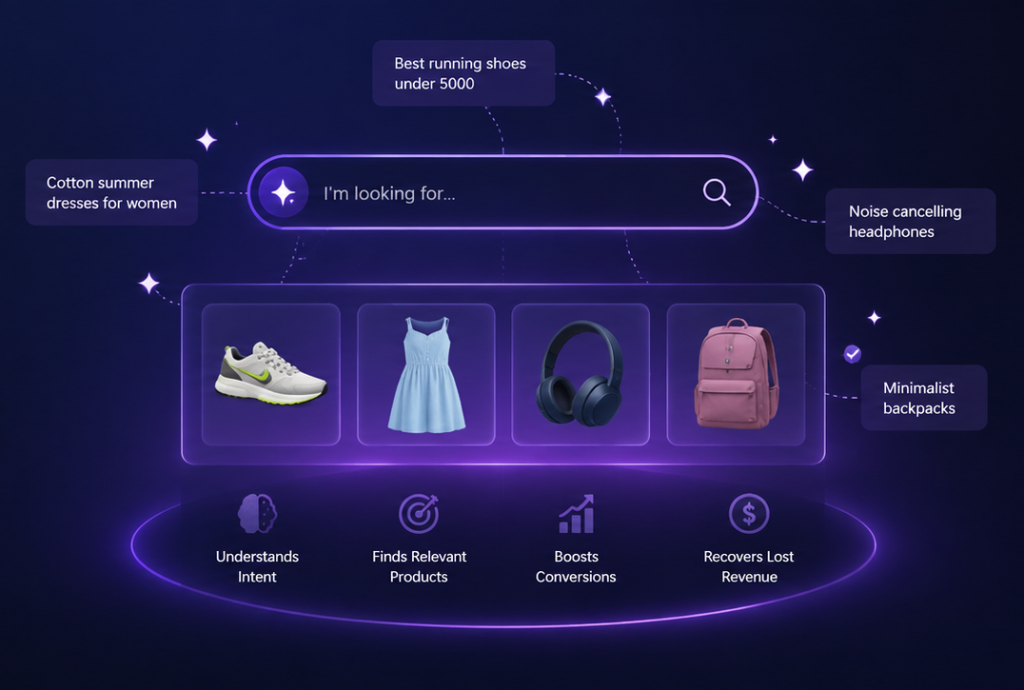
Natural language product search lets shoppers describe what they want in conversational language and returns relevant products even when no item is literally tagged with those phrases.

What "natural language" actually means in product search

The phrase gets used loosely. In practice, modern natural language product search handles four query patterns that traditional keyword engines fail on:

Descriptive queries

"Comfortable walking shoes for travel" — describes use case, not product name.

Recipient-based queries

"Gift for my dad who likes camping" — implies an entire shopping persona.

Occasion queries

"Dress for a beach wedding in summer" — combines occasion, setting, and season.

Constraint queries

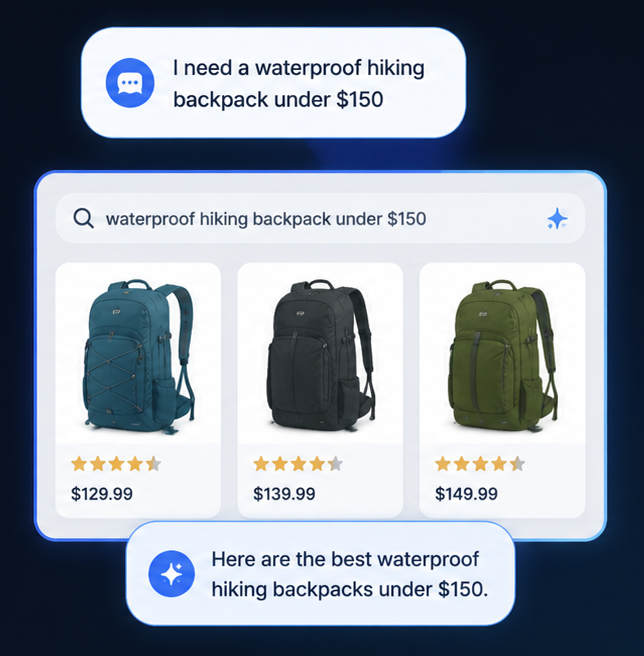
"Running shoes under $100 for flat feet that ship by Friday" — stacks four orthogonal constraints.

The UX layer: how natural language search should look and feel

Technology alone doesn’t deliver the lift; UX does. The most successful implementations share five UX patterns.

The search bar invites natural language

Placeholder copy is the cheapest, highest-impact UX lever. "Search products" is a missed opportunity. Try instead:

This nudge alone increases descriptive query volume by 30–50% in measured deployments. Shoppers who didn’t know the engine could handle natural language now use it.

Suggested queries during typing

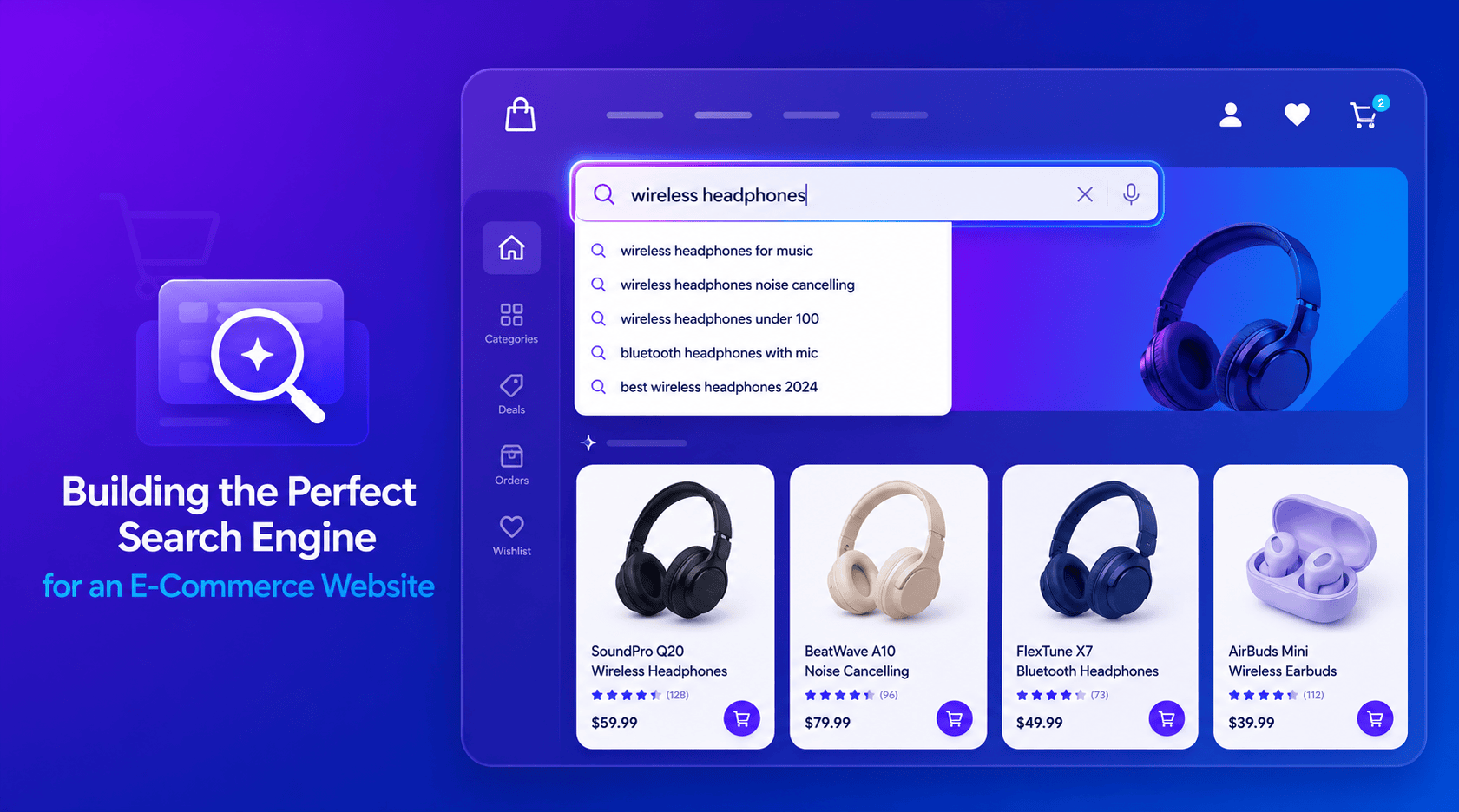
As the shopper types, surface natural-language autocomplete suggestions that go beyond keyword expansion. Instead of "blue → blue dress, blue jeans, blue shirt," surface "blue → blue dress for a cocktail party, blue jacket for hiking, blue running shoes." This teaches users what kinds of queries actually work.

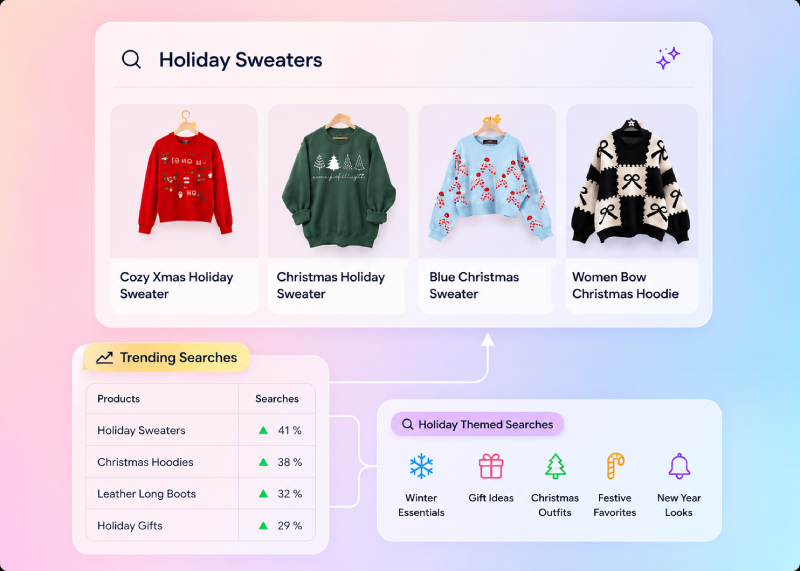
Intent confirmation chips

When the engine parses a complex query into structured intent, surface those parsed components as removable chips above the results: [summer] [beach wedding] [under $200]. This shows the shopper their query was understood, makes refinement frictionless, and recovers control if intent was misinterpreted.

Smart fallbacks instead of zero results

When the engine genuinely can't satisfy every constraint, never return an empty page. Surface the closest matches with an honest message: "No exact matches under $100 — here are similar options between $100–$150." Recovery beats abandonment every time.

Conversational refinement, not modal filters

Modern shoppers refine through conversation, not faceted modals. After initial results, surface refinement prompts inline: "Want to see only the waterproof ones? Cheaper options? Different colors?" Each chip becomes a one-tap refinement that maintains the original intent.

The technology stack underneath

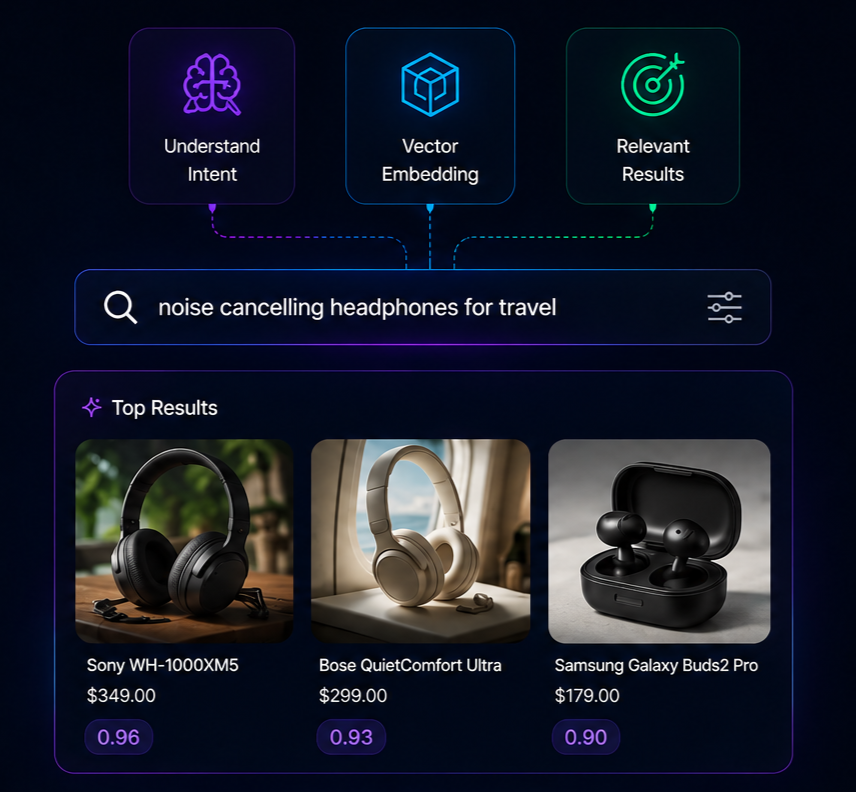
Natural language search isn’t a single technology — it’s a four-layer stack:

Layer

Technology

Purpose

1. Intent parsing
LLM or NER model
Extract entities, constraints, intent
2. Retrieval
Hybrid vector + BM25
Recall candidate products
3. Reasoning
LLM (RAG)
Apply complex constraints
4. Reranking
Behavioral model
Optimize for conversion

Voice and conversational interfaces

🎙️

Voice-first Product Discovery

Voice queries average 3–5× longer than typed queries and skew much more conversational. A typed query is “running shoes.” A voice query is “what running shoes would you recommend for someone with flat feet who runs about 20 miles a week?” The latter is the future-state baseline, and natural language search is the only architecture that handles it.

💬

Conversational Query Understanding

Natural language search is the same architecture that powers voice search. As voice queries grow (mobile assistants, smart speakers, in-app voice search), the same intent parsing + RAG pipeline serves both surfaces. Stores investing in natural language search aren’t just modernizing typed search — they’re future-proofing for voice.

Multilingual natural language search

One semantic space for every language

Multilingual embedding models project all languages into a shared semantic vector space.
A shopper searching in French can retrieve English product descriptions automatically.
This eliminates separate keyword indexes, translation layers, and per-language synonym dictionaries.
One retrieval pipeline supports every supported language.

FR

French Queries

veste légère randonnée

US

English Results

lightweight hiking jacket

Unified Retrieval

Single multilingual pipeline

The conversion data: what natural language search actually delivers

Metric

Typical lift

Why

Search-to-purchase conversion
+30–50%
More relevant results for descriptive queries
Long-tail query coverage
+50–80%
Recovers queries that returned zero
Search abandonment
−40–60%
Fewer dead-end queries
Average order value
+10–18%
Better cross-sell from semantic neighbors
Voice search engagement
+200–400%
Architecture finally fits the input modality
Mobile search session length
+25–40%
Conversational refinement keeps shoppers in funnel

Common UX mistakes to avoid

Hiding the search bar on mobile

Every percentage point of mobile traffic that uses search converts at 2–3× browse. Don't bury it behind an icon.

Showing too many results per page

24 products is the modern sweet spot. More than 48 induces decision paralysis; fewer than 12 looks sparse.

Removing facets

Conversational refinement supplements facets but doesn't replace them. Power shoppers still want filter controls.

Skipping result explanations

"We found these because you searched for X" — even minimal context lifts trust and CTR.

Tactical tip

Run a search-bar copy A/B test as your first experiment. Changing placeholder text from "Search" to "Try: 'comfortable shoes for travel'" routinely lifts descriptive query volume 30–50%, which is pure incremental conversion lift on top of any backend improvement.

Industry-specific patterns

Apparel and fashion
Style descriptors ("flowy," "cropped," "casual," "elegant") matter as much as product types. Natural language search lets shoppers describe vibes ("70s boho summer dress") that no keyword engine can parse.
Beauty and personal care
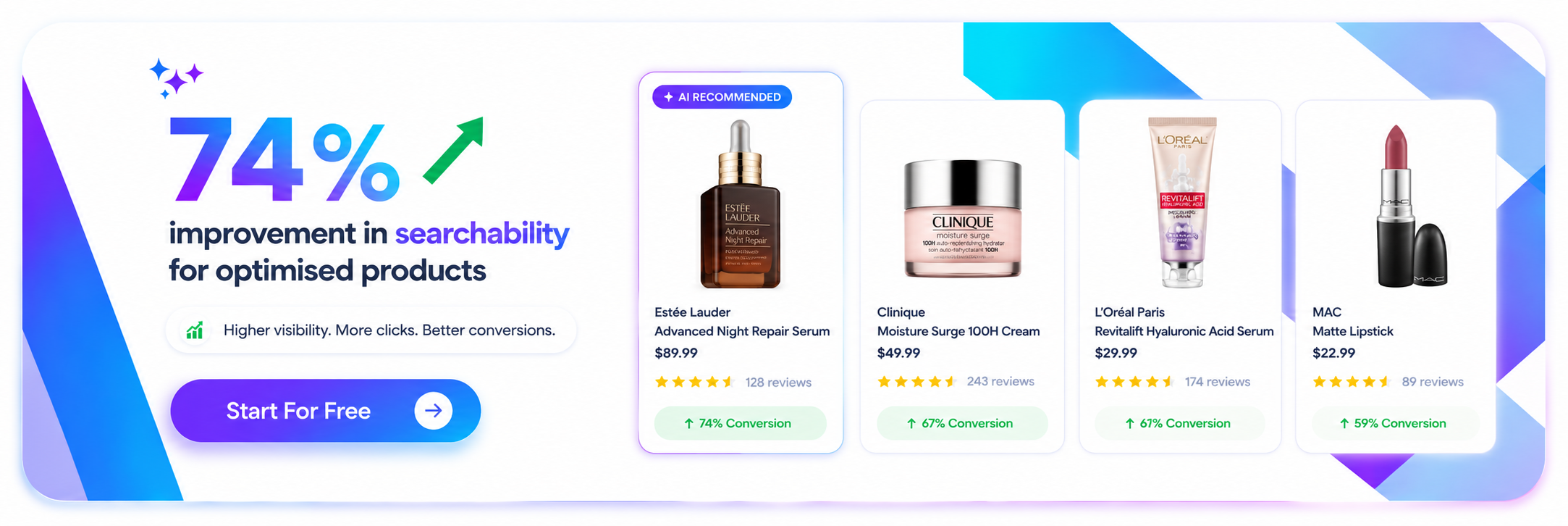
Concern-based queries ("anti-aging serum for sensitive skin," "fragrance-free moisturizer for eczema") dominate. Natural language search routes these to relevant products without manual mapping.
Home and furniture
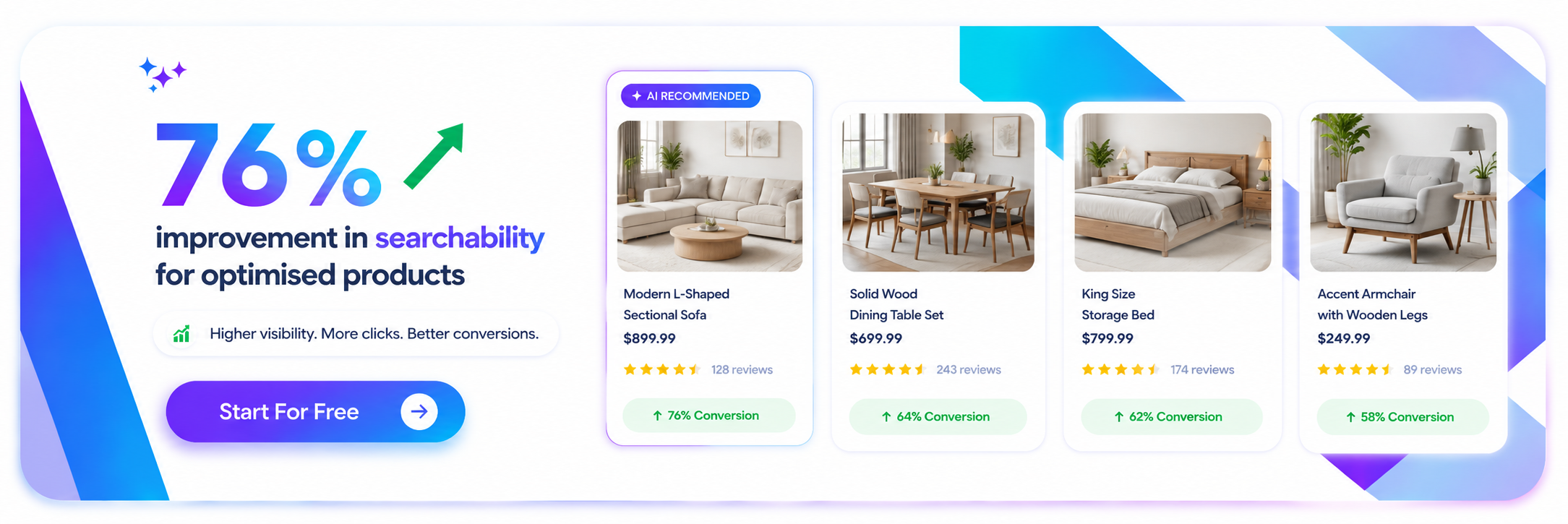
Room and style queries ("mid-century coffee table for a small living room") combine multiple attributes. The intent parsing layer extracts each component cleanly.
Electronics and tech
Compatibility queries ("phone case that fits iPhone 15 Pro Max with MagSafe") require both natural language understanding and structured attribute matching. Hybrid retrieval is essential.
B2B and industrial
Specification-heavy queries ("M8 stainless steel hex bolt 50mm with washer") need exact-match precision. Hybrid (vector + BM25) retrieval is non-negotiable here.

How to deploy natural language search on your storefront

Step 1: Audit your current search analytics

Pull the last 30 days of search query data. Segment into: head queries (top 100), mid-tail (101–1,000), and long-tail (everything else). Calculate the zero-results rate per segment. Long-tail rates above 15% indicate massive recoverable revenue.

Step 2: Pick your platform path

Build path: 4–9 months, 2–4 engineers, full control. Buy path: under two weeks with AI-native platforms like bCloud, predictable pricing, no engineering team required.

Step 3: A/B test in parallel

Run new natural language search at 50% traffic split alongside existing search. Measure conversion, AOV, search abandonment, zero-results rate. Promote when the lift is statistically significant.

Step 4: Iterate the UX layer

Test placeholder copy, autocomplete behavior, intent chips, refinement prompts. The UX layer often delivers as much lift as the underlying engine upgrade.

Frequently asked questions

What is natural language product search?
Natural language product search lets shoppers describe what they want in plain conversational language — including descriptive queries, occasions, gifts, and multi-constraint requests — and returns relevant products even when no item is literally tagged that way.
Voice search is one input modality; natural language search is the underlying retrieval architecture. The same engine that powers natural language typed queries also handles voice — they share the intent parsing and retrieval layers.
Not anymore. AI-native platforms ship the entire stack as a managed service. Self-hosting still requires significant engineering (4–9 months for production-grade), but managed platforms deploy in under two weeks.
30–50% on search-driven sessions is typical. Larger gains on stores with previously high zero-results rates. Smaller gains on stores already running modern hybrid keyword search.
Yes — multilingual embedding models project queries from any language into a shared semantic space. A single index handles all supported languages without per-language deployment.
The technical foundations behind natural language product search reach across multiple architectural layers. The retrieval mathematics is detailed in our deep dive on vector search ecommerce, while the catalog and embedding strategy is covered in semantic search product catalogs. The reasoning layer — multi-constraint and conversational queries — lives in our LLM search for e-commerce guide. And if you’re deploying on a specific platform, see our integration walkthrough for AI search BigCommerce.
Scroll to Top